In short
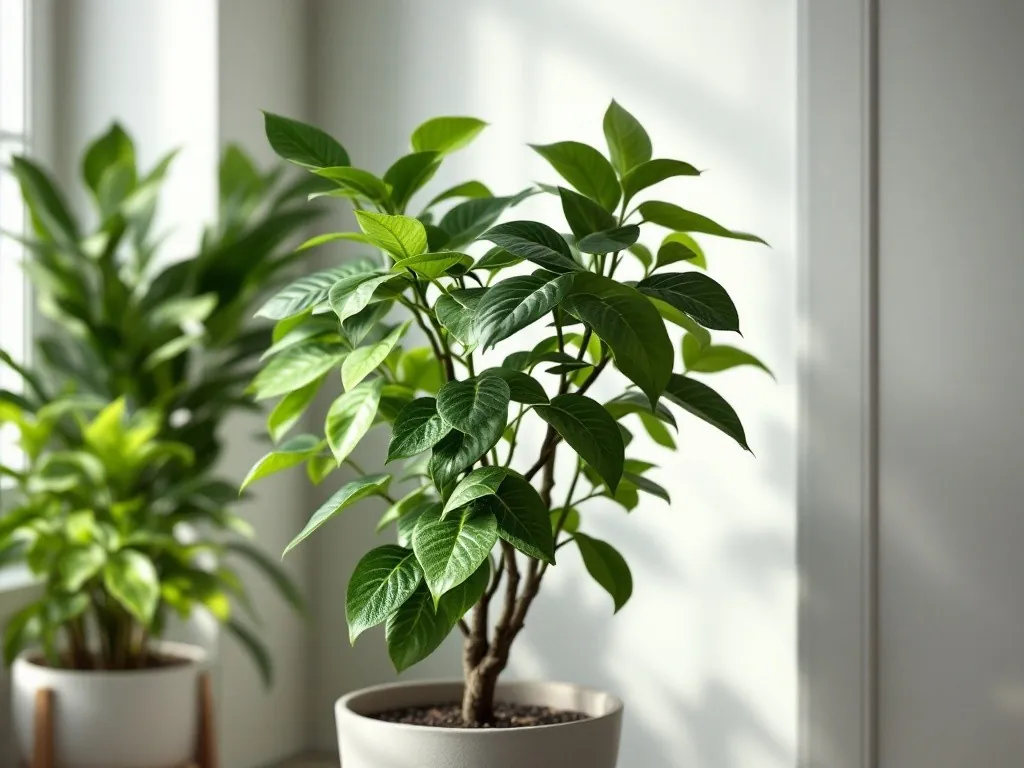
- Large, glossy leaves - a striking structural plant for interiors.
- Prefers a bright position without harsh, direct sun.
- Dislikes being moved - it reacts by dropping its leaves.
- The milky sap irritates the skin; the plant is mildly toxic.
- Water moderately, avoiding overwatering.
Botanical data
- Family
- Moraceae (Moraceae)
- Height
- 0.6–3 m
- Width
- 0.4–1 m
- Habit
- Upright
- Growth rate
- Moderate
- Position
- Full sun, Partial shade
- Soil
- Humus-rich
- pH reaction
- pH 5.5–7
- Moisture
- Moderate
- Bloom
- —
- Hardiness
- USDA 10a–11b
- Propagation
- From cuttings, By layering
Characteristics
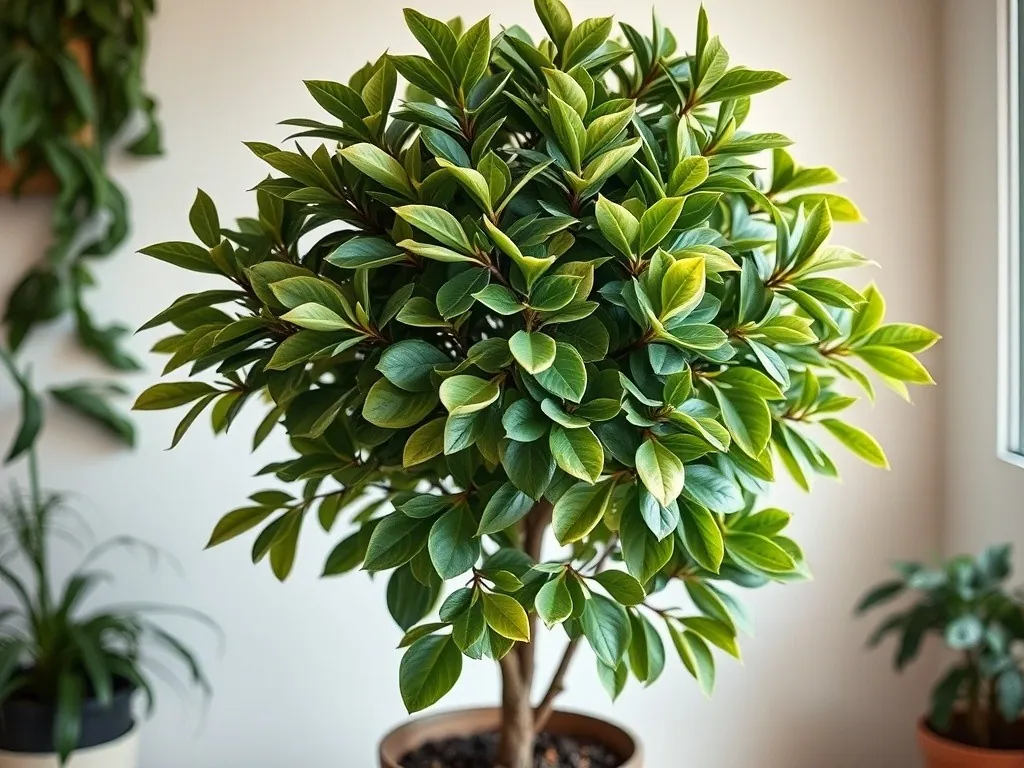
An evergreen plant with an upright habit and large, oval, leathery leaves with an intense gloss. Some cultivars have reddish or variegated leaves. In the wild it produces aerial roots and reaches the size of a tree.
Growing and care
Watering
Water when the top layer of the substrate has dried out. Sensitive to overwatering - excess water causes the leaves to drop.
Fertilizing
Moderate feeding during the growing season.
Planting
A well-draining substrate for foliage plants; a stable pot given the height of mature specimens.
Pruning
Pinching out the growing tip encourages branching and limits height; wipe away the milky sap.
Companion plants
Good companions
Similar light and water requirements create a cohesive composition of large-leaved greenery.
Bad companions
Figs cope poorly with being moved and with changing conditions, reacting by shedding their leaves - it is best to pair them with companions that stay in a fixed position.
The evidence level indicates whether the relationship is backed by research, observation, or gardening tradition.
Diseases and pests
Small (1–3 mm) soft-bodied insects, green, black or pink, feeding in clusters on young shoots and the underside of leaves. They excrete sticky honeydew.
Armoured and soft scale insectsImmobile, brown or yellowish shields (1–4 mm) attached to stems and the underside of leaves, especially along the veins. Easily mistaken for growths on the plant. They suck sap, causing yellowing and weakening, and excrete sticky honeydew. Common on figs, orchids and plants with tough leaves.
Spider mitesTiny (0.3–0.5 mm) arachnids, hard to spot with the naked eye, feeding on the underside of leaves. Symptoms: fine, pale speckling (feeding punctures); over time the leaves turn grey, yellow and dry out. Under heavy infestation a fine webbing becomes visible. Warm, dry air favours their development — a common problem for houseplants in winter near radiators.
MealybugsInsects covered in a white, cottony, waxy coating, gathering in leaf axils, at the base of shoots and on the underside of leaf blades. They look like tufts of cotton wool. They suck sap, weaken the plant and excrete sticky honeydew, on which black sooty mould develops. A common pest of houseplants and succulents.
Toxicity
| For whom | Level | Notes |
|---|---|---|
| Humans | Mild | The milky sap (latex) irritates the skin and mucous membranes and can cause allergic reactions. |
| Dogs | Mild | — |
| Cats | Mild | — |
History and origin
The rubber plant was once cultivated on plantations as a source of natural rubber (hence the name 'rubber plant'), before it was replaced by the Para rubber tree. As a houseplant it has been popular since Victorian times.
Uses
For bright living and office interiors as a structural plant. Pruning allows you to control the height and shape the habit.
Trivia
- The names 'elastica' and 'rubber' come from the milky sap (latex), from which rubber was once obtained.
- In its natural habitat in India, the famous 'living bridges' are formed from the aerial roots of figs.
Frequently asked questions
Why is my rubber plant dropping its leaves?
The most common causes are a change of position, draughts, overwatering or a sudden change in temperature. Figs are sensitive to changes in conditions - once the surroundings have stabilised they usually regrow their foliage.
How do I clean a rubber plant's leaves?
Wipe them with a damp, soft cloth - this removes dust and restores the gloss, improving photosynthesis. Avoid oil-based leaf-shine products.
Is the rubber plant poisonous?
The milky sap (latex) irritates the skin and mucous membranes and can cause allergic reactions. The plant is mildly toxic to animals - it is best kept out of their reach.
Sources
- Plants of the World Online (POWO)Database (GBIF, POWO…)
- RHS — Ficus elasticaInstitution / botanical garden
My note
A private note for this plant — saved in your browser.