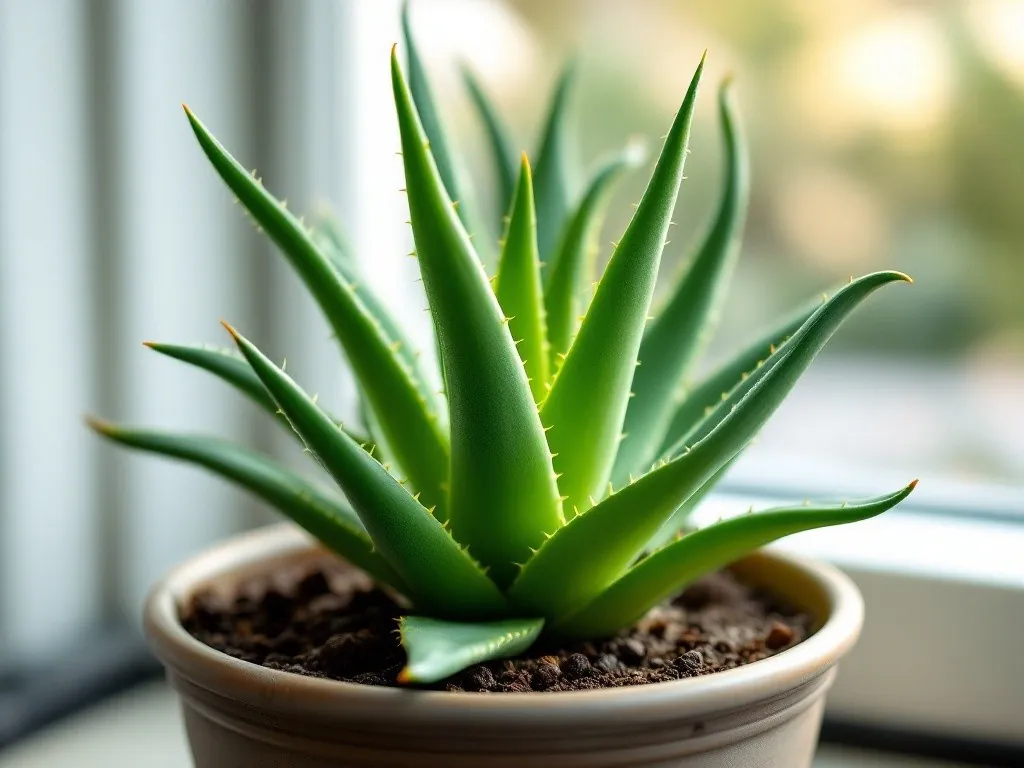
In short
- Highly drought-resistant — stores water in its fleshy leaves.
- Requires full sun and a free-draining substrate.
- The gel from the leaf flesh is used in cosmetics and in first aid for burns.
- The latex beneath the leaf skin is toxic to animals and strongly laxative.
- The most common cultivation mistake is overwatering.
Botanical data
- Family
- Asphodelaceae (Asphodelaceae)
- Height
- 0.3–0.6 m
- Width
- 0.3–0.6 m
- Habit
- Clump-forming
- Growth rate
- Slow
- Position
- Full sun
- Soil
- Sandy
- pH reaction
- pH 6–7.5
- Moisture
- Dry
- Bloom
- March–May
- Hardiness
- USDA 9a–11b
- Propagation
- By division
Characteristics
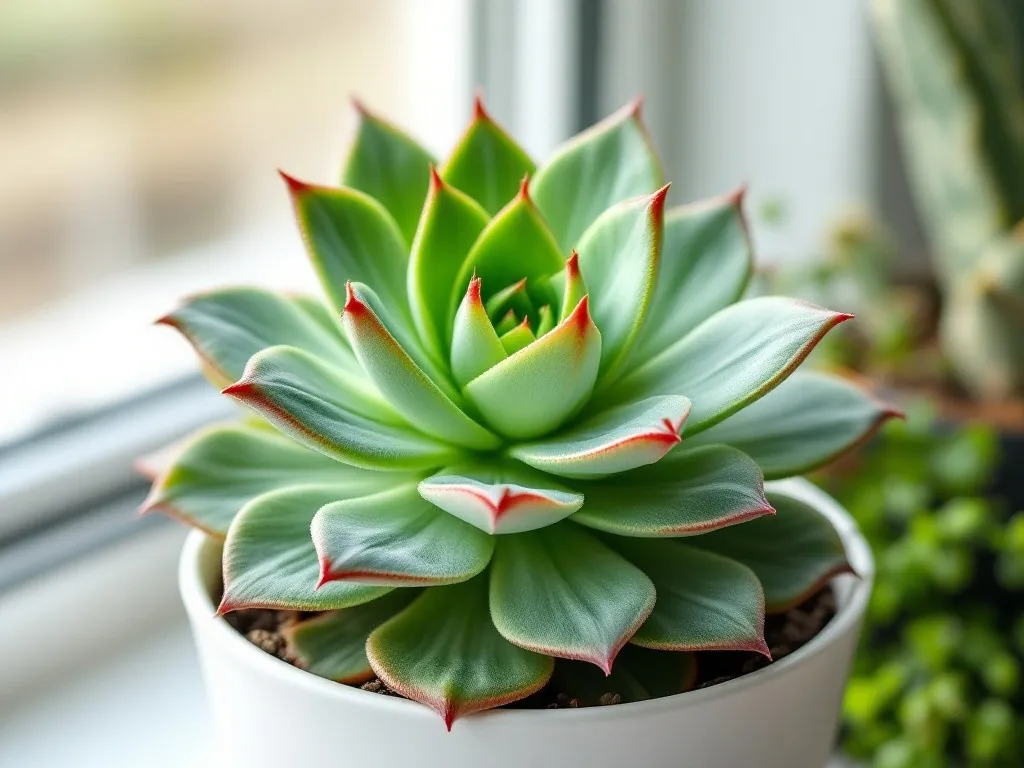
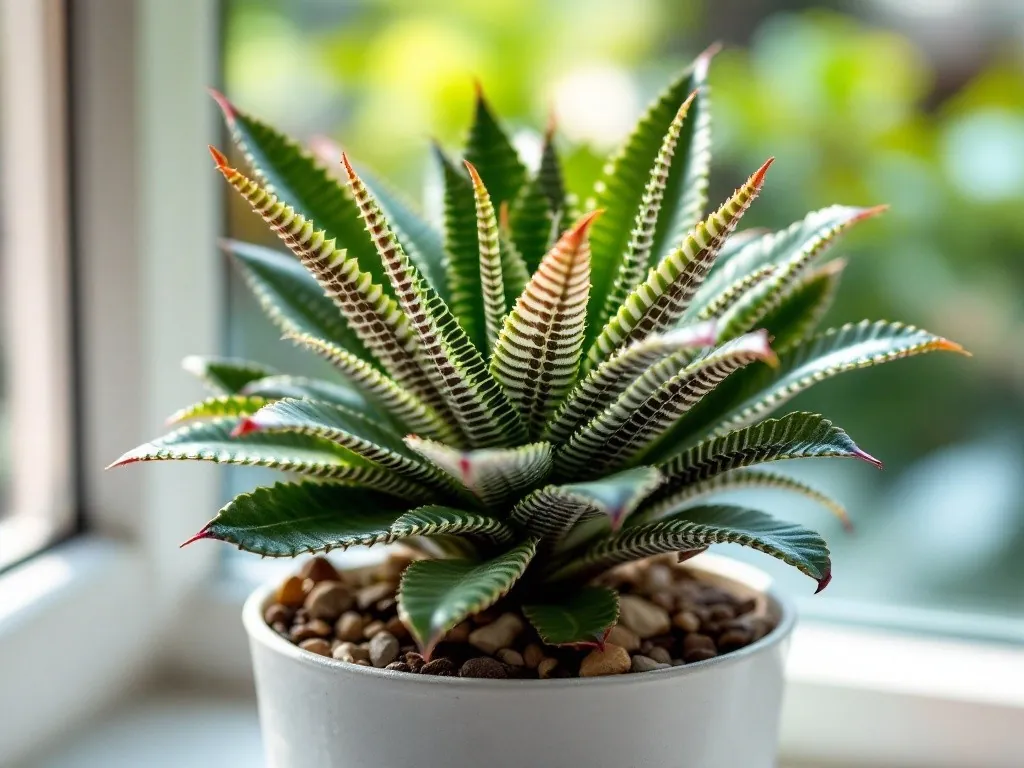
A succulent forming a rosette of thick, fleshy, lance-shaped leaves with toothed edges, filled with a translucent gel. Mature plants produce tall flower spikes with tubular, yellow or orange flowers.
Growing and care
Watering
The fleshy leaves store water. Water thoroughly, but only after the substrate has dried out completely — overwatering causes rot.
Fertilizing
Undemanding — feed sparingly during the growing season.
Planting
Free-draining cactus substrate; a pot with a drainage hole, preferably terracotta.
Pruning
Cut off the outer, mature leaves at the base — these are the ones used to obtain the gel.
Companion plants
Good companions
Identical requirements — full sun, free-draining substrate, infrequent watering; a natural companion in succulent arrangements.
Bad companions
A shared substrate kept moist leads to root rot in the aloe.
The evidence level indicates whether the relationship is backed by research, observation, or gardening tradition.
Diseases and pests
Toxicity
| For whom | Level | Notes |
|---|---|---|
| Humans | Mild | The gel from the leaf flesh is used externally, but the latex layer beneath the leaf skin is strongly laxative and irritating. |
| Dogs | Moderate | Aloe latex is toxic to dogs and cats when ingested. |
| Cats | Moderate | — |
History and origin
Aloe is one of the oldest medicinal plants — references to its use date back to ancient Egypt, Greece and Mesopotamia. To this day it is widely used in cosmetics and natural medicine.
Uses
For bright, sunny windowsills, for balcony cultivation in summer, and as a household medicinal plant — the gel is applied externally to minor burns and skin irritations.
Trivia
- Aloe gel is about 99% water, with the remainder made up of active compounds.
- Aloe uses CAM metabolism, opening its stomata at night to limit water loss in the heat.
Frequently asked questions
Why are my aloe's leaves turning brown and soft?
This is usually a sign of overwatering and root rot. Cut back on watering, check the drainage and repot the plant into a dry, free-draining substrate, removing any rotten parts.
How often should aloe be watered?
Rarely — about every 2 weeks in summer and once a month in winter, always after the substrate has dried out completely. Aloe tolerates drought far better than excess water.
Can the aloe gel from a houseplant be applied to the skin?
Fresh gel from the leaf flesh is sometimes applied externally to minor irritations, but you should avoid the yellowish latex just beneath the leaf skin, which is strongly irritating. When in doubt, exercise caution and consult a specialist.
Sources
- Plants of the World Online (POWO)Database (GBIF, POWO…)
- RHS — Aloe veraInstitution / botanical garden
My note
A private note for this plant — saved in your browser.