In short
- One of the easiest houseplants - ideal for beginners.
- Tolerates partial shade, shade and irregular watering.
- Can be grown in soil or in water alone.
- Grows quickly and propagates easily from stem cuttings.
- Toxic to dogs and cats if chewed.
Botanical data
- Family
- Araceae (Araceae)
- Height
- 0.3–2 m
- Width
- 0.2–0.5 m
- Habit
- Cascading
- Growth rate
- Fast
- Position
- Partial shade, Shade
- Soil
- Humus-rich
- pH reaction
- pH 6–6.5
- Moisture
- Moderate
- Bloom
- —
- Hardiness
- USDA 10b–11b
- Propagation
- From cuttings
Characteristics
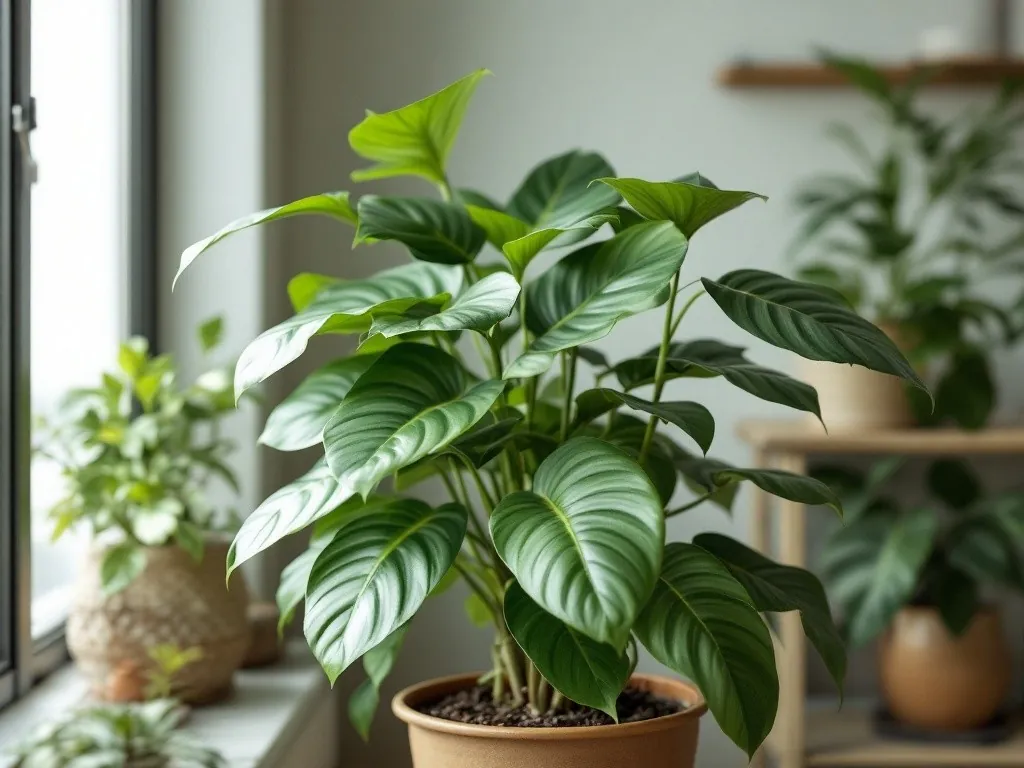
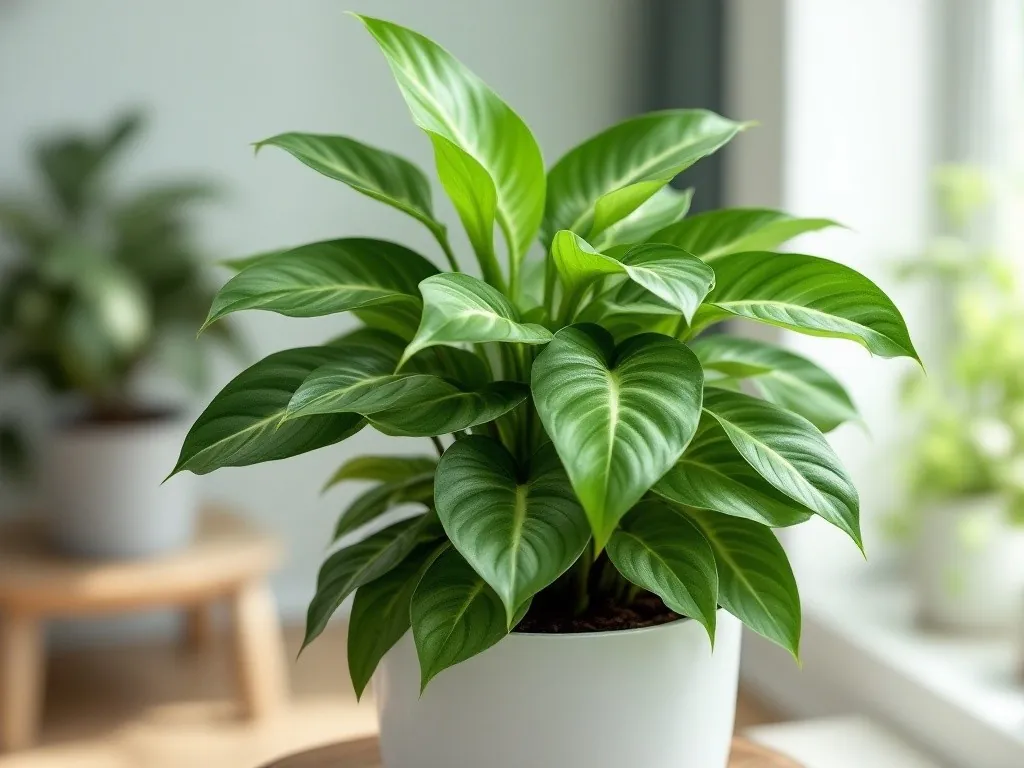
An evergreen climber with flexible shoots and heart-shaped, glossy leaves, often with yellow or cream marbled variegation. It produces clinging aerial roots that allow it to climb up supports.
Growing and care
Watering
One of the most forgiving plants - it tolerates irregular watering. It can also be grown in water alone.
Fertilizing
Undemanding - grows well even with minimal feeding.
Planting
A universal, well-draining substrate for foliage plants.
Pruning
Shorten overly long shoots - this encourages the plant to branch and thicken.
Companion plants
Good companions
Similar light and water requirements, both members of the arum family - an easy shared position.
Bad companions
Epipremnum prefers partial shade; in full sun the leaves fade and scorch.
The evidence level indicates whether the relationship is backed by research, observation, or gardening tradition.
Diseases and pests
Small (1–3 mm) soft-bodied insects, green, black or pink, feeding in clusters on young shoots and the underside of leaves. They excrete sticky honeydew.
MealybugsInsects covered in a white, cottony, waxy coating, gathering in leaf axils, at the base of shoots and on the underside of leaf blades. They look like tufts of cotton wool. They suck sap, weaken the plant and excrete sticky honeydew, on which black sooty mould develops. A common pest of houseplants and succulents.
Fungus gnatsSmall, dark gnats (2–4 mm) flying around pots and scurrying across the surface of the substrate. The adults are a nuisance, but the real damage is done by their larvae in the soil, feeding on the roots and the base of the stems of young plants. A constantly moist, humus-rich substrate favours their development — the classic result of overwatering houseplants.
Toxicity
| For whom | Level | Notes |
|---|---|---|
| Humans | Mild | Contains calcium oxalates that irritate the mucous membranes if ingested. |
| Dogs | Moderate | — |
| Cats | Moderate | — |
History and origin
It originates from the islands of the Pacific, where in the tropical climate it reaches enormous sizes. As a houseplant it has gained worldwide popularity thanks to its exceptional tolerance of neglect and its air-purifying ability.
Uses
For hanging pots, on shelves and cabinets, as a climber on supports, and for hydroponic cultivation in vases of water.
Trivia
- Pothos is frequently cited in NASA studies on plants that clean the air of volatile organic compounds.
- In the tropics it can climb to a height of a dozen or more metres, producing leaves far larger than those seen in pot cultivation.
Frequently asked questions
Why is my pothos losing its yellow variegation?
The most common cause is too little light - in shade the plant produces more chlorophyll and the leaves turn uniformly green. Move it to a brighter spot (without direct sun).
Can pothos be kept in water permanently?
Yes, epipremnum grows well in water alone for a long time. It is worth changing the water every 1-2 weeks and periodically adding a small dose of liquid fertiliser.
How often should I water epipremnum?
Usually once a week in summer and every two weeks in winter, once the top layer of the substrate has dried out. The plant copes well with brief drying out.
Sources
- Plants of the World Online (POWO)Database (GBIF, POWO…)
- RHS — Epipremnum aureumInstitution / botanical garden
My note
A private note for this plant — saved in your browser.