In short
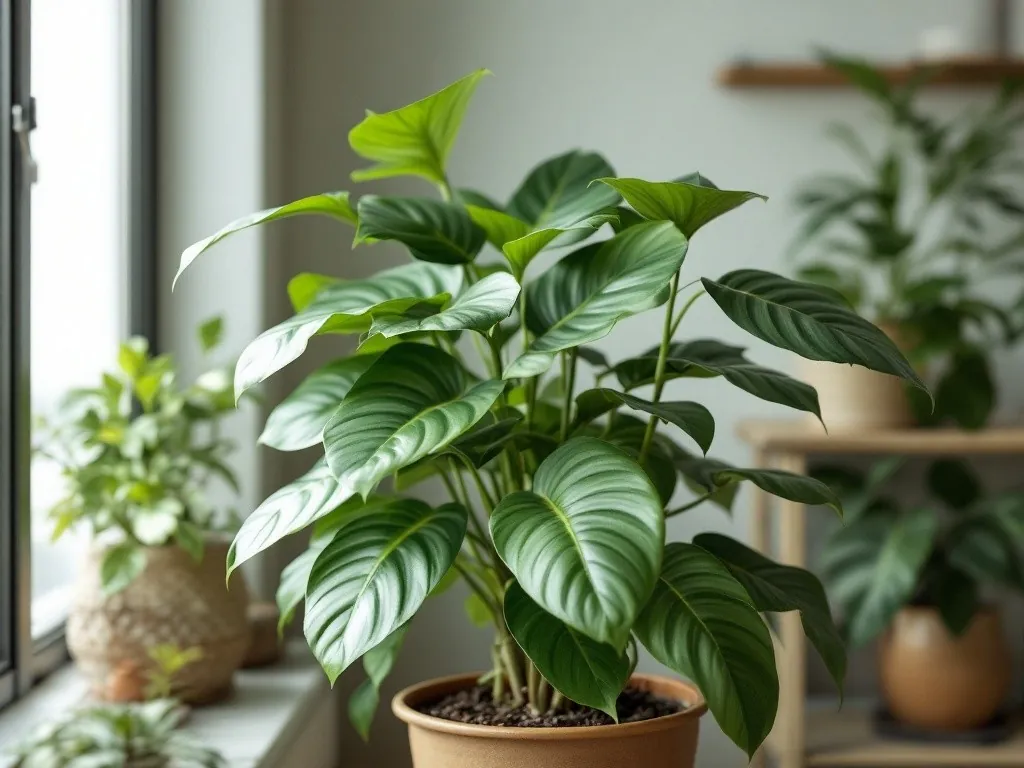
- Heart-shaped, glossy leaves on long shoots that trail or climb a support.
- One of the most tolerant houseplants - it copes even with lower light.
- In a brighter position it grows more compactly, with more densely leaved shoots.
- Easily propagated from cuttings rooted in water.
- Toxic to dogs and cats - it contains calcium oxalates that irritate the mouth.
Botanical data
- Family
- Araceae (Araceae)
- Height
- 0.3–0.6 m
- Width
- 0.3–0.5 m
- Habit
- Cascading
- Growth rate
- Fast
- Position
- Partial shade, Shade
- Soil
- Humus-rich
- pH reaction
- pH 5–6.5
- Moisture
- Moderate
- Bloom
- —
- Hardiness
- USDA 10a–11b
- Propagation
- From cuttings
Characteristics
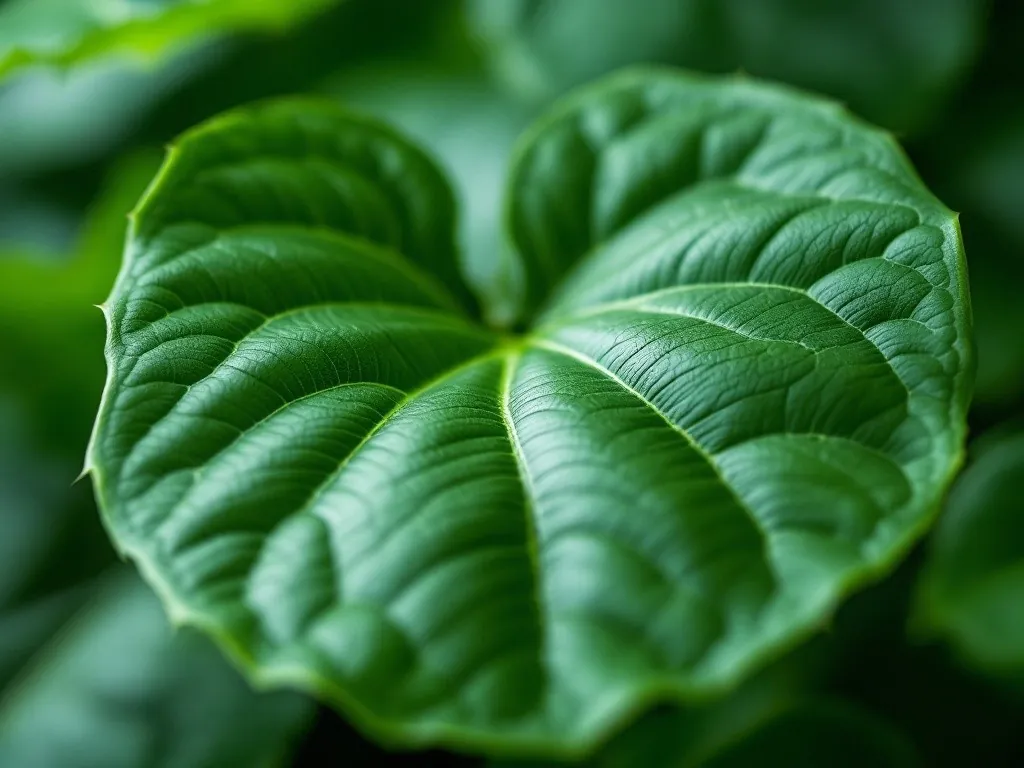
A perennial herbaceous plant with flexible, slender shoots and leathery, heart-shaped leaves 5-15 cm long, dark green and glossy. Without support it grows as a trailing cascade 0.5-2 m long; trained on a moss pole it climbs upward thanks to aerial roots that emerge from the nodes.
Growing and care
Watering
Water when the top layer of the substrate has dried out to a depth of 2-3 cm. It tolerates short periods of drying out better than constantly wet substrate.
Fertilizing
Diluted universal fertiliser for foliage plants - reduce or suspend feeding in winter.
Planting
A universal substrate for foliage plants with added bark and perlite; optionally a moss pole to train the shoots upward.
Pruning
Prune elongated, bare shoots just above a node to encourage branching from the base.
Companion plants
Good companions
Similar requirements for light, air humidity and watering - an easy shared position in the same room.
Bad companions
Radically different water requirements - the philodendron needs regular moisture, while succulents need dry substrate between waterings.
The evidence level indicates whether the relationship is backed by research, observation, or gardening tradition.
Diseases and pests
Small (1–3 mm) soft-bodied insects, green, black or pink, feeding in clusters on young shoots and the underside of leaves. They excrete sticky honeydew.
Spider mitesTiny (0.3–0.5 mm) arachnids, hard to spot with the naked eye, feeding on the underside of leaves. Symptoms: fine, pale speckling (feeding punctures); over time the leaves turn grey, yellow and dry out. Under heavy infestation a fine webbing becomes visible. Warm, dry air favours their development — a common problem for houseplants in winter near radiators.
MealybugsInsects covered in a white, cottony, waxy coating, gathering in leaf axils, at the base of shoots and on the underside of leaf blades. They look like tufts of cotton wool. They suck sap, weaken the plant and excrete sticky honeydew, on which black sooty mould develops. A common pest of houseplants and succulents.
Toxicity
| For whom | Level | Notes |
|---|---|---|
| Humans | Mild | Contains insoluble calcium oxalate crystals - contact with the sap and ingestion irritate the skin and the mucous membranes of the mouth. |
| Dogs | Moderate | Chewing the leaves causes drooling, swelling of the muzzle, vomiting and irritation of the mouth. |
| Cats | Moderate | Symptoms similar to those in dogs - drooling, vomiting and irritation of the mouth after chewing the leaves. |
History and origin
Brought to Europe from the tropical forests of Central America in the 19th century as a greenhouse plant, today it is one of the most popular pot philodendrons worldwide and among the most frequently recommended to beginners, prized for its forgiving nature.
Uses
For interiors with varying light levels as a trailing plant from a high shelf or hanging pot, or trained upward on a moss pole as an ornamental climber.
Trivia
- The genus name 'Philodendron' comes from the Greek and means 'tree-loving' - in the wild the plant climbs up trunks as an epiphyte, using aerial roots to attach itself to the bark.
- Cuttings of the heartleaf philodendron root very easily in plain water - simply cut off a section of shoot with a node and stand it in a glass in a bright spot; roots appear after 2-4 weeks.
Frequently asked questions
Will the heartleaf philodendron cope in a dark room?
It is one of the most light-tolerant houseplants - it will cope even with a fairly dark position, though it then grows more slowly and produces longer gaps between the leaves. In a brighter spot it grows denser and more compactly.
What is the easiest way to propagate the heartleaf philodendron?
The simplest way is to cut off a section of shoot with at least one node and place it in a glass of water in a bright, warm spot. Roots usually appear after 2-4 weeks, after which the cutting can be potted up into substrate.
Is the philodendron safe for a dog or cat that chews the leaves?
No - the heartleaf philodendron contains insoluble calcium oxalate crystals which, when chewed, cause drooling, swelling of the muzzle, vomiting and irritation of the mouth in dogs and cats. The plants should be kept out of reach of pets.
Sources
- Plants of the World Online (POWO)Database (GBIF, POWO…)
- RHS — Philodendron hederaceumInstitution / botanical garden
My note
A private note for this plant — saved in your browser.