In short
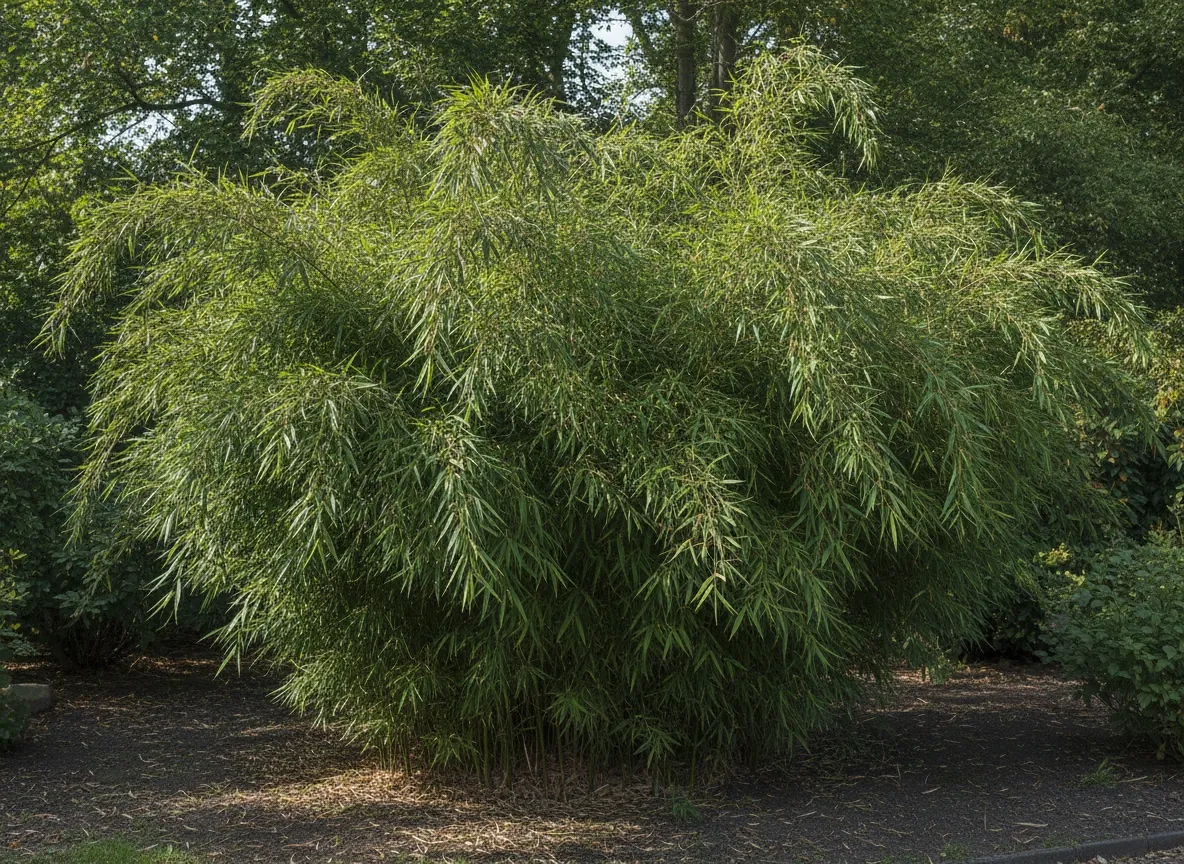
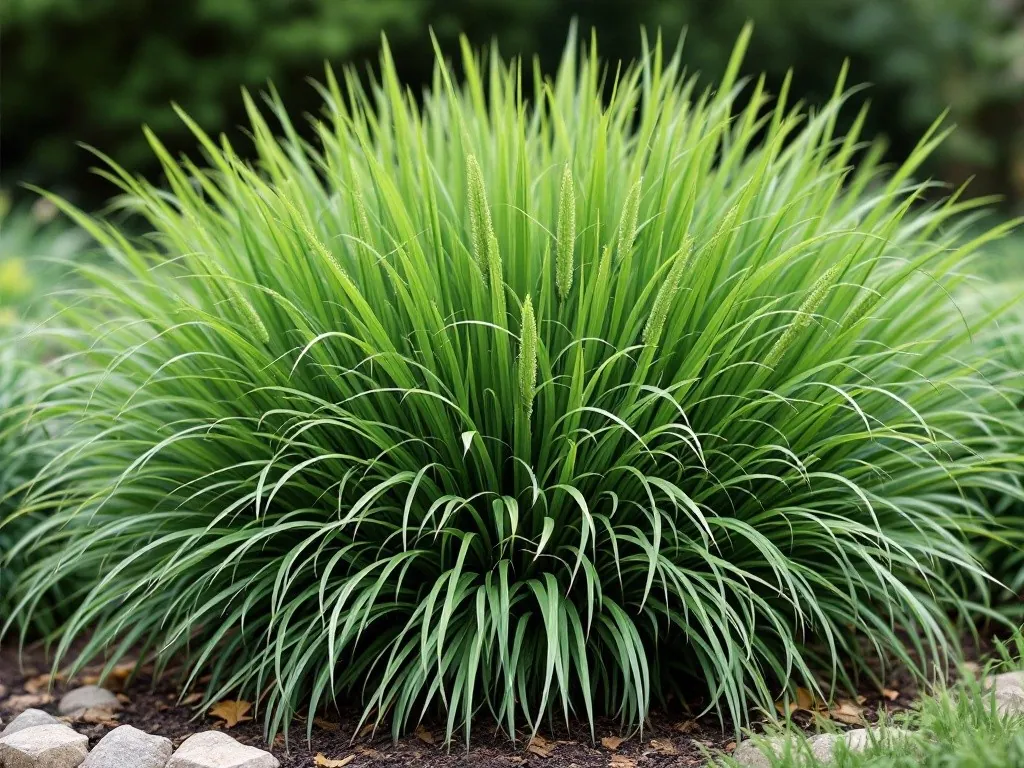
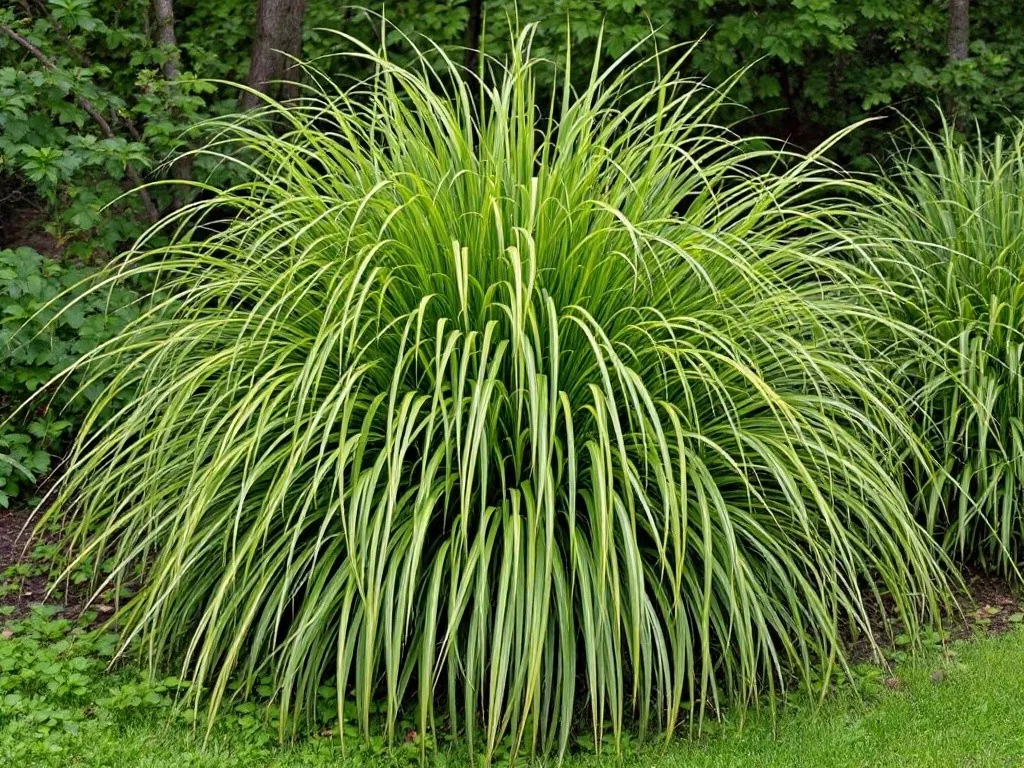
- Narrow, arching leaves create the effect of a soft, cascading waterfall.
- Unlike most ornamental grasses, it thrives in partial shade and shade.
- Needs moist, fertile, well-drained soil — does not tolerate drying out.
- Grows slowly and forms compact, non-spreading clumps.
- The 'Aureola' cultivar with yellow-green striped leaves is the most popular in cultivation.
- Excellent for containers, beds in tree shade, and Japanese-style gardens.
Botanical data
- Family
- Poaceae (Poaceae)
- Height
- 0.3–0.6 m
- Width
- 0.4–0.6 m
- Habit
- Cascading
- Growth rate
- Slow
- Position
- Partial shade, Shade
- Soil
- Humus-rich, Loamy
- pH reaction
- pH 5.5–7
- Moisture
- Moderate, Moist
- Bloom
- August–September
- Hardiness
- USDA 5a–9b
- Propagation
- By division
Characteristics
Unlike the vast majority of ornamental grasses, which require full sun and tolerate even dry, poor sites, Hakonechloa is a woodland species adapted to dappled light and consistently moist, fertile soil — in sun and dry soil it quickly loses its ornamental value, and its leaves brown at the tips. The clumps grow slowly, are dense but non-spreading, and the narrow, bright green or — in variegated cultivars — yellow-green striped leaves grow in a distinctive one-sided fashion, arching down like a small cascade of water. In fall, the leaves of many cultivars turn copper-orange, adding another layer of ornamental interest to the garden.
Growing and care
Watering
Needs consistently moist soil — in dry soil, especially in full sun, the leaf edges quickly brown. In hot weather and in containers, the soil dries out quickly, so moisture control matters more here than for most ornamental grasses.
Fertilizing
Moderate doses in spring support growth, but excess nitrogen weakens the intensity of the yellow coloring in variegated cultivars such as 'Aureola'.
Planting
Mix the soil with compost or humus before planting to ensure consistent moisture and fertility; avoid sites that dry out in the sun.
Pruning
Cut back last year's dried shoots close to the ground to make room for fresh, arching foliage.
Companion plants
Good companions
Identical requirements — partial shade/shade and moist, humus-rich soil; contrasting leaf shapes (broad in hosta, narrow and arching in Hakonechloa) pair well together.
Shared woodland habitat — shade, moisture, acidic soil pH; a classic pairing in Japanese-style gardens.
Bad companions
Completely different site requirements — Hakonechloa quickly dries out at the leaf edges in full sun and on a parched site.
The evidence level indicates whether the relationship is backed by research, observation, or gardening tradition.
Toxicity
| For whom | Level | Notes |
|---|---|---|
| Humans | None | — |
| Dogs | None | — |
| Cats | None | — |
History and origin
Hakonechloa macra was scientifically described in the 19th century and for a long time was cultivated mainly in Japan as a garden plant and element of traditional gardens. It reached Western gardens in the second half of the 20th century, and its golden cultivar 'Aureola' — selected in Japan — quickly became one of the most prized grasses for shade borders, receiving the Perennial Plant of the Year award in the USA in 2009.
Uses
Excellent for beds in tree shade, Japanese and woodland gardens, path edging, and containers placed on partially shaded terraces. Looks good planted in larger groups, forming a uniform, soft texture under the tree canopy.
Trivia
- The genus name refers to Mount Hakone and the surrounding region in Japan, home to the species' natural habitats.
- It is one of the few ornamental grasses that garden designers recommend as an alternative to lawn in deep shade under trees.
- The 'Aureola' cultivar is considered one of the most recognizable ornamental grasses in the world due to its distinctive yellow-green striped leaves and cascading habit.
Frequently asked questions
Does Japanese forest grass really grow in shade, given that most ornamental grasses need sun?
Yes — it's one of the few ornamental grasses adapted to woodland habitats. In the wild it grows on shaded mountain slopes in Japan, so in the garden it tolerates partial shade, and even deep shade, best, as long as the soil is sufficiently moist.
Why do Japanese forest grass leaves brown at the tips?
The most common cause is dry soil, especially combined with full sun or strong wind. The plant needs consistently moist, humus-rich soil — in a dry spot, increase watering frequency and apply mulch.
How fast does Japanese forest grass grow, and when should the clump be divided?
It grows slowly and reaches its full size only after several years. Division isn't necessary every year — it's done mainly to propagate the plant, in early spring, once the clump has become large and dense enough.
Sources
- Plants of the World Online (POWO)Database (GBIF, POWO…)
- RHS — Hakonechloa macraInstitution / botanical garden
My note
A private note for this plant — saved in your browser.