In short
- The whole point of growing it is the red leaf tips — plant it where the sun backlights them.
- It grows slowly and the clump is well-behaved; it has nothing to do with the invasiveness of the wild form.
- It starts into growth late in spring — do not assume it is dead in April.
- Cut out every shoot with purely green leaves, because over time they displace the red ones.
- It overwinters in zone 5b–6, provided the soil is well-drained; do not cut it back in autumn.
- Propagation only by division — the cultivar does not come true from seed.
Botanical data
- Family
- Poaceae (Poaceae)
- Height
- 0.3–0.5 m
- Width
- 0.3–0.4 m
- Habit
- Upright
- Growth rate
- Slow
- Position
- Full sun, Partial shade
- Soil
- Humus-rich, Sandy, Loamy
- pH reaction
- pH 5.5–7
- Moisture
- Moderate
- Bloom
- August–September
- Hardiness
- USDA 5b–9b
- Propagation
- By division
Characteristics
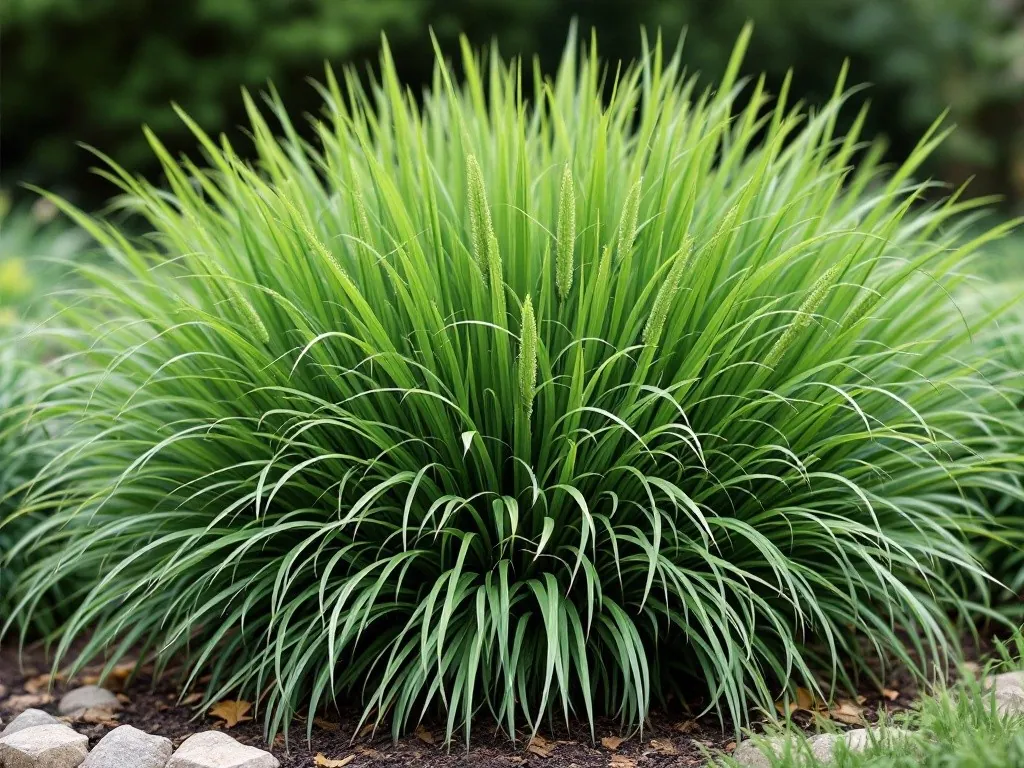
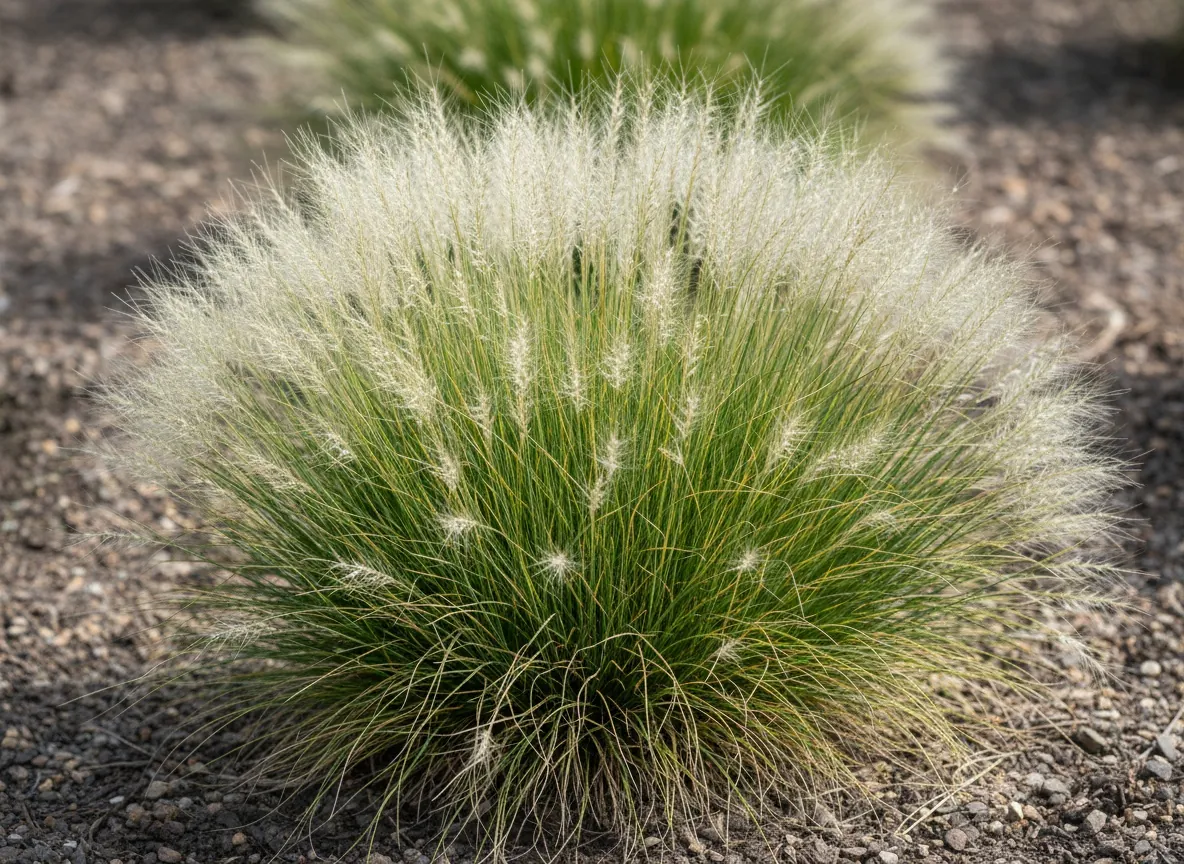
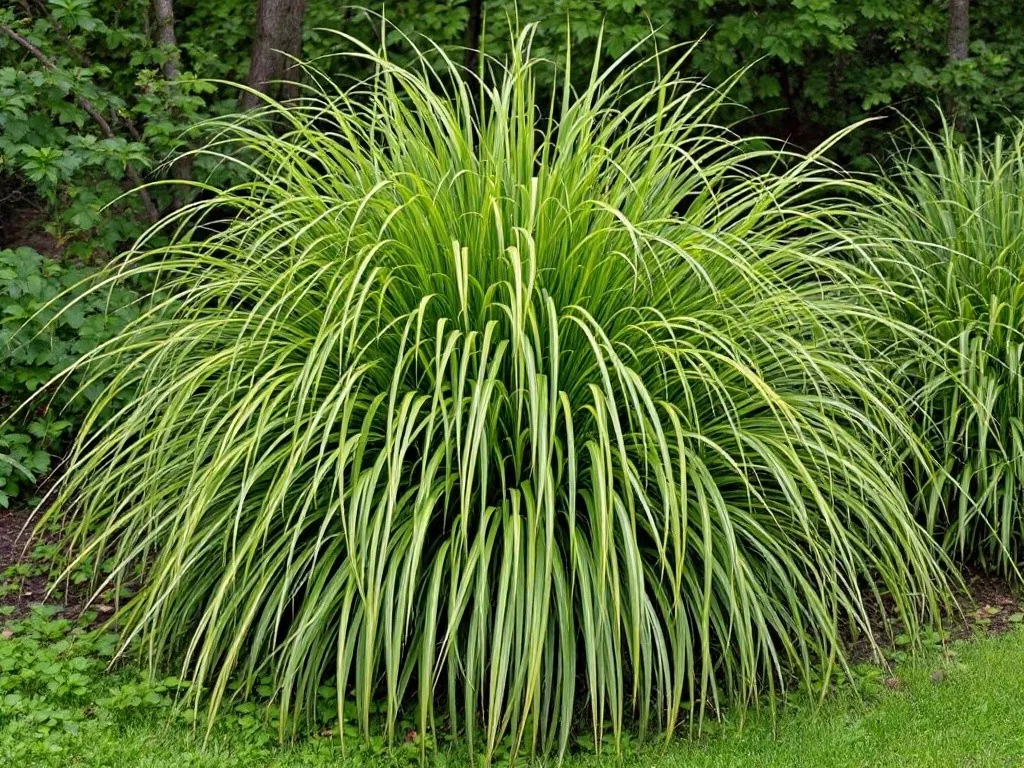
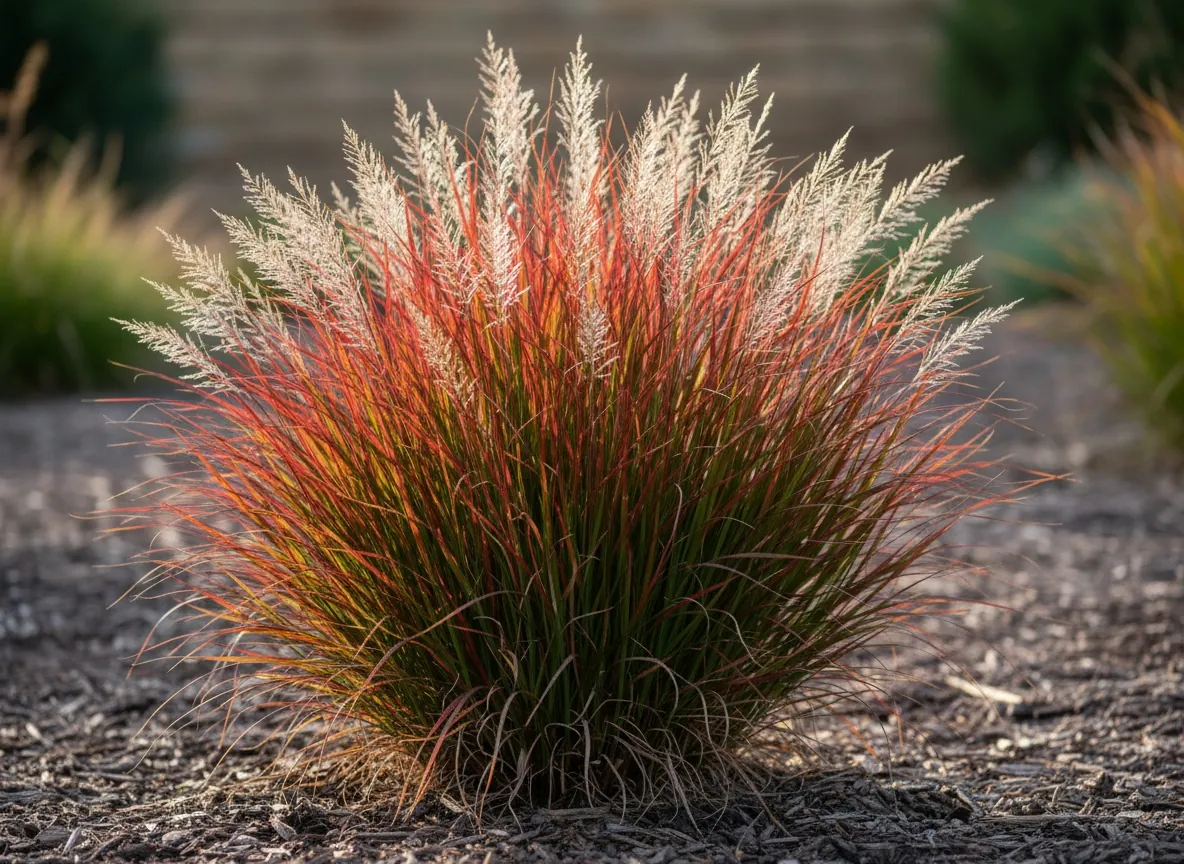
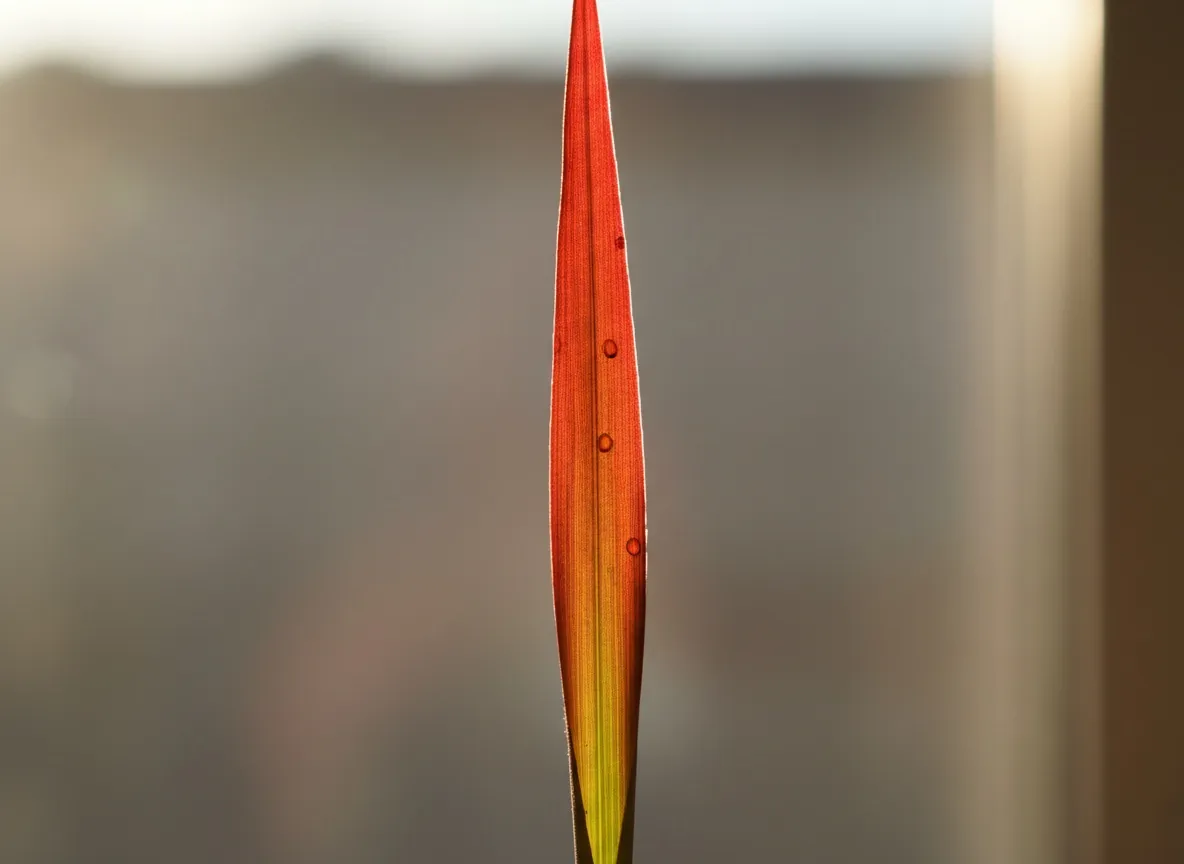
It forms small, upright clumps 30–50 cm tall. The leaves grow almost vertically, are stiff, pointed, and colour gradually: in spring only the tips redden, and from July the blood-red colour descends further and further until, in autumn, it covers nearly the whole leaf and turns to a rusty brown. This red is almost translucent and reveals itself fully only in transmitted light, which is why a clump viewed against the sun looks completely different from the same plant lit from the front. In Poland it flowers rarely and irregularly, only towards the end of summer, producing narrow, silvery white, fluffy panicles — they are pretty, but in the Polish climate one should not count on them; the merit lies solely in the leaves. The plant dies down for winter and regrows from its rhizomes only in May.
Growing and care
Watering
It likes an evenly fresh soil — in drought the leaves roll up and lose the intensity of their red. In winter drainage is decisive; a waterlogged position is the most common cause of clumps being lost.
Fertilizing
Sparingly — excess nitrogen gives lush but green leaves and markedly weakens the red colouring.
Planting
A well-drained position enriched with compost. It is worth planting where the clump will be backlit by the afternoon sun — that is the condition for achieving the effect for which this grass is grown.
Pruning
Cut last year's dried leaves right down to the ground. A separate and important task is systematically cutting out shoots with purely green leaves — blood grass has a strong tendency to revert, and the green shoots, growing more vigorously, would in time displace the red ones.
Companion plants
Good companions
The blue-grey tufts of the fescue are the strongest possible contrast to the red leaves of the blood grass; both grasses stay low and do not obscure one another.
Similar light and drainage requirements, and the fleshy, blue-green leaves of the stonecrop form a calm backdrop for the strong colour of the blood grass.
A bright, silver background sets off the red of the leaves to the maximum, and the soil and light requirements of both plants are similar.
Bad companions
Blood grass grows slowly and does not compete for space; an aggressive ground cover quickly moves into the clump and hides the lower parts of the leaves — precisely what is meant to be lit up by the sun.
It requires shade and constantly moist soil; in such conditions blood grass does not colour red and languishes, and the hosta's broad leaves shade it further.
The evidence level indicates whether the relationship is backed by research, observation, or gardening tradition.
Toxicity
| For whom | Level | Notes |
|---|---|---|
| Humans | None | — |
| Dogs | None | — |
| Cats | None | — |
History and origin
In warm climates the species is a common meadow and pioneer grass. The red-leaved form was selected in Japan, where it is known as “Chi gaya”, that is blood grass; it reached Europe in the 1960s and quickly gained popularity under the Dutch trade name “Red Baron”, which is a synonym of the older cultivar name “Rubra”.
Uses
For low perennial and gravel borders, as edging and for the front of plantings, for Japanese gardens and modern minimalist compositions. It looks very good in containers on terraces, where it is easy to position so that the leaves are backlit by the afternoon sun, and in winter the pot can be moved somewhere sheltered from rain.
Trivia
- The wild, green form is regarded in the tropics as one of the world's most troublesome weeds — it has taken over millions of hectares in South-East Asia and Africa, spreading by sharp rhizomes and encouraging fires. In the USA the species is for this reason on the federal noxious weed list. The ornamental cultivar poses no such problem in the Polish climate: it grows slowly, in clumps, sets almost no seed and there are no recorded cases of naturalisation — but that is thanks to the cool climate, not to the cultivar itself.
- Green shoots appearing in the clump are a reversion to the wild form. They are stronger than the red ones, and if they are not cut out, after a few seasons the clump turns entirely green.
- Because of its need for backlighting, designers plant blood grass in places one walks past facing the sun — for example along the western edge of a path. The same plant set on the opposite side simply looks like a dark grass.
Frequently asked questions
Why is my blood grass not red, but green?
Usually for one of three reasons. First — too little sun: in shade the red pigment is barely produced. Second — too much nitrogen, which drives lush, green growth. Third and most important — reversion: shoots of the wild, green form appear in the clump and grow faster than the red ones. Such shoots must be cut out systematically at the very base, otherwise after a few years they will displace the whole cultivar.
Is blood grass invasive and will it spread through the garden?
The wild, green species is a dangerous weed in the tropics, but the ornamental cultivar “Red Baron” poses no threat under Polish conditions. It grows slowly, forms a compact clump, sets practically no seed and has not been recorded naturalising outside gardens. It is worth knowing, though, that what holds it back is mainly the cool climate rather than the cultivar itself — which is why green reversion shoots are cut out immediately.
When does blood grass start into growth in spring and will it survive winter?
It starts very late, usually only in May — an empty clump in April does not mean the plant has died, and it should not be dug up then. It is hardy to roughly USDA zone 5b–6, but drainage is crucial: it dies of winter moisture rather than of frost. The dry leaves are not cut in autumn but in spring — they protect the buds and are an ornament of the winter border.
Sources
- Plants of the World Online (POWO)Database (GBIF, POWO…)
- Missouri Botanical Garden — Imperata cylindrica „Red Baron”Institution / botanical garden
My note
A private note for this plant — saved in your browser.