In short
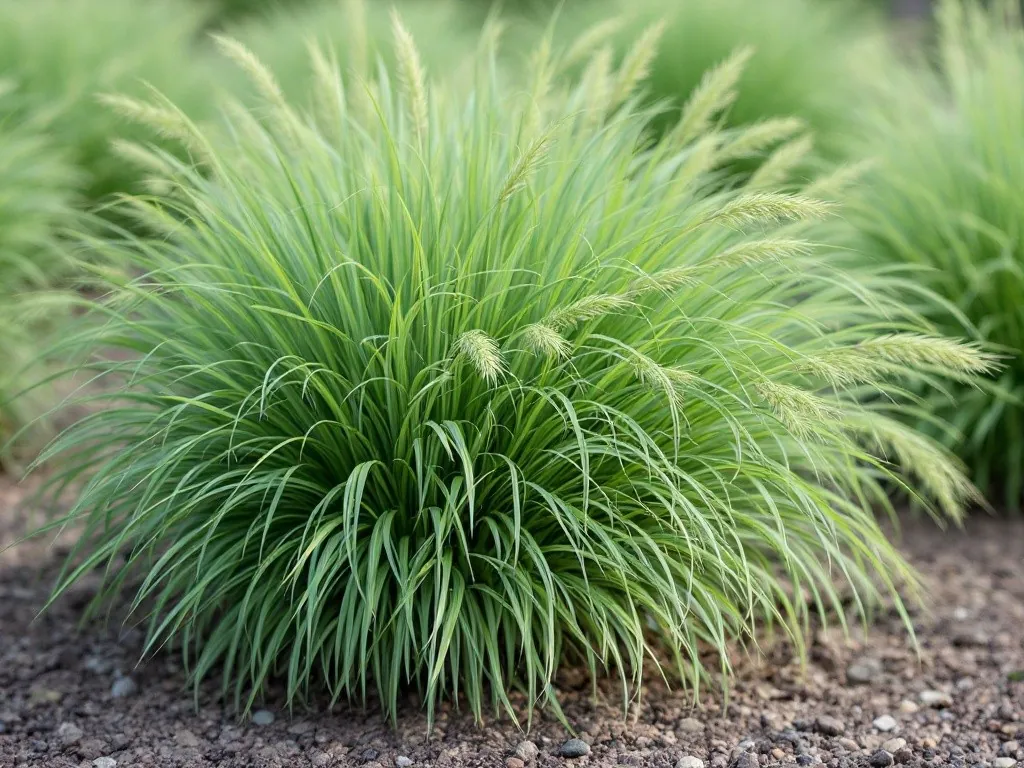
- An upright grass 1–1.8 m tall, forming dense, non-running clumps.
- Delicate, airy panicles in a pinkish shade appear from August to October.
- Tolerates both drought and periodic waterlogging – a rare trait among ornamental grasses.
- Of great value to birds and pollinators – the seeds are an important winter food source.
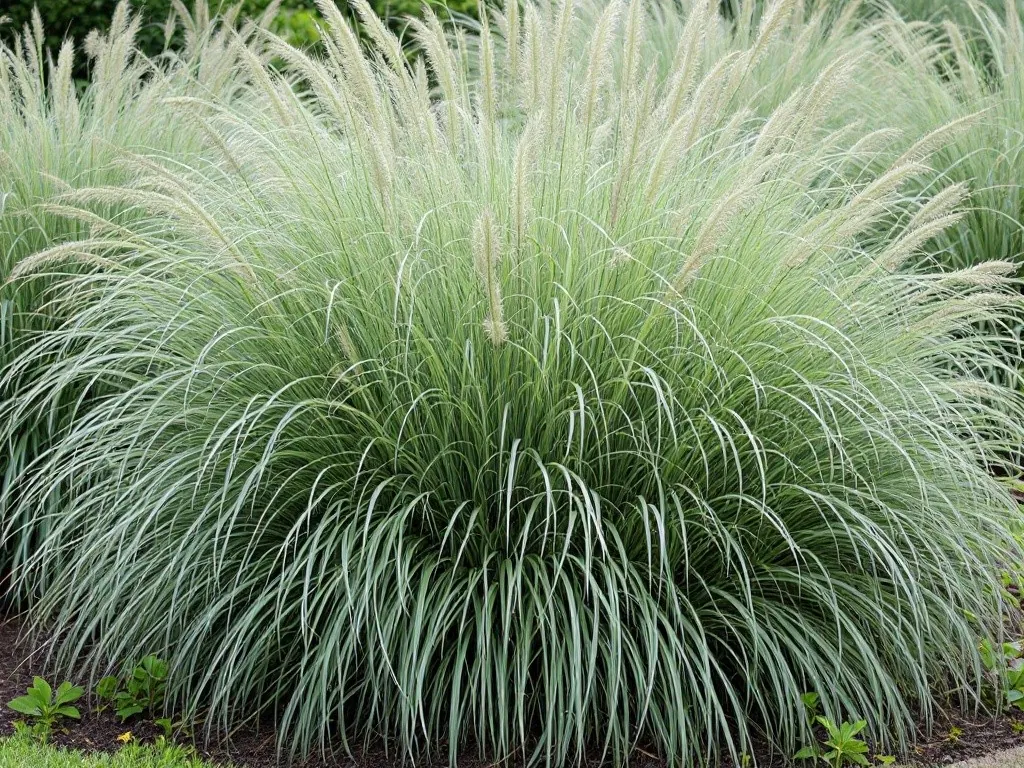
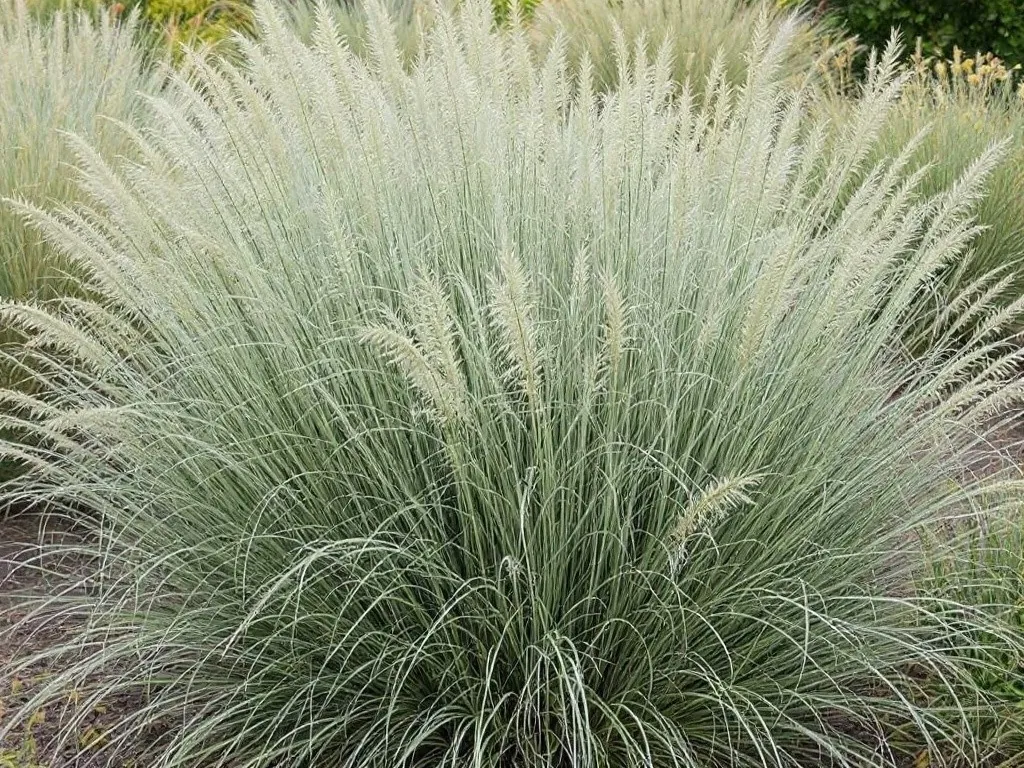
- Popular varieties include 'Heavy Metal' (blue-grey leaves) and 'Shenandoah' (red colouring).
- Also studied as an energy crop for biomass production.
Botanical data
- Family
- Poaceae (Poaceae)
- Height
- 1–1.8 m
- Width
- 0.6–1 m
- Habit
- Upright
- Growth rate
- Moderate
- Position
- Full sun
- Soil
- Loamy, Sandy, Humus-rich
- pH reaction
- pH 5.5–7.5
- Moisture
- Moderate, Moist, Dry
- Bloom
- August–October
- Hardiness
- USDA 4a–9b
- Propagation
- By division, From seed
Characteristics
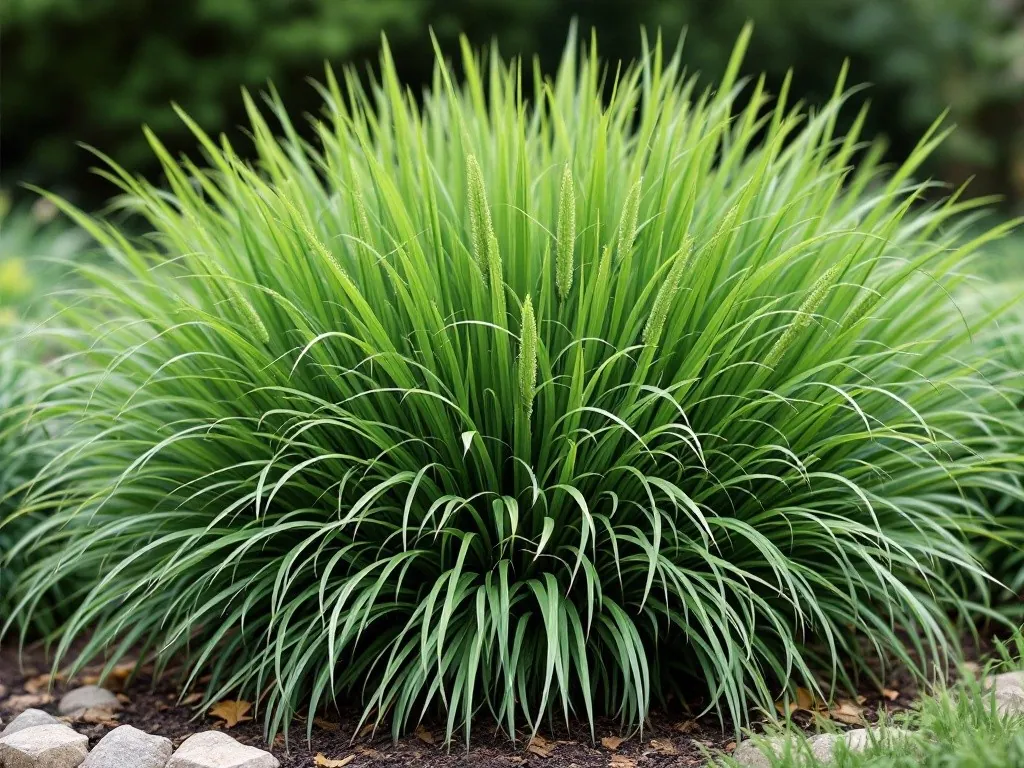
A clump-forming grass with stiff, upright culms and narrow, light-green or blue-grey leaves, depending on the variety. From August to October it produces light, airy panicles in a pinkish-silvery shade that float high above the foliage, giving the plant a distinctive, 'aired-out' texture. In autumn the foliage of many varieties turns yellow, orange or burgundy, further extending the season of interest. Unlike many ornamental grasses, switchgrass is astonishingly adaptable to soil moisture – it grows well on dry, sandy dunes but equally tolerates periodic flooding, making it one of the most versatile grasses for the garden.
Growing and care
Watering
Exceptionally adaptable in terms of moisture – grows well both on dry, free-draining sites and on periodically waterlogged ones, e.g. near ponds. Once established, it needs virtually no watering.
Fertilizing
Undemanding – grows just as well on poor soils, while excess nitrogen leads to the lodging of the tall stems.
Planting
Tolerates a wide range of soils, from dry sands to moist clays; needs no special soil preparation.
Pruning
Cut the entire clump of last year's culms low to the ground before the fresh shoots appear.
Companion plants
Good companions
A natural pairing from the native prairies of North America – the same requirements (sun, free-draining soil) and a shared ecological history as co-occurring species.
A classic naturalistic prairie-garden combination – tall grasses as a backdrop and structure for flowering perennials.
Bad companions
The tall, upright clump of switchgrass quickly overgrows and shades lower plants set right beside it, limiting their access to light.
The evidence level indicates whether the relationship is backed by research, observation, or gardening tradition.
Toxicity
| For whom | Level | Notes |
|---|---|---|
| Humans | None | — |
| Dogs | None | — |
| Cats | None | — |
History and origin
Panicum virgatum is one of the dominant grass species of the North American tallgrass prairie, where for thousands of years it has helped shape the ecosystem alongside prairie perennials. It entered ornamental gardens in the second half of the 20th century with the rise of the prairie style and naturalistic gardens, and in recent decades has gained additional importance as one of the energy grasses under study in the United States and Europe.
Uses
For naturalistic and prairie gardens, as an element of seasonal hedges, in group plantings and as a specimen in larger beds. Thanks to its tolerance of waterlogging, it also performs well in plantings around ponds and in rain gardens.
Trivia
- The variety 'Heavy Metal' is distinguished by stiff, blue-grey leaves and a very upright, non-lodging habit, while 'Shenandoah' stands out for its red-burgundy foliage colour from early summer onwards.
- Like Chinese silver grass, switchgrass is intensively studied as an energy crop (biomass) because of its rapid biomass gain and low fertiliser requirements.
- The dense, upright clumps of switchgrass are an important habitat and winter food source for songbirds, which feed on its small, abundant seeds.
Frequently asked questions
Is switchgrass suitable for a moist position in the garden?
Yes, it is one of the few ornamental grasses that tolerate both drought and periodic waterlogging well. Thanks to this adaptability it works excellently in rain gardens and around ponds, while at the same time needing no watering during dry spells once established.
When should switchgrass be cut back?
In early spring, before the new shoots appear. It is worth leaving the dry culms and panicles over winter – they adorn the garden, protect the clump from frost and provide food and shelter for birds.
How do the varieties 'Heavy Metal' and 'Shenandoah' differ?
'Heavy Metal' has stiff, blue-grey leaves and a very upright, non-lodging habit, whereas 'Shenandoah' stands out for its red-burgundy foliage colour from early summer onwards, making it more colourful throughout the season.
Sources
- Plants of the World Online (POWO)Database (GBIF, POWO…)
- RHS — Panicum virgatumInstitution / botanical garden
My note
A private note for this plant — saved in your browser.