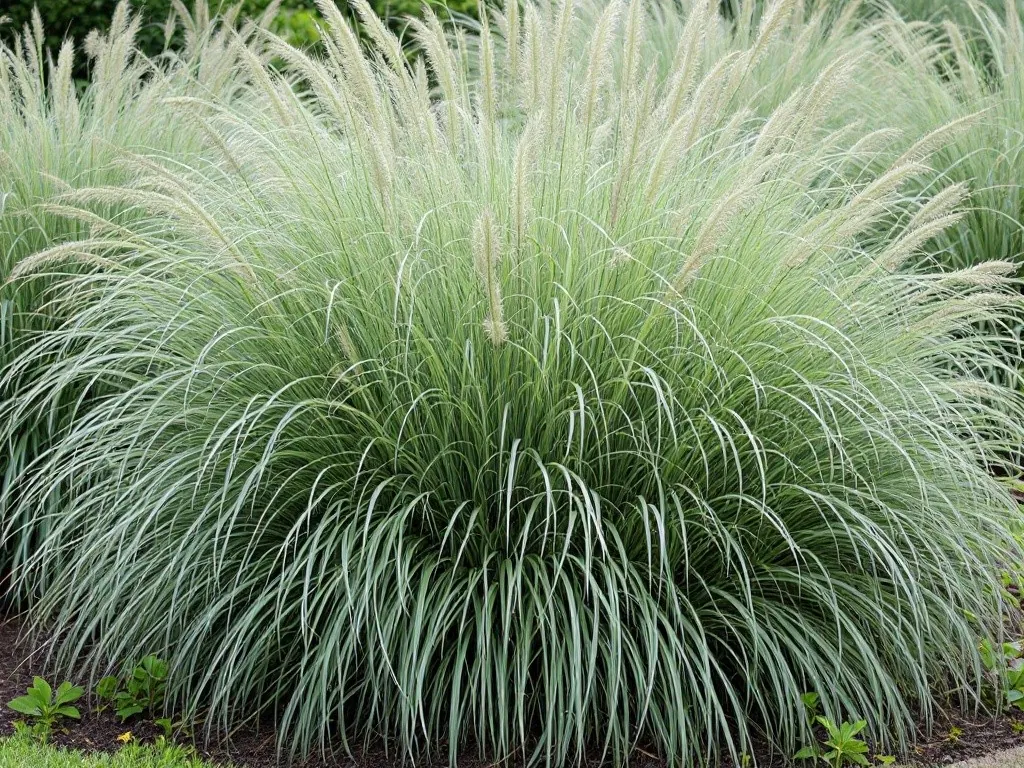
In short
- Forms tall clumps (1–2.5 m) – an impressive structural grass.
- Needs full sun; drought-tolerant once established.
- Feathery flower plumes appear in late summer.
- Dry stems adorn the garden in winter – cut back only in spring.
- Undemanding and long-lived.
Botanical data
- Family
- Poaceae (Poaceae)
- Height
- 1–2.5 m
- Width
- 0.6–1.2 m
- Habit
- Clump-forming
- Growth rate
- Fast
- Position
- Full sun
- Soil
- Loamy, Humus-rich, Sandy
- pH reaction
- pH 5.5–7.5
- Moisture
- Moderate, Moist
- Bloom
- August–October
- Hardiness
- USDA 4a–9a
- Propagation
- By division
Characteristics
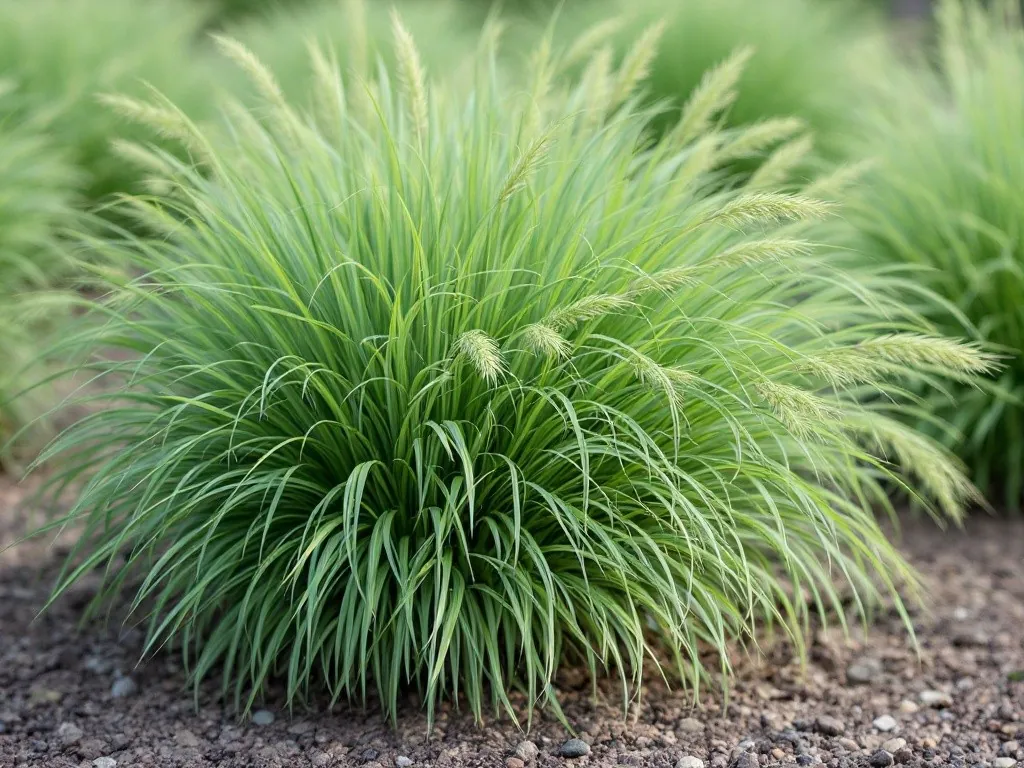
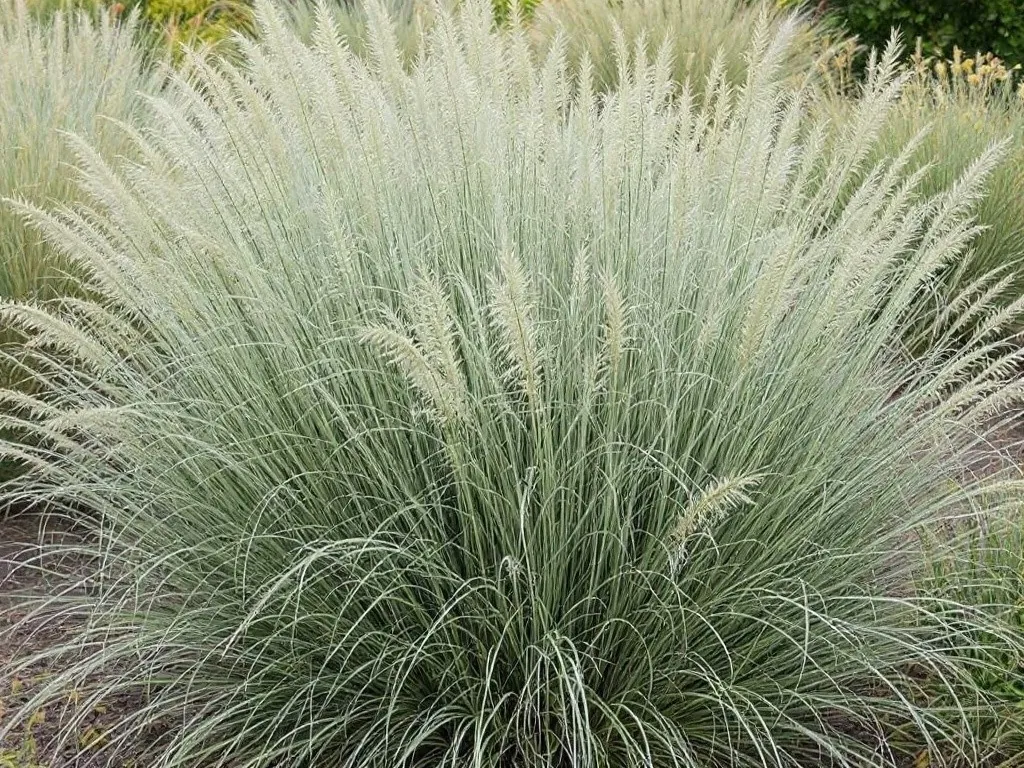
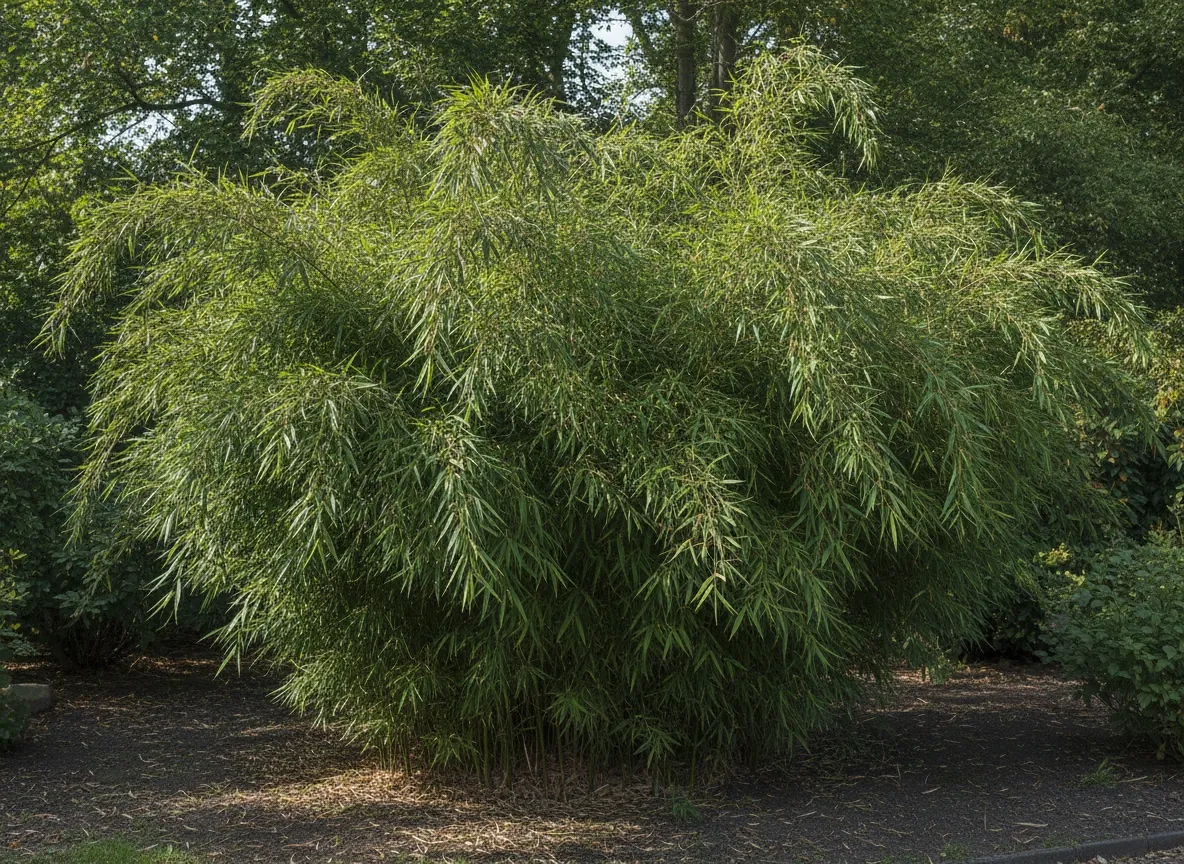
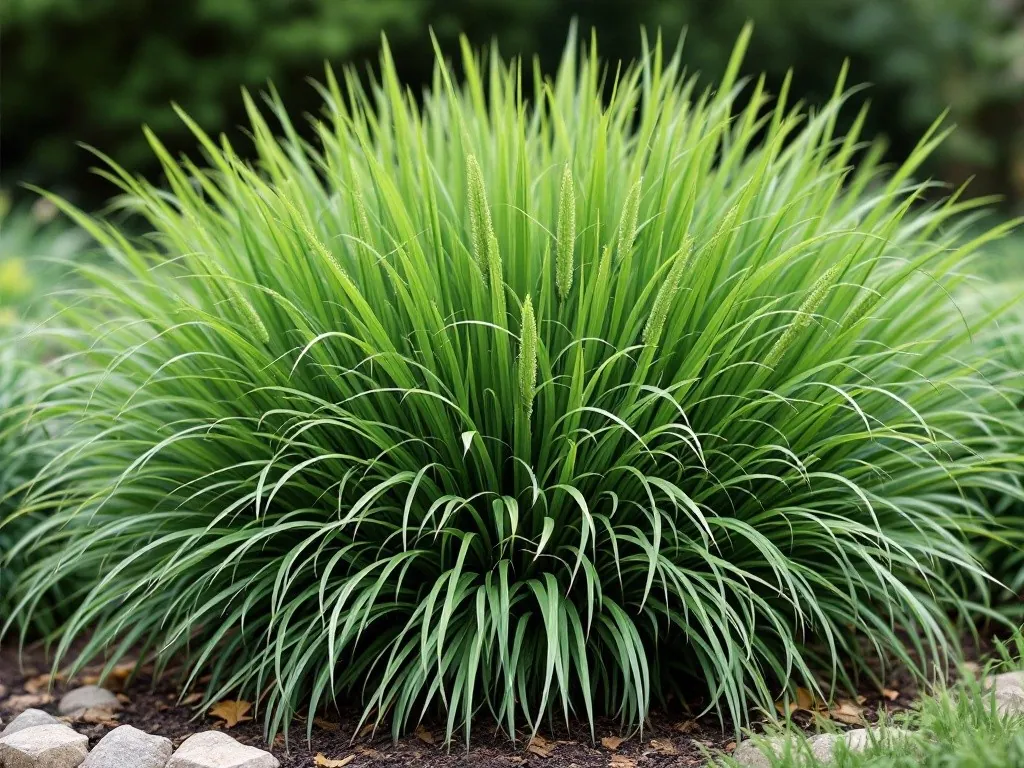
A clump-forming grass with narrow, arching leaves, often with a lighter midrib or cross-banding. In late summer it produces feathery, silvery-pink plumes on tall stems.
Growing and care
Watering
Drought-tolerant once established; watering is mainly needed in the first season and during prolonged drought.
Fertilizing
Undemanding – excess nitrogen causes the stems to lodge.
Planting
Tolerates various soils; grows best in fertile, moderately moist soil in full sun.
Pruning
Cut last year's dried stems down close to the ground before new shoots appear.
Companion plants
Good companions
Similar requirements – sun, moderate moisture; the autumn display of grasses and stonecrop complements each other beautifully.
A classic naturalistic-garden (prairie-style) pairing – grasses form a backdrop for flowering perennials.
Bad companions
The spreading, tall clump of Miscanthus quickly shades out and crowds low-growing plants planted right next to it.
The evidence level indicates whether the relationship is backed by research, observation, or gardening tradition.
Toxicity
| For whom | Level | Notes |
|---|---|---|
| Humans | None | — |
| Dogs | None | — |
| Cats | None | — |
History and origin
Chinese silver grass gained popularity with the rise of naturalistic gardens and the prairie style (New Perennial Movement) at the turn of the 20th and 21st centuries, promoted among others by the designer Piet Oudolf.
Uses
For naturalistic and prairie-style gardens, as a specimen plant, in groups, and as a seasonal, unclipped screen. The flower plumes are suitable for dried arrangements.
Trivia
- Miscanthus is being studied as an energy crop for biomass production thanks to its fast growth and high yield.
- In winter, the frosted, dry flower plumes of Miscanthus are among the most decorative features of the garden.
Frequently asked questions
When should Chinese silver grass be cut back?
In early spring, before new shoots appear – cut last year's stems down close to the ground. In winter it's best to leave them standing, as they decorate the garden and protect the clump from frost.
Is Chinese silver grass invasive?
Most garden cultivars grow slowly and form compact clumps. Some species can self-seed in warmer climates, so it's worth choosing proven, low-seeding cultivars.
Why does my Miscanthus flop over and splay outward?
The most common cause is soil that's too fertile or excess nitrogen, which causes the stems to lodge, as well as too much shade. Miscanthus grows most compactly in full sun on moderately fertile soil.
Sources
- Plants of the World Online (POWO)Database (GBIF, POWO…)
- RHS — Miscanthus sinensisInstitution / botanical garden
My note
A private note for this plant — saved in your browser.