In short
- An ornamental, not a fruiting climber — the fruits are small and astringent, and strongly toxic to dogs; it is grown exclusively for its leaves.
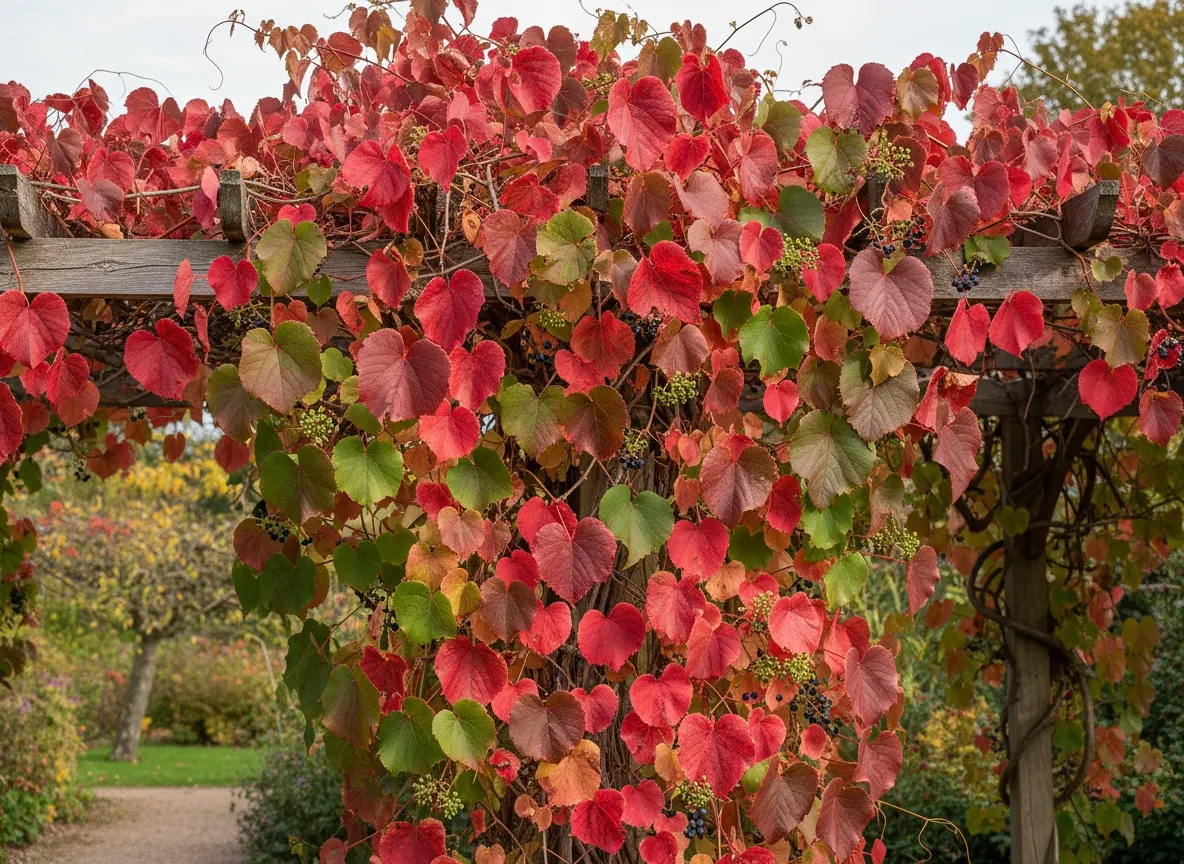
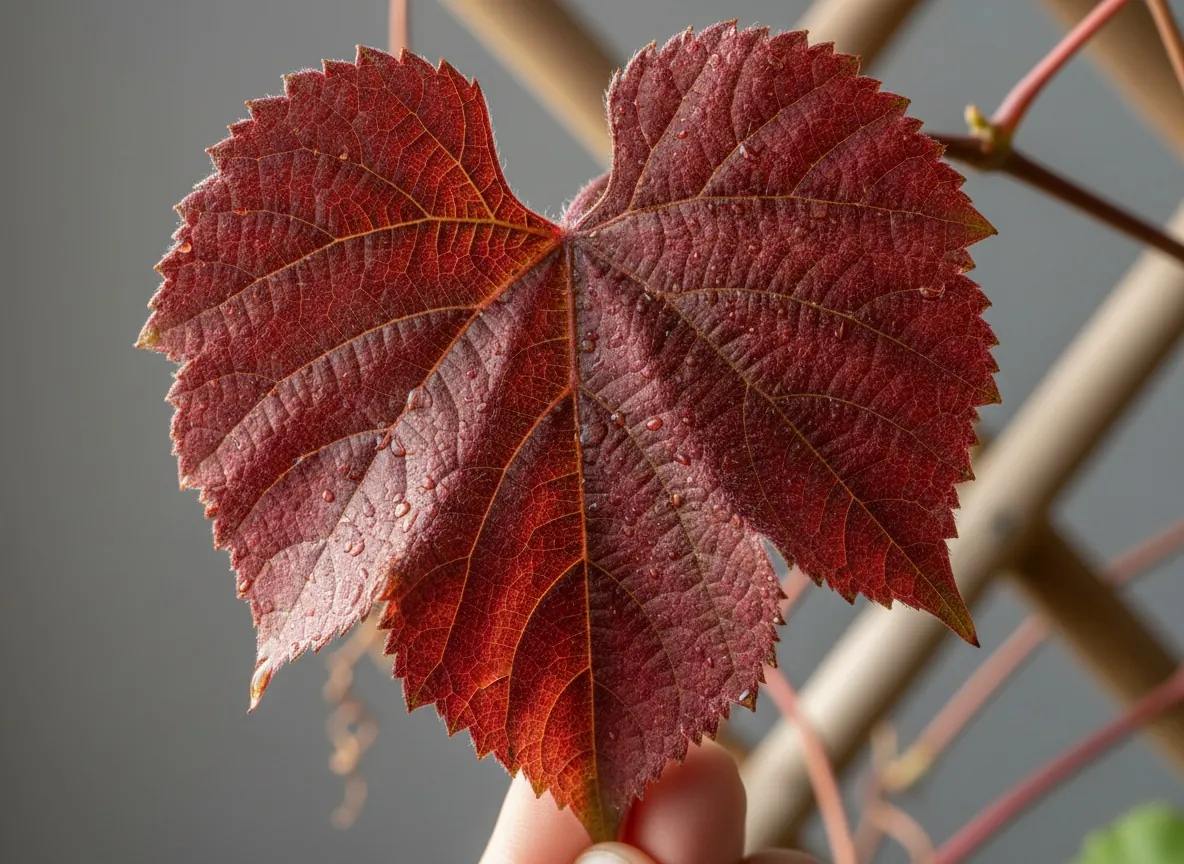
- Huge, heart-shaped leaves up to 30 cm in diameter; in autumn they turn crimson, scarlet and purple — this is the species' greatest strength.
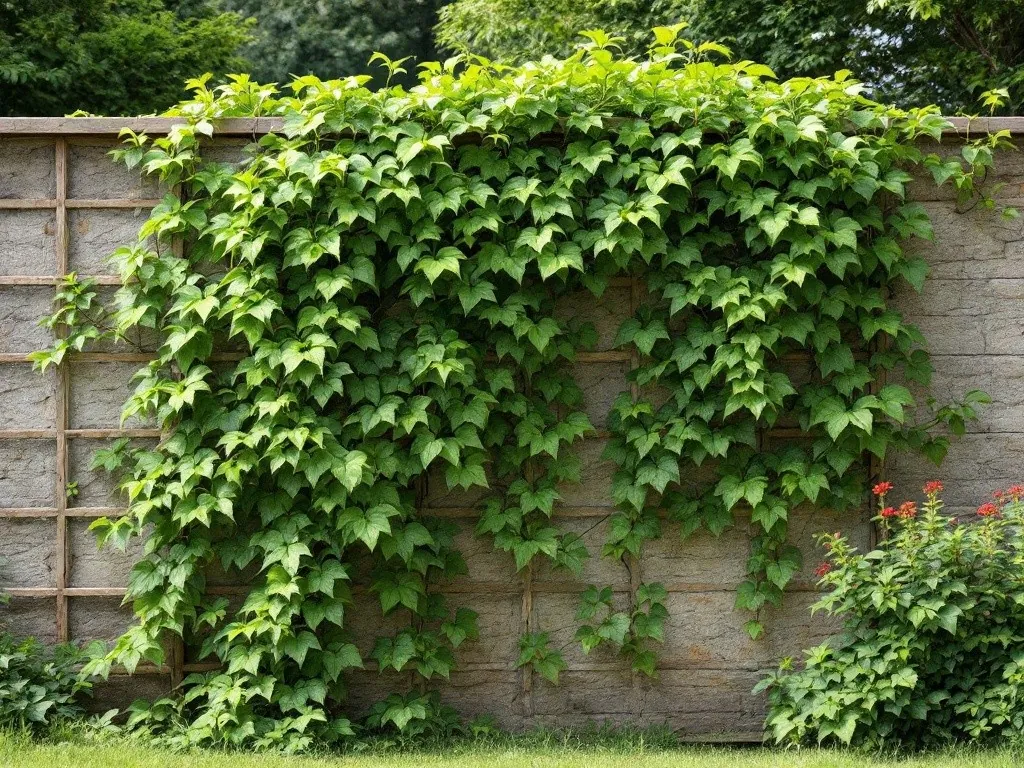
- It grows very vigorously, to 10–15 m, and requires a really strong structure: a pergola, a trellis or an old tree.
- It climbs by tendrils, not by adhesive pads — it will not hold onto a smooth wall by itself, unlike Boston ivy.
- It gives the most intense autumn colour in full sun and on soil not too rich in nitrogen.
- Prune in February, in deep dormancy — once the sap rises, vines “bleed” heavily.
Botanical data
- Family
- Vitaceae (Vitaceae)
- Height
- 8–15 m
- Width
- 3–6 m
- Habit
- Creeping
- Growth rate
- Fast
- Position
- Full sun, Partial shade
- Soil
- Loamy, Humus-rich, Sandy
- pH reaction
- pH 6–7.5
- Moisture
- Moderate
- Bloom
- June–July
- Hardiness
- USDA 5a–9a
- Propagation
- From cuttings, By layering, From seed
Characteristics
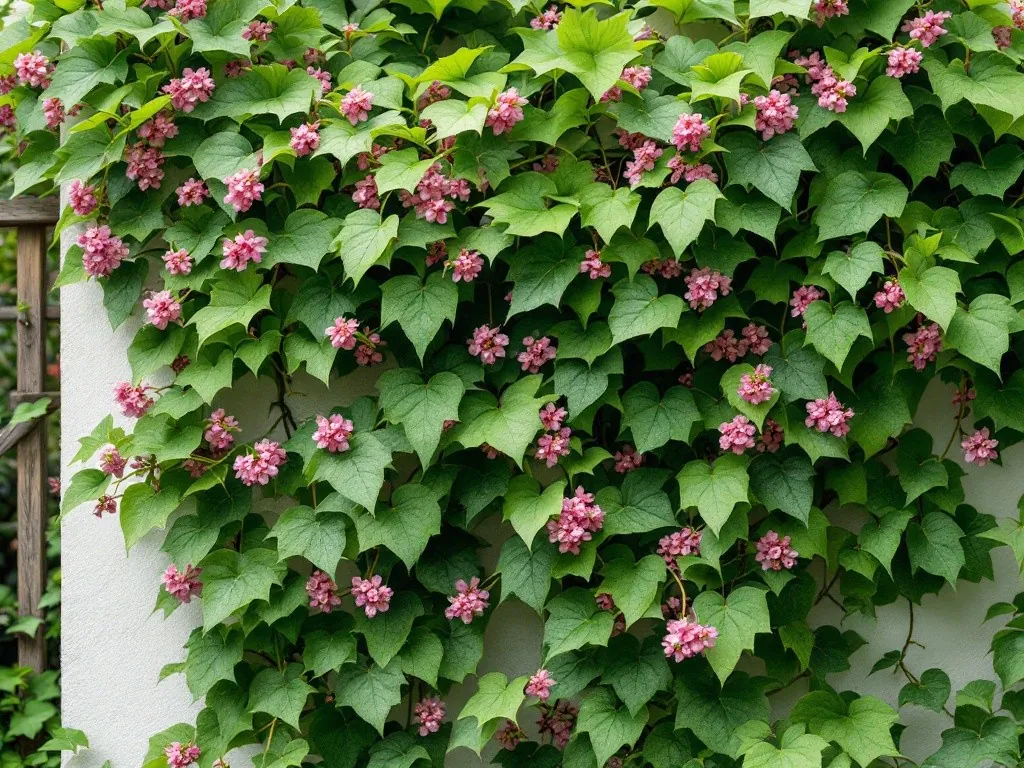
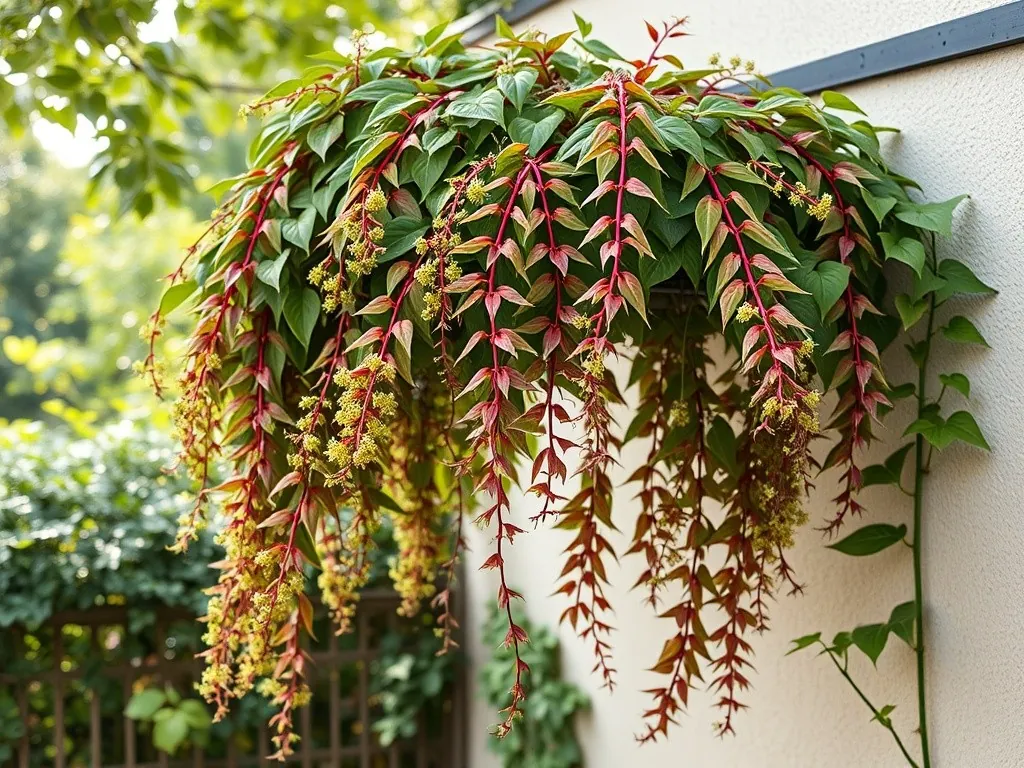
A vigorous, woody climber with thick shoots covered in rust-coloured felt — hence the German name Rostrote Weinrebe, that is “rust-red grapevine”. The leaves are what this species is grown for: very large (15–30 cm), broadly heart-shaped, shallowly 3–5-lobed, thick and distinctly wrinkled, rusty-hairy beneath; in autumn they colour gradually, giving on a single plant the whole range from green through orange and scarlet to deep crimson. The tendrils are forked, growing opposite the leaves — with these the plant twines around its support. The flowers are small, greenish, inconspicuous, gathered in panicles. The fruits are spherical, black-purple berries with a waxy bloom, about 1 cm in diameter, with strongly sour and astringent flesh.
Growing and care
Watering
Regular watering is needed by young plants and by specimens growing against the wall of a building, where the eaves cut off rainwater — this is the most common cause of failure when growing climbers. A mature climber with a well-developed root system copes on its own, but does not tolerate standing water.
Fertilizing
Sparingly. Excess nitrogen gives lush, green growth at the expense of the most important ornamental quality — the intensity and earliness of the autumn leaf colouring. An over-fertilised plant stays green well into autumn, after which the leaves fall without any striking colour.
Planting
The supporting structure is crucial and must be decided on BEFORE planting. The crimson glory vine climbs by tendrils, not adhesive pads — it will not hold onto a smooth wall by itself, unlike Boston ivy. It needs a solid trellis, a pergola, a system of wires or an old, strong tree; the structure must bear the weight of a mature, woody climber, so lightweight plastic lattices are out. By a wall, leave a gap of 10–15 cm for air circulation. The soil should be fertile and well-drained.
Pruning
The climber grows very vigorously and requires firm restraint: shorten the growth, cut out weak, tangled shoots and those extending beyond the intended structure. One can also maintain several permanent framework shoots and shorten the side growth arising from them each year.
Companion plants
Good companions
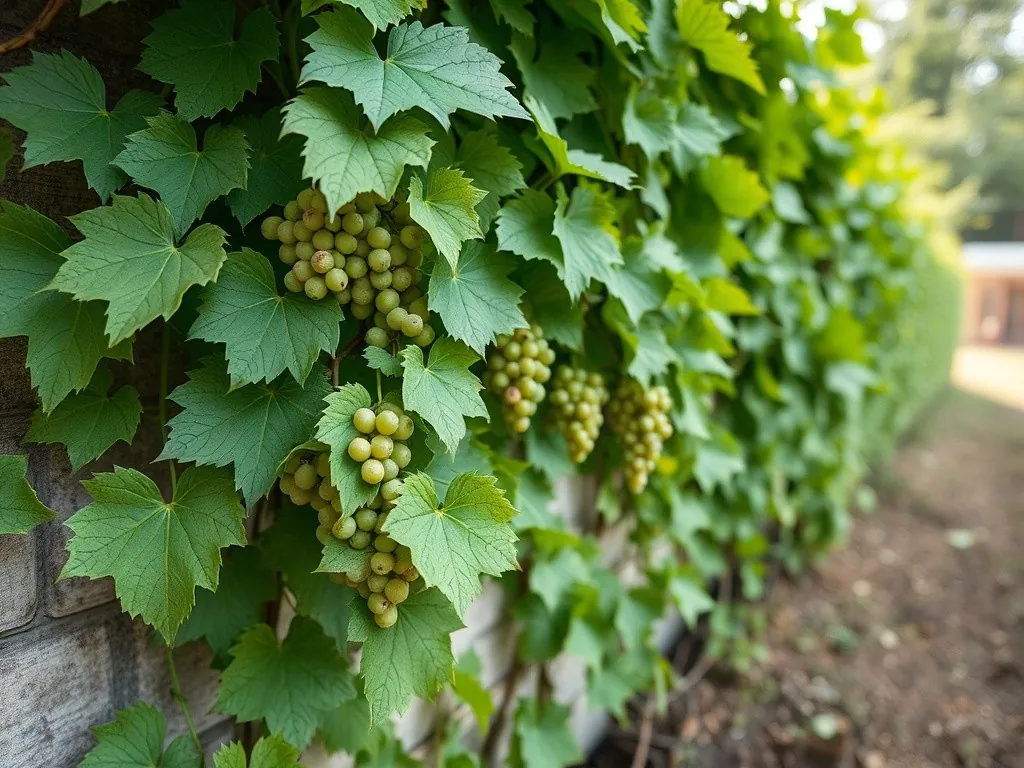
Similar requirements and the same method of training (tendrils, pruning in dormancy), but opposite roles: the grapevine gives edible fruits, the crimson glory vine — autumn colour. Planted on a shared pergola they complement each other throughout the season.
A classic combination of climbers: the clematis flowers in summer in the well-lit parts of the structure, while the dense foliage of the vine shades and cools its sensitive root zone — in line with the principle “head in the sun, feet in the shade”.
This shade-loving perennial fills the base of the climber well, shading and cooling the soil around the roots without competing for light on the structure.
Bad companions
The crimson glory vine puts on several metres a year and within two or three seasons completely smothers weaker climbers sharing its support, cutting off their light with its enormous leaves.
The climber ascends the trunk into the crown, shades the host's leaves and mechanically burdens the branches. Only old, strong, well-established specimens, which will not be harmed by the loss of some light, are suitable for training it into trees.
The evidence level indicates whether the relationship is backed by research, observation, or gardening tradition.
Toxicity
| For whom | Level | Notes |
|---|---|---|
| Humans | None | The fruits are not poisonous, but very sour, astringent and full of pips — practically inedible raw. The plant is ornamental, not a fruit crop. |
| Dogs | High | The fruits of plants in the genus Vitis (grapes and raisins) are strongly toxic to dogs — they can cause acute kidney failure even after eating a small amount. It is worth clearing up fallen fruits. |
| Cats | Mild | The mechanism of grape toxicity is less well documented in cats than in dogs, but caution is advised. |
History and origin
The species comes from the mountain forests of Japan, Korea and the Russian Far East. It reached Europe in the 1870s, during the period of gardeners' fascination with the flora of a Japan freshly opened to the world. The species name commemorates Marie Coignet — a Frenchwoman who brought the seeds of this vine from Japan to Lyon. In European horticulture it was quickly appreciated as the climber with the most striking autumn leaf colour, and vine breeders became interested in it as a source of resistance.
Uses
For clothing pergolas, arbours, trellises, strong lattices and fences, and for training up old, strong trees. It works wherever a dense, green screen is needed quickly in summer and a strong accent of colour in autumn — it is one of the most striking plants of the autumn garden. It is not suitable for a fruit harvest, nor for smooth walls without a supporting structure. Because of its vigour it needs space and annual pruning.
Trivia
- The species name commemorates Marie Coignet, who in the 1870s brought the seeds of this vine from Japan to France.
- The leaves of the crimson glory vine are among the largest in the whole genus Vitis — they can reach 30 cm in diameter, that is the size of a sizeable plate.
- The species is sometimes used in vine breeding as a source of genes for frost hardiness and disease resistance, passed on to cultivated varieties.
Frequently asked questions
Are the fruits of the crimson glory vine edible?
They are not poisonous to people, but in practice inedible: they are small (about 1 cm), full of pips, very sour and astringent. At most they are made into juice or jelly with a lot of sugar — and even that has nothing in common with the quality of dessert grapes. This species is grown exclusively for its leaves and autumn colour. An important note for dog owners: the fruits of plants in the genus Vitis are strongly toxic to dogs and can cause acute kidney failure, so it is worth clearing up fallen berries.
Will the crimson glory vine climb a wall by itself?
No. This is the most common misunderstanding when buying this climber. The crimson glory vine climbs by tendrils, which must have something to twine around — it needs a trellis, a system of wires, a pergola or a tree. It will not climb smooth render or masonry and will simply fall away. The climber that holds onto a wall by itself, thanks to adhesive pads tipped with suckers, is Boston ivy — if the aim is to green a bare wall without a structure, that is the one to choose. The structure for the crimson glory vine must be solid: a mature, woody climber is really heavy.
Why are the leaves of the crimson glory vine not turning red?
The most common causes are too much shade and over-fertilising with nitrogen. The pigments responsible for the crimson autumn colour form most intensively in strongly lit leaves, so in shade the plant will at most turn yellow. Excess nitrogen keeps the leaves green and vegetative well into autumn, delaying or writing off the colouring. The weather matters too: the finest colour is given by sunny days and cool but frost-free nights — a warm, cloudy autumn always turns out pale. Young plants colour less well than well-established specimens.
Sources
- Plants of the World Online (POWO)Database (GBIF, POWO…)
- RHS — Vitis coignetiaeInstitution / botanical garden
My note
A private note for this plant — saved in your browser.