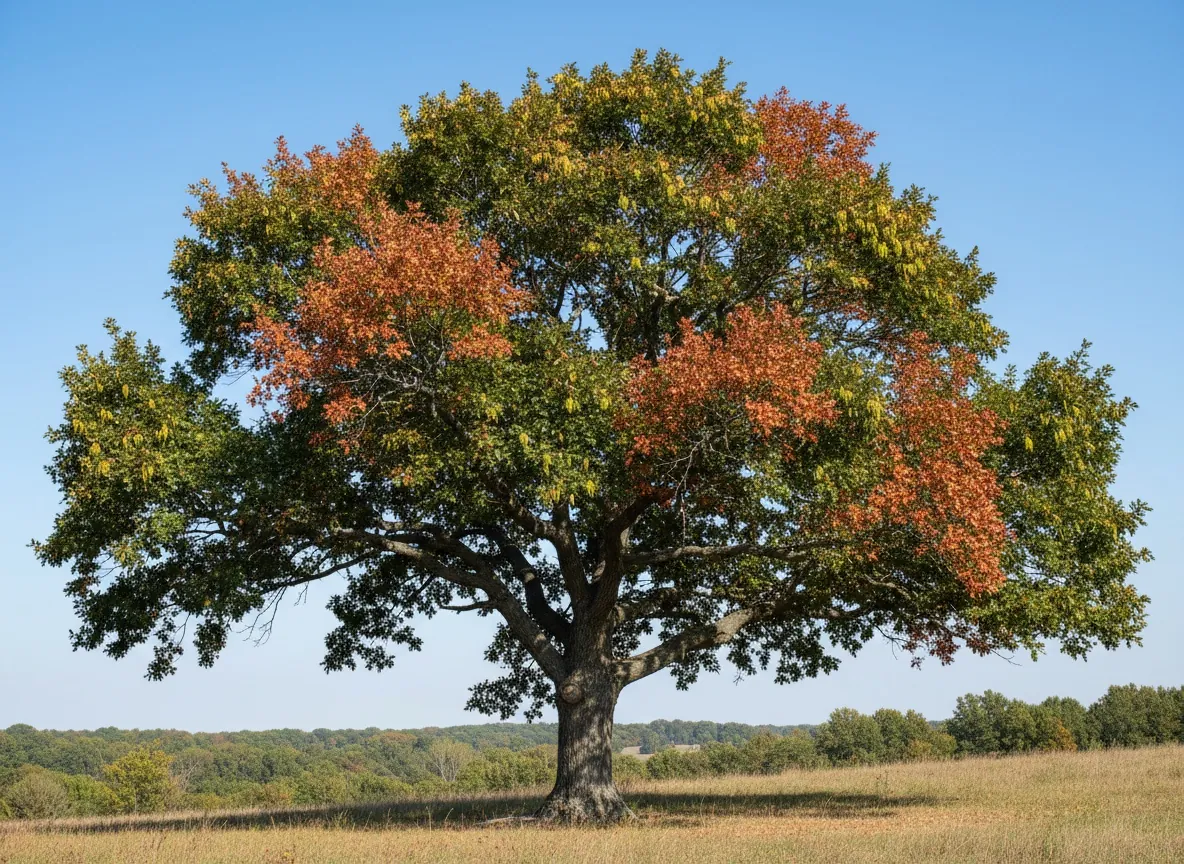
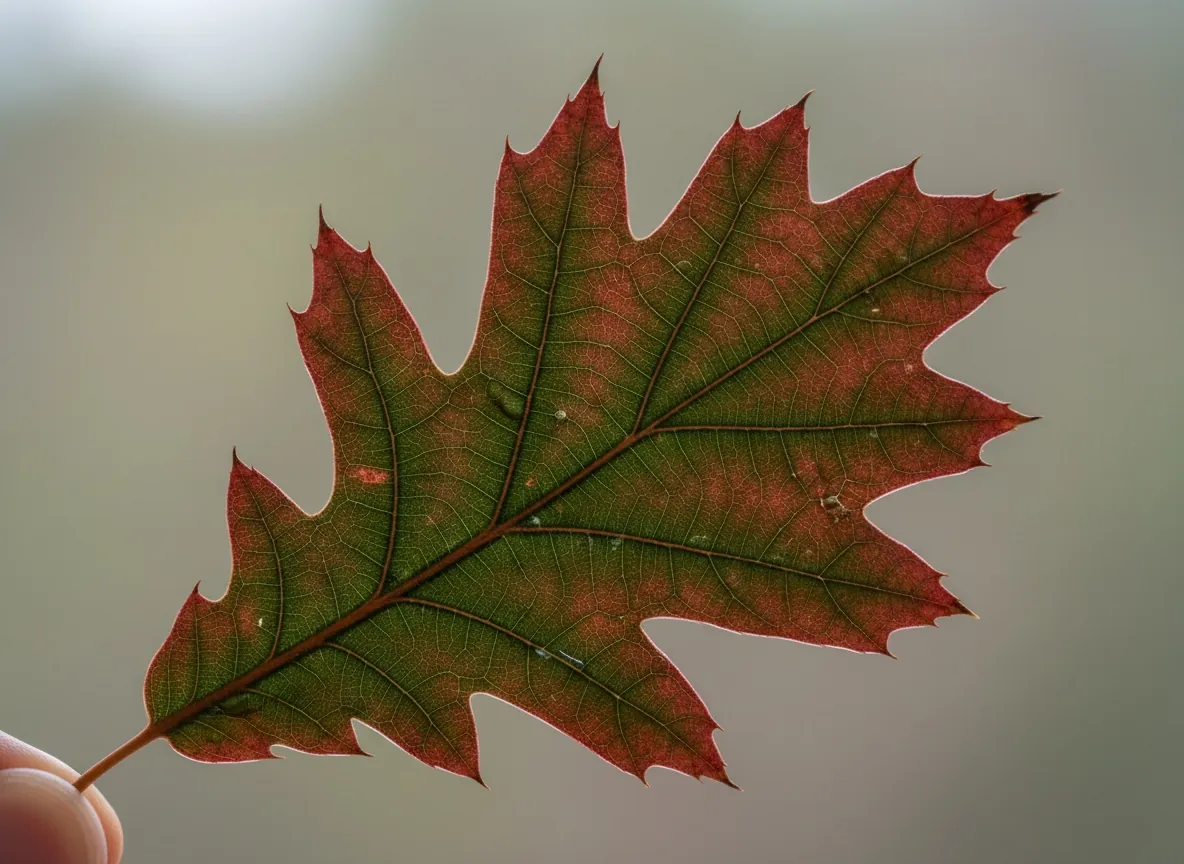
In short
- An alien and invasive species in Poland — it escapes from plantings and displaces the native oaks.
- The leaves have lobes ending in a POINT, with a fine bristle-like tip (native oaks — rounded).
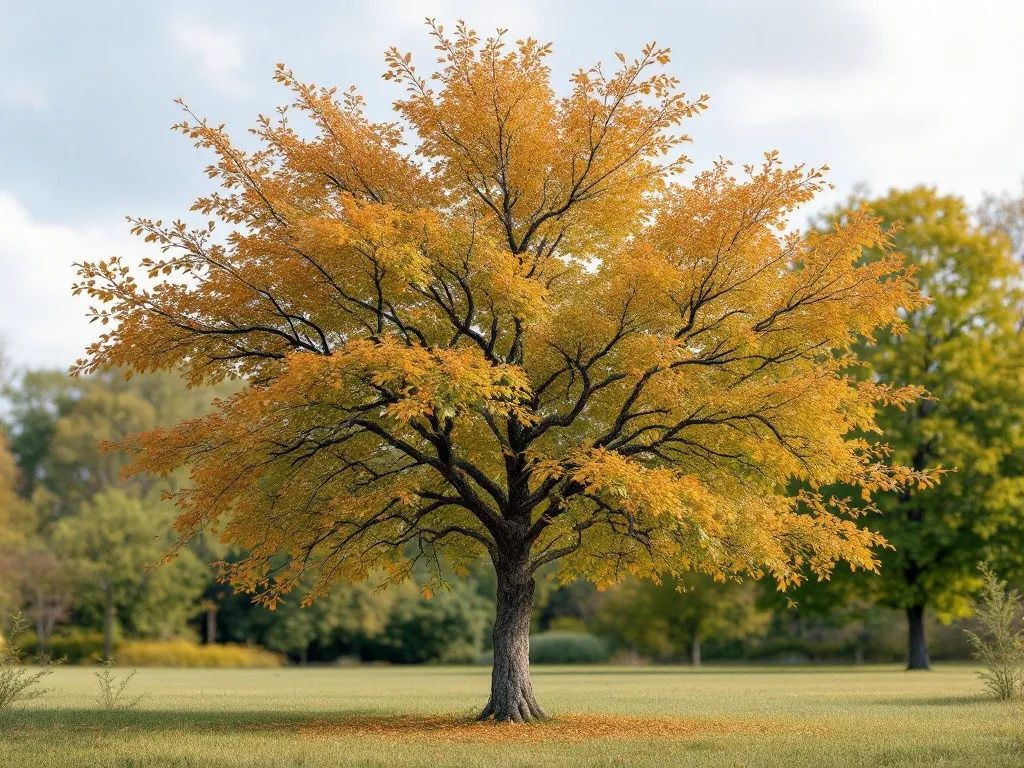
- The reason for planting it: the intense, scarlet autumn colour.
- Grows faster than the pedunculate oak and tolerates dry, acidic and poor soils.
- Low ecological value — it supports far fewer insects than the native oaks, and its litter blocks the ground layer.
Botanical data
- Family
- Fagaceae (Fagaceae)
- Height
- 20–30 m
- Width
- 12–20 m
- Habit
- Spreading
- Growth rate
- Fast
- Position
- Full sun, Partial shade
- Soil
- Sandy, Loamy, Humus-rich
- pH reaction
- pH 4–7
- Moisture
- Dry, Moderate
- Bloom
- May–May
- Hardiness
- USDA 4a–8a
- Propagation
- From seed
Characteristics
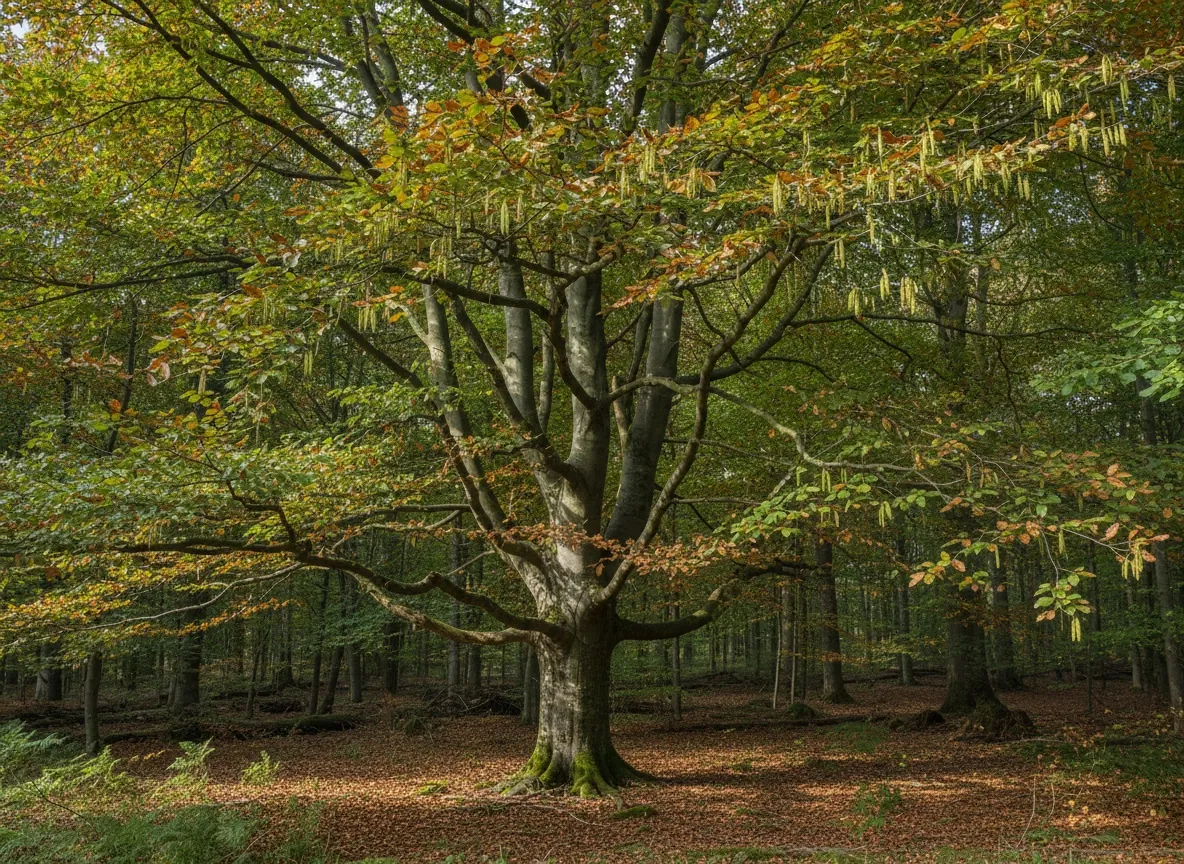
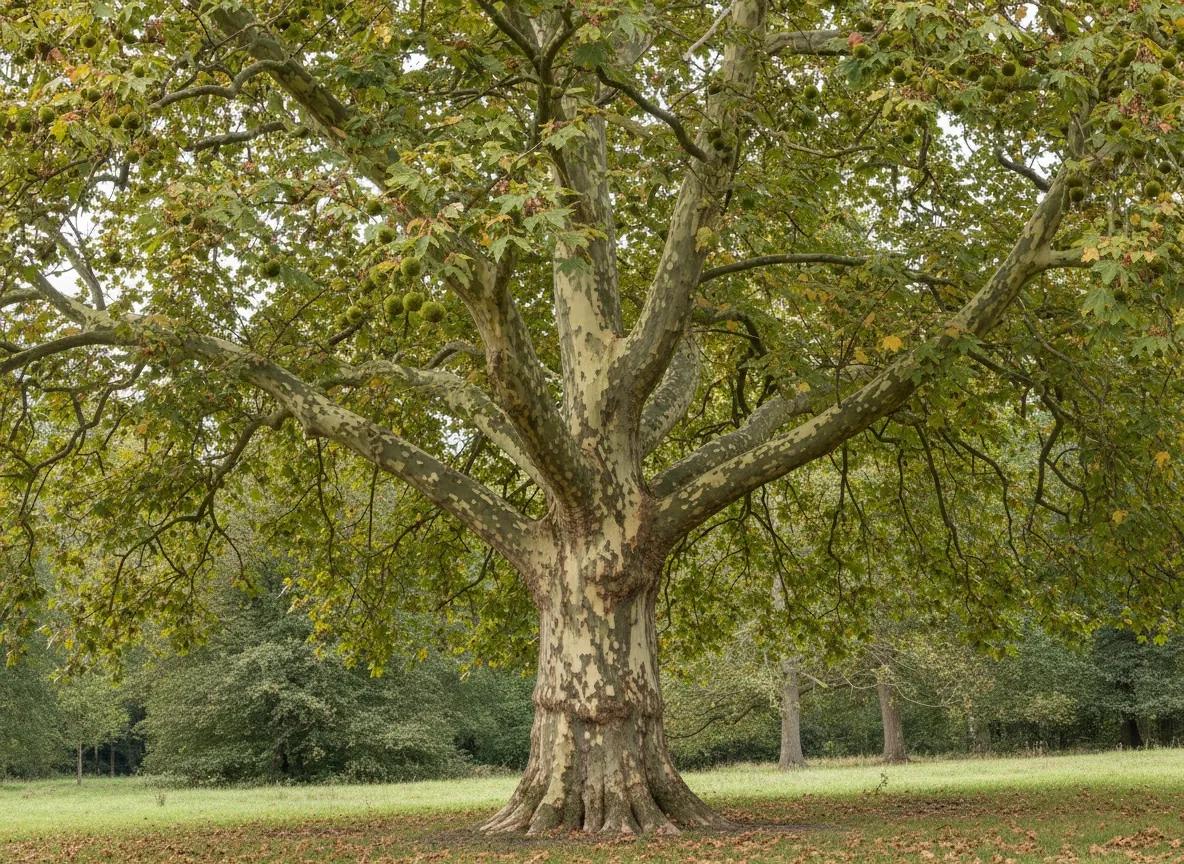
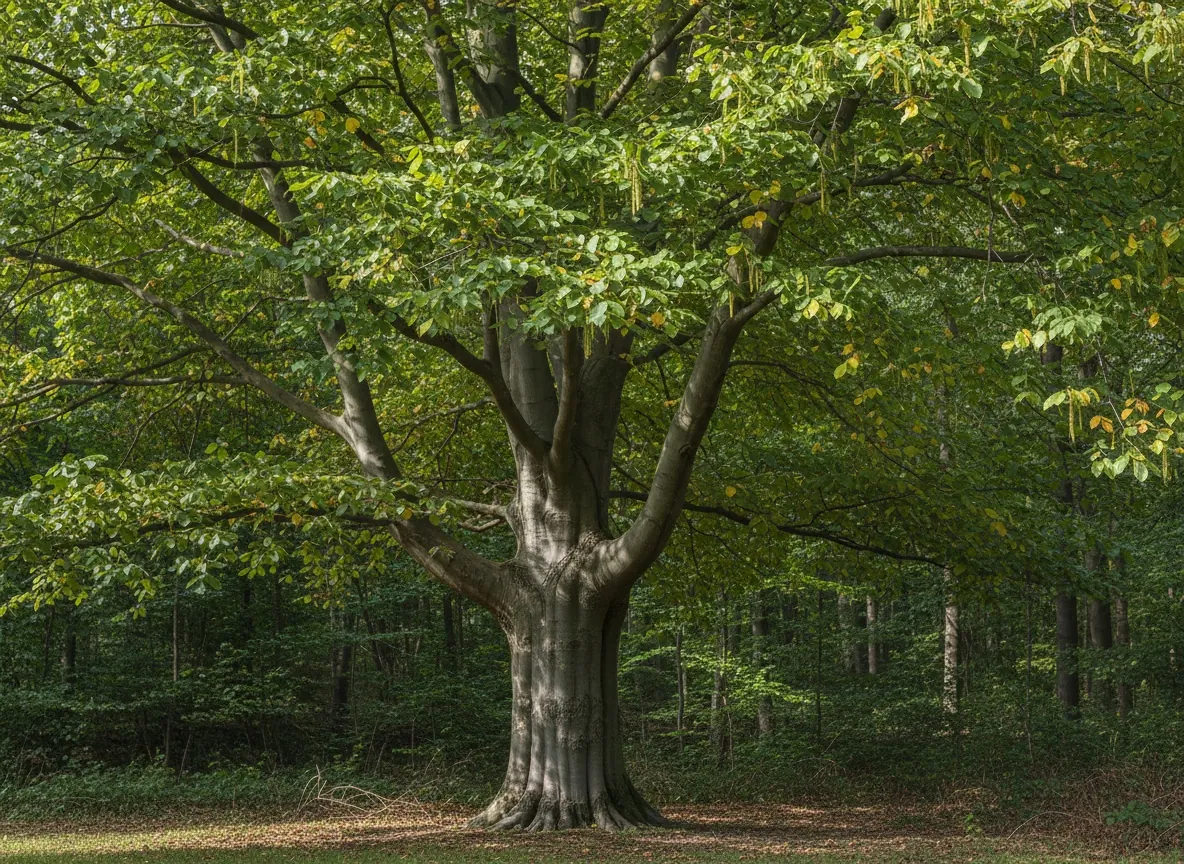
A tree with a straight trunk and a broad, regular crown, with smooth, long-persisting grey bark. The leaves are large (10–20 cm), with 7–11 lobes ending in a point and equipped with fine, bristle-like teeth — this is the most reliable feature distinguishing them from the native oaks with rounded lobes. In autumn they turn scarlet and intense red, although on young trees the colour can be duller and browner. The acorns are broadly ovate, set in a shallow cup, and ripen only in their second year.
Growing and care
Watering
Considerably more resistant to drought and poor soils than the native oaks — this is one of the reasons for its expansiveness. Only young trees require watering.
Fertilizing
The red oak copes well on acidic and poor soils; fertilising is unnecessary.
Planting
Tolerates acidic, sandy and dry soils. BEFORE planting, consider the status of the species: the red oak escapes from plantings, and next to a natural forest it is better to choose the pedunculate or the sessile oak.
Pruning
Remove only diseased, dead and crossing shoots; the crown shapes itself.
Companion plants
Good companions
A specimen in open space shows the full autumn colour and at the same time does not border a natural forest into which it could spread.
Bad companions
The red oak grows faster, fruits earlier and more abundantly, and thereby effectively displaces the native oaks from the habitats in which it establishes itself.
The thick leaves of the red oak decompose very slowly, forming a dense litter layer that acidifies the soil and mechanically blocks the emergence of ground-layer plants.
The evidence level indicates whether the relationship is backed by research, observation, or gardening tradition.
Toxicity
| For whom | Level | Notes |
|---|---|---|
| Humans | Mild | Acorns and leaves contain tannins — raw acorns are inedible and bitter. |
| Horses | High | Acorns and young leaves are toxic to horses, just as in the native oaks. |
| Dogs | Moderate | — |
History and origin
Brought to Europe in the 18th century as an ornamental tree, and from the 19th century planted in forestry as well — it was meant to be a fast-growing producer of timber and a species resistant to industrial pollution. Only after decades did it turn out that it escapes easily: in Poland and Germany it is today counted among the invasive alien species, and its removal from nature reserves is sometimes the subject of dedicated active conservation programmes.
Uses
Planted in parks, urban avenues and large gardens as a tree of high decorative value that tolerates air pollution and difficult soil conditions. The decision to plant it is nevertheless worth taking consciously: near forests, reserves and natural areas the native oaks are a decidedly better choice, and the red oak makes sense at most in a heavily transformed urban setting, far from habitats it could come to dominate.
Trivia
- The autumn colour is the more intense the colder the nights and the sunnier the days — in our climate it is therefore different year after year, from deep scarlet to plain brown.
- The name rubra, meaning red, refers not only to the leaves but also to the wood — freshly cut it has a distinctly pinkish-red tone.
Frequently asked questions
How do you tell the red oak from the pedunculate oak?
The leaves decide. The red oak has lobes ending in a point, with a fine, bristle-like tip at the apex, and the blade is large, thin and matt. The pedunculate oak has distinctly rounded lobes, the leaf is smaller and has a very short stalk, but the acorns are set on a long stalk. In autumn the difference is simpler still: the red oak turns scarlet, the native pedunculate oak yellowish-brown.
Is the red oak invasive in Poland?
Yes. It has established itself so effectively that it escapes from plantings and seeds itself into the surrounding forests. It grows faster than the native oaks, fruits earlier and more abundantly, tolerates dry and acidic soils, and its thick leaves decompose very slowly, forming a dense, acidifying litter that the plants of the ground layer cannot push through. The effect is twofold: it displaces the native oaks and impoverishes the entire ground layer beneath it.
Is the red oak worth planting in a garden?
That depends above all on the surroundings. The scarlet autumn colour is genuinely striking, and the tree tolerates difficult urban conditions — in dense development, far from natural areas, it is a sensible choice. If, however, your plot adjoins a forest, a natural park or waste ground, the tree will become a source of acorns spreading further. In such a place the pedunculate oak will be the better choice — or, if it is only about a red autumn, the smoke tree or the Japanese maple.
Sources
- Plants of the World Online (POWO)Database (GBIF, POWO…)
- Generalna Dyrekcja Ochrony Środowiska — inwazyjne gatunki obceInstitution / botanical garden
My note
A private note for this plant — saved in your browser.