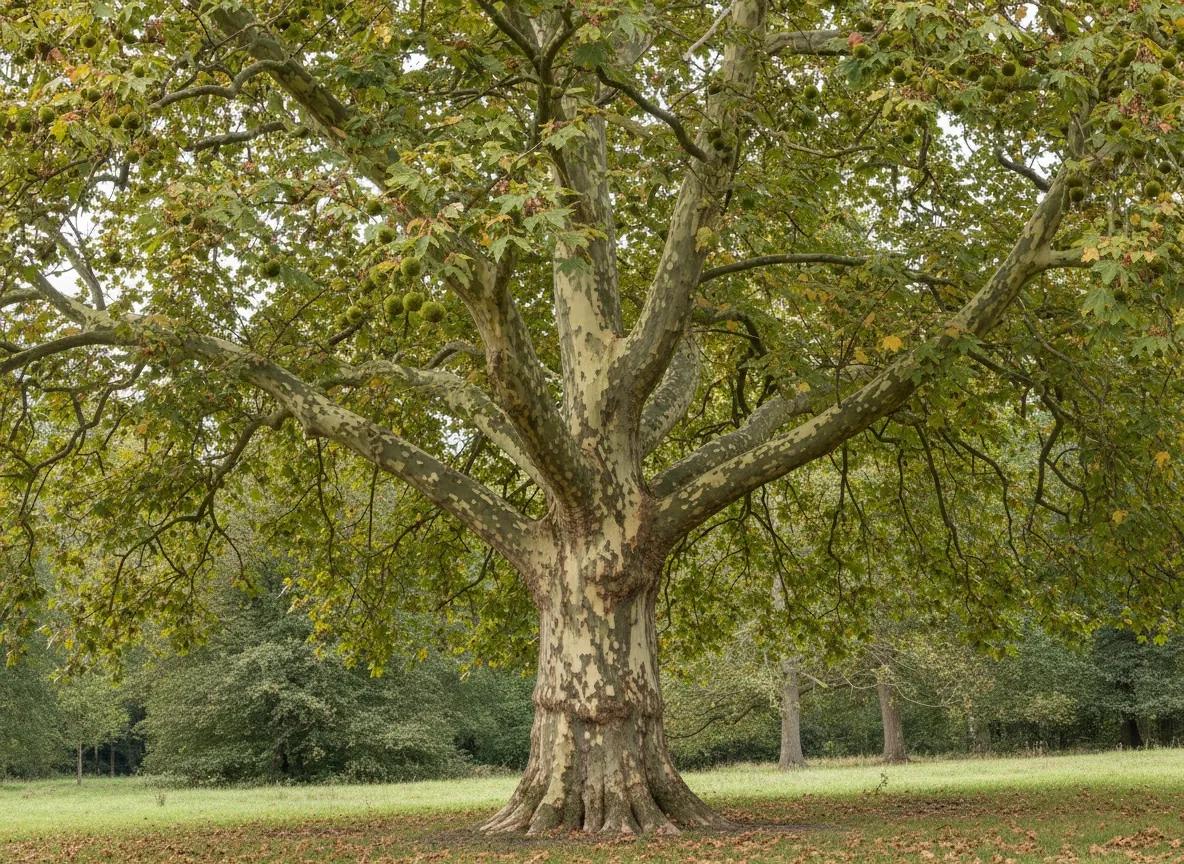
In short
- The flagship tree of urban avenues — it tolerates exhaust fumes, compacted soil and salinity.
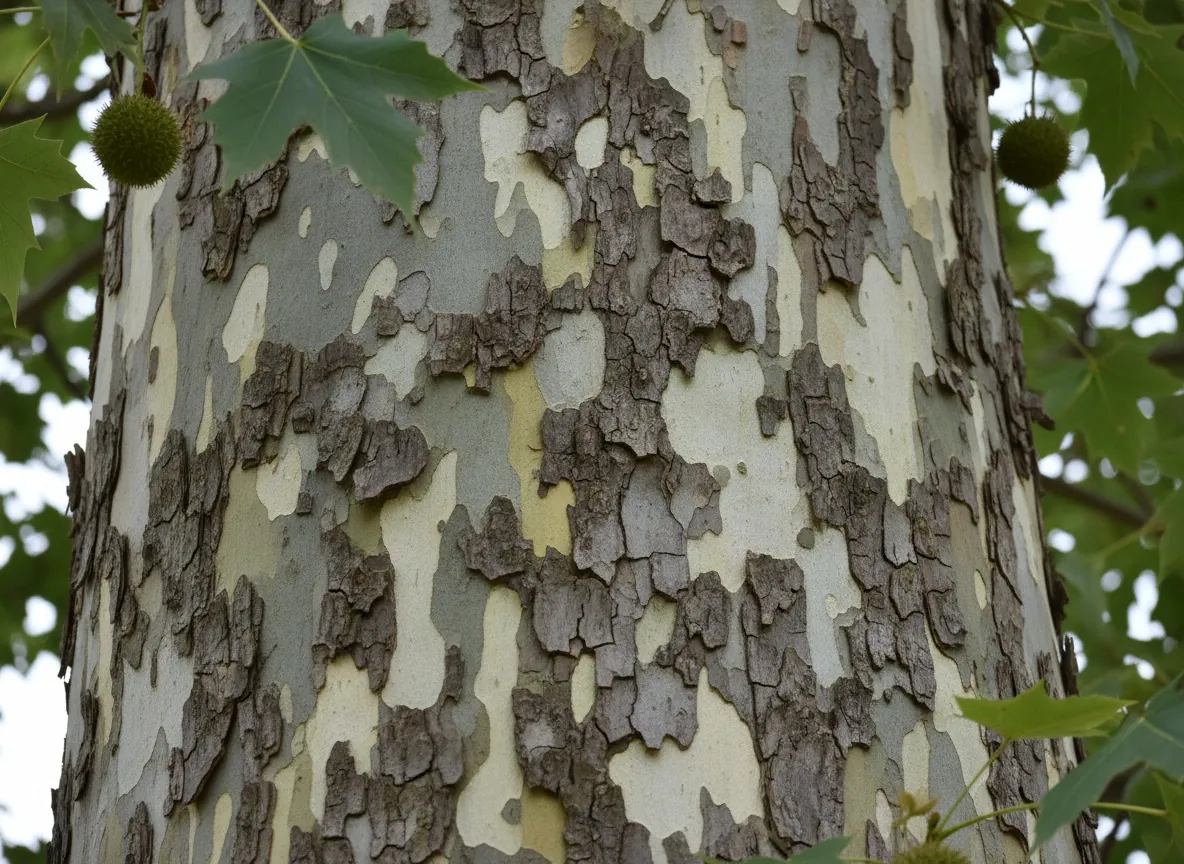
- The bark exfoliates in large plates, giving a characteristic blotched, camouflage-like pattern.
- Tolerates hard pruning and pollarding superbly — hence the regular crowns in urban rows.
- Enormous: 25–35 m tall with a crown 15–25 m wide — for parks and avenues only.
- The hairs from the fruit clusters irritate the eyes and airways in spring, especially in asthmatics.
Botanical data
- Family
- Platanaceae (Platanaceae)
- Height
- 25–35 m
- Width
- 15–25 m
- Habit
- Spreading
- Growth rate
- Fast
- Position
- Full sun, Partial shade
- Soil
- Humus-rich, Loamy, Sandy, Clay
- pH reaction
- pH 5.5–8
- Moisture
- Moderate, Moist
- Bloom
- May–May
- Hardiness
- USDA 5b–9a
- Propagation
- From cuttings, From seed
Characteristics
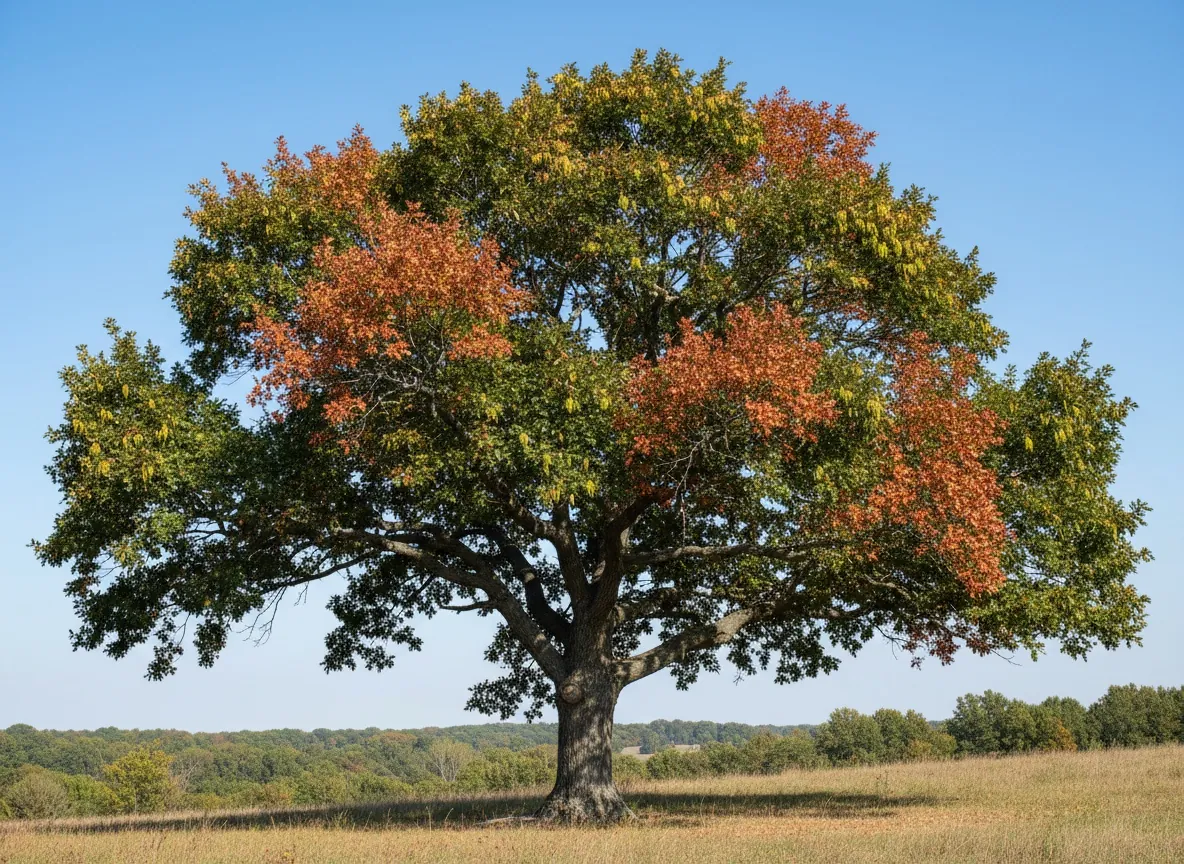
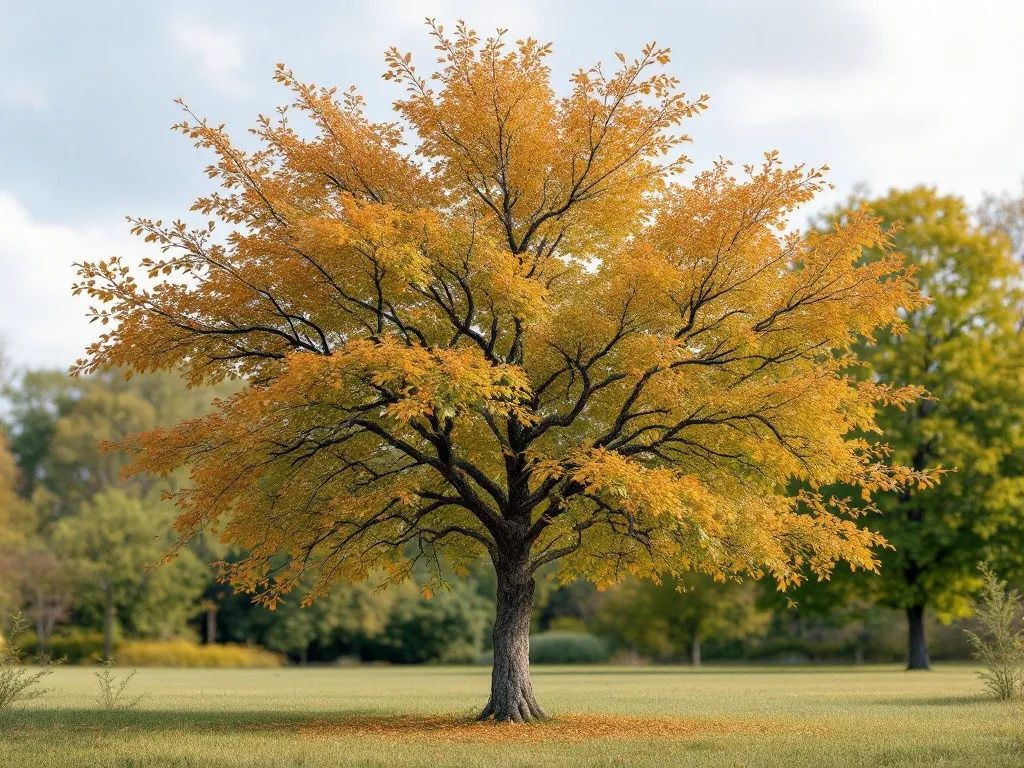
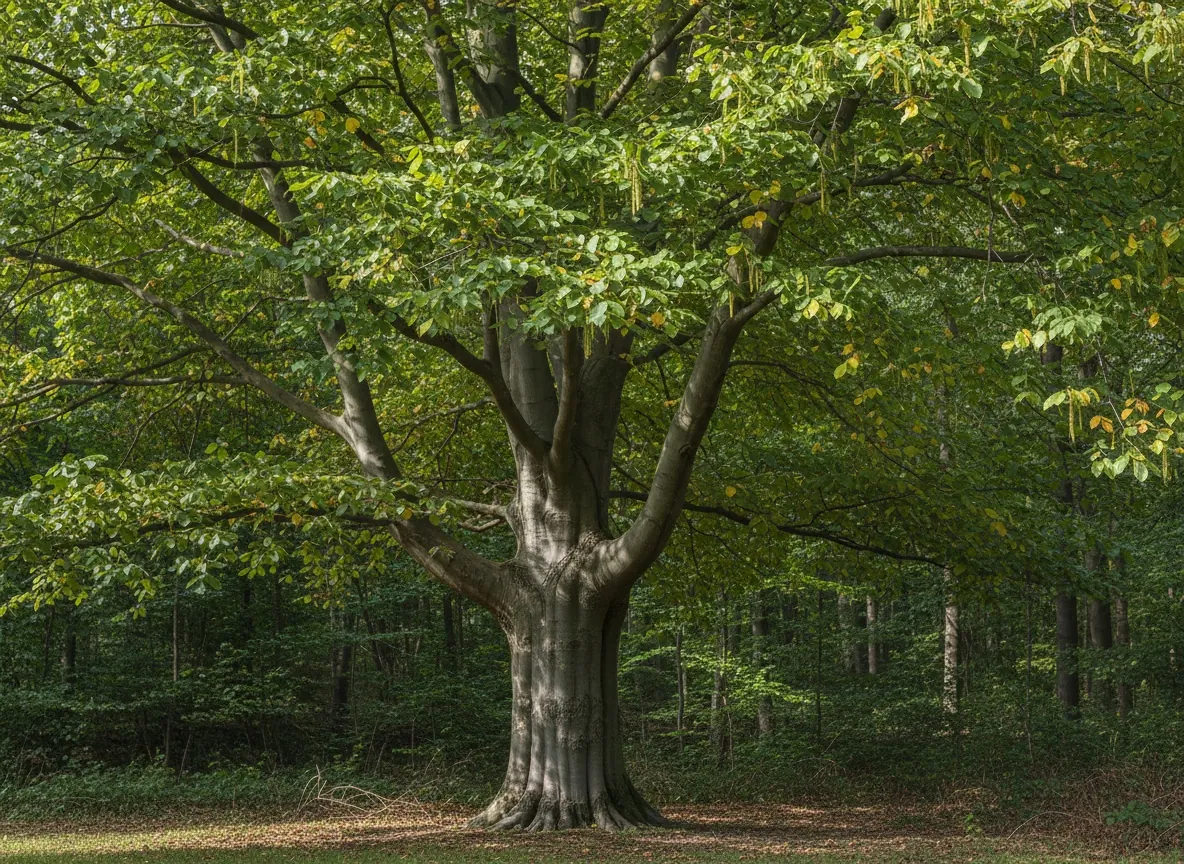
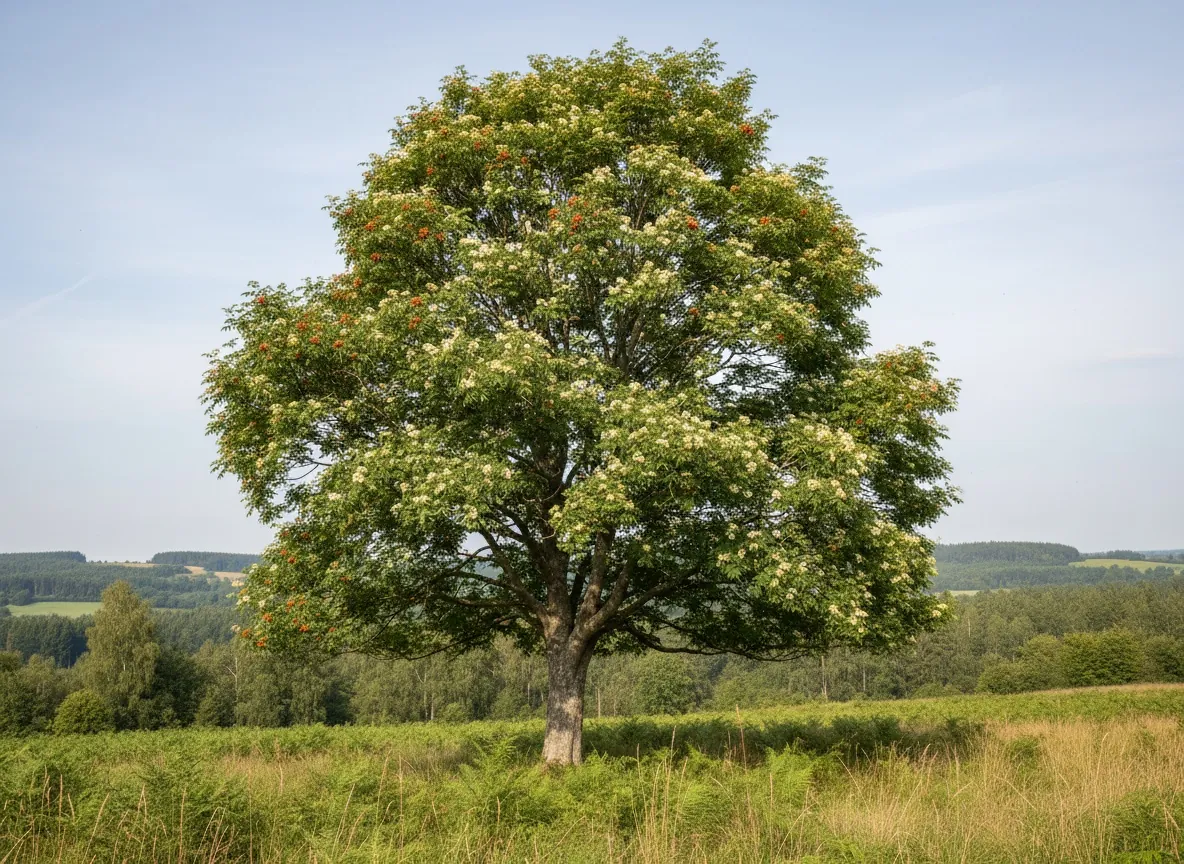
A tree with a massive trunk and a broad, domed crown. The most recognisable feature is the bark: it comes away in large, thin plates, exposing lighter layers beneath, so that the trunk is covered by a mosaic of green, cream, olive and grey. The leaves are large, palmately lobed, with 3–5 lobes — deceptively similar to maple leaves, but arranged alternately, not oppositely, which is a reliable way of telling them apart. The fruit clusters are spherical heads 2–3 cm across, hanging on long stalks usually in pairs and persisting on the tree through the winter.
Growing and care
Watering
Tolerates both compacted urban soils and periodic flooding — this is one of the reasons for its popularity in avenues. Water young trees regularly.
Fertilizing
Mature trees need no fertilising; in the city, providing an adequate soil volume for the roots matters more than fertiliser.
Planting
Requires a great deal of space — the eventual crown is 15–25 m wide. Tolerates compacted, saline and urban soils. Decidedly not for a small plot.
Pruning
Tolerates very hard pruning superbly — in cities it is shaped by pollarding to a head, giving regular, low crowns in avenues.
Companion plants
Good companions
Planted in a row of a single species it gives a coherent, regular vault and tolerates the shared, cyclical pollarding superbly.
This shade-tolerant ground cover copes in the dry shade beneath the plane's crown, where a lawn usually fails.
Bad companions
An eventual 25–35 m in height and a crown 15–25 m wide, together with a powerful root system that lifts paving, rule the plane out of cramped spaces.
Dense shade, strong root competition for water and a thick layer of slowly decomposing leaves suppress the plants growing beneath.
The evidence level indicates whether the relationship is backed by research, observation, or gardening tradition.
Toxicity
| For whom | Level | Notes |
|---|---|---|
| Humans | Mild | The plane itself is not toxic, but the fine hairs from the fruit clusters and young leaves become airborne in spring and mechanically irritate the eyes, throat and airways — especially in people with asthma. |
| Dogs | None | — |
| Cats | None | — |
History and origin
The hybrid arose in the 17th century in Europe, probably in Spain or London, from a cross between the oriental and the American plane. It quickly proved to be the ideal species for the industrial age: when the cities of the 19th century were choking on coal smoke, the plane grew where other trees were dying back. It thus became a symbol of European urban design — from the boulevards of Paris and the squares of London to the avenues of southern France.
Uses
For avenues, boulevards, large parks and city squares, where it is valued for its resistance to pollution, compacted soil and the salinity left by winter road salting, and for its tolerance of very hard pruning. Cyclical pollarding makes it possible to keep low, regular crowns even in narrow streets. It is entirely unsuitable for a home garden — unless we are talking about an estate of several hectares.
Trivia
- The exfoliation of the bark is not an aesthetic whim but a cleansing mechanism: along with the plates of bark the plane sheds the pollutants deposited on them, instead of accumulating them.
- The plane leaf is so similar to a maple leaf that only the arrangement settles it: the plane has alternate leaves, the maple always opposite ones.
Frequently asked questions
Why does plane bark peel off in plates?
This is a normal feature of the species, not a symptom of disease. The bark of the plane is rigid and does not stretch as the trunk thickens, so it cracks and falls away in large plates, exposing the lighter layer beneath — hence the characteristic blotched pattern. The process also makes practical sense: along with the plates of bark the tree sheds the dust and pollutants deposited on them, instead of accumulating them. This is one of the reasons the plane copes so well with urban conditions.
Does the plane cause allergies?
Partly. Plane pollen is a moderate allergen, but a far greater problem is the fine hairs covering the spherical fruit clusters and the young leaves. In spring they become airborne and mechanically irritate the eyes, throat and airways — in people with asthma or bronchial hyperreactivity they can provoke marked symptoms. The tree itself, however, is not toxic either to people or to animals.
Can a plane be planted in a home garden?
Realistically no. The plane grows to 25–35 m tall with a crown 15–25 m wide, grows fast and develops a powerful root system that can lift paving and damage services. On a typical plot it will shade the whole garden and the neighbour's house within a dozen or so years. This is a tree for parks, avenues and large public spaces — if you are looking for a similarly striking tree on a smaller scale, consider the Norway maple or the small-leaved lime.
Sources
- Plants of the World Online (POWO)Database (GBIF, POWO…)
- RHS — Platanus × hispanicaInstitution / botanical garden
My note
A private note for this plant — saved in your browser.