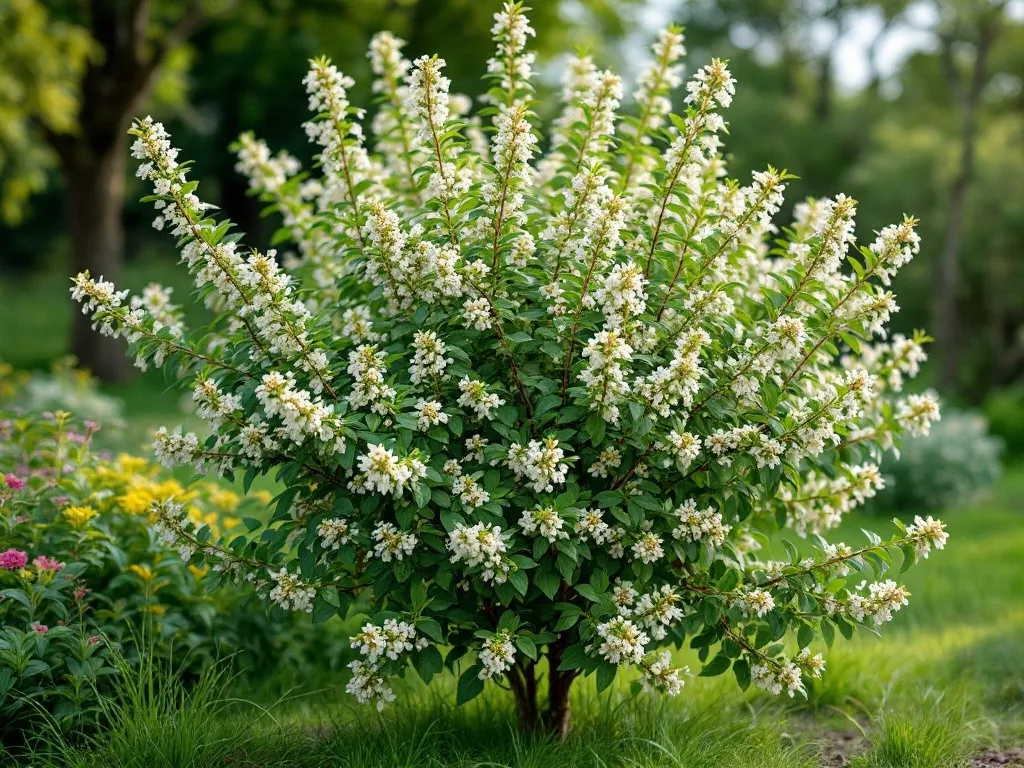
In short
- The most popular shrub for formal hedges in Poland.
- Glossy, dark green leaves that turn red-orange in fall.
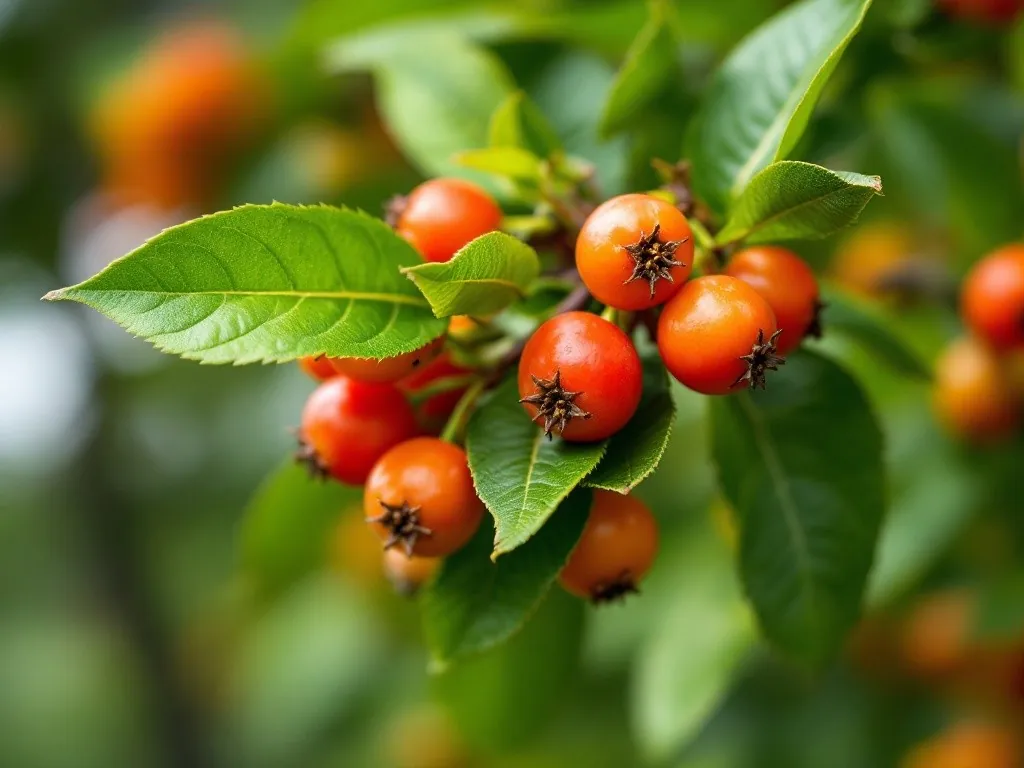
- White flowers in June, black fruit in fall — readily eaten by birds.
- Tolerates air pollution, alkaline soil, and drought.
- Handles hard, regular pruning very well.
Botanical data
- Family
- Rosaceae (Rosaceae)
- Height
- 2–3 m
- Width
- 1.5–2.5 m
- Habit
- Spreading
- Growth rate
- Moderate
- Position
- Full sun, Partial shade
- Soil
- Loamy, Sandy, Humus-rich, Chalky
- pH reaction
- pH 6–7.8
- Moisture
- Moderate
- Bloom
- June–June
- Hardiness
- USDA 3a–7b
- Propagation
- From cuttings, From seed, By layering
Characteristics
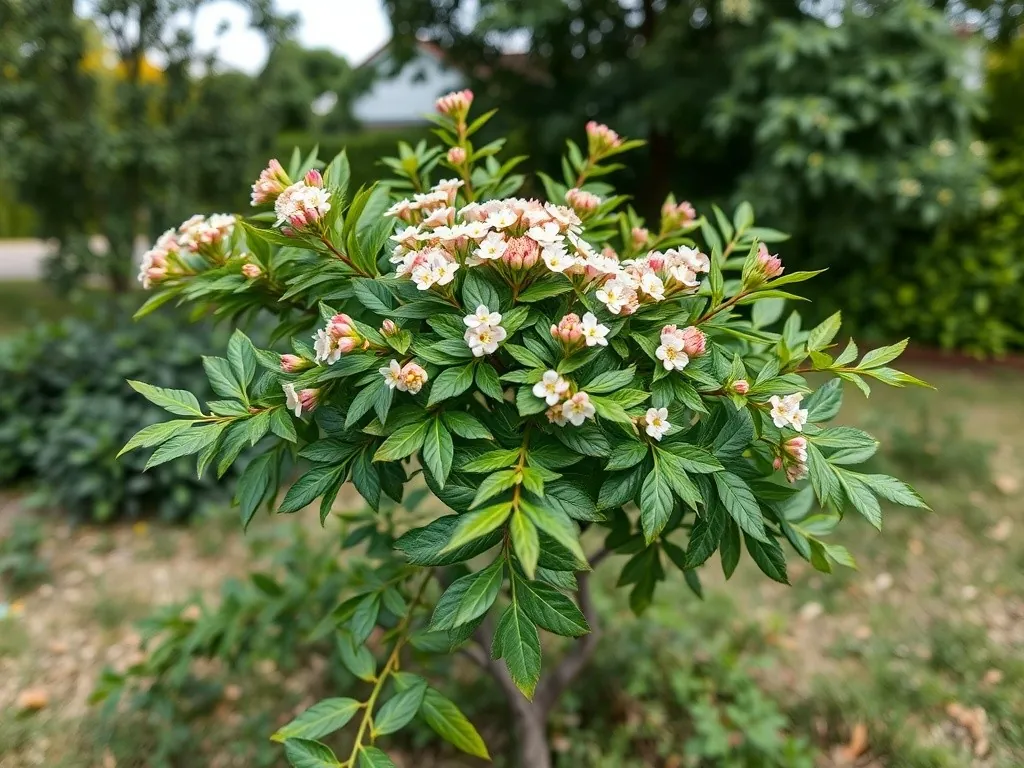
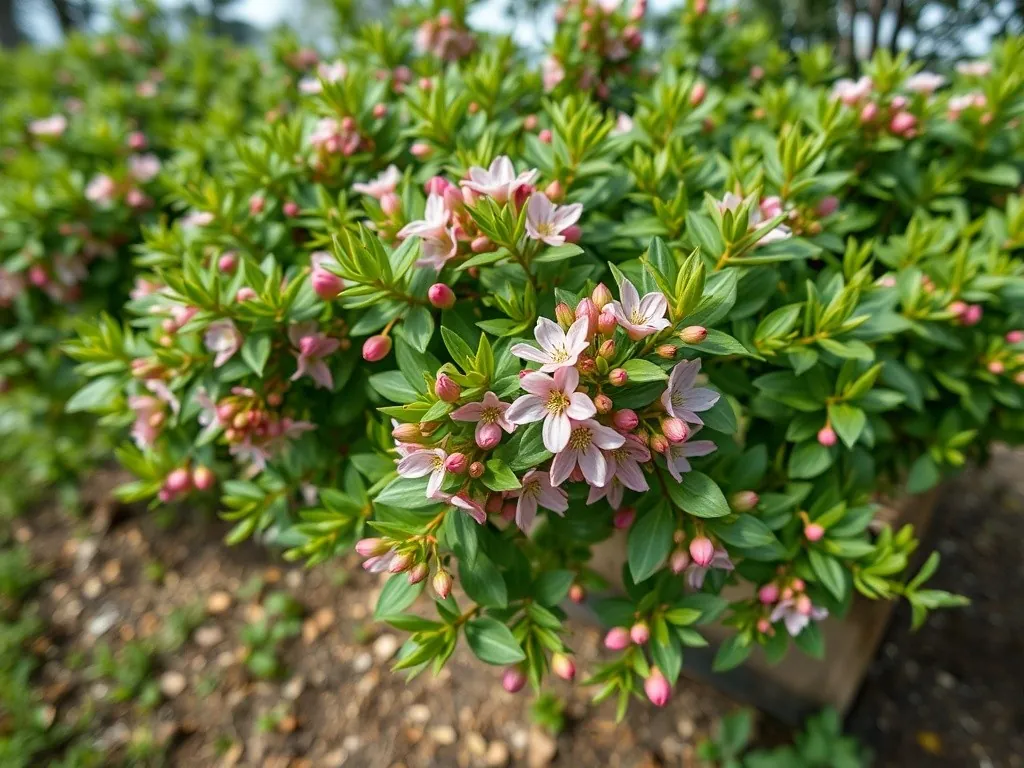
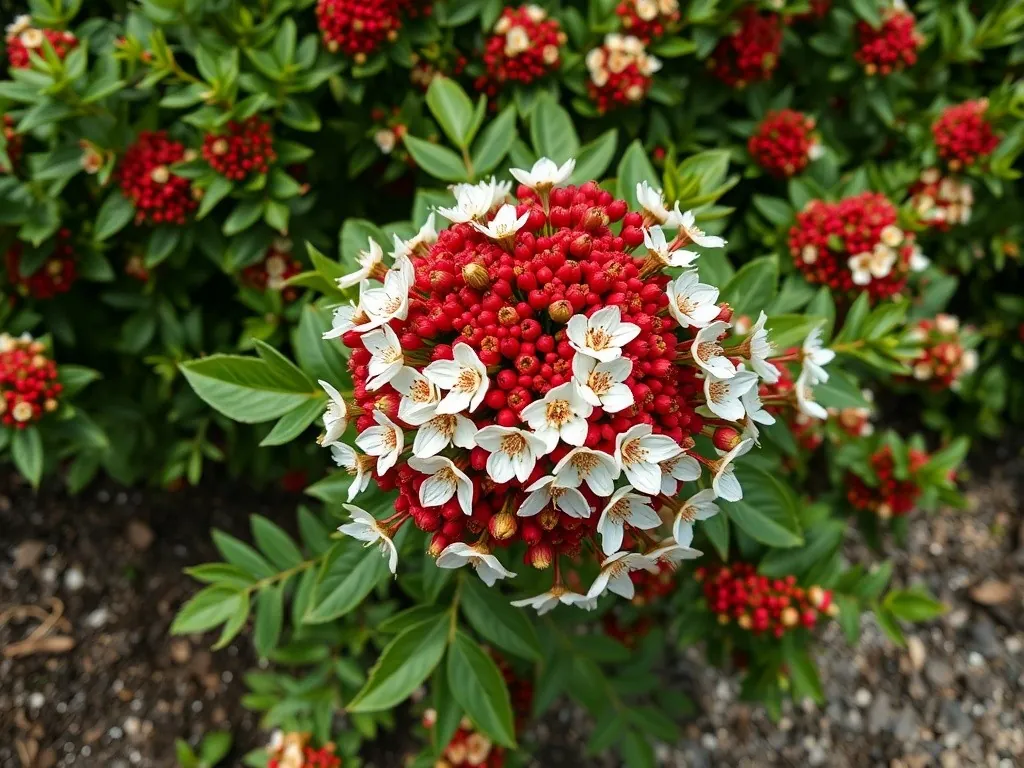
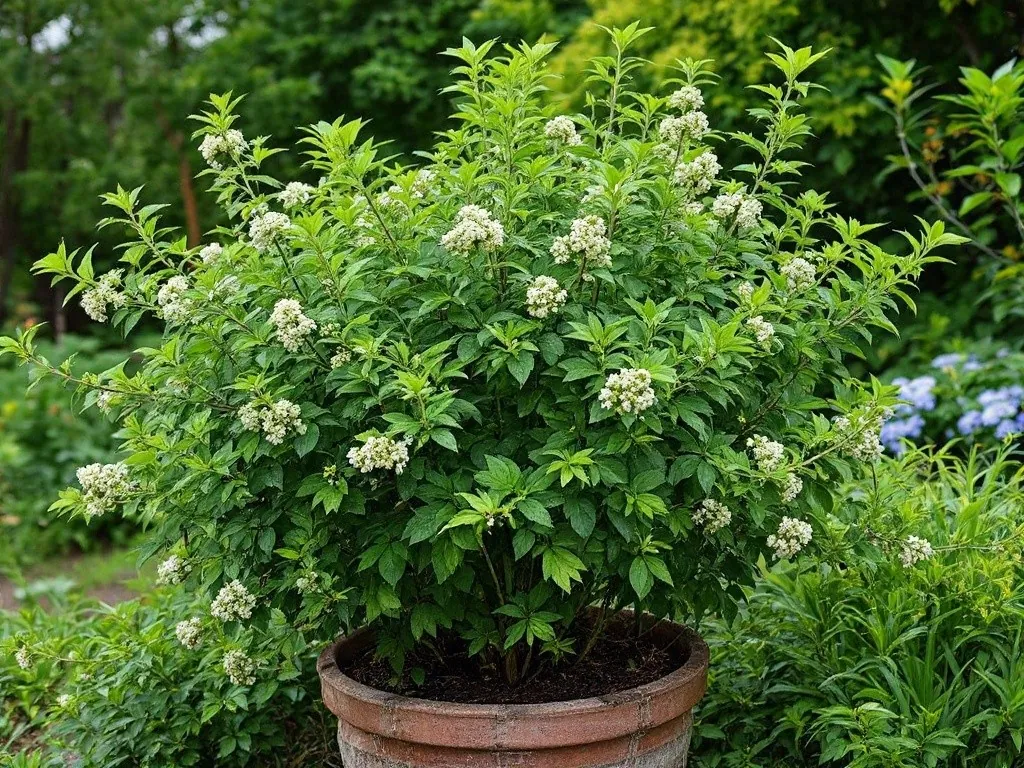
A shrub with upright, arching shoots and oval, glossy leaves of intense green that turn red and orange in fall. Small white flowers gathered in clusters appear in June, followed by black, round fruit that ripens in fall.
Growing and care
Watering
Very drought-tolerant once established; watering is mainly needed in the first year after planting.
Fertilizing
Undemanding — grows well even in soils without extra feeding.
Planting
Tolerates practically any garden soil, including alkaline and dust-polluted; does best in sunny positions.
Pruning
Trim with hedge shears or pruners, shaping a compact form; regenerates very well after hard renewal pruning.
Companion plants
Good companions
Similar soil requirements and pruning tolerance — a common pairing in mixed hedges with varied leaf texture.
Bad companions
Cotoneaster tolerates alkaline, dry soil well, which conflicts with the requirements of acid-loving plants planted directly next to it.
The evidence level indicates whether the relationship is backed by research, observation, or gardening tradition.
Diseases and pests
Yellow or angular (vein-bounded) spots on the upper leaf surface, matched underneath by a grey-violet or brown coating of spores. It differs from powdery mildew, whose white coating sits on the upper surface. It develops in humidity and cool nights and is dangerous to cucumbers, onions and grapevines.
Armoured and soft scale insectsImmobile, brown or yellowish shields (1–4 mm) attached to stems and the underside of leaves, especially along the veins. Easily mistaken for growths on the plant. They suck sap, causing yellowing and weakening, and excrete sticky honeydew. Common on figs, orchids and plants with tough leaves.
AphidsSmall (1–3 mm) soft-bodied insects, green, black or pink, feeding in clusters on young shoots and the underside of leaves. They excrete sticky honeydew.
Toxicity
| For whom | Level | Notes |
|---|---|---|
| Humans | Mild | The fruit is inedible for humans and may cause mild stomach upset if eaten in larger amounts. |
| Dogs | Mild | — |
| Cats | Mild | — |
History and origin
Brought to Europe from Siberia and China in the 19th century, hedge cotoneaster quickly gained popularity in cities thanks to its resistance to air pollution and soil salinity — it became the standard hedging shrub along streets, parking lots, and housing estates across Poland.
Uses
Mainly for low and medium-height formal hedges, also as a groundcover on slopes or as a specimen plant in less formal plantings. Tolerates urban conditions well.
Trivia
- Due to its mass planting in cities, hedge cotoneaster is one of the most frequently trimmed shrubs in Poland — found practically in every city as a formal hedge.
- The black fruit, though inedible for humans, is an important food source for fieldfares and other thrushes in winter, when other resources are scarce.
Frequently asked questions
How often should hedge cotoneaster be trimmed as a hedge?
For formal hedges, 1-2 trims per season are usually enough — around late June/early July and possibly in August, to maintain a compact shape. The shrub handles even hard renewal pruning very well.
Does hedge cotoneaster have edible fruit?
No — the black fruit of hedge cotoneaster is inedible for humans and may cause mild stomach upset if eaten. Birds, however, readily eat it, especially in winter.
Does hedge cotoneaster grow in shade?
It grows best in full sun but also tolerates partial shade well. In deeper shade it flowers and fruits less, though it retains its value as a decorative foliage hedge.
Sources
- Plants of the World Online (POWO)Database (GBIF, POWO…)
- RHS — Cotoneaster lucidusInstitution / botanical garden
My note
A private note for this plant — saved in your browser.