In short
- Flowers for a long time, from June until the first frosts.
- Requires full sun and average, well-drained soil.
- On fertile soil it grows lushly at the expense of flowering — do not fertilise.
- Very easy from direct sowing into the ground; readily self-seeds.
- Strongly attracts bees and butterflies — valuable in an insect-friendly garden.
Botanical data
- Family
- Asteraceae (Asteraceae)
- Height
- 0.6–1.2 m
- Width
- 0.3–0.5 m
- Habit
- Upright
- Growth rate
- Fast
- Position
- Full sun
- Soil
- Sandy, Humus-rich
- pH reaction
- pH 6–7.5
- Moisture
- Dry, Moderate
- Bloom
- June–October
- Hardiness
- —
- Propagation
- From seed
Characteristics
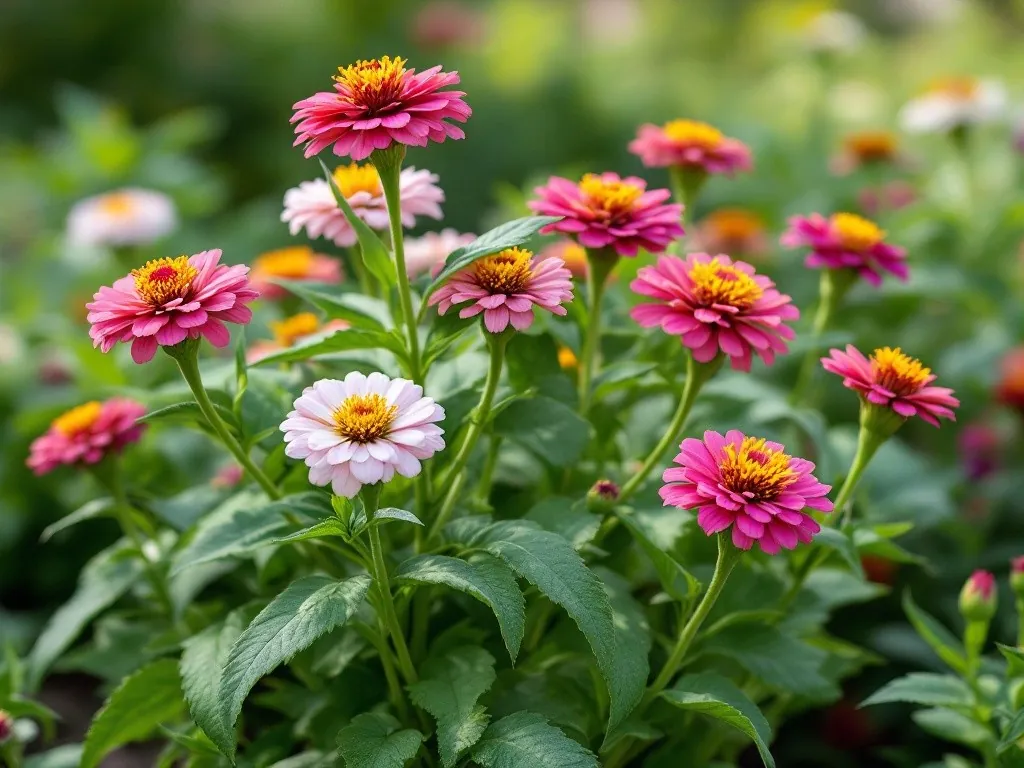
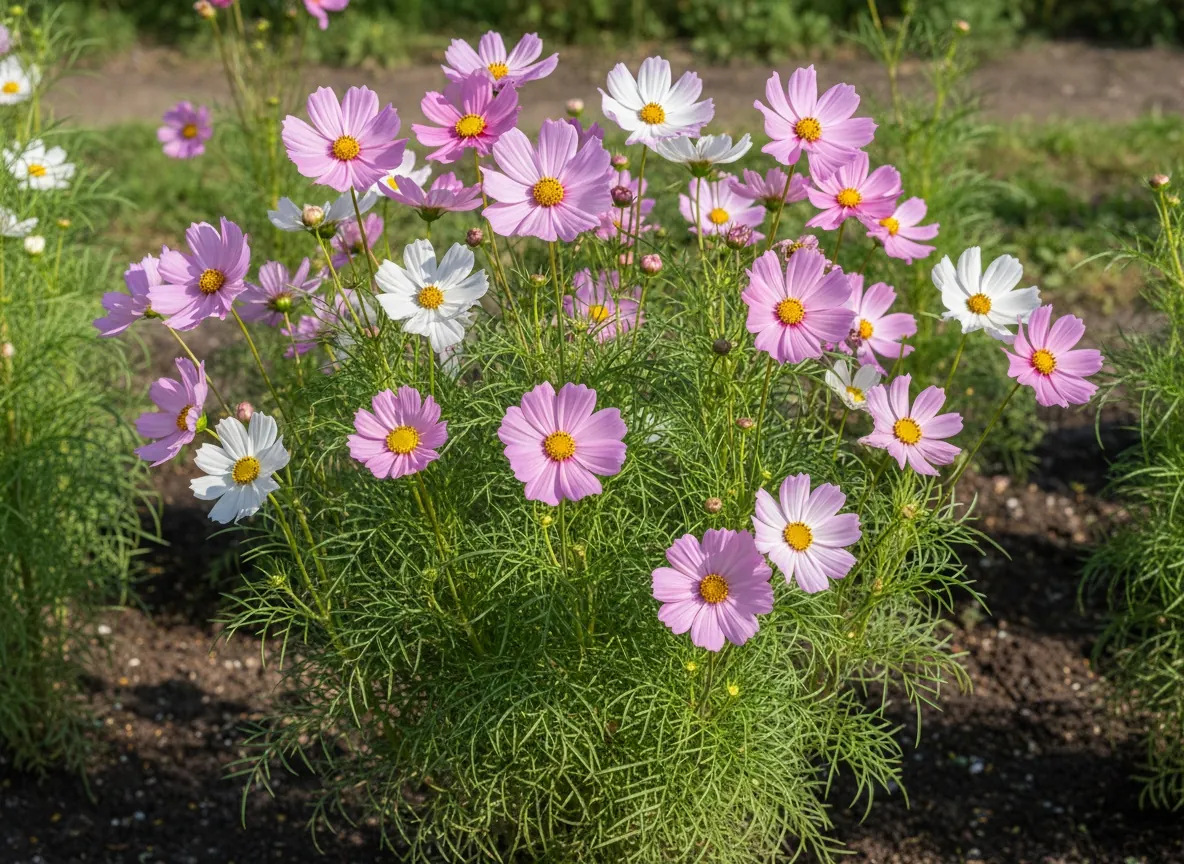
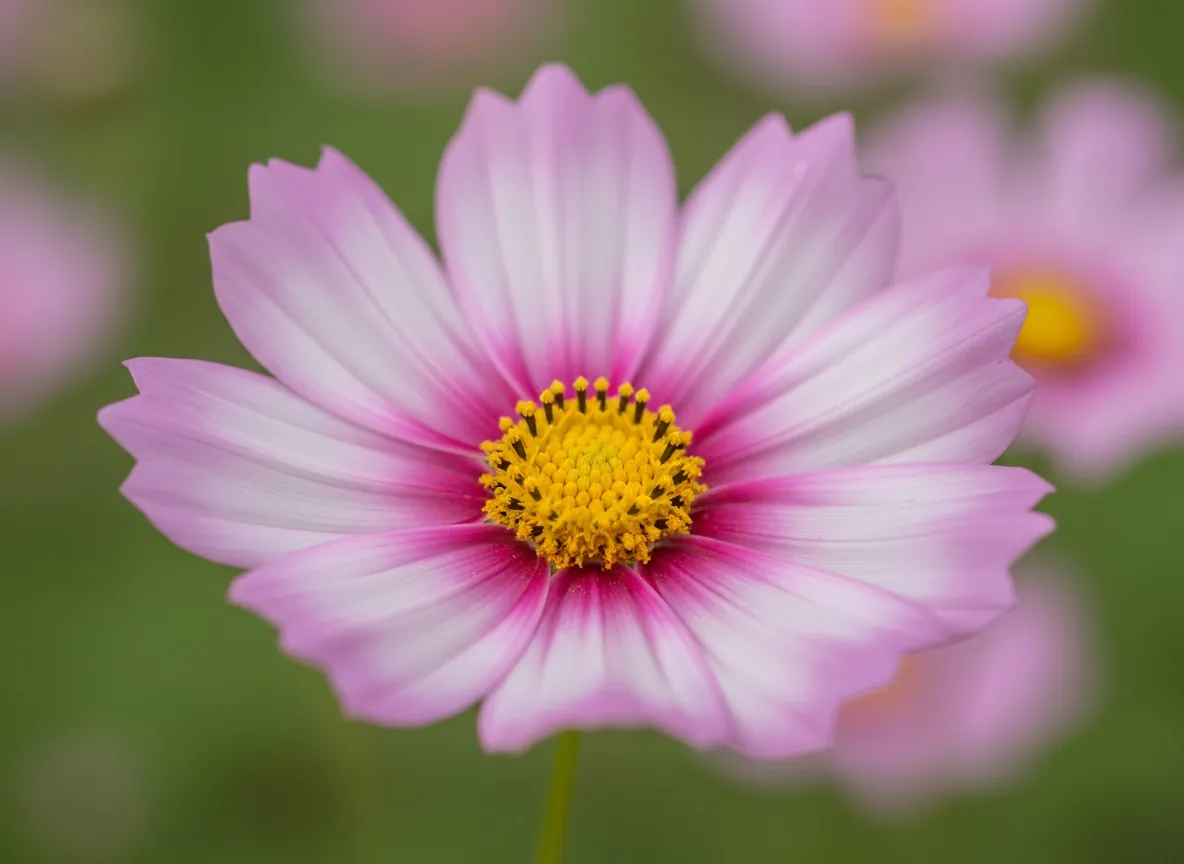
The plant forms loose, upright, fairly tall clumps (usually 60–120 cm) with thin, branched stems. The leaves are finely, doubly pinnately divided into thread-like segments, giving the whole plant an airy, light appearance. The flower heads are large capitula with broad, silky ray florets surrounding a yellow centre, in shades of pink, white and carmine.
Growing and care
Watering
Once established it tolerates drought well and grows best on poor, well-drained soil. Substrate that is too fertile and moist results in lush growth at the expense of flowering.
Fertilizing
On fertile soil the plant produces many leaves and few flowers — so it is best to avoid fertilising or keep it to a minimum.
Planting
Position in full sun, average or poor, well-drained soil; the plant tolerates neither frosts nor a cold, wet spring.
Pruning
Regular removal of spent flower heads (deadheading) considerably prolongs flowering; young plants are worth pinching once above the next pair of leaves so that they branch better.
Companion plants
Good companions
The flowers of cosmos attract bees and other pollinators, which improves the pollination and fruit set of cucurbits growing nearby.
Two easy, long-flowering annuals with similar requirements, together forming a colourful border that attracts beneficial insects.
Together they attract pollinators and natural enemies of pests, supporting the vegetable and herb garden.
Bad companions
Tall, dense cosmos plants grow quickly and shade lower neighbours that require full sun, limiting their flowering.
The evidence level indicates whether the relationship is backed by research, observation, or gardening tradition.
Toxicity
| For whom | Level | Notes |
|---|---|---|
| Humans | None | — |
| Dogs | None | — |
| Cats | None | — |
History and origin
The species comes from the mountainous, dry regions of Mexico, where it grew as a wild meadow plant. It was introduced into Europe as an ornamental annual bedding plant; the genus name Cosmos, from the Greek word meaning “order” and “ornament”, alludes to the regular, harmonious arrangement of the petals. In Poland it has become established enough that it is sometimes called warszawianka.
Uses
Ideal for naturalistic borders, flower meadows, cottage gardens and pollinator plantings. It works excellently at the back of a border and as a cut flower. Taller cultivars are worth staking in windy spots, while lower ones are also suitable for large containers on a terrace.
Trivia
- Cosmos self-seeds so readily that, once sown, it can return to the same spot for many successive seasons.
- Poor soil is an advantage, not a drawback — it is one of the few ornamental plants that flower markedly worse on an over-fertilised site.
Frequently asked questions
Why does my cosmos put out lots of leaves but flowers poorly?
The most common cause is soil that is too fertile or nitrogen fertilising. Cosmos flowers best on a poor, well-drained site in full sun — it is enough to stop feeding it and to give it more light.
Does cosmos have to be sown every year?
It is an annual, so formally yes, but in practice it often renews itself by self-seeding. If we leave a few spent flower heads to set seed, the young seedlings usually appear the following spring without any effort on our part.
When and how should cosmos be sown?
The simplest way is to sow it directly into the ground in May, after the frosts have passed, to a depth of about 1 cm. You can also raise seedlings earlier under cover in April, which brings the flowering forward by a few weeks.
Sources
- Plants of the World Online (POWO)Database (GBIF, POWO…)
- RHS — Cosmos bipinnatusInstitution / botanical garden
My note
A private note for this plant — saved in your browser.