In short
- Position: the brightest possible — without strong light the leaves lose their colours.
- Substrate constantly slightly moist; drying out ends in leaf drop.
- It tolerates neither draughts nor being moved — it responds to them by dropping leaves.
- It exudes an irritating white milky sap — work in gloves.
- Toxic to people and animals; the seeds are the most toxic part.
Botanical data
- Family
- Euphorbiaceae (Euphorbiaceae)
- Height
- 0.5–1.5 m
- Width
- 0.4–0.8 m
- Habit
- Upright
- Growth rate
- Moderate
- Position
- Full sun, Partial shade
- Soil
- Humus-rich, Peaty
- pH reaction
- pH 5.5–6.5
- Moisture
- Moderate, Moist
- Bloom
- —
- Hardiness
- —
- Propagation
- From cuttings, By layering
Characteristics
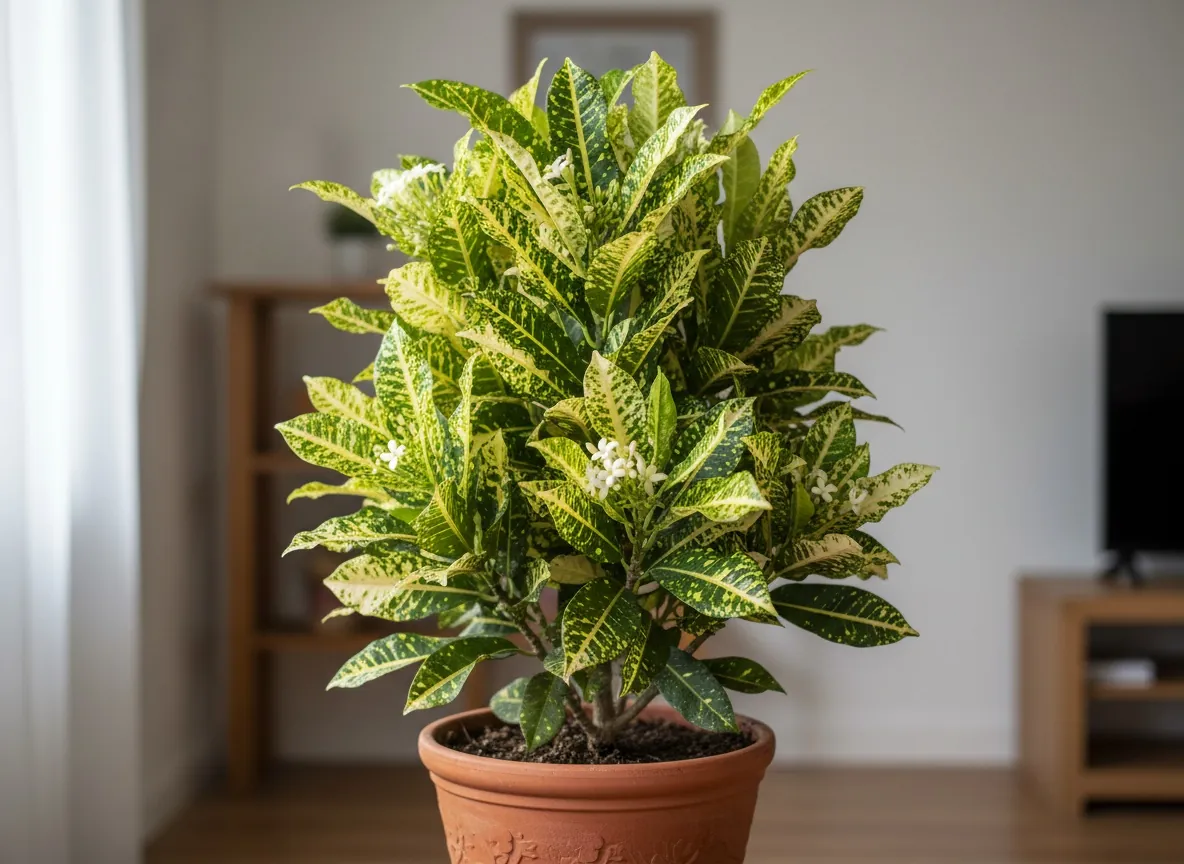
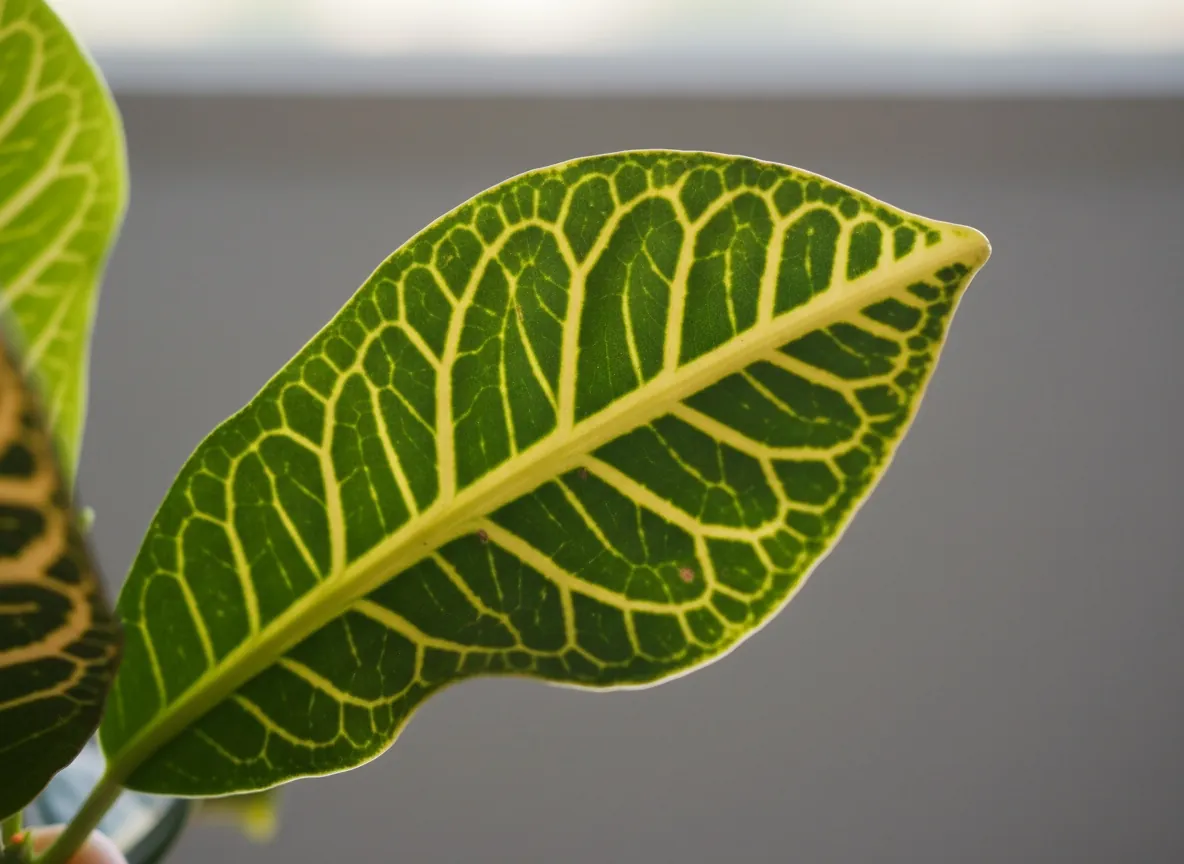
A shrub with upright shoots that become woody with time. The leaves are thick, leathery and glossy, and their shape depends on the cultivar — they may be broadly lanceolate, ribbon-like, spirally twisted or deeply lobed. The colouring changes with the age of the leaf: young ones are usually green and yellow, older ones take on reds and purples. The small, inconspicuous flowers are gathered in drooping racemes and appear rarely indoors.
Growing and care
Watering
Substrate constantly slightly moist — the croton responds to a dried-out root ball by dropping its leaves immediately. It likes humid air and water at room temperature; cold water and draughts are a shock to it.
Fertilizing
The manufacturer's standard dose. Fertilisers with a high nitrogen content strengthen the green at the expense of the reds and yellows — preparations for coloured-leaved plants are better.
Planting
A fertile, humus-rich substrate with added perlite; a pot with drainage. When repotting it is worth putting on gloves — damaged roots and shoots exude an irritating milky sap.
Pruning
Shorten overly long shoots by a third, just above a node — the croton branches well after cutting. The severed tips are suitable as cuttings.
Companion plants
Good companions
The same bright windowsill and a similar watering regime; neither species tolerates draughts or frequent moving.
Both plants colour up only in a genuinely bright spot, so they compete for the same good position without shading each other.
Similar humidity requirements; the tall monstera screens the croton from the harshest midday sun without depriving it of light.
Bad companions
A position in which shade-loving plants thrive is too dark for the croton — the leaves turn green and lose their whole pattern.
The sansevieria requires long breaks between waterings, while the croton drops its leaves immediately when dried out — shared care harms one of them.
The evidence level indicates whether the relationship is backed by research, observation, or gardening tradition.
Toxicity
| For whom | Level | Notes |
|---|---|---|
| Humans | Moderate | Like most spurges it exudes a white milky sap (latex). Contact with the skin causes irritation and a contact rash, and sap in the eye — painful conjunctivitis. Eating the leaves or seeds causes burning of the mouth, vomiting and diarrhoea; the seeds are the most toxic part of the plant. |
| Dogs | Moderate | Chewing the shoots causes drooling, vomiting and diarrhoea as a result of the latex; contact of the sap with the skin causes irritation. |
| Cats | Moderate | Symptoms as in dogs — irritation of the mouth and digestive tract after chewing the leaves. |
History and origin
The species originates from the islands of the western Pacific, where it has long been planted by houses and along field boundaries as an ornamental plant and a marker of territory. It reached Europe in the 19th century, and the selection of cultivars differing in leaf shape and colouring began even then — today there are several hundred of them.
Uses
For bright living rooms and offices, at east-, west- and south-facing windows with light screening at midday. It works excellently as an accent plant — a single specimen brings more colour into a room than most flowering plants.
Trivia
- Despite its common name, the croton does not belong to the genus Croton but to the genus Codiaeum — the only thing the two groups share is membership of the spurge family, which is a lasting source of confusion in nomenclature.
- The intensity of the colouring is a direct indicator of the amount of light: the same plant moved into shade will “turn green” within a few weeks, and after returning to a bright spot will regain its colours on the new leaves.
Frequently asked questions
Why is the croton dropping its leaves?
The croton is exceptionally sensitive to changes in conditions. The most common causes are a draught, cold air, a dried-out root ball or the change of place itself — a freshly bought plant often loses some of its leaves simply because of the move. It has to be placed in a permanent, warm and bright spot free of draughts, and the substrate must not be allowed to dry out.
Why have the croton's leaves turned green and lost their colour?
This is almost always the result of too little light. The croton needs the brightest position in the home, with a few hours of gentle, direct sun. After moving it to a bright place the old leaves will not colour up again, but the new growth will regain the full pattern. A fertiliser for coloured-leaved plants rather than one rich in nitrogen also helps.
Is the croton's sap toxic?
Yes. Like all spurges, the croton exudes a white latex which irritates the skin and mucous membranes, and in the eye causes painful inflammation. Eating the leaves or — especially — the seeds causes vomiting and diarrhoea in people and animals. When pruning and repotting one should work in gloves and keep the plant out of reach of children and animals.
Sources
- Plants of the World Online (POWO)Database (GBIF, POWO…)
- Missouri Botanical Garden — Codiaeum variegatumInstitution / botanical garden
My note
A private note for this plant — saved in your browser.