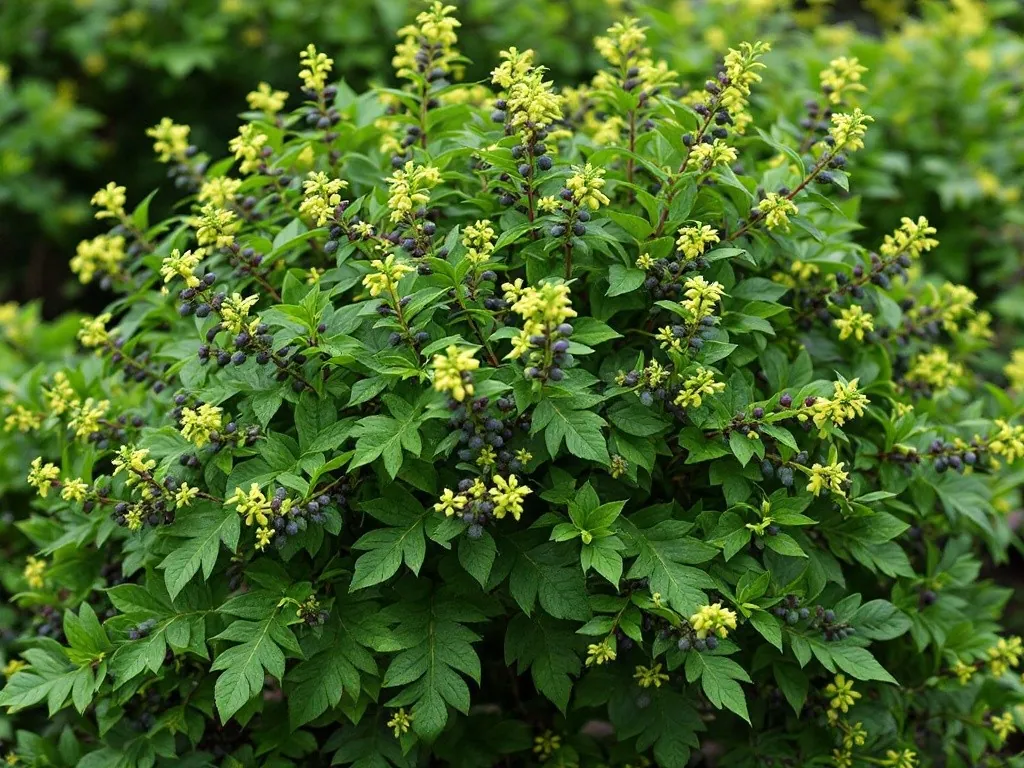
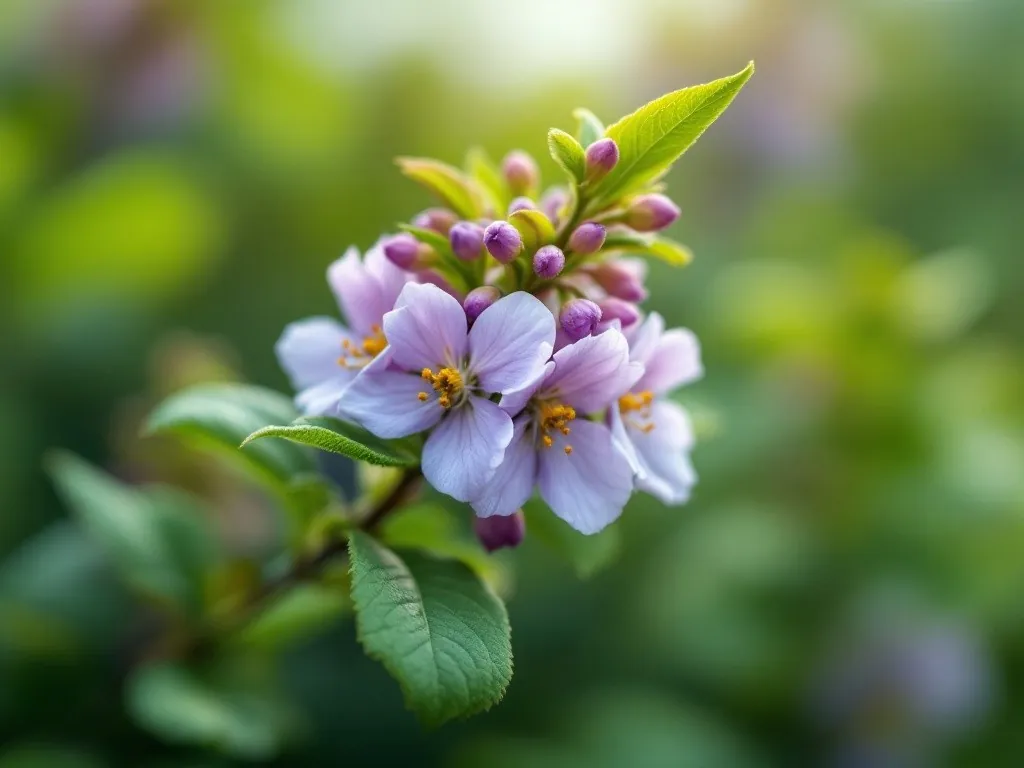
In short
- Evergreen — leaves resembling holly, spiny, glossy.
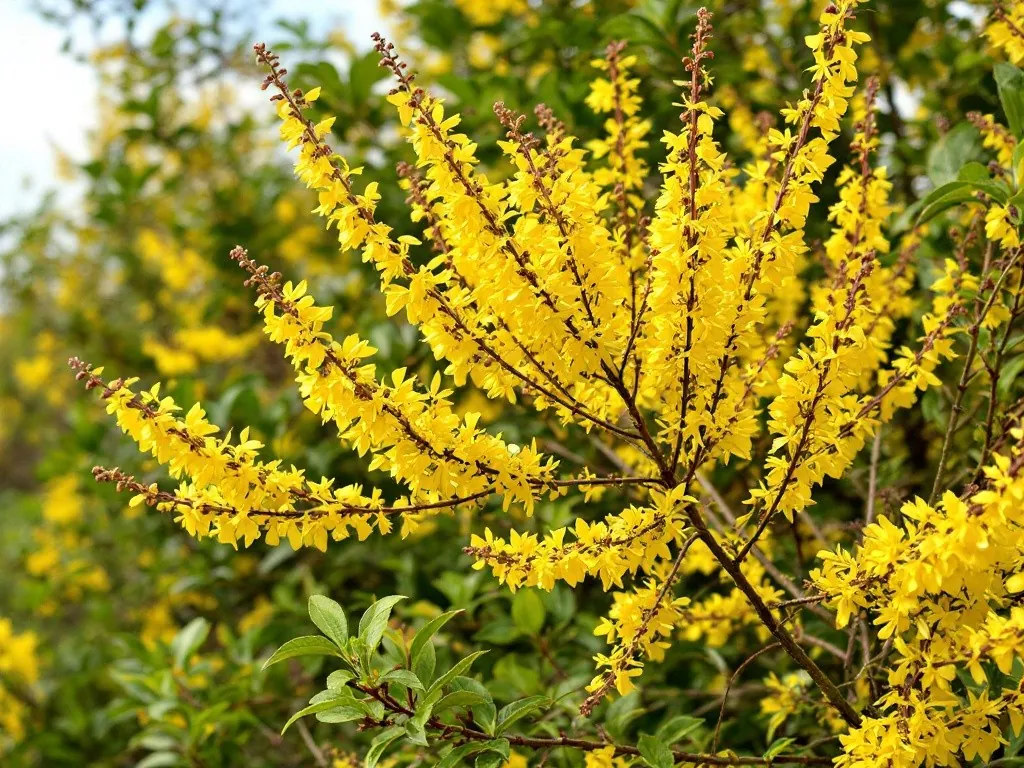
- Fragrant yellow flowers as early as February-April — an important early forage for bees.
- Blue-black, edible, berry-like fruits, tart, rich in vitamin C.
- Grows well in shade and part shade, where few other shrubs flower.
- Spreads by root suckers, forming dense clumps.
- All parts except the ripe fruit contain toxic alkaloids.
Botanical data
- Family
- Berberidaceae (Berberidaceae)
- Height
- 0.5–1.5 m
- Width
- 0.6–1.5 m
- Habit
- Clump-forming
- Growth rate
- Slow
- Position
- Partial shade, Shade
- Soil
- Loamy, Humus-rich, Sandy
- pH reaction
- pH 5–7
- Moisture
- Moderate, Moist
- Bloom
- February–April
- Hardiness
- USDA 5a–8b
- Propagation
- From cuttings, By layering, From seed
Characteristics
A shrub with stiff, pinnate leaves made up of spiny, glossy, holly-like leaflets, often turning bronze-purple in winter. Small, yellow, fragrant flowers in dense, upright clusters appear very early in spring, ahead of most other shrubs. The fruits are blue-black, bloom-covered berries ripening in summer.
Growing and care
Watering
Once established, fairly drought-tolerant in shade, but in sun it needs regular watering to avoid leaf scorch.
Fertilizing
Responds well to slightly acidic soil enriched with compost; avoid excess lime.
Planting
Grows best in part shade or shade, in free-draining, slightly acidic soil with added compost; a sheltered site protects the leaves from winter frost damage.
Pruning
Remove spent flower clusters and the oldest, bare shoots at the base; if needed, the shrub can be cut back hard, as it regrows well from the base.
Companion plants
Good companions
Similar requirements — shade or part shade, moist, free-draining soil; a natural pairing in underplantings beneath trees.
Bad companions
Oregon grape grows best in shade or part shade in moister soil, which conflicts with the requirements of sun- and drought-loving plants.
The evidence level indicates whether the relationship is backed by research, observation, or gardening tradition.
Diseases and pests
Rusty-orange to brown, powdery clusters of spores on the underside of leaves, matched on the upper side by yellow spots. Heavily infected leaves turn yellow and drop prematurely, and the plant weakens. It affects roses and mallows among others, and some rusts have an alternate host (for example pear rust and juniper).
AphidsSmall (1–3 mm) soft-bodied insects, green, black or pink, feeding in clusters on young shoots and the underside of leaves. They excrete sticky honeydew.
Toxicity
| For whom | Level | Notes |
|---|---|---|
| Humans | Mild | All parts of the plant except the ripe fruit contain alkaloids (including berberine) — they may cause mild digestive irritation if eaten. |
| Dogs | Mild | — |
| Cats | Mild | — |
History and origin
Oregon grape was discovered by botanists during the Lewis and Clark expedition at the turn of the 18th and 19th centuries and named after the American horticulturist Bernard M'Mahon. In 1899 it was declared the state flower of Oregon (Oregon grape), where it grows naturally in the forest understorey.
Uses
For underplanting beneath trees, informal hedging in shade, bee-friendly gardens (early forage), and as ground cover on difficult, shaded sites.
Trivia
- The root and bark of Oregon grape are rich in berberine, an alkaloid with antibacterial properties, used in traditional Native American medicine and today studied in phytotherapy.
- The tart, blue-black fruits of Oregon grape, despite their bitterness when raw, are sometimes used for preserves — jams and jellies — similar to the fruits of barberry, its close relative.
Frequently asked questions
Why does Oregon grape flower so early in spring?
Oregon grape has evolved a flowering strategy from February to April, when competition for pollinators is low. Its fragrant yellow flowers are one of the first sources of nectar and pollen for bees waking from winter.
Are Oregon grape fruits edible?
Yes, the ripe, blue-black fruits are edible, though very tart when raw. Traditionally they are used for jams and jellies. The other parts of the plant (leaves, bark, roots) contain toxic alkaloids and should not be eaten.
Does Oregon grape grow in full shade?
Yes, it tolerates both part shade and deeper shade well, making it one of the few shrubs that flowers abundantly in such conditions. In full sun the leaves may scorch, especially in winter under heavy frost and wind.
Sources
- Plants of the World Online (POWO)Database (GBIF, POWO…)
- RHS — Mahonia aquifoliumInstitution / botanical garden
My note
A private note for this plant — saved in your browser.