In short
- Popular foliage cultivars: 'Atropurpurea' (dark purple leaves) and 'Rose Glow' (variegated, pink-purple-white).
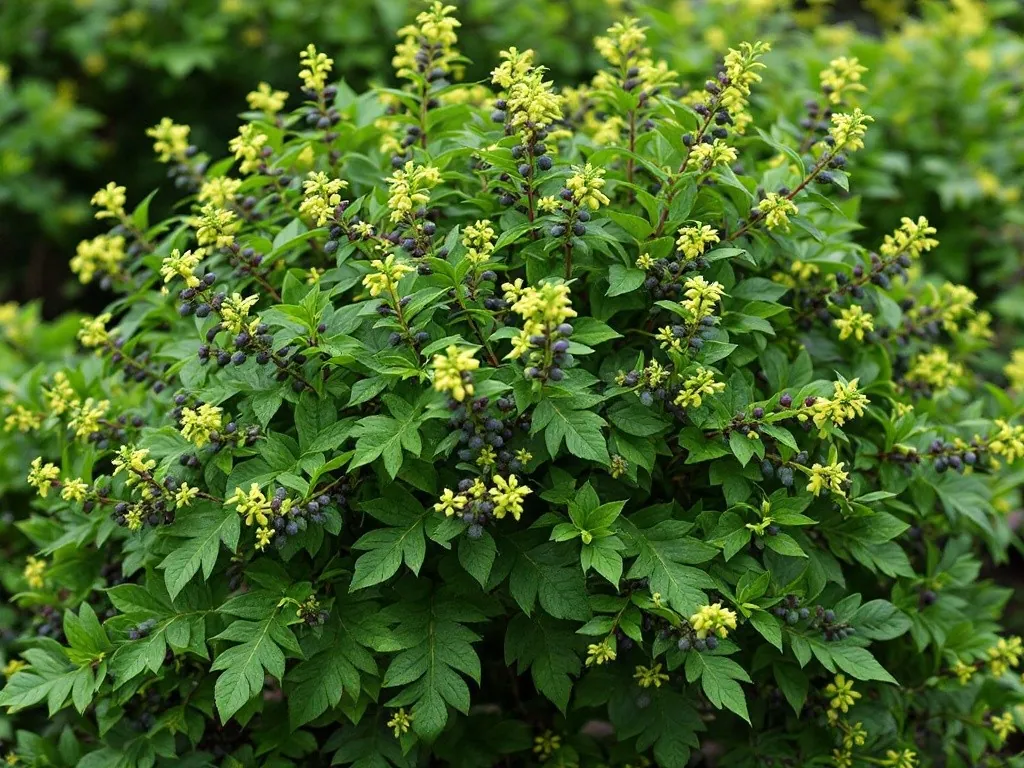
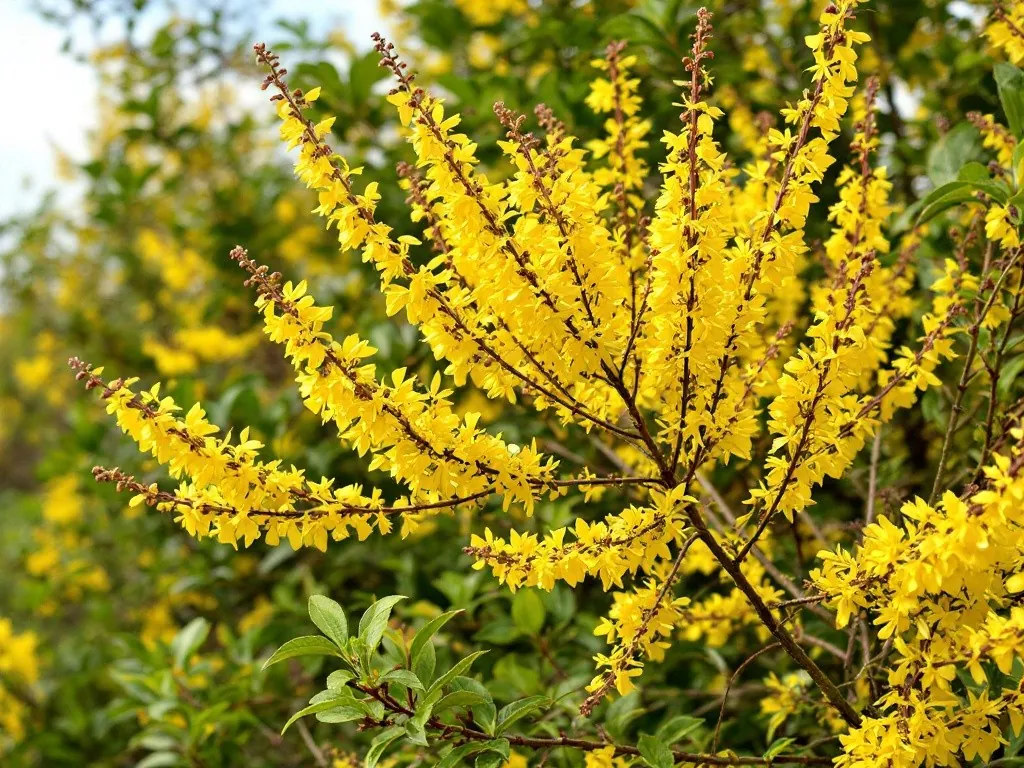
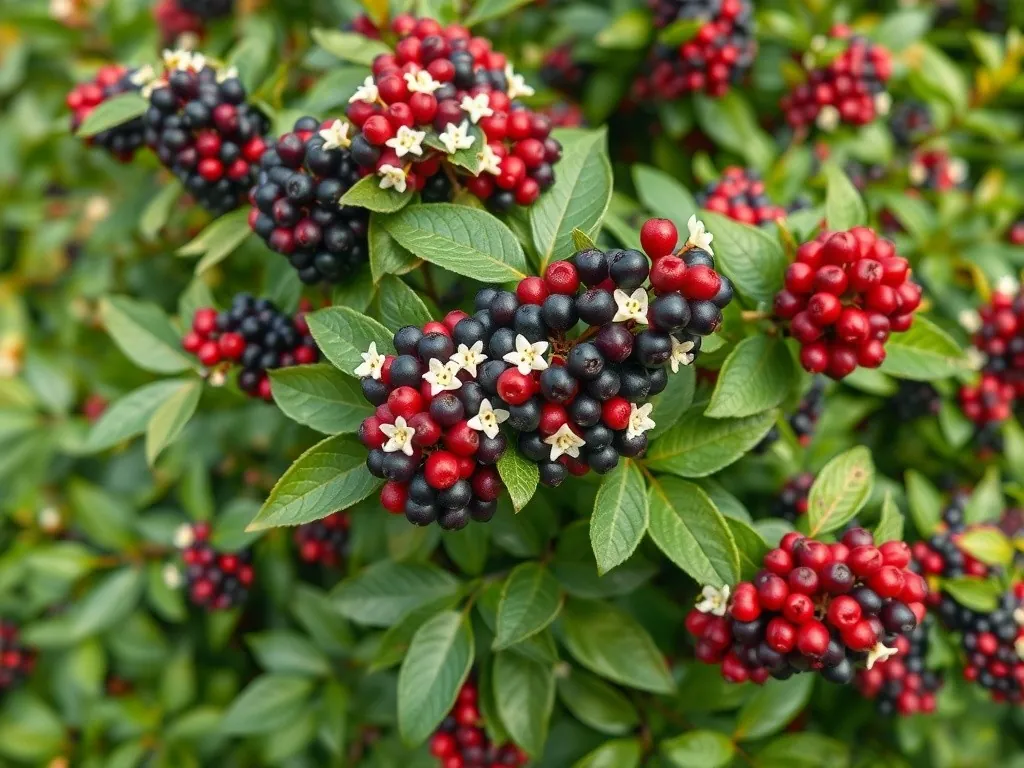
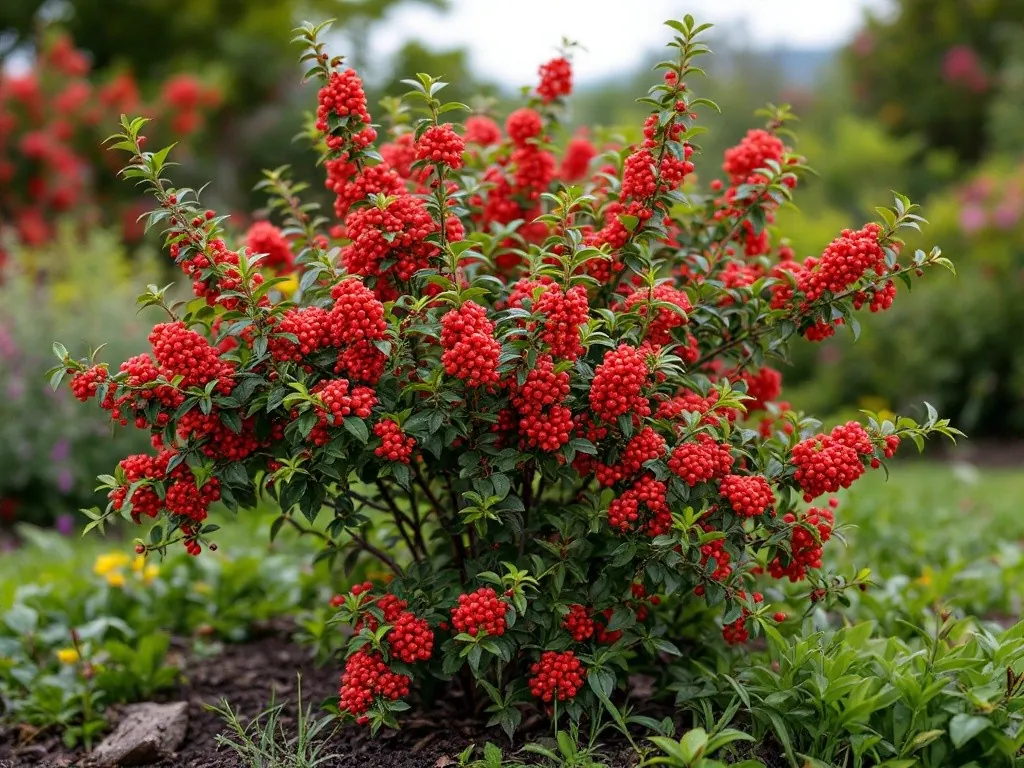
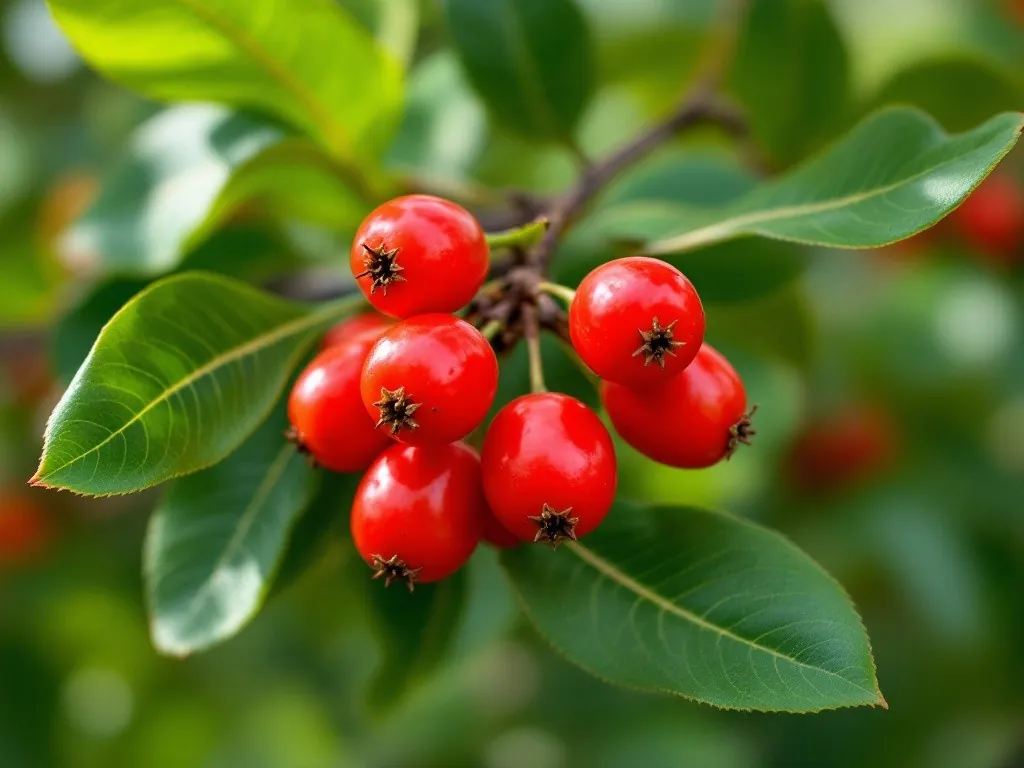
- Small yellow flowers in spring, bright red fruits in autumn and winter — valuable for birds.
- For the best leaf colour, the coloured cultivars need full sun.
- Very frost-hardy and undemanding as to soil, including calcareous soils.
- Its sharp thorns make it one of the best plants for protective hedges.
Botanical data
- Family
- Berberidaceae (Berberidaceae)
- Height
- 1–2 m
- Width
- 1–2.5 m
- Habit
- Rounded
- Growth rate
- Moderate
- Position
- Full sun, Partial shade
- Soil
- Loamy, Sandy, Humus-rich, Chalky
- pH reaction
- pH 6–7.5
- Moisture
- Moderate
- Bloom
- April–May
- Hardiness
- USDA 4a–8b
- Propagation
- From cuttings, From seed
Characteristics
A dense, rounded shrub with numerous sharp thorns and small, oval leaves, coloured purple, red or variegated in the ornamental cultivars. Small, yellow flowers hang singly or in small clusters along the shoots in spring, and in autumn glossy, bright red fruits set that persist on the shrub long after the leaves have fallen.
Growing and care
Watering
Very drought-resistant once established; does not tolerate waterlogged sites or heavy, stagnant soils.
Fertilizing
Undemanding — excess nitrogen reduces the intensity of the purple leaf colouring in the coloured cultivars.
Planting
Tolerates a wide range of soils, including calcareous and dry ones; for the best leaf colour in purple cultivars it needs full sun.
Pruning
Shape hedges once or twice per season; specimen plants need only sanitary pruning and the removal of the oldest shoots.
Companion plants
Good companions
The golden foliage of the spiraea contrasts strikingly with the purple leaves of the barberry, and both plants have similar, modest cultivation requirements.
Similar requirements — full sun, well-drained, not necessarily fertile soil, and high drought tolerance.
Bad companions
The sharp thorns and dense, spreading shoots of the barberry make weeding and safe access to plants set directly beneath the shrub difficult.
The evidence level indicates whether the relationship is backed by research, observation, or gardening tradition.
Toxicity
| For whom | Level | Notes |
|---|---|---|
| Humans | None | The fruits are not significantly toxic — some barberry species (e.g. Berberis vulgaris) are traditionally used in cooking and folk medicine. The real hazard is the sharp thorns, not toxic substances. |
| Dogs | None | — |
| Cats | None | — |
History and origin
Named after Carl Peter Thunberg, the Swedish naturalist and pupil of Carl Linnaeus, who collected specimens in Japan in the 18th century. It was introduced into ornamental cultivation around the turn of the 19th and 20th centuries and quickly replaced the common barberry (Berberis vulgaris) in countries where that species was being cleared on a massive scale as an intermediate host of stem rust of cereals (Puccinia graminis) — Japanese barberry is resistant to this pathogen and therefore became a safe alternative in agricultural regions.
Uses
For formal and protective hedges (thanks to the thorns), specimen plantings, groups in mixed borders, and autumn-winter compositions with red fruits standing out against the snow.
Trivia
- In several US states, Japanese barberry is now regarded as a potentially invasive species in forests, because birds readily spread its fruits — under Polish conditions it is not classified as invasive.
- It is one of the most reliable plants for safe, thorny boundary hedges — it effectively deters intruders and pets from fenced-off parts of the garden.
- The autumn colouring of the foliage to red and orange is often as striking as the summer leaf colour of the purple cultivars.
Frequently asked questions
How do you maintain the intense leaf colour of barberry?
The purple and variegated cultivars need full sun — in shade the leaves turn green and lose colour intensity. Moderate fertilising without excess nitrogen also helps preserve the colour.
Are barberry fruits safe for children and animals?
The fruits of Berberis thunbergii are not significantly toxic, but the real hazard is the sharp thorns on the shoots. It is worth planting barberry in spots less accessible to small children and pets because of the risk of scratches.
Is Japanese barberry invasive in Poland?
No — in Poland it is widely and safely cultivated as an ornamental plant. Its status as a potentially invasive species concerns some regions of North America, where birds intensively spread its fruits in forests.
Sources
- Plants of the World Online (POWO)Database (GBIF, POWO…)
- RHS — Berberis thunbergiiInstitution / botanical garden
My note
A private note for this plant — saved in your browser.