In short
- Flowers briefly but very strikingly in May and June.
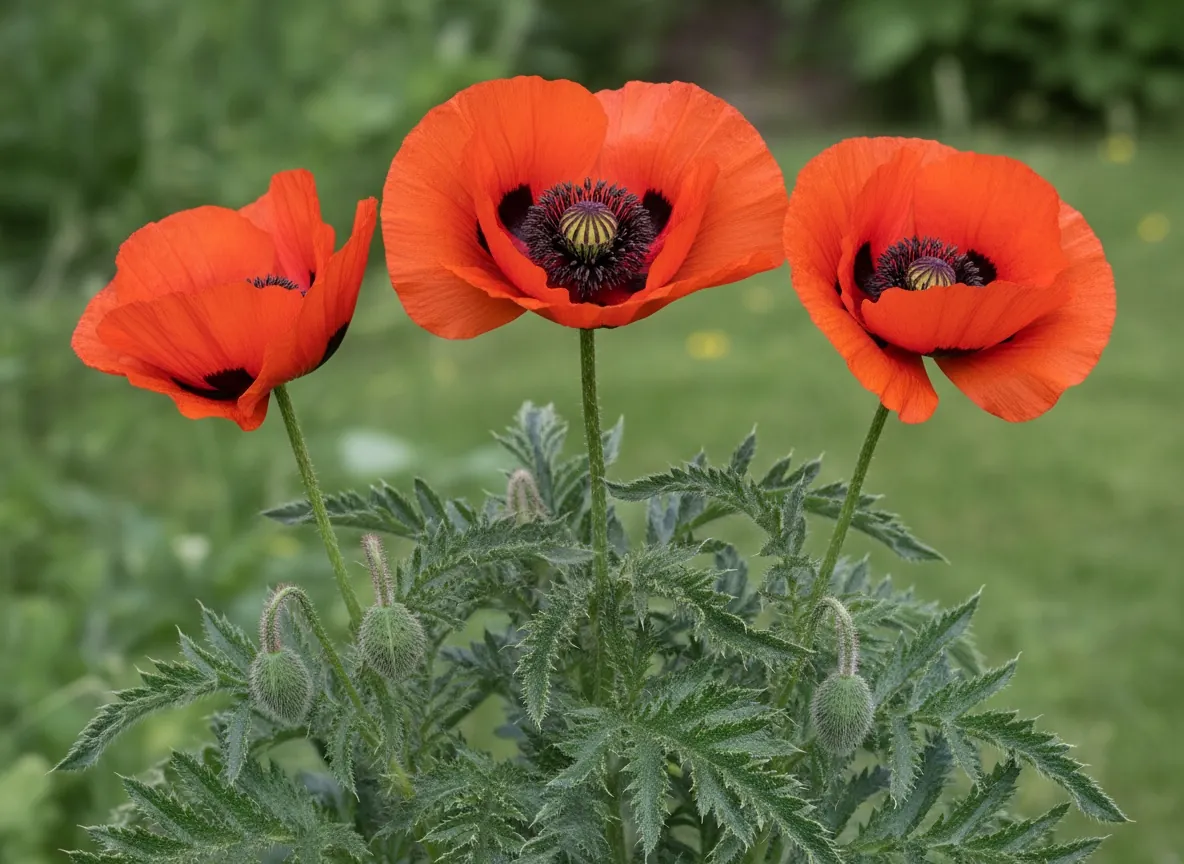
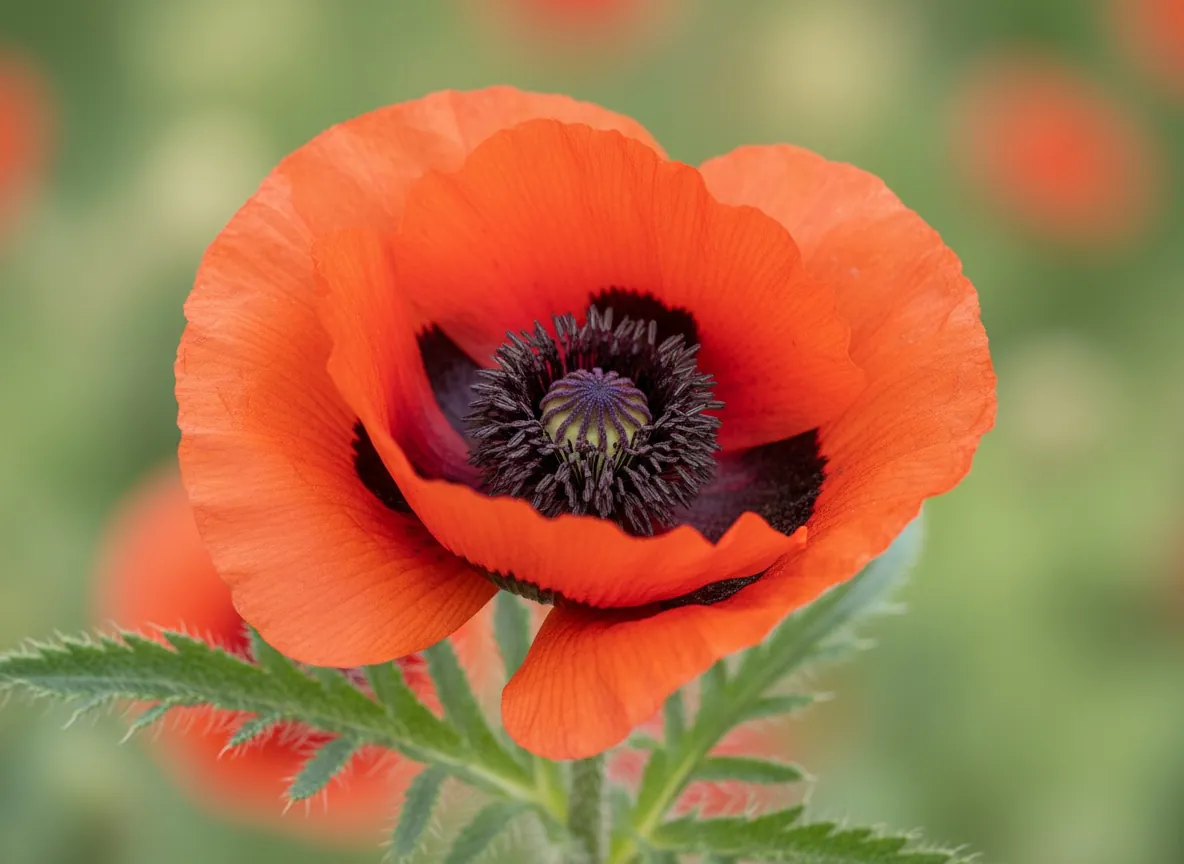
- Large flowers (up to 15 cm) with silky petals and a dark, contrasting centre.
- After flowering the leaves die back and the plant rests in summer — this is natural, not a sign of disease.
- Requires full sun and well-drained soil; does not tolerate winter moisture.
- Contains alkaloids — all parts are slightly poisonous.
Botanical data
- Family
- Papaveraceae (Papaveraceae)
- Height
- 0.6–1 m
- Width
- 0.5–0.9 m
- Habit
- Clump-forming
- Growth rate
- Moderate
- Position
- Full sun
- Soil
- Humus-rich, Loamy, Sandy
- pH reaction
- pH 6–7.5
- Moisture
- Dry, Moderate
- Bloom
- May–June
- Hardiness
- USDA 3a–7b
- Propagation
- From seed, From cuttings, By division
Characteristics
It forms a clump of roughly hairy, deeply cut, grey-green leaves, from which stiff, hairy stems rise, ending in single, huge flowers. The petals are silky and crumpled, often with a dark blotch at the base, and the centre is filled with a dense tuft of dark stamens and the characteristic seed capsule. After flowering the above-ground part dies back, and the plant survives the summer thanks to its thick taproot.
Growing and care
Watering
After flowering it enters summer dormancy and needs almost no watering. What harms it most is winter moisture around its thick, fleshy root — well-drained soil is essential.
Fertilizing
Sparingly — on soil that is too fertile the shoots flop, and the plant flowers more weakly.
Planting
Deeply dug, well-drained soil; the plant forms a thick taproot and tolerates transplanting poorly once established.
Pruning
Cut the yellowed, dying leaves back to the ground; a new leaf rosette regrows in autumn and overwinters.
Companion plants
Good companions
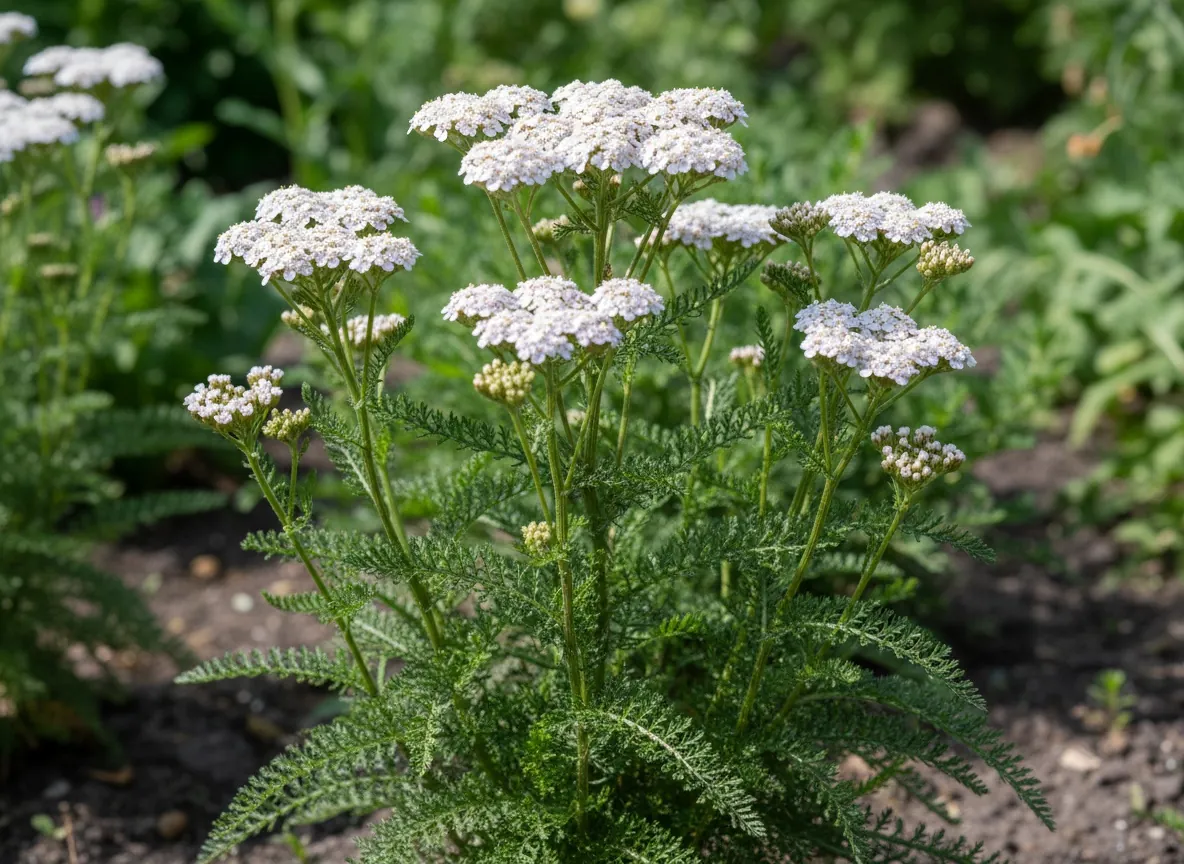
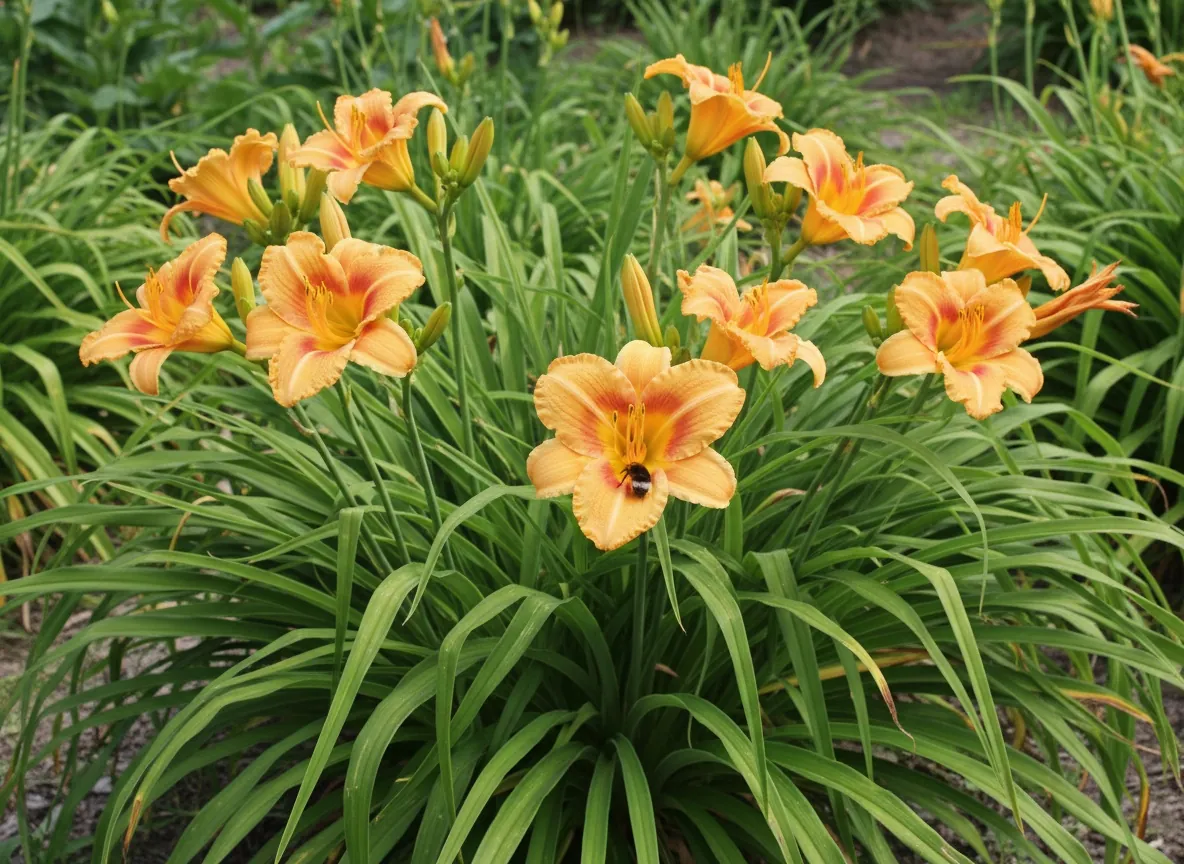
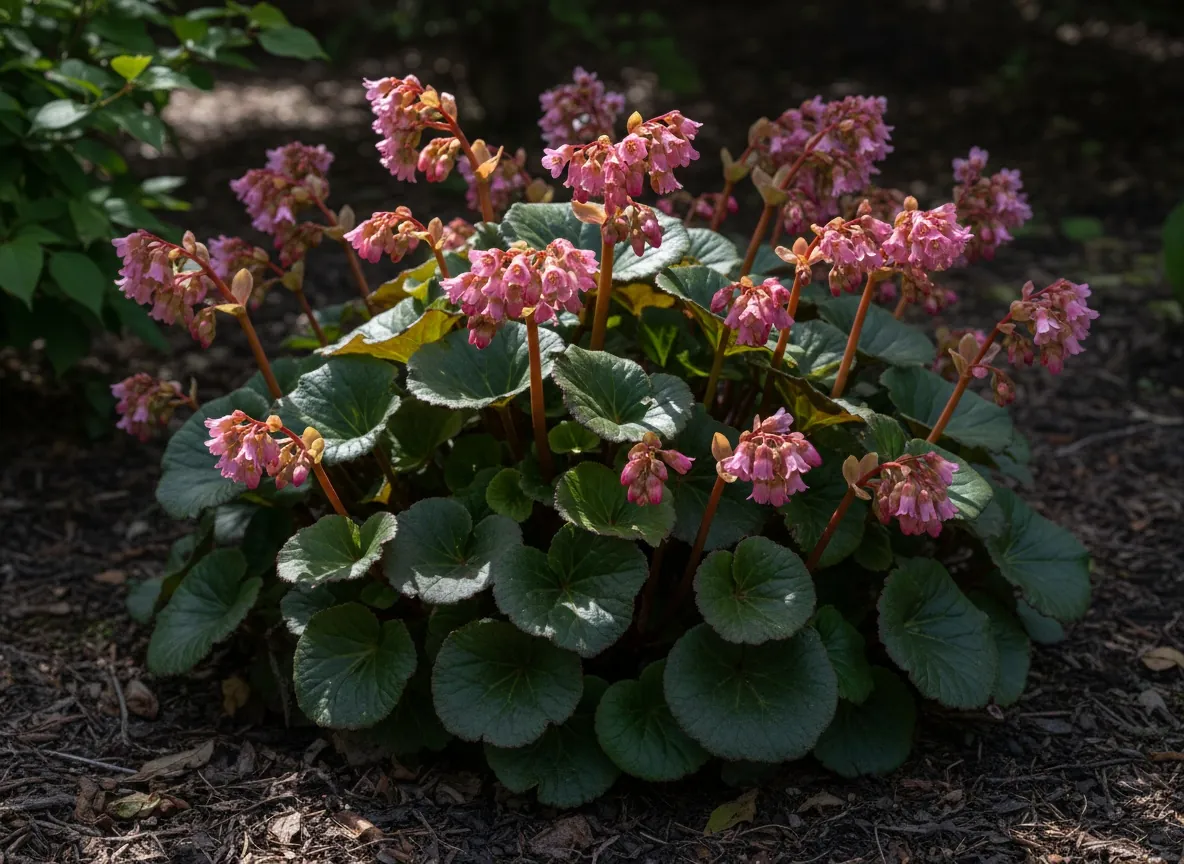
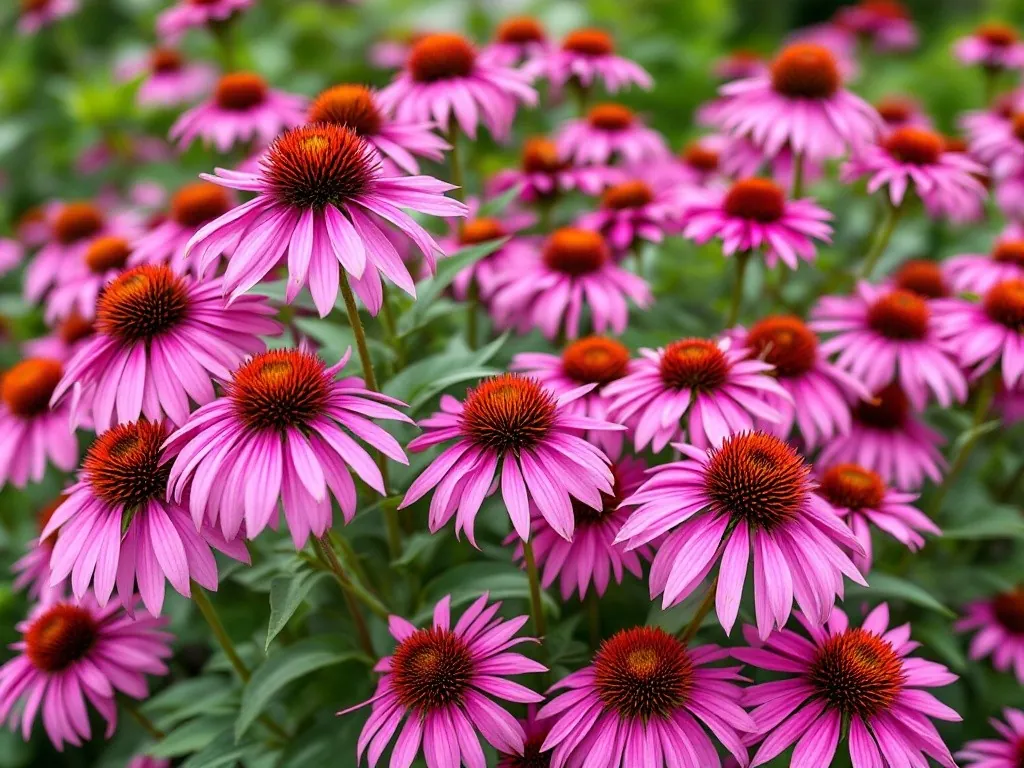
The phlox spreads and flowers in the second half of summer, covering the gap left by poppies entering summer dormancy.
Flowers in summer, when the poppy's leaves die back — its clumps then take over the decorative role in the border.
A traditional companion of the Oriental poppy — its airy, summer flower heads mask the emptiness after the dying leaves.
Bad companions
The watering that moisture-loving plants need, especially during the poppy's summer dormancy, leads to the rotting of its thick root.
The evidence level indicates whether the relationship is backed by research, observation, or gardening tradition.
Toxicity
| For whom | Level | Notes |
|---|---|---|
| Humans | Mild | All parts contain alkaloids, and the milky sap can irritate the skin and mucous membranes. It is not the opium poppy, but consuming any parts should be avoided. |
| Dogs | Mild | — |
| Cats | Mild | — |
| Horses | Mild | — |
History and origin
It reached European gardens from the Caucasus and the Middle East in the 18th century and quickly became a prized border perennial. In the 20th century, breeders, including Amos Perry, produced numerous cultivars that widened the colour palette to include pink, white and salmon.
Uses
For sunny perennial borders and naturalistic gardens, best in the company of plants that cover the gap left by its summer dormancy. The flowers are suitable as a short-lived cut flower, and the seed capsules for drying.
Trivia
- The Oriental poppy is sometimes confused with the opium poppy, but it contains no opium — its alkaloids are different and have no narcotic use.
- The characteristic seed capsules resembling a salt shaker are prized in dried bouquets after flowering.
Frequently asked questions
Why do the leaves of my Oriental poppy die back in summer?
This is completely natural. After flowering, the Oriental poppy enters summer dormancy — its leaves yellow and dry out, and the plant survives this period thanks to its thick root. A new leaf rosette regrows in autumn. During this time the plant should be neither watered intensively nor fertilised.
Is the Oriental poppy poisonous?
Yes, to a small degree. All parts contain alkaloids, and the milky sap can irritate the skin and mucous membranes. It is not the opium poppy and has no culinary uses — the plants should be handled with care, and it is worth wearing gloves when tending them.
How do you propagate the Oriental poppy?
The most reliable method is root cuttings taken during the dormant period, because the plant readily regrows from pieces of the thick root. Seeds can also be sown, although garden cultivars do not always reproduce the traits of the mother plant this way.
Sources
- Plants of the World Online (POWO)Database (GBIF, POWO…)
- Missouri Botanical Garden — Papaver orientaleInstitution / botanical garden
My note
A private note for this plant — saved in your browser.