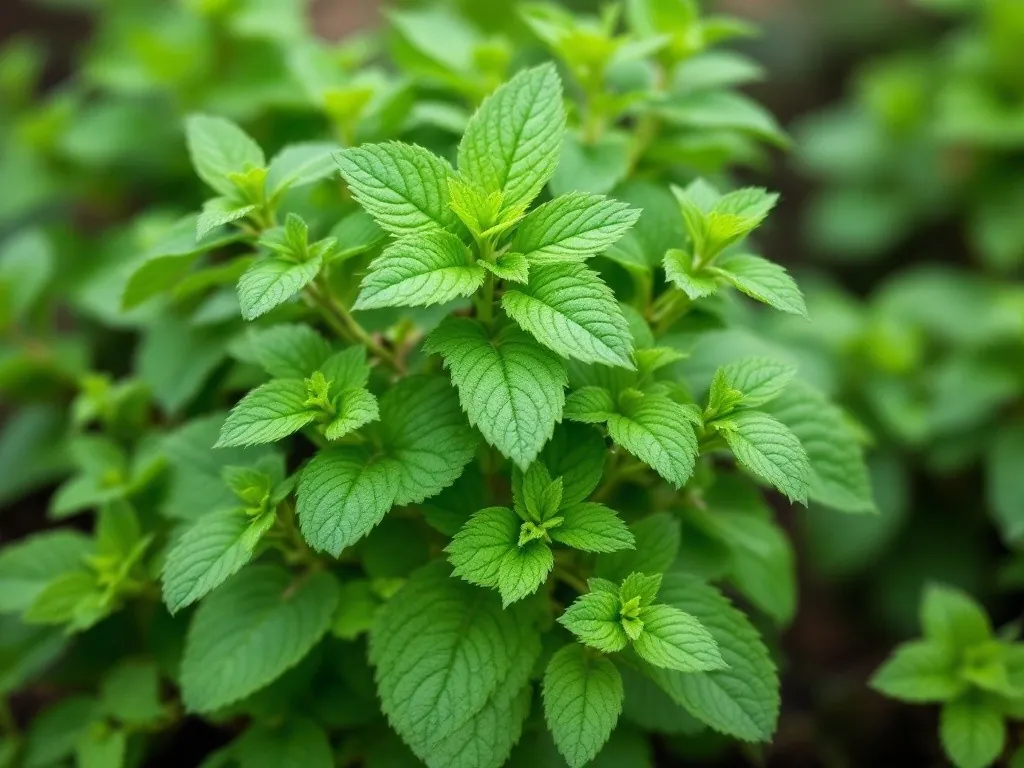
In short
- Grows very vigorously — plant in a container that restricts its runners.
- Likes moist soil and tolerates part shade.
- Regular harvesting encourages bushier growth.
- Highly attractive to bees, drawing bees and butterflies.
- Aroma is strongest just before flowering.
Botanical data
- Family
- Lamiaceae (Lamiaceae)
- Height
- 0.3–0.9 m
- Width
- 0.4–1 m
- Habit
- Creeping
- Growth rate
- Fast
- Position
- Full sun, Partial shade
- Soil
- Humus-rich, Loamy
- pH reaction
- pH 6–7.5
- Moisture
- Moist
- Bloom
- July–September
- Hardiness
- USDA 3a–9a
- Propagation
- By division, From cuttings
Characteristics
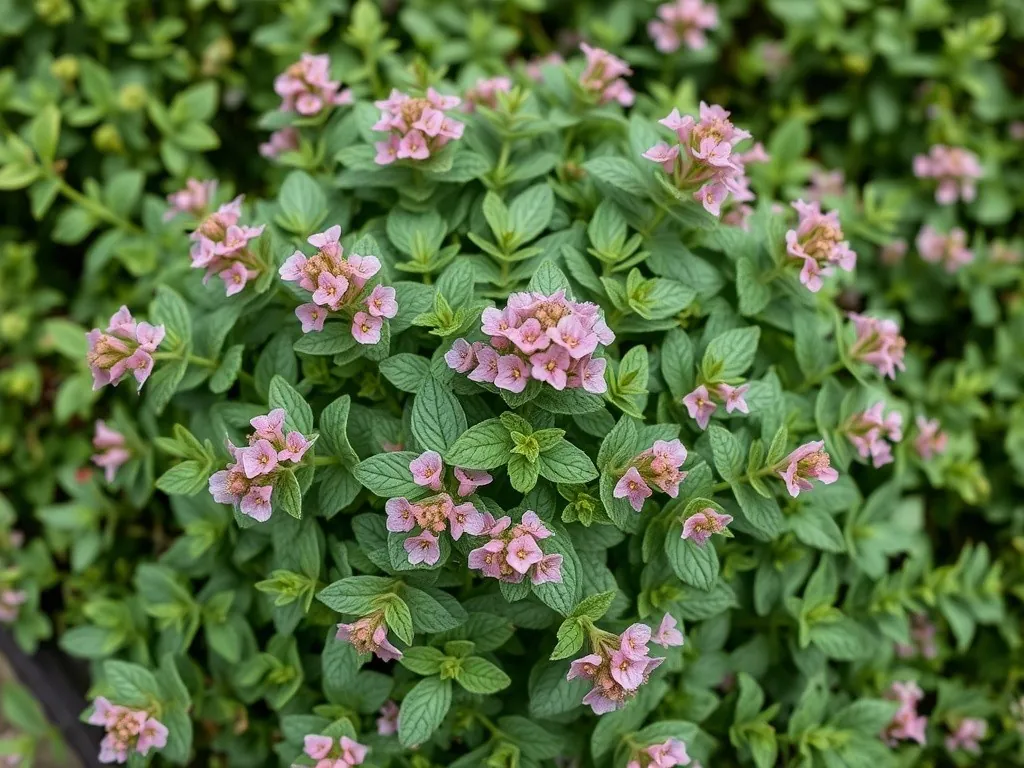
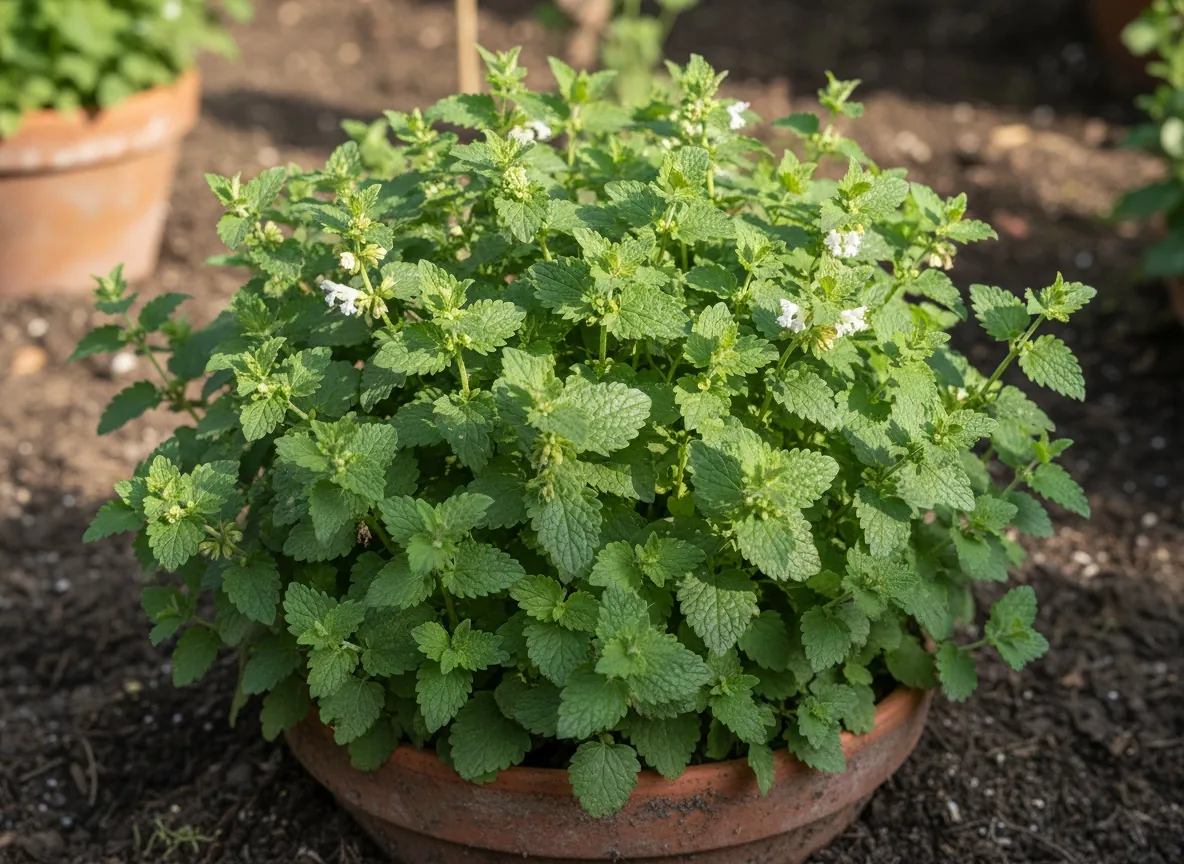
A perennial herbaceous plant with square stems, spreading by underground and above-ground runners. The leaves are toothed and strongly scented with menthol. Small, lipped flowers form in spike-like clusters.
Growing and care
Watering
Likes consistently moist soil; wilts quickly if it dries out. One of the few herbs that tolerates damp sites well.
Fertilizing
Undemanding — grows vigorously even without fertilising.
Planting
Moist, fertile soil; it is ESSENTIAL to plant in a container that restricts root spread (e.g. a sunken pot) — mint is strongly invasive.
Pruning
Harvest and cut back shoots regularly, which encourages bushier growth; the aroma is strongest just before flowering.
Companion plants
Good companions
Mint's strong scent repels cabbage white butterflies and aphids that attack brassicas.
Bad companions
The two plants have different water needs (mint likes moisture, basil prefers moderate moisture), and the vigorous mint smothers the slower-growing herb.
The evidence level indicates whether the relationship is backed by research, observation, or gardening tradition.
Diseases and pests
Toxicity
| For whom | Level | Notes |
|---|---|---|
| Humans | None | — |
| Dogs | Mild | Large amounts of peppermint oil can irritate animals' digestive tracts. |
| Cats | Mild | — |
History and origin
Peppermint arose as a natural hybrid in 17th-century England. Mints were already prized as medicinal and refreshing herbs in antiquity, mentioned in Egyptian, Greek and Roman sources.
Uses
For herb gardens (in containers), balcony pots and windowsill planters. The leaves are used fresh and dried in infusions, dishes and drinks.
Trivia
- The menthol responsible for mint's refreshing effect stimulates cold receptors in the skin and mouth.
- Peppermint is a sterile hybrid — it propagates only vegetatively, by runners and cuttings.
Frequently asked questions
How do you stop mint from spreading throughout the garden?
Plant it in a container that restricts the roots — for example, a large pot sunk into the ground, or a separate, enclosed bed. Mint spreads aggressively through underground runners.
Does mint grow in shade?
Yes, it tolerates part shade better than most herbs, though it has a more intense aroma in sun. The key is keeping the soil moist.
Why is my mint losing its aroma?
Aroma weakens after flowering and with excess nitrogen fertilising. It is best to harvest the leaves just before flowering and grow mint in moderately fertile soil.
Sources
- Plants of the World Online (POWO)Database (GBIF, POWO…)
- RHS — MintInstitution / botanical garden
My note
A private note for this plant — saved in your browser.