In short
- Very drought-resistant — grows best in a sunny, well-drained position.
- Flowers from July to September and is intensively visited by bees, bumblebees and butterflies.
- Frost-hardy in the Polish climate, needs no winter cover.
- The leaves are most aromatic just before flowering — this is the best time to harvest.
- It is worth rejuvenating the plant by division every few years, when the centre of the clump begins to thin.
Botanical data
- Family
- Lamiaceae (Lamiaceae)
- Height
- 0.3–0.8 m
- Width
- 0.3–0.5 m
- Habit
- Clump-forming
- Growth rate
- Moderate
- Position
- Full sun, Partial shade
- Soil
- Sandy, Chalky, Humus-rich
- pH reaction
- pH 6–8
- Moisture
- Dry, Moderate
- Bloom
- July–September
- Hardiness
- USDA 4a–9b
- Propagation
- From seed, From cuttings, By division
Characteristics
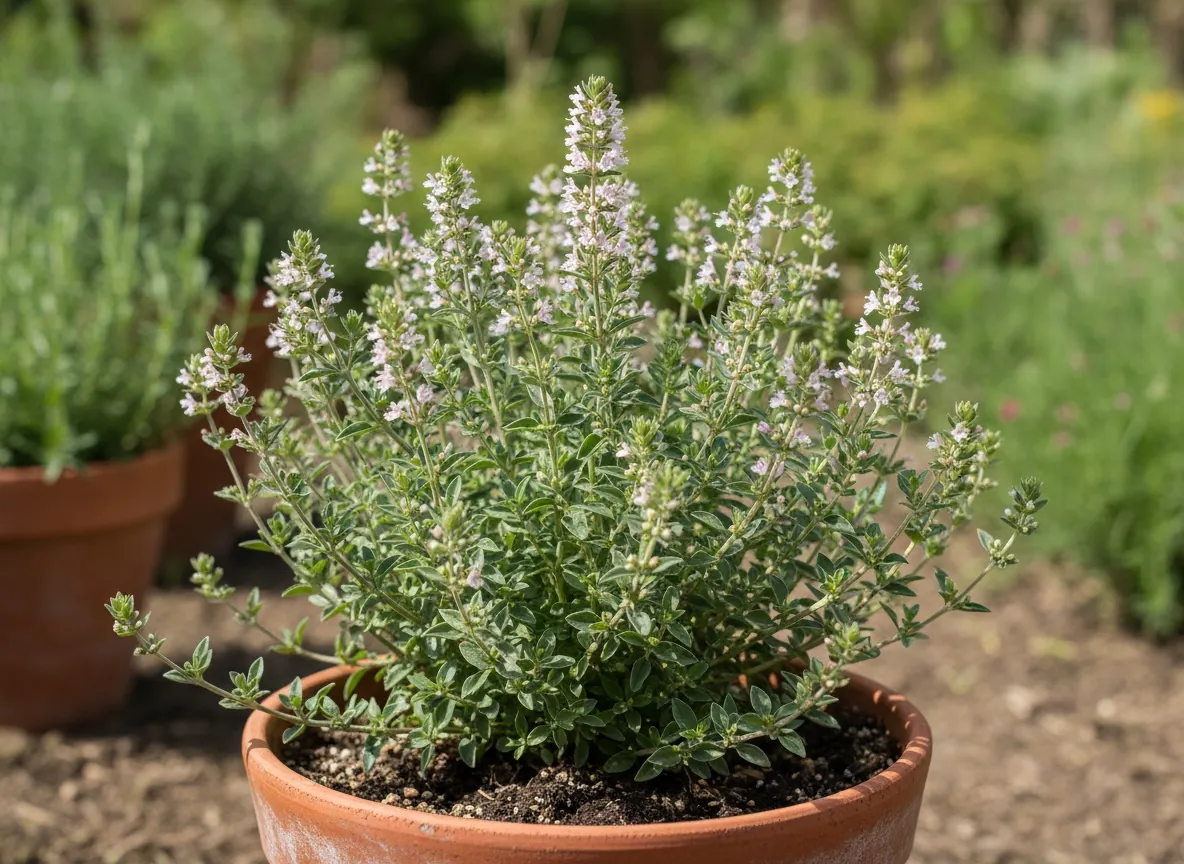
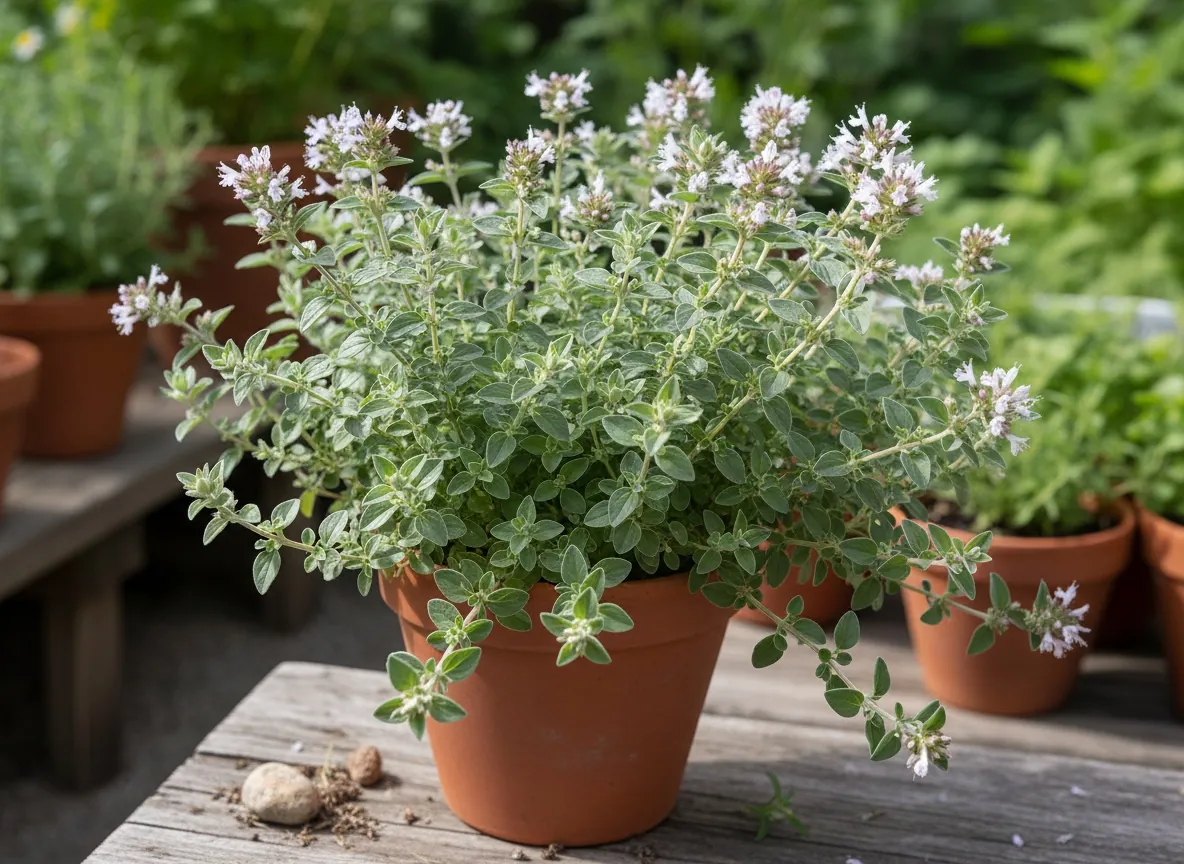
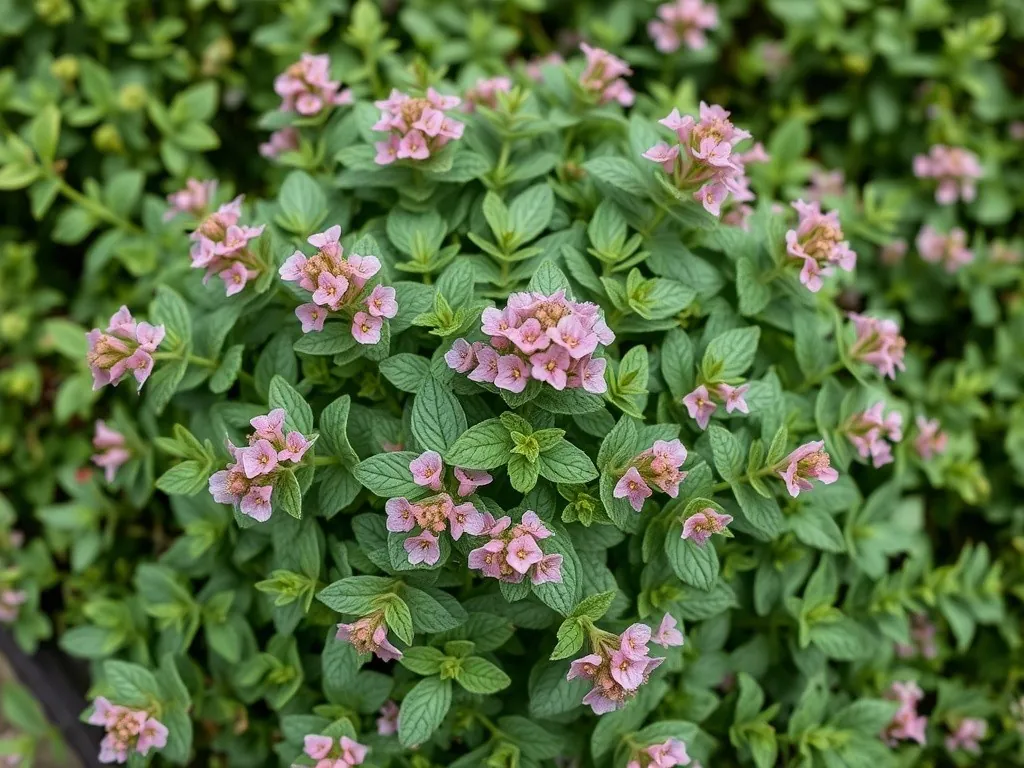
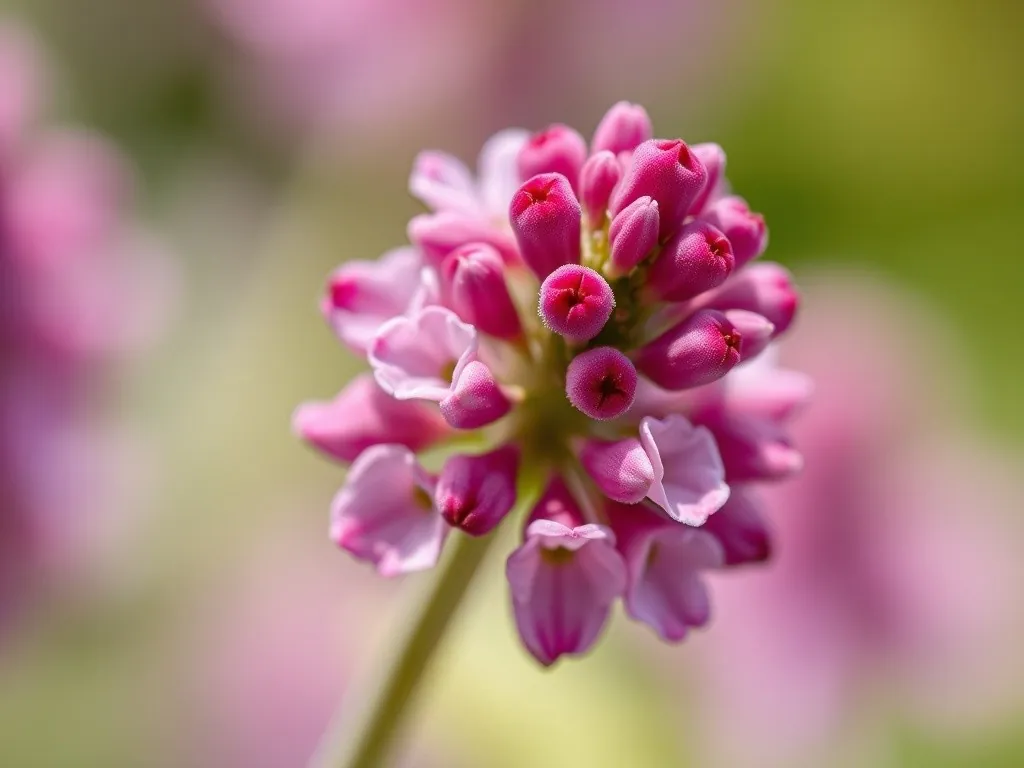
Forms low, dense clumps of erect, slightly four-angled stems with small, oval, aromatic leaves. Small, pink-violet flowers are gathered in loose corymbs at the tips of the shoots, strongly attracting pollinating insects.
Growing and care
Watering
Tolerates short dry spells better than an excess of water. In winter it usually needs no watering in the ground.
Fertilizing
Avoid nitrogen-rich fertilisers — they weaken the intensity of the leaf aroma.
Planting
A well-drained position, preferably with added sand or gravel; avoid compacted and waterlogged soils.
Pruning
Cut the shoots just above the soil surface after flowering has finished; divide old, woody clumps to rejuvenate the plant.
Companion plants
Good companions
The aroma of oregano deters some of the pests that attack tomatoes, while at the same time attracting pollinating and predatory insects that limit aphids.
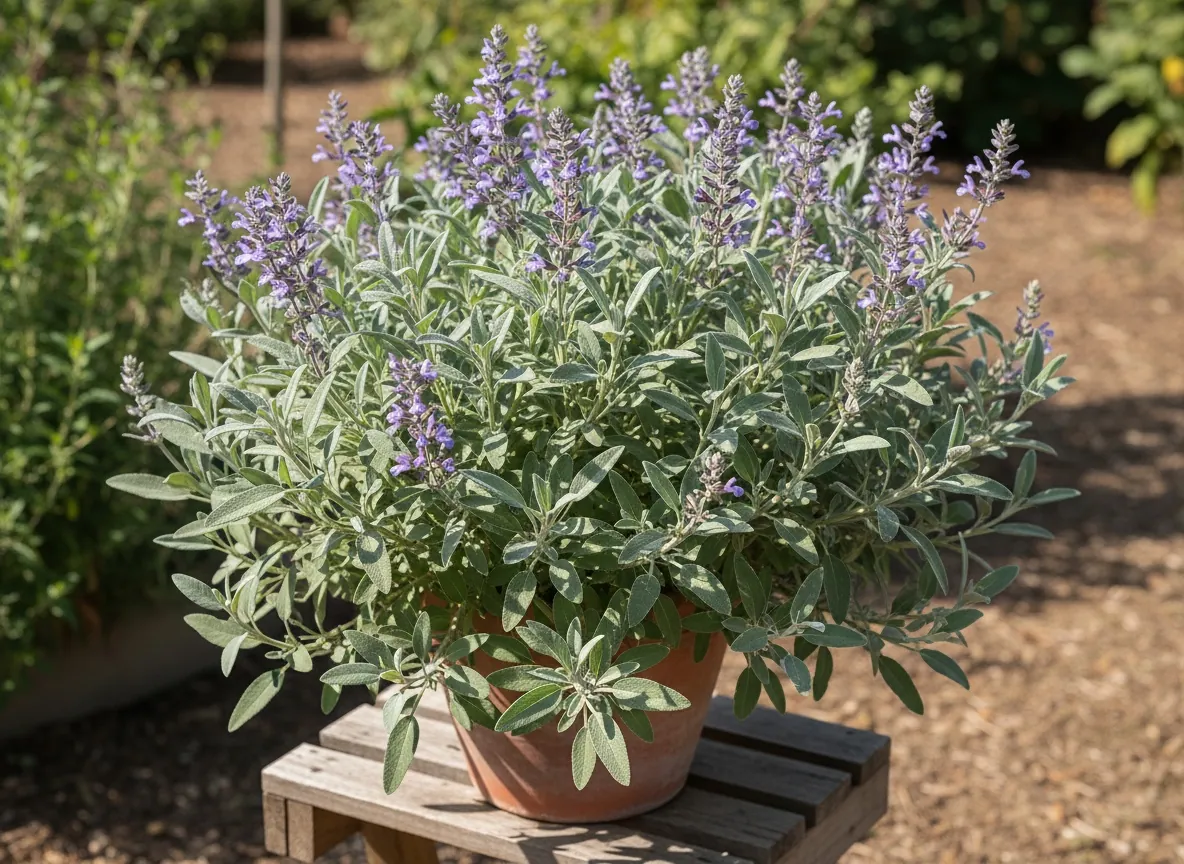
Similar site requirements (sun, well-drained soil) and shared use in Mediterranean cooking.
Bad companions
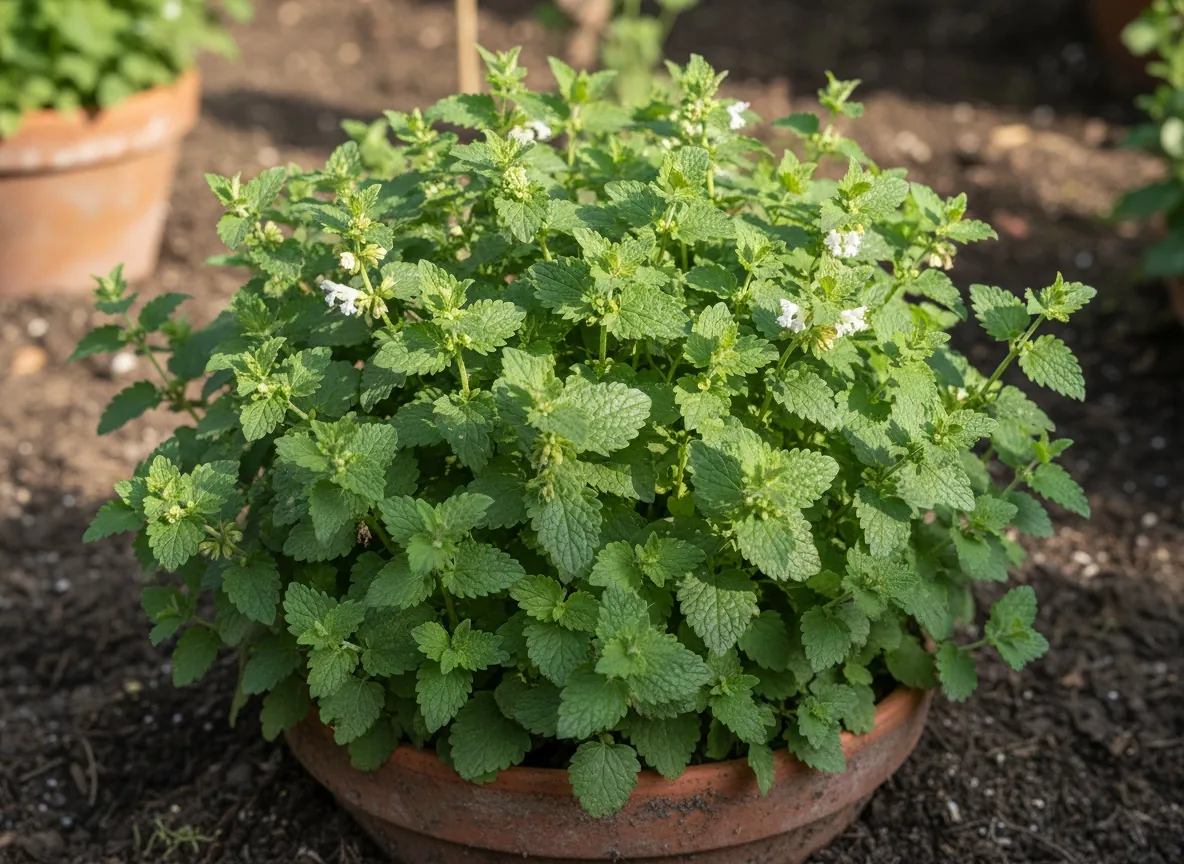
Mint spreads aggressively through underground runners and quickly smothers the slower-growing oregano, taking away its space and water.
The evidence level indicates whether the relationship is backed by research, observation, or gardening tradition.
Toxicity
| For whom | Level | Notes |
|---|---|---|
| Humans | None | A popular culinary herb, eaten every day. |
| Dogs | None | — |
| Cats | None | — |
History and origin
Cultivated since the times of ancient Greece and Rome, where it was valued both in cooking and in medicine. The genus name Origanum derives from the Greek 'oros' (mountain) and 'ganos' (joy, adornment) — 'adornment of the mountains'. In Poland it has grown wild for centuries on dry field margins and grasslands.
Uses
For herb gardens, sunny borders, dry banks and balcony cultivation in pots. The leaves are used fresh and dried in Mediterranean cooking, and the flowers are valued by beekeepers.
Trivia
- Oregano is a close relative of marjoram (Origanum majorana), with which it is sometimes confused, although it has a more pronounced, sharper aroma.
- Dried oregano leaves retain their aroma much longer than fresh ones, which is why this herb is more often bought dried than fresh.
Frequently asked questions
When should oregano leaves be harvested for the strongest aroma?
The best time is just before the start of flowering, when the concentration of essential oils in the leaves is highest. It is best to harvest in the morning, after the dew has dried.
Will oregano survive the Polish winter in the ground?
Yes, it is a fully frost-hardy plant in our climate and usually needs no additional cover, provided the site is well-drained and does not accumulate winter moisture.
Why does my oregano smell weak?
Too much nitrogen fertilising and soil that is too fertile and moist weaken the aroma of the leaves. Oregano smells strongest in a poor, sunny and dry position, close to its natural habitat.
Sources
- Plants of the World Online (POWO) — Origanum vulgareDatabase (GBIF, POWO…)
- RHS — Origanum vulgareInstitution / botanical garden
My note
A private note for this plant — saved in your browser.