In short
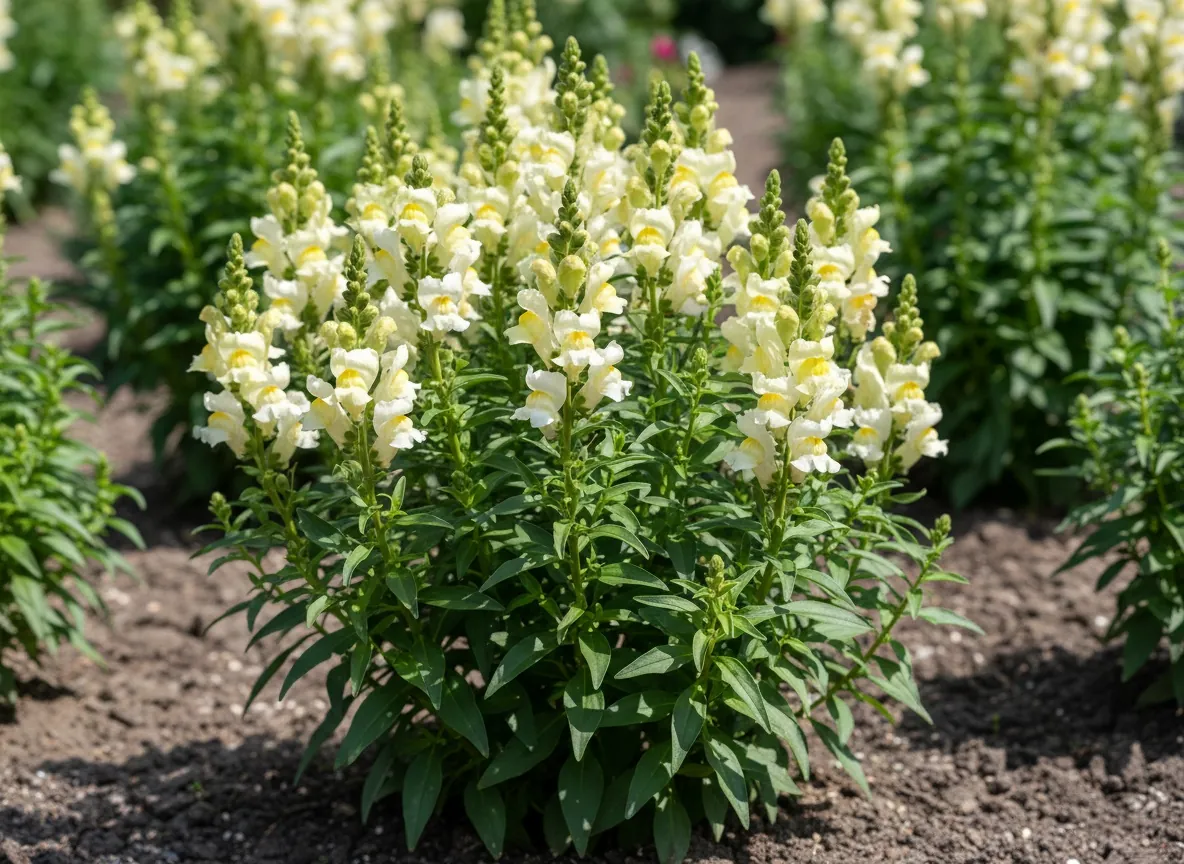
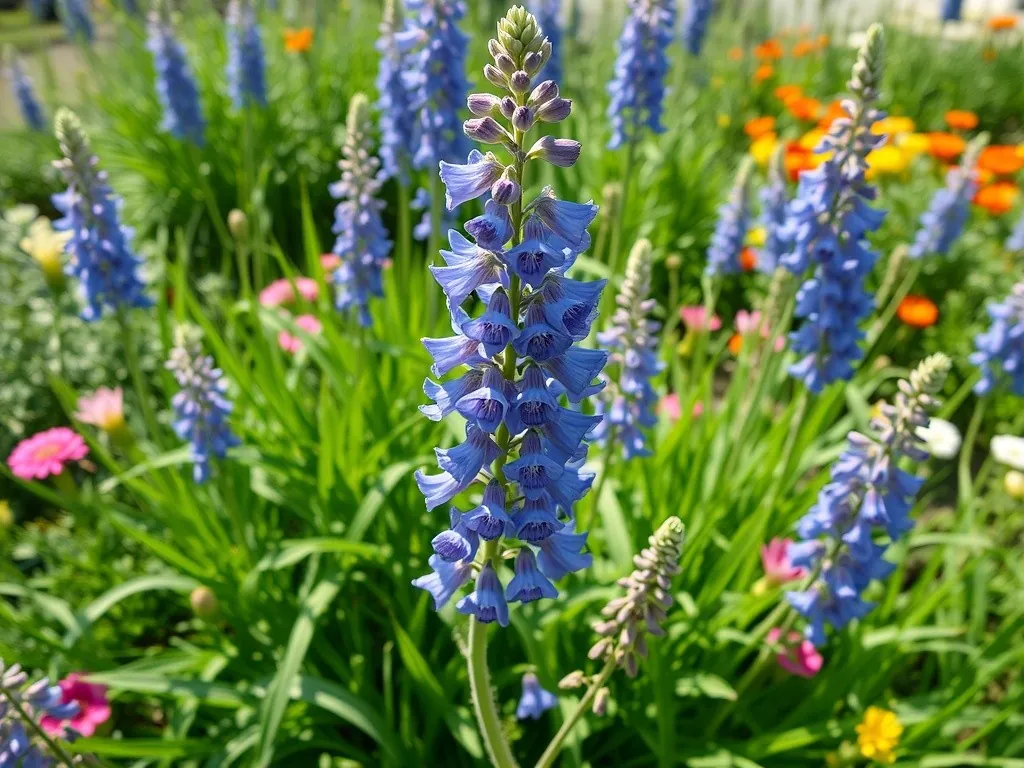
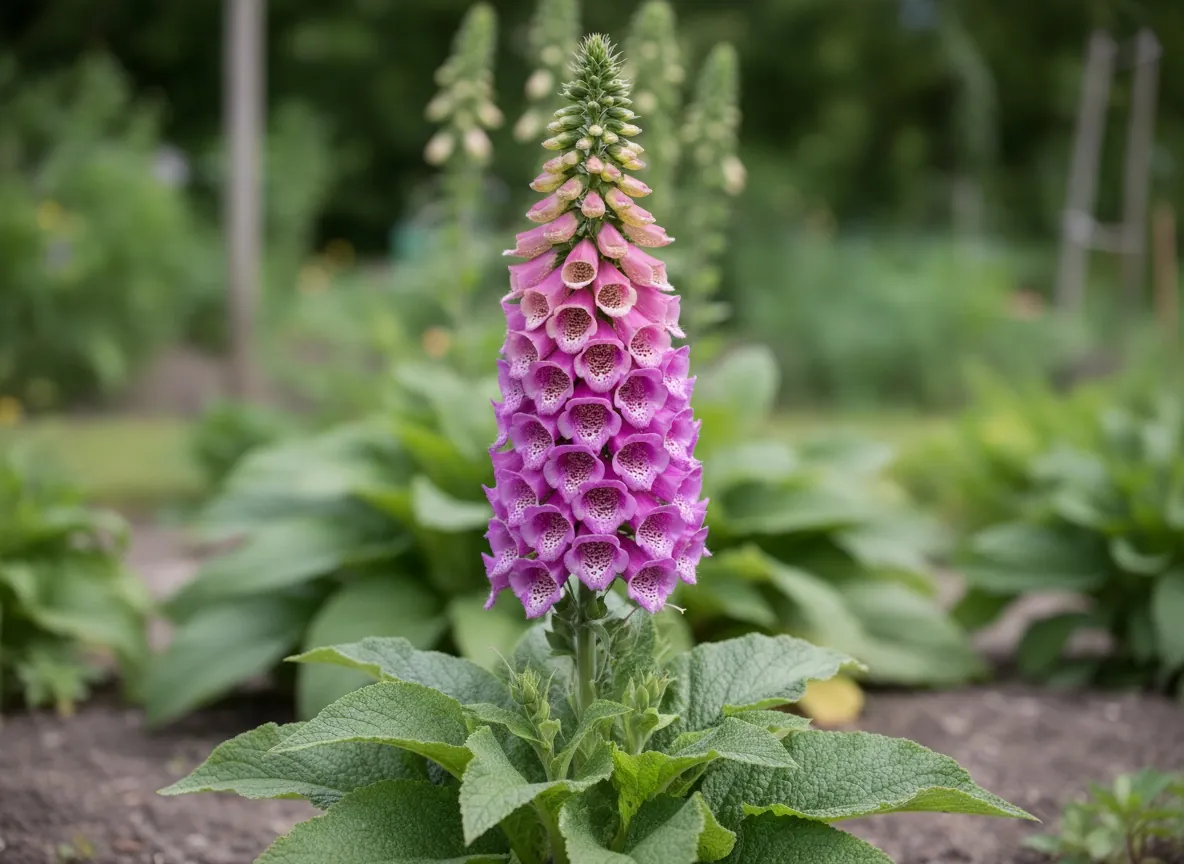
- Tall, stately spikes of bell-shaped flowers in June and July.
- A biennial plant — in the first year it forms a rosette, in the second it flowers and dies.
- HIGHLY POISONOUS: cardiac glycosides in all parts, dangerous to humans and animals.
- Likes humus-rich, acidic soil in partial shade — ideal for woodland gardens.
- Self-seeds readily and is a valued food source for bumblebees.
Botanical data
- Family
- Plantaginaceae (Plantaginaceae)
- Height
- 1–2 m
- Width
- 0.3–0.6 m
- Habit
- Upright
- Growth rate
- Fast
- Position
- Partial shade, Full sun
- Soil
- Humus-rich, Peaty
- pH reaction
- pH 5–6.5
- Moisture
- Moderate, Moist
- Bloom
- June–July
- Hardiness
- USDA 4a–8b
- Propagation
- From seed
Characteristics
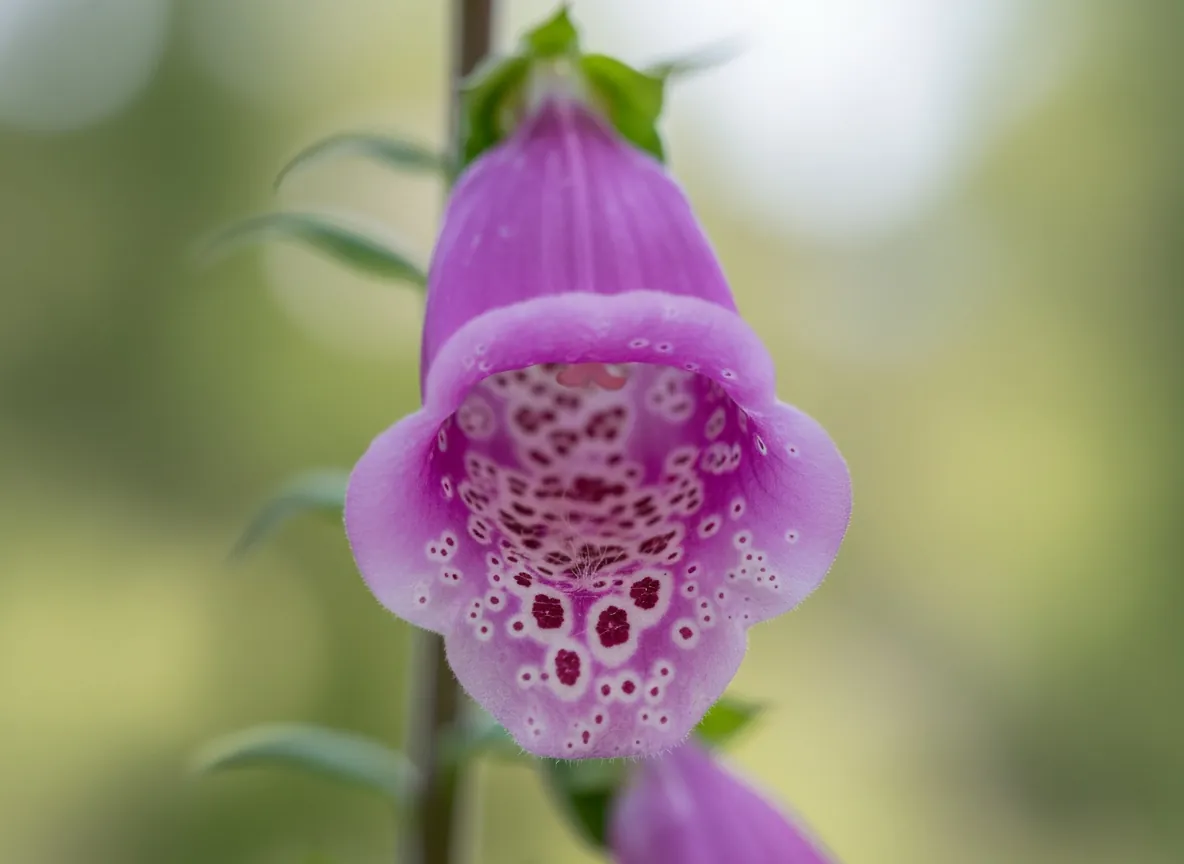
In the first year it produces a ground-level rosette of large, softly hairy, lance-shaped leaves. In the second year a stiff, unbranched stem grows from it, ending in a long, one-sided raceme of drooping, bell- to tube-shaped flowers. Their interior is adorned with dark spots on a pale background, guiding insects deep into the corolla towards the nectar.
Growing and care
Watering
Prefers fresh, humus-rich and slightly acidic, moderately moist soil. It tolerates neither long drought nor constant waterlogging.
Fertilizing
Small — humus-rich, woodland soil is entirely sufficient.
Planting
Sow the fine seeds on the surface (they germinate in light) into moist, humus-rich soil; set the seedlings out in their final position in the autumn of the first year.
Pruning
Cutting the leading inflorescence just after flowering often triggers weaker side spikes; leaving some of the spikes allows the plant to self-seed.
Companion plants
Good companions
Both plants like humus-rich soil in partial shade; the broad leaves of the hosta fill the space at the base of the tall foxglove spikes well.
Naturalistic companions of the woodland edge — both species readily self-seed and flower in a similar, early-summer period.
Foxglove prefers the same acidic, humus-rich soils as rhododendrons and beautifully fills woodland beds under their canopy.
Bad companions
The strongly poisonous leaves of foxglove are sometimes mistaken for edible herbs, e.g. comfrey — proximity to food crops risks a dangerous mix-up at harvest.
The evidence level indicates whether the relationship is backed by research, observation, or gardening tradition.
Toxicity
| For whom | Level | Notes |
|---|---|---|
| Humans | Lethal | All parts contain cardiac glycosides (including digoxin and digitoxin). Ingesting even a small amount can cause dangerous heart rhythm disturbances, vomiting, vision disturbances, and in more severe cases lead to death. The leaves are sometimes mistaken for edible herbs — plant away from food crops and out of the reach of children. |
| Dogs | Lethal | Cardiac glycosides are strongly toxic to dogs; ingestion requires immediate veterinary intervention. |
| Cats | Lethal | — |
| Horses | High | Poisonous also in hay — it should not grow near pastures or hay meadows. |
| Rabbits | High | — |
History and origin
Foxglove has commanded respect for centuries as both a medicinal and a poisonous plant. In the 18th century the English physician William Withering described its use in treating oedema associated with heart failure, which gave rise to the use of cardiac glycosides (digoxin) in cardiology. The dosage of these substances is, however, extremely narrow, which is why home use of the plant is strongly discouraged.
Uses
For woodland, naturalistic and cottage gardens, at the edge of trees and shrubs on acidic ground, where it can self-seed freely. Because of its strong toxicity it is inadvisable in gardens with small children, animals, and near edible crops.
Trivia
- The Latin and German names (Digitalis, “Fingerhut”) and the Polish “naparstek” (thimble) refer to the shape of the flower, which fits over a finger like a thimble.
- Digoxin is obtained from foxglove — a cardiac medicine still used in cardiology today, which makes this plant a model example of the thin line between poison and medicine.
Frequently asked questions
Is foxglove really that dangerous?
Yes — it is one of the most poisonous ornamental plants. All its parts contain cardiac glycosides (including digoxin and digitoxin), which even in small doses cause dangerous heart rhythm disturbances, vomiting and vision disturbances, and in more severe cases can lead to the death of humans and animals. Poisonings have occurred after its leaves were mistaken for edible herbs.
Why did the foxglove not flower in the first year?
This is normal — the common foxglove is a biennial plant. In the first year after sowing it forms only a ground-level leaf rosette and flowers only in the second year, after which it usually dies. To have flowering plants every season, it is worth sowing it two years in a row or letting it self-seed.
How do you get foxglove to return in the garden every year?
Although a single plant dies after flowering, the species maintains itself easily through self-seeding. It is enough to leave some of the spent spikes so that they ripen and scatter the fine seeds. Young rosettes will appear near the mother plant and flower the following season.
Sources
- Plants of the World Online (POWO)Database (GBIF, POWO…)
- RHS — Digitalis purpureaInstitution / botanical garden
My note
A private note for this plant — saved in your browser.