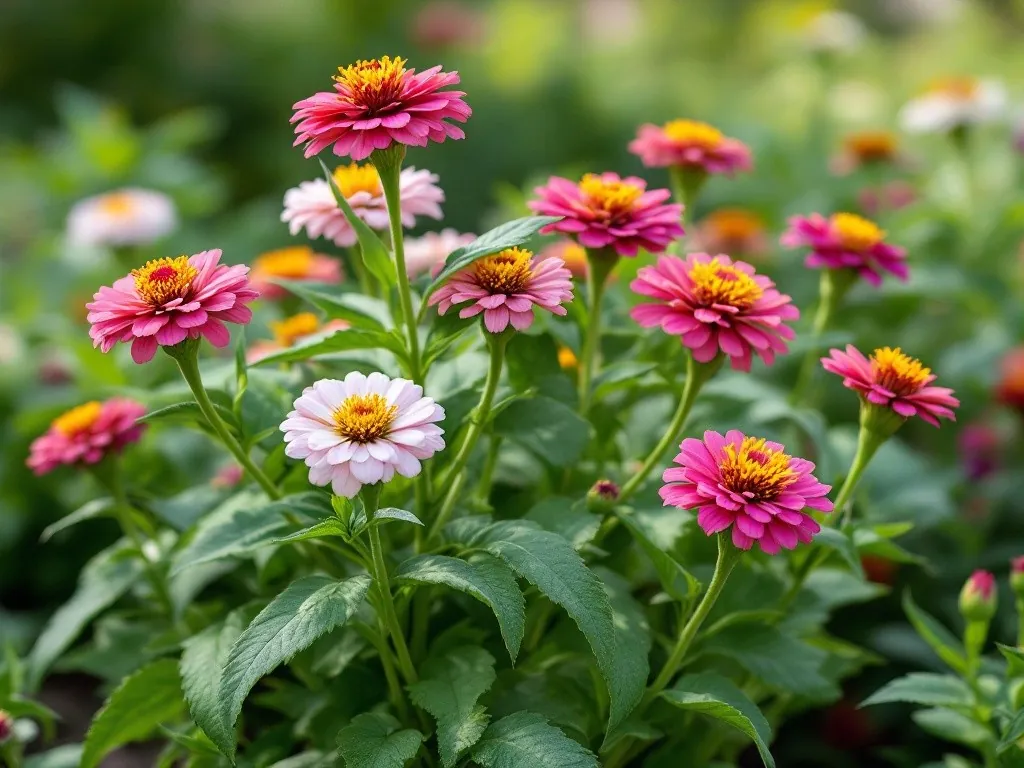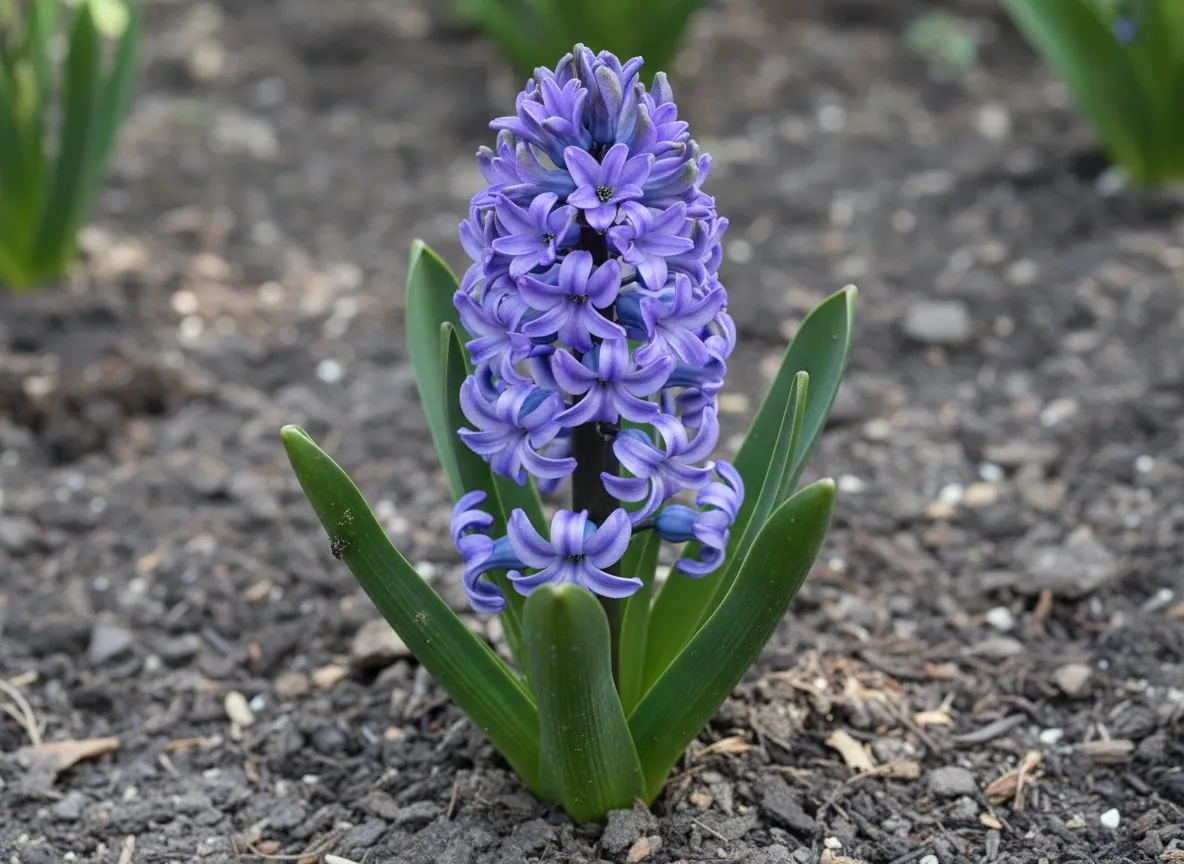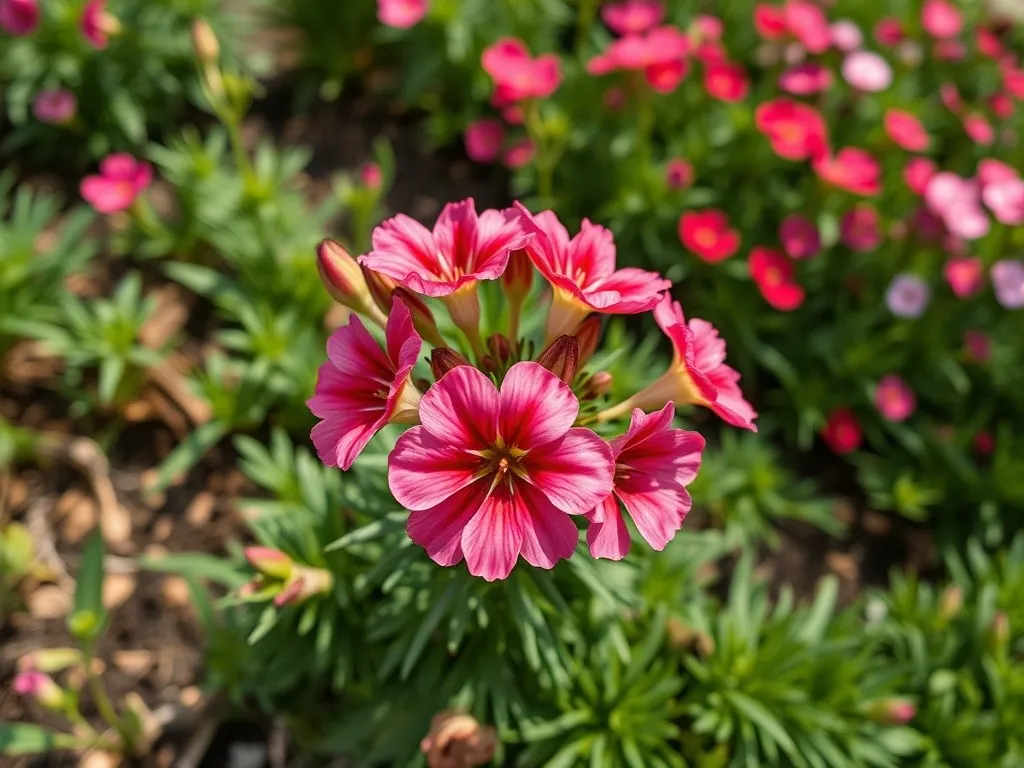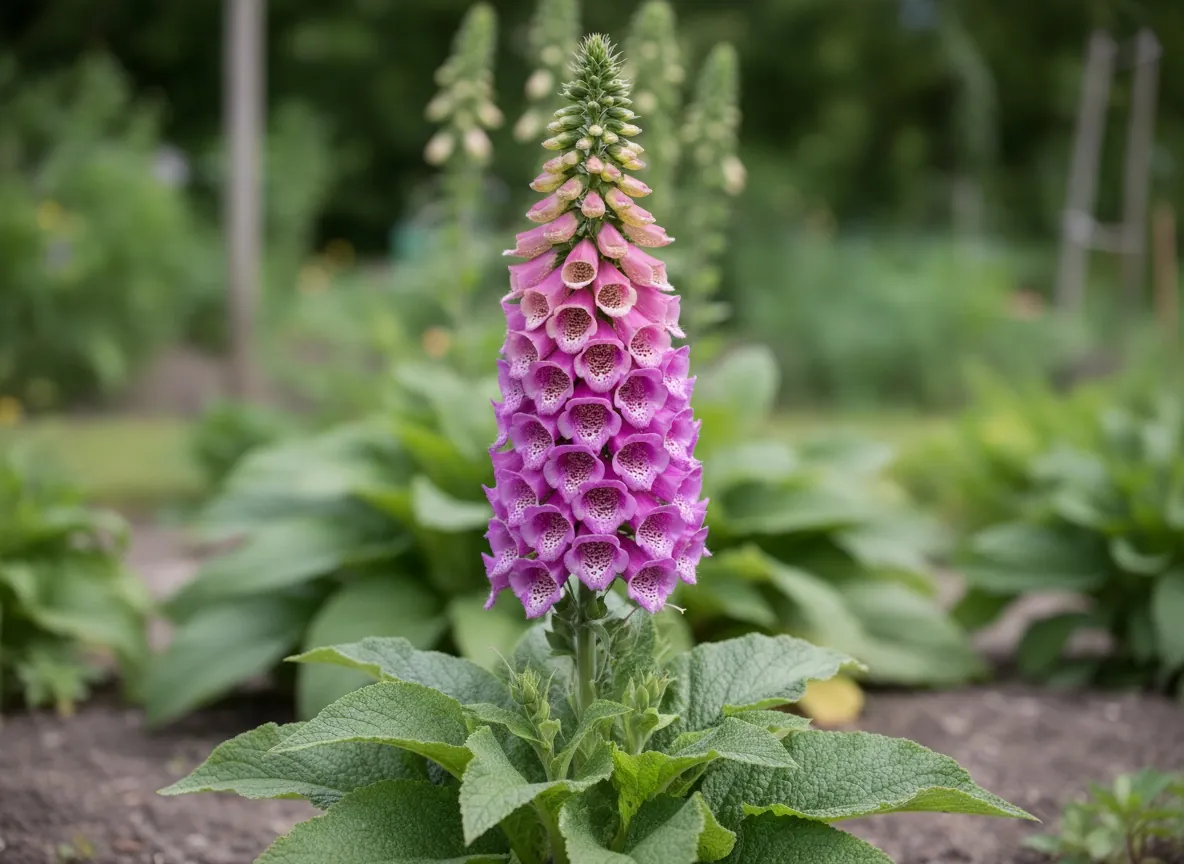
In short
- Flowers for a long time, from June until the autumn frosts, in almost every colour except blue.
- Requires sun or partial shade and fertile, well-drained soil.
- Popular for borders and as a long-lasting cut flower.
- Pinching young plants produces more flower spikes.
- In dense planting it can be prone to rust — provide good air circulation.
Botanical data
- Family
- Plantaginaceae (Plantaginaceae)
- Height
- 0.2–0.9 m
- Width
- 0.2–0.35 m
- Habit
- Upright
- Growth rate
- Moderate
- Position
- Full sun, Partial shade
- Soil
- Humus-rich, Loamy
- pH reaction
- pH 6–7.5
- Moisture
- Moderate
- Bloom
- June–October
- Hardiness
- —
- Propagation
- From seed
Characteristics
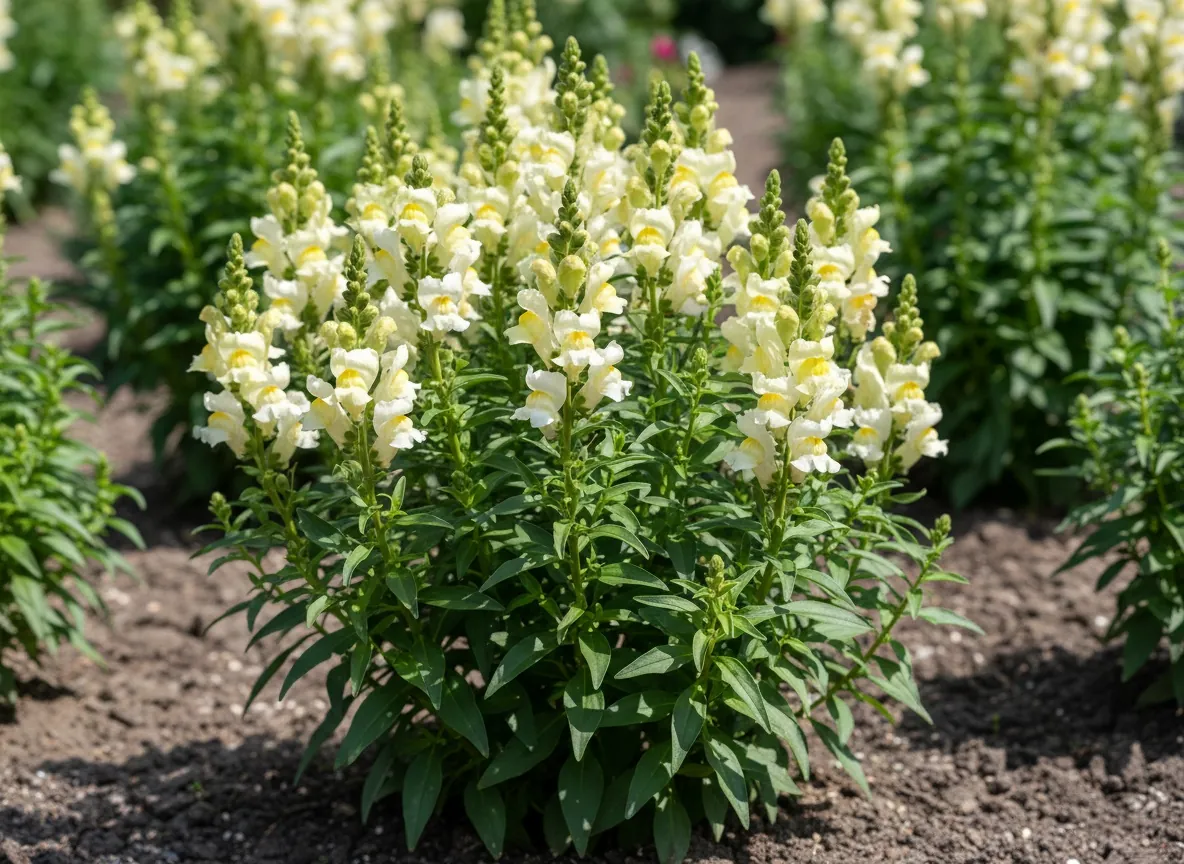
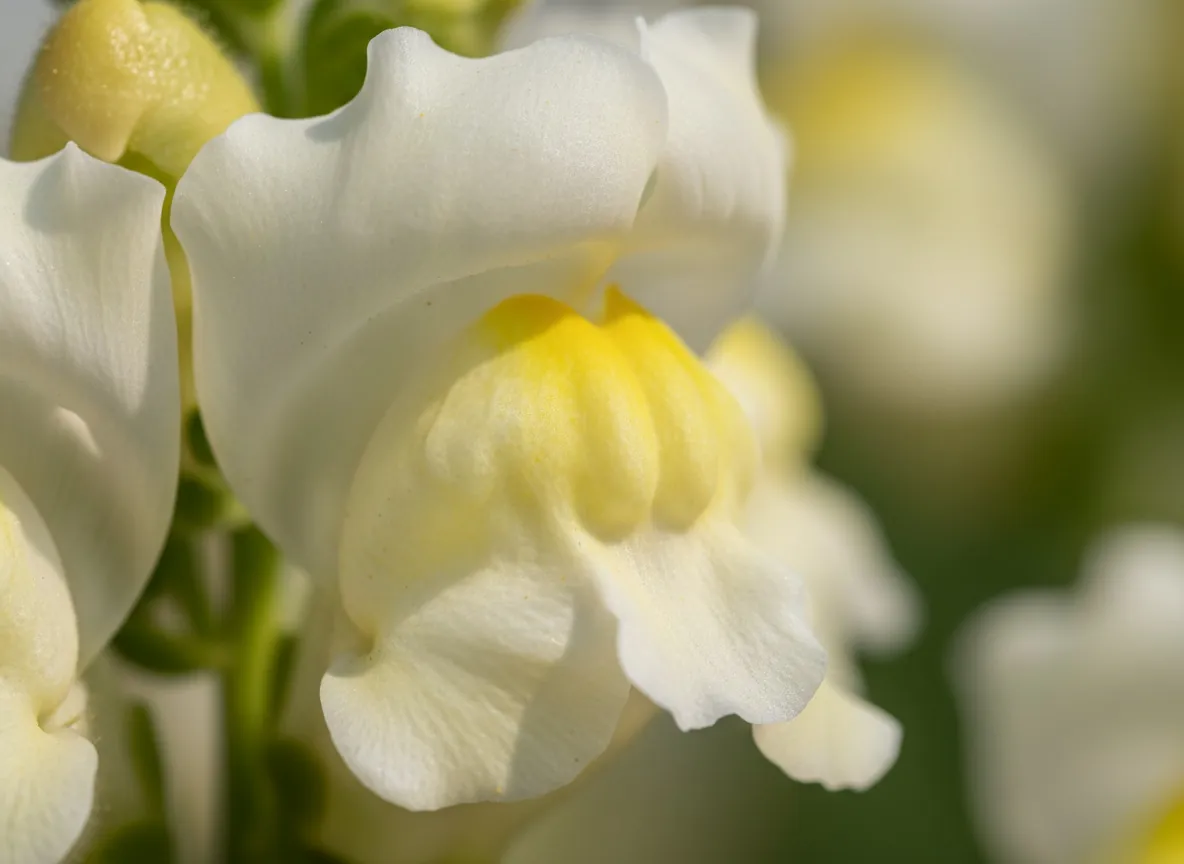
A plant with stiff, upright stems ending in dense spikes of flowers. The individual flower has a two-lipped corolla that “opens” like a mouth when squeezed at the sides — hence the common name lion's mouth. The flowers open in succession from the bottom of the spike upwards, in colours from white through yellows, pinks and reds to two-coloured combinations. The cultivars differ in height — from low, edging types to tall forms for cutting.
Growing and care
Watering
Water moderately, preferably at the base of the plant, avoiding wetting the leaves — wet foliage in dense planting favours the rust to which snapdragon is prone.
Fertilizing
Regular, moderate doses sustain abundant flowering and strong stems for cutting.
Planting
Sunny or lightly shaded position, fertile, well-drained, neutral to slightly alkaline soil. Sow the fine seeds shallowly — they germinate in light.
Pruning
Pinching the tips of young plants above the 3rd–4th pair of leaves induces branching and a greater number of spikes. Systematic removal of spent flower clusters and cutting for the vase stimulate the plant to flower again.
Companion plants
Good companions
Two classic bedding plants with similar requirements for sun and water, together forming a colourful, long-flowering composition.
Both species tolerate the cooler parts of the season well, so they complement each other nicely in spring and autumn bedding plantings.
A similar preference for sun and well-drained, rather alkaline soil makes growing them together in a sunny border easy.
Bad companions
Too close a neighbourhood worsens air circulation around the snapdragon and increases the risk of developing rust, to which the species is particularly sensitive.
The evidence level indicates whether the relationship is backed by research, observation, or gardening tradition.
Toxicity
| For whom | Level | Notes |
|---|---|---|
| Humans | None | The flowers are considered edible and are sometimes used decoratively, but the plant is grown primarily as an ornamental. |
| Dogs | None | — |
| Cats | None | — |
History and origin
The species comes from the Mediterranean, where it grows on rocks and dry slopes as a perennial. It has been cultivated in gardens for centuries, and intensive breeding has produced hundreds of cultivars differing in colour, height and flower form. The botanical name Antirrhinum, from the Greek for “nose-like”, alludes to the shape of the flower.
Uses
A versatile bedding and balcony plant. Low cultivars work excellently as edging and in containers, while tall ones are a valuable, long-lasting cut flower for bouquets. The snapdragon fits in well in colourful summer borders and cottage gardens, attracting bumblebees, which are able to open its flowers.
Trivia
- Children like to “open the mouths” of the flowers by gently squeezing them at the sides — the flower briefly gapes open and closes again.
- After flowering, dry seed capsules form that resemble tiny skulls in shape, which has given the plant dark nicknames in some cultures.
Frequently asked questions
Why are rust-coloured spots appearing on the leaves of my snapdragon?
This is most often snapdragon rust — a fungal disease to which the species is particularly prone. It is favoured by overly dense planting, poor air circulation and watering that wets the leaves. It is worth allowing greater spacing and watering only at the base of the plants.
How do you get more flowers on a snapdragon?
The key is pinching the tips of young plants, which stimulates branching and the formation of more spikes. Regular removal of spent flower clusters and systematic cutting of flowers for the vase also help.
Will a snapdragon overwinter in the garden?
In the Polish climate usually not — it is a perennial that does not overwinter in the ground, which is why it is grown as an annual. In mild winters individual plants may survive, but this should not be relied on; annual sowing is more reliable.
Sources
- Plants of the World Online (POWO)Database (GBIF, POWO…)
- RHS — Antirrhinum majusInstitution / botanical garden
My note
A private note for this plant — saved in your browser.