In short
- Requires high air humidity and a constantly moist substrate.
- Prefers partial shade and shade — does not tolerate direct sun.
- Browning of the leaflets is usually the result of dry air.
- Non-toxic — safe for children and animals.
- Excellent for bathrooms and kitchens with higher humidity.
Botanical data
- Family
- Nephrolepidaceae (Nephrolepidaceae)
- Height
- 0.4–0.9 m
- Width
- 0.5–1.2 m
- Habit
- Cascading
- Growth rate
- Moderate
- Position
- Partial shade, Shade
- Soil
- Humus-rich, Peaty
- pH reaction
- pH 5–6.5
- Moisture
- Moist
- Bloom
- —
- Hardiness
- USDA 9a–11b
- Propagation
- By division, By runners
Characteristics
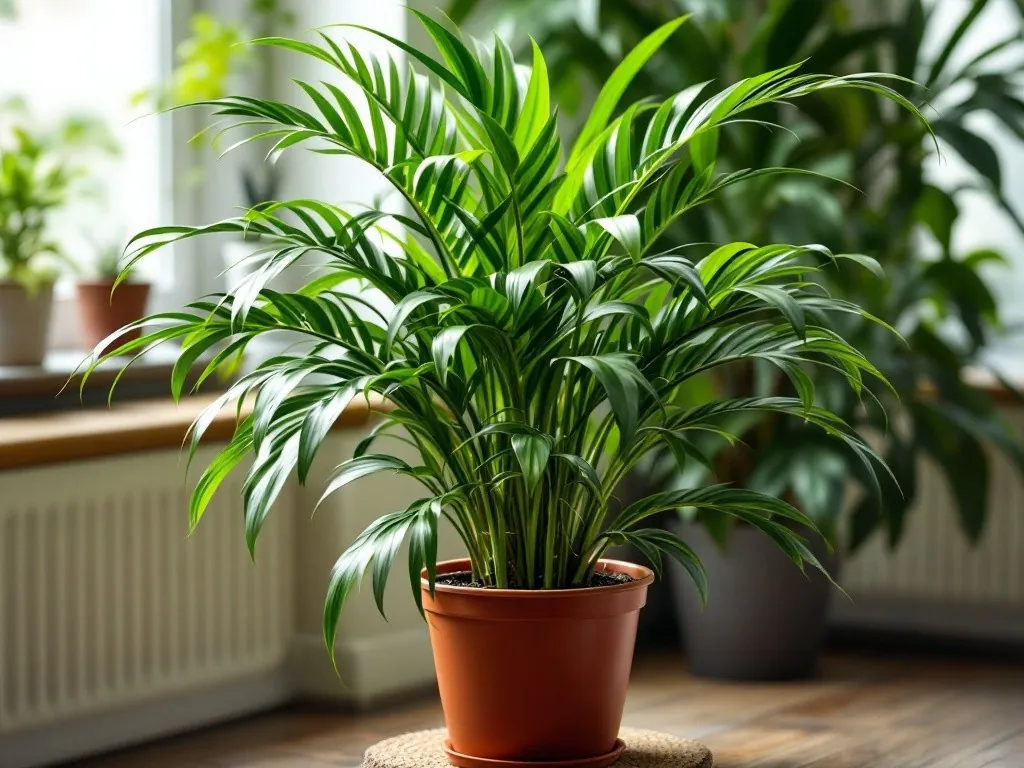
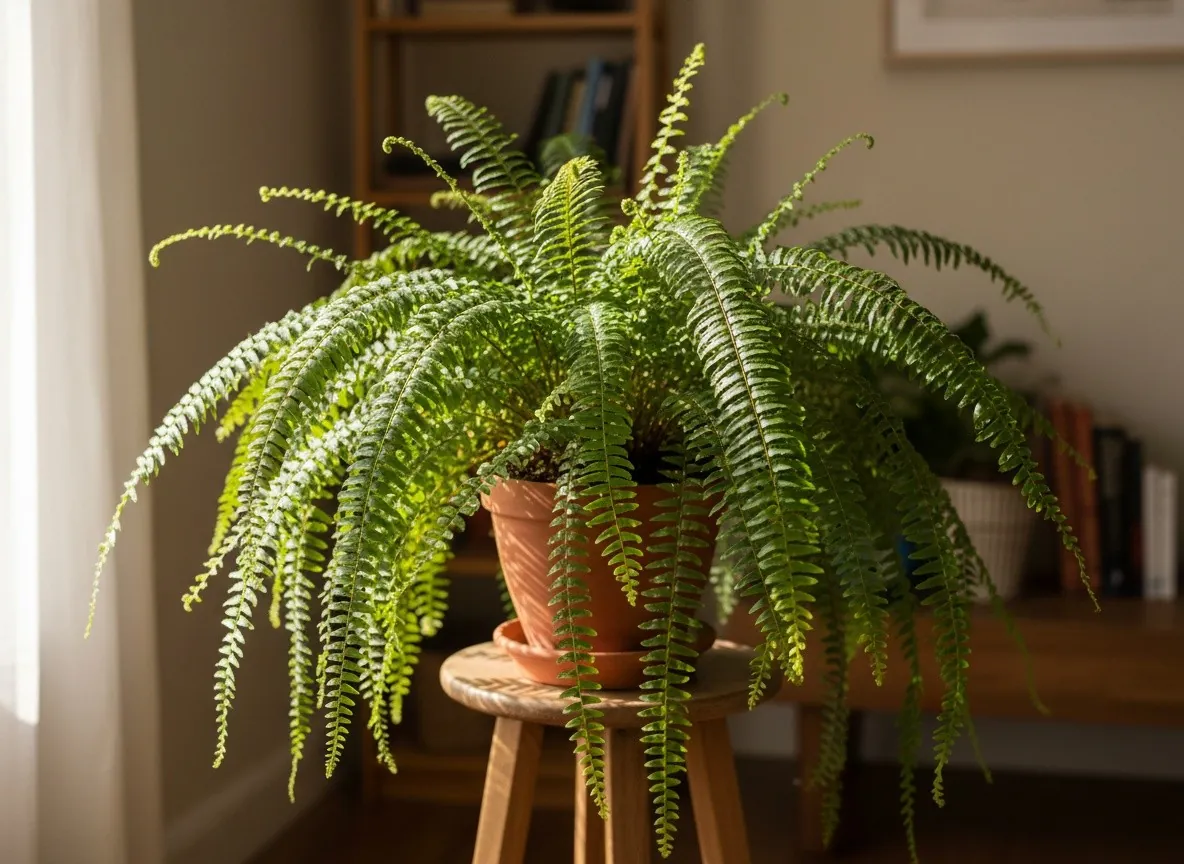
A fern with dense, arching, pinnate leaves (fronds) made up of numerous small leaflets. It spreads by runners, forming lush, cascading clumps.
Growing and care
Watering
Requires a constantly moist substrate and high air humidity. Dry air causes the leaflets to brown and drop — misting is worthwhile.
Fertilizing
Sensitive to salinity — feed with a weak solution.
Planting
A light, humus-rich, acidic substrate that retains moisture; a pot with drainage.
Pruning
Remove browned and withered leaves at the base to encourage new growth.
Companion plants
Good companions
Similar requirements — partial shade and high air humidity; they grow well together in a bathroom.
Bad companions
They require dry air and infrequent watering — the opposite of the moisture-loving fern.
The evidence level indicates whether the relationship is backed by research, observation, or gardening tradition.
Diseases and pests
Immobile, brown or yellowish shields (1–4 mm) attached to stems and the underside of leaves, especially along the veins. Easily mistaken for growths on the plant. They suck sap, causing yellowing and weakening, and excrete sticky honeydew. Common on figs, orchids and plants with tough leaves.
MealybugsInsects covered in a white, cottony, waxy coating, gathering in leaf axils, at the base of shoots and on the underside of leaf blades. They look like tufts of cotton wool. They suck sap, weaken the plant and excrete sticky honeydew, on which black sooty mould develops. A common pest of houseplants and succulents.
Fungus gnatsSmall, dark gnats (2–4 mm) flying around pots and scurrying across the surface of the substrate. The adults are a nuisance, but the real damage is done by their larvae in the soil, feeding on the roots and the base of the stems of young plants. A constantly moist, humus-rich substrate favours their development — the classic result of overwatering houseplants.
Toxicity
| For whom | Level | Notes |
|---|---|---|
| Humans | None | — |
| Dogs | None | — |
| Cats | None | — |
History and origin
The Boston fern gained enormous popularity in the Victorian era as a parlour plant. The 'Bostoniensis' cultivar, from which it takes its name, appeared in the USA in the late 19th century as a mutation.
Uses
For interiors with moderate light and raised humidity, for hanging baskets, on pedestals and in bathrooms. An excellent cascading plant.
Trivia
- The Boston fern is cited in NASA studies as effective at removing formaldehyde from the air.
- Ferns are among the oldest land plants — they existed hundreds of millions of years before flowering plants.
Frequently asked questions
Why is my Boston fern turning brown and dropping its leaflets?
The most common cause is air that is too dry and a substrate that has dried out. The fern needs high humidity — regular misting, standing it on a tray of moist expanded clay and keeping it away from radiators all help.
Is the Boston fern safe for cats?
Yes — the Boston fern is non-toxic and considered safe for cats and dogs, which sets it apart from many popular houseplants.
Where is the best place to put a Boston fern?
In a bright spot without direct sun and with raised humidity — ideally a bathroom with a window or a kitchen. Avoid dry, hot air.
Sources
- Plants of the World Online (POWO)Database (GBIF, POWO…)
- RHS — Nephrolepis exaltataInstitution / botanical garden
My note
A private note for this plant — saved in your browser.