In short
- Full sun and dry, well-drained soil are essential — it does not tolerate waterlogging.
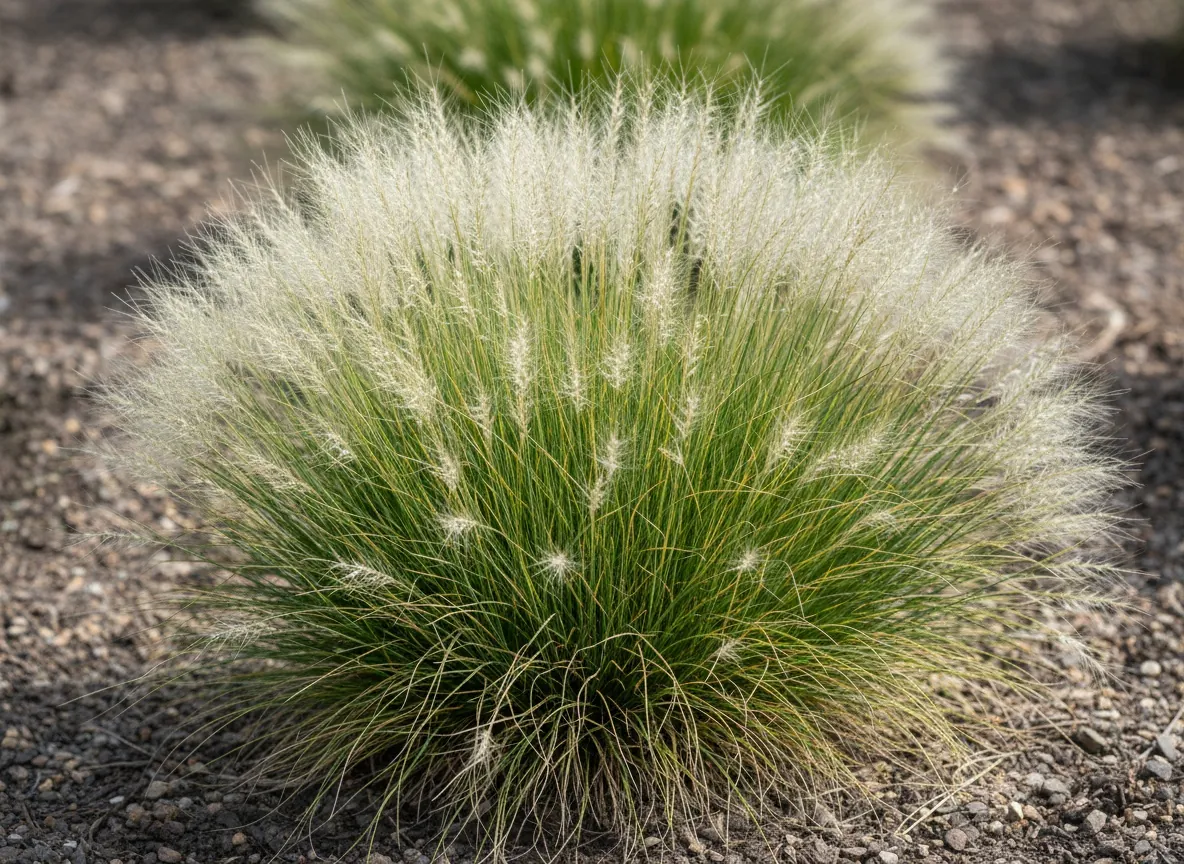
- Hair-like leaves and creamy panicles give the effect of “smoke” rippling in the wind.
- It self-seeds very freely — the seedlings must be weeded out, or the panicles cut before the seeds ripen.
- Short-lived: a clump looks good for 3–5 years, after which it is worth renewing.
- Cut in early spring, not in autumn — in winter the pale clump is an ornament.
- Frost-hardy roughly to USDA zone 6; winter moisture is more dangerous than frost.
Botanical data
- Family
- Poaceae (Poaceae)
- Height
- 0.4–0.7 m
- Width
- 0.3–0.5 m
- Habit
- Clump-forming
- Growth rate
- Fast
- Position
- Full sun
- Soil
- Sandy, Chalky
- pH reaction
- pH 6–8
- Moisture
- Dry, Moderate
- Bloom
- June–August
- Hardiness
- USDA 6a–10a
- Propagation
- From seed, By division
Characteristics
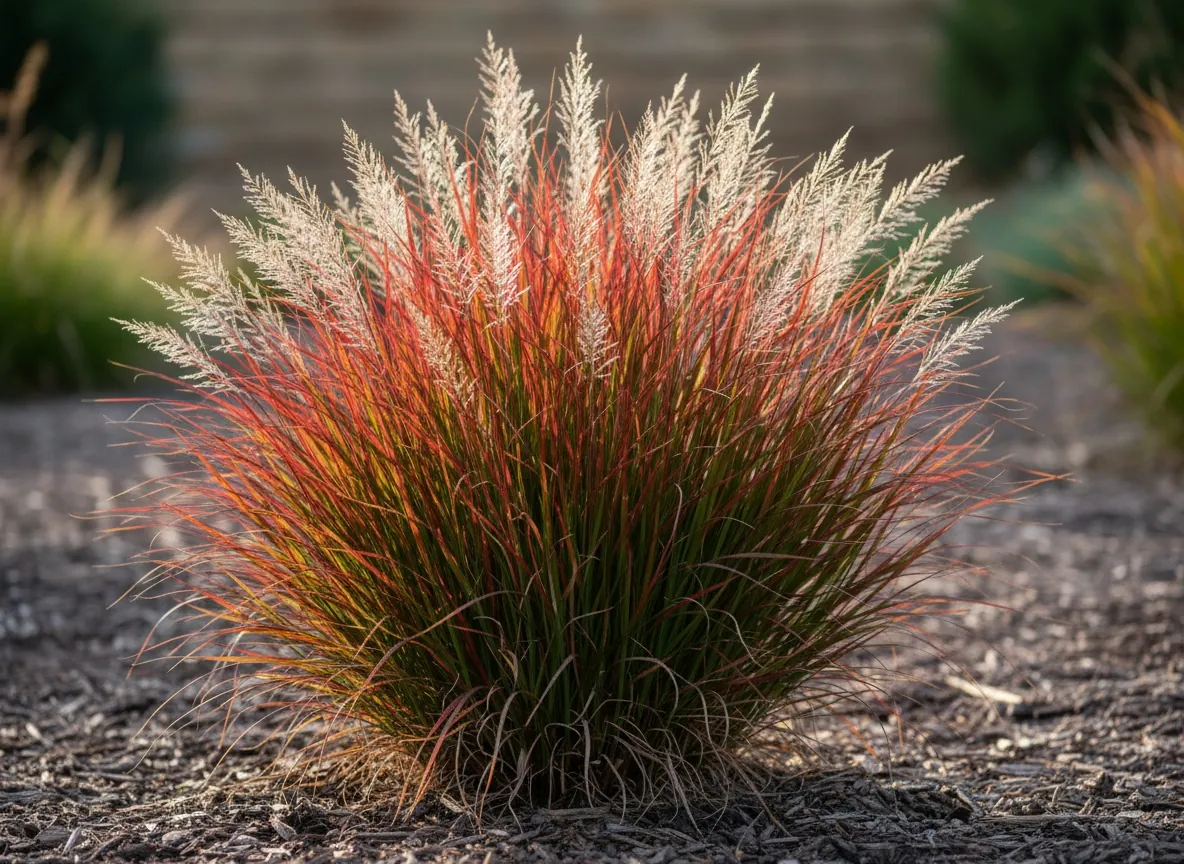
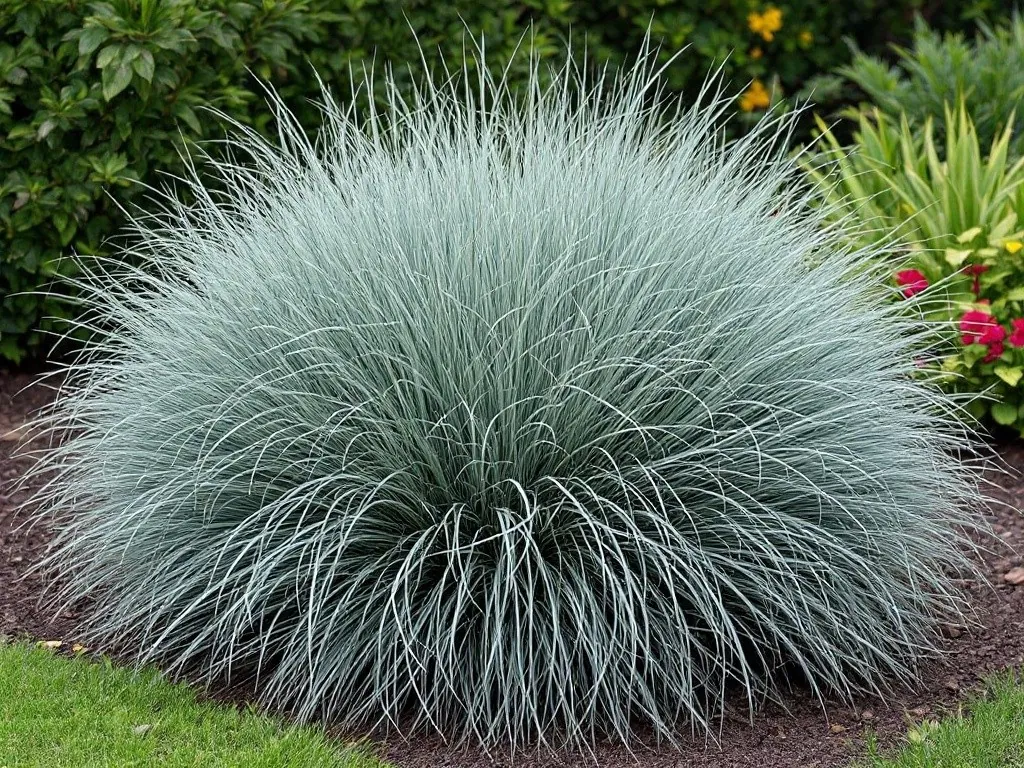
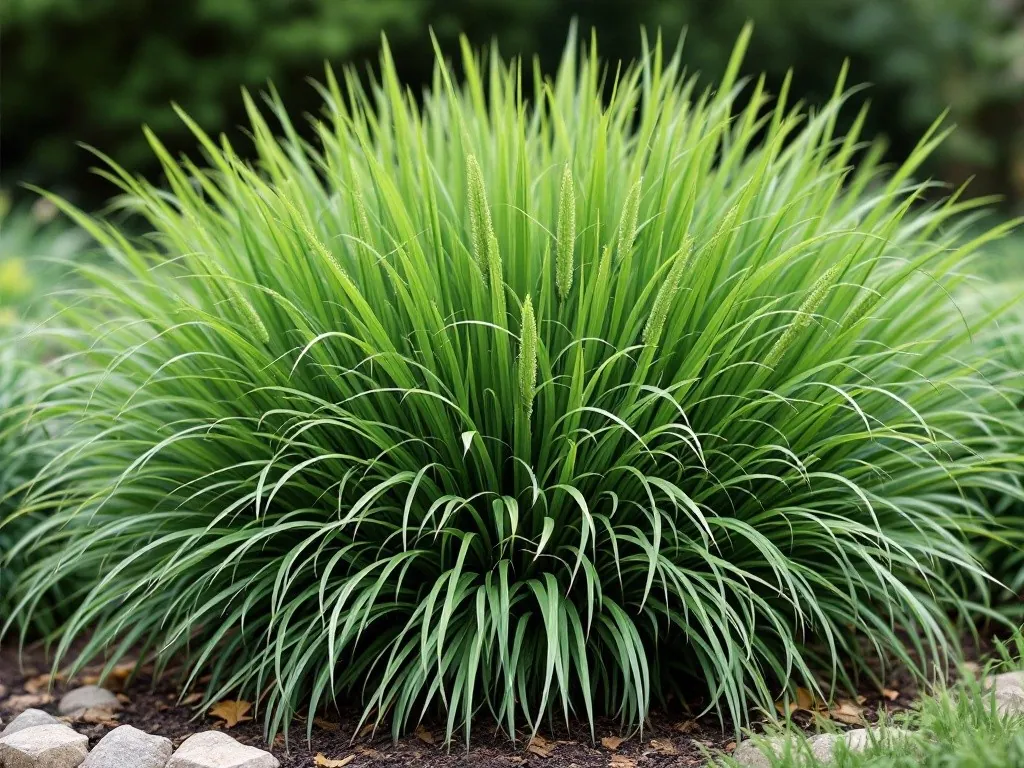
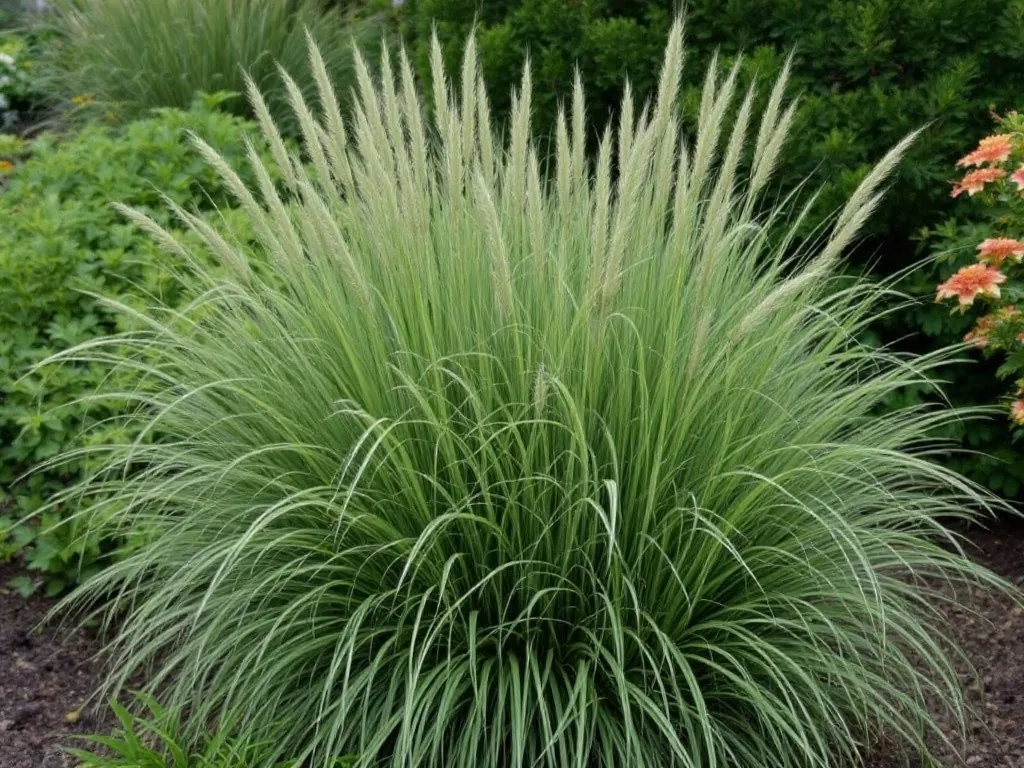
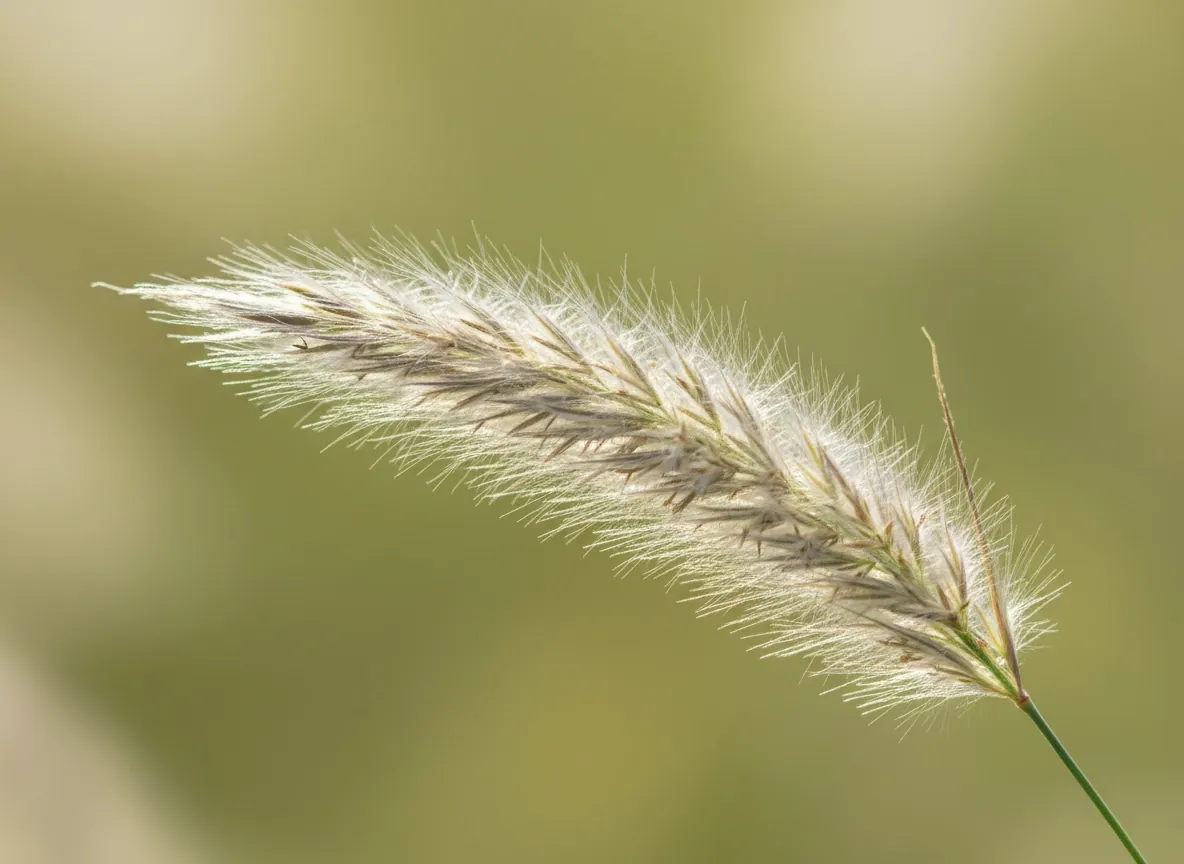
It forms dense, fountain-like spreading clumps 40–70 cm tall including the flower heads. The leaves are so narrow that they resemble green hair — hence the English trade name “angel hair”. From June to August it produces masses of delicate, loose panicles, at first greenish, then creamy and finally pale straw-coloured; their fine spikelets bear the long, thin awns characteristic of feather grasses, thanks to which the whole clump looks like a pale mist. It has no coloured flowers — like all grasses it is wind-pollinated, and its decorative quality rests entirely on texture and movement. In autumn it takes on a uniform, tawny yellow colour, which it keeps all winter.
Growing and care
Watering
Once established it needs practically no watering. The greatest threat is winter moisture on an impermeable substrate — feather grasses die more often from waterlogging than from frost.
Fertilizing
A plant of poor habitats; fertilising causes rank, collapsing growth and the loss of the compact, fountain-like habit.
Planting
Well-drained soil is essential — on clay ground, mix the planting hole with coarse sand or grit and plant on a slight mound so that water does not stand at the root collar.
Pruning
Comb the clump through with a gloved hand, removing dry leaves and spent panicles; you can also cut the whole clump back to about 10 cm, after which it quickly regrows with fresh foliage. The panicles are worth removing right after flowering if you want to limit self-seeding.
Companion plants
Good companions
Identical requirements (full sun, dry, well-drained soil), and the airy, pale panicles of the feather grass lighten the compact, violet clumps of lavender beautifully.
A drought-loving partner of an entirely different texture — the fleshy leaves and flat flower heads of the stonecrop contrast with the hair-like foliage of the feather grass.
A classic prairie-border combination: the upright, violet spikes of the sage pushing through the pale haze of the feather grass; both plants tolerate drought and poor ground.
Bad companions
It requires constantly moist, fertile soil; watering at the rhythm the hydrangea needs quickly causes the base of the feather grass clump to rot.
The abundant self-seeding of the feather grass can smother, within a few seasons, neighbours that do not compete with rapid growth — the seedlings come up densely around the parent clump.
The evidence level indicates whether the relationship is backed by research, observation, or gardening tradition.
Toxicity
| For whom | Level | Notes |
|---|---|---|
| Humans | None | — |
| Dogs | None | — |
| Cats | None | — |
| Horses | Mild | Not toxic, but the awned seeds of related feather grasses can work their way into the coat and mucous membranes of animals grazing over large areas. |
History and origin
The species comes from the dry regions of the Americas and became firmly established in European gardens in the 1990s, along with the fashion for prairie and naturalistic plantings. For decades it was known in the trade and in the literature as Stipa tenuissima; molecular studies of the genus Stipa moved it to the genus Nassella, but the old name still dominates nursery labels to this day.
Uses
For gravel, prairie and Mediterranean borders, on dry banks, as path edging and in group plantings, where the rippling effect is strongest. It looks very good in containers on sunny terraces — growing it in a pot has the added advantage of effectively limiting self-seeding.
Trivia
- In Australia and New Zealand the species has been declared a serious invasive weed and banned from sale; it is also a problem in the dry regions of California, where it displaces native grasses. In Poland the climate holds it back — the clumps do not always come through a frosty winter, and no naturalisation outside gardens is observed — but abundant self-seeding within the border is real and needs watching.
- The dry clump reflects the light of the setting sun beautifully, which is why designers plant feather grass on the western side of a border — at that time of day it looks like a backlit cloud.
- The genus name of the feather grasses derives from the awns, the long, stiff appendages on the spikelets; in some feather grasses they are so springy that they screw the ripe seed into the soil in response to changes in humidity.
Frequently asked questions
Is Mexican feather grass invasive?
In Australia, New Zealand and parts of California, yes — there it has been declared an invasive weed and made subject to sales restrictions. Under Polish conditions the climate holds it back and it does not naturalise outside gardens, but it self-seeds very freely within the border. If you do not want dozens of seedlings, it is worth cutting the panicles right after flowering, before the seeds ripen.
My feather grass has turned brown — has it died?
Usually not. The tawny, straw colour is the natural state of the clump from autumn to spring, and that is exactly when the plant is ornamental. It is enough to comb the clump through or cut it back in March — if green shoots are visible at the base, the plant is alive. Real dieback shows as rot and blackening in the centre of the clump and usually results from winter moisture on heavy soil.
Will Mexican feather grass survive winter in Poland?
Usually yes, it is hardy to roughly USDA zone 6, but it is not a reliable grass. Overwintering depends above all on drainage: on well-drained, dry soil it comes through winter without cover, on heavy, waterlogged ground it rots even in mild winters. It is worth leaving the dry leaves until spring — they protect the heart of the clump.
Sources
- Plants of the World Online (POWO)Database (GBIF, POWO…)
- RHS — Nassella tenuissimaInstitution / botanical garden
My note
A private note for this plant — saved in your browser.