In short
- Site: full sun, well-drained, rather alkaline soil.
- Very drought-tolerant — does not tolerate waterlogging.
- Blooms from June to August, strongly attracting bees and butterflies.
- Hardy to USDA zone 5; heavier soils need drainage.
- Prune after flowering, without cutting into old wood.
Botanical data
- Family
- Lamiaceae (Lamiaceae)
- Height
- 0.3–0.6 m
- Width
- 0.4–0.8 m
- Habit
- Clump-forming
- Growth rate
- Moderate
- Position
- Full sun
- Soil
- Sandy, Chalky
- pH reaction
- pH 6.5–8
- Moisture
- Dry, Moderate
- Bloom
- June–August
- Hardiness
- USDA 5a–9b
- Propagation
- From cuttings, From seed
Characteristics
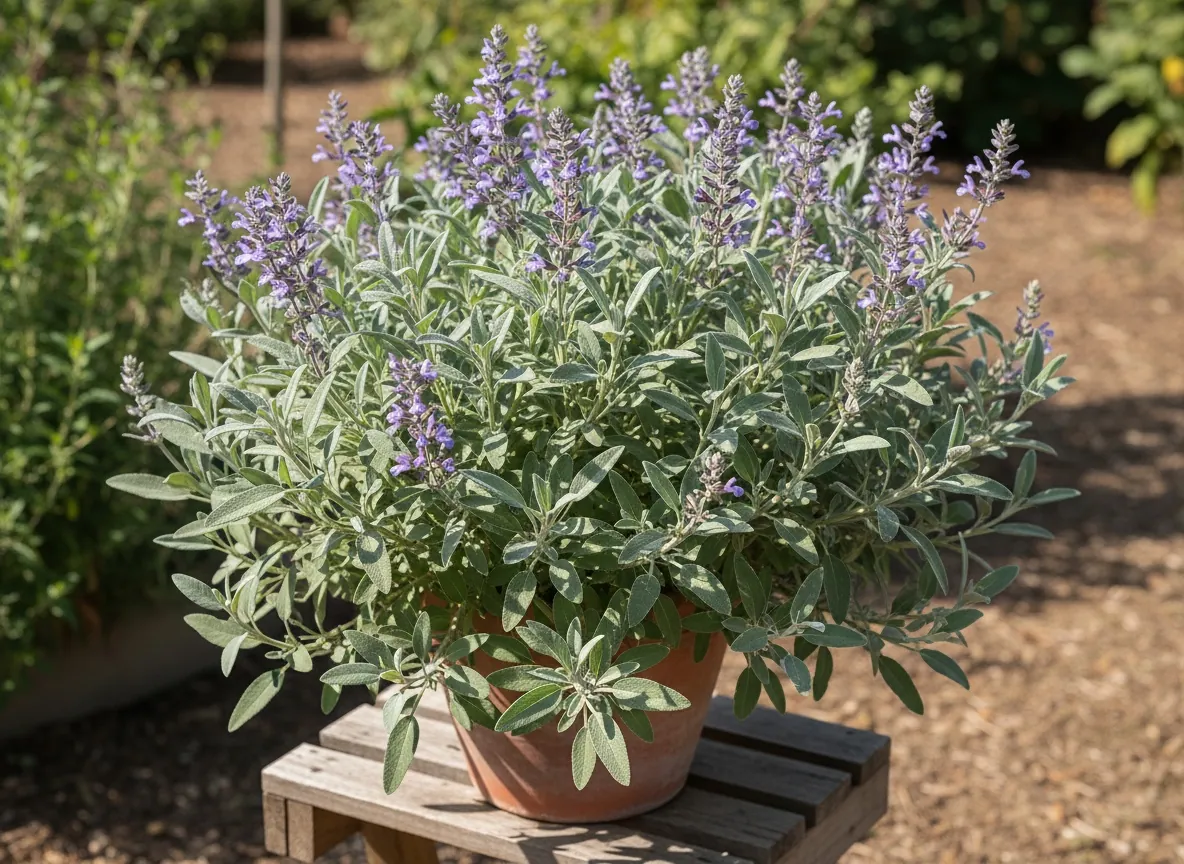
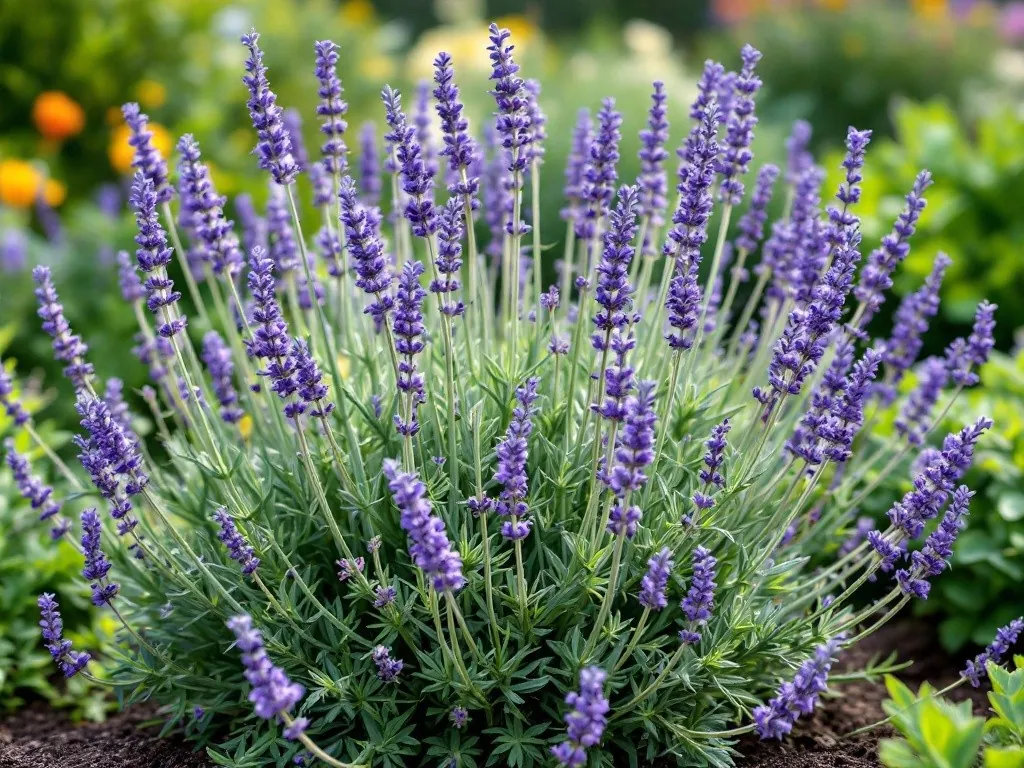
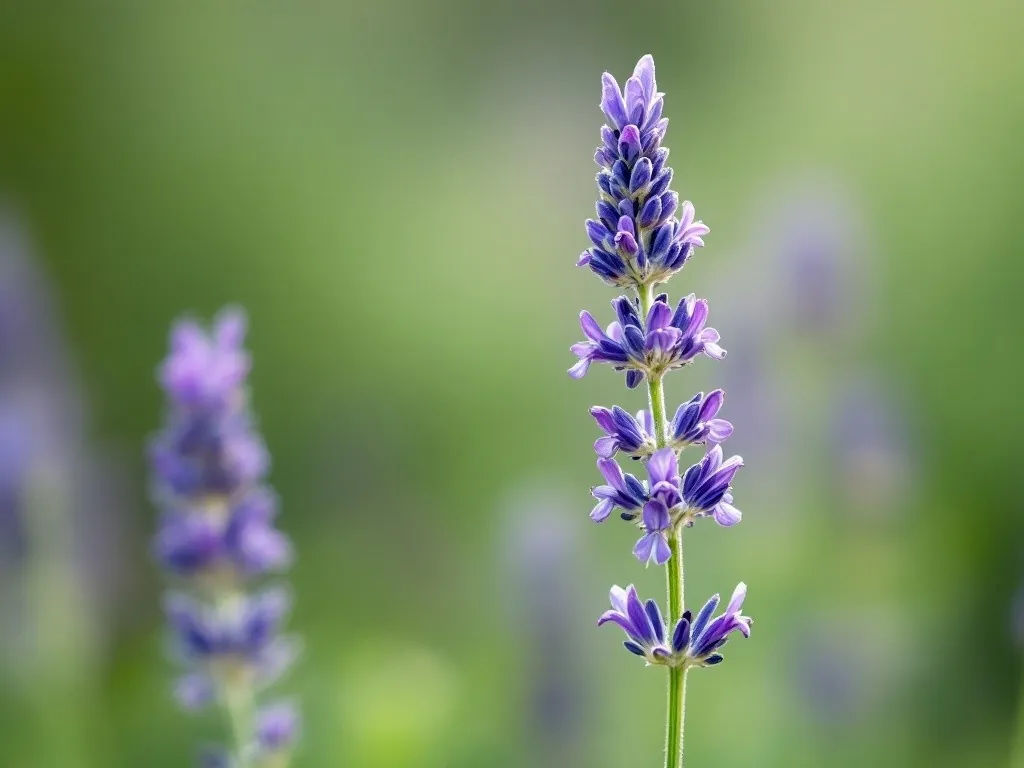
Forms compact, hemispherical clumps 30–60 cm tall. The narrow, lance-shaped leaves are covered in a silvery down that reduces water loss. Small flowers are borne in spike-like inflorescences on leafless stalks.
Growing and care
Watering
Does not tolerate waterlogging. Water sparingly, only once the soil has dried out. In the ground, it usually needs no watering in winter.
Fertilizing
Sparingly — excess nitrogen weakens fragrance and flowering.
Planting
A free-draining site; on heavy soils add gravel or coarse sand to the planting hole.
Pruning
Cut back shoots by about a third, without cutting into the old woody growth.
Companion plants
Good companions
Lavender's scent repels aphids, which readily attack roses — a classic, tried-and-tested pairing.
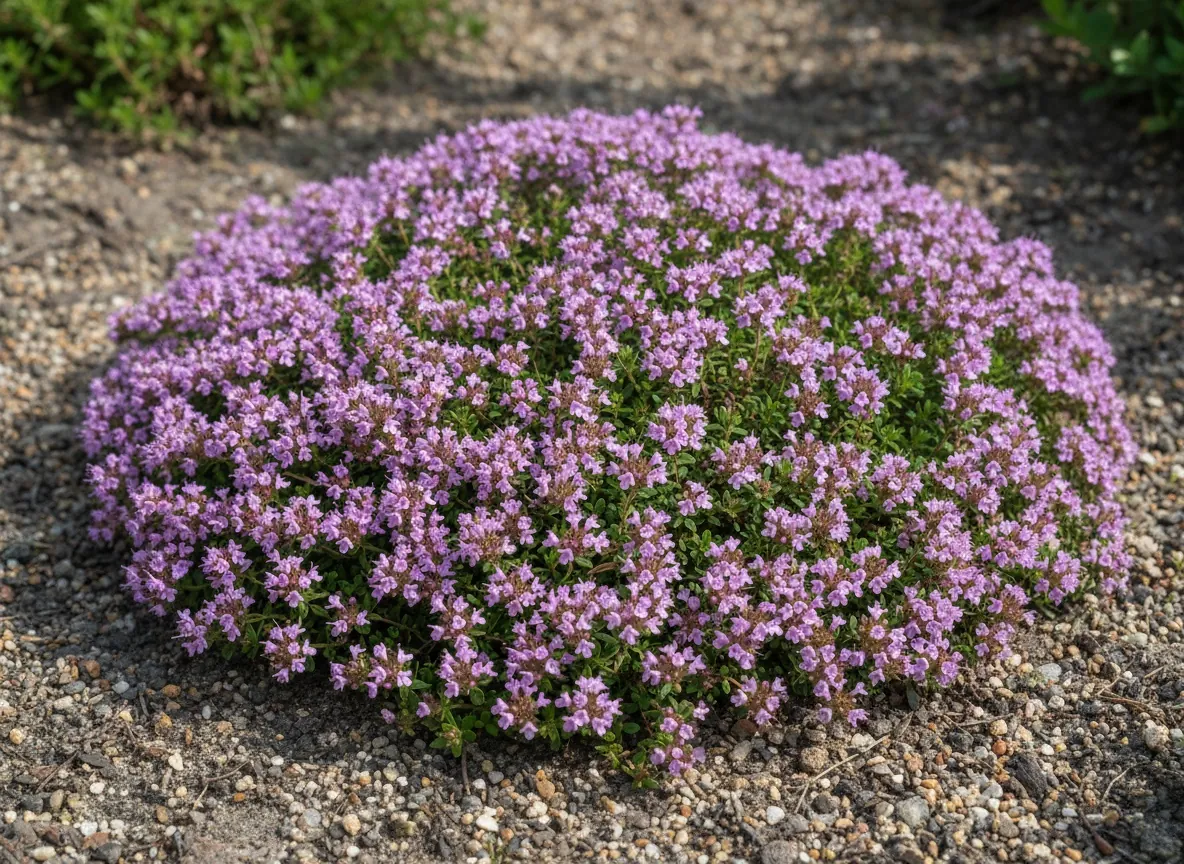
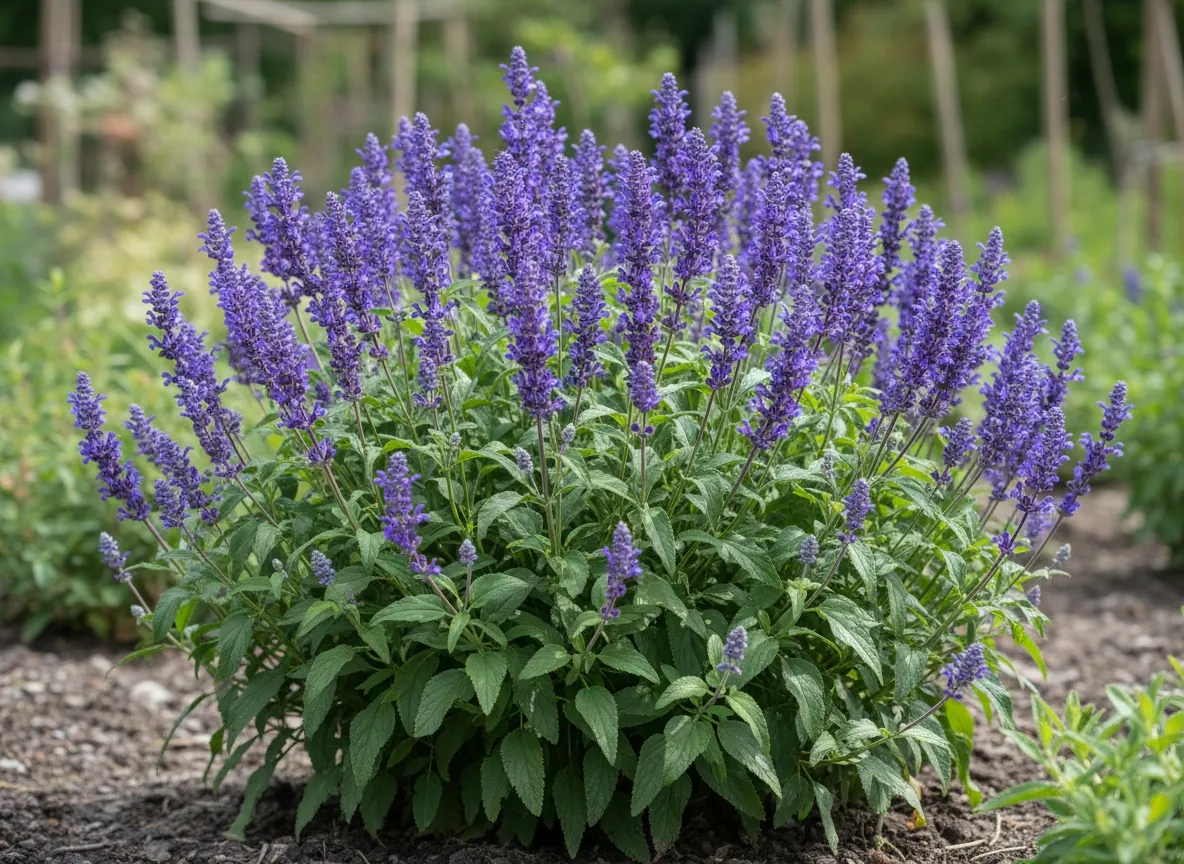
Similar requirements (sun, dry, well-drained soil) — easy to grow together.
A Mediterranean companion with identical soil and water requirements.
Bad companions
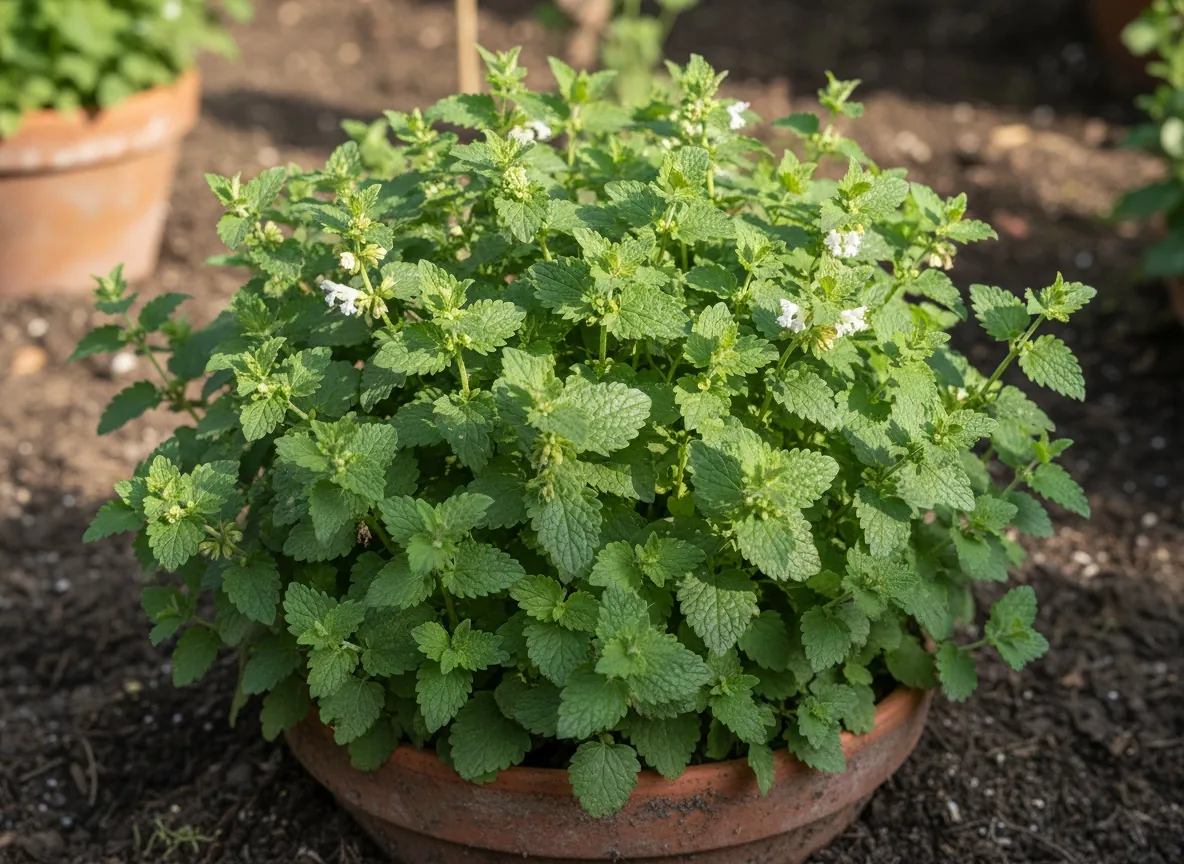
They need permanently moist soil, which causes root rot in lavender.
The evidence level indicates whether the relationship is backed by research, observation, or gardening tradition.
Toxicity
| For whom | Level | Notes |
|---|---|---|
| Humans | None | — |
| Dogs | Mild | Eating large amounts can irritate the digestive tract. |
| Cats | Mild | — |
History and origin
Cultivated since antiquity — the Romans added it to their bathwater (Latin lavare — to wash), which gave rise to its name. Prized in herbal medicine and perfumery since the Middle Ages, today it is a symbol of Provence.
Uses
For perennial borders, edging, herb and Mediterranean gardens, dry slopes, and pot cultivation. The flowers are suitable for drying and for making oils.
Trivia
- Lavender oil is among the most widely used oils in aromatherapy.
- Dried lavender keeps its scent for many months and repels moths.
Frequently asked questions
Why is my lavender rotting?
The most common cause is soil that is too moist or poorly drained, or overwatering. Lavender needs a dry, well-drained site.
When should lavender be pruned?
The main pruning is done after flowering, in August, cutting the stems back by about a third. Avoid cutting into the old, woody, leafless growth.
Is lavender frost-hardy?
English lavender is hardy to USDA zone 5. On heavier soils, drainage is key, since winter dampness harms it more than frost.
Sources
- Plants of the World Online (POWO)Database (GBIF, POWO…)
- RHS — Lavandula angustifoliaInstitution / botanical garden
My note
A private note for this plant — saved in your browser.