In short
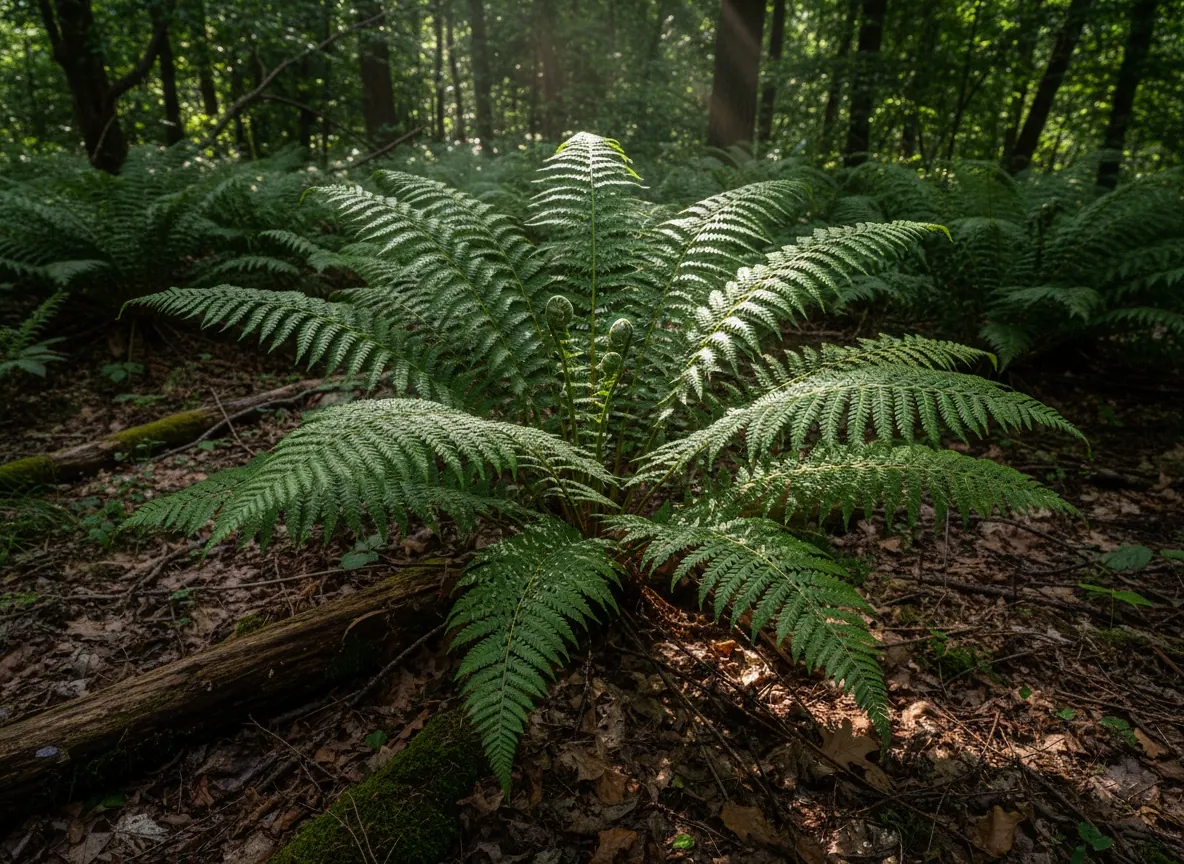
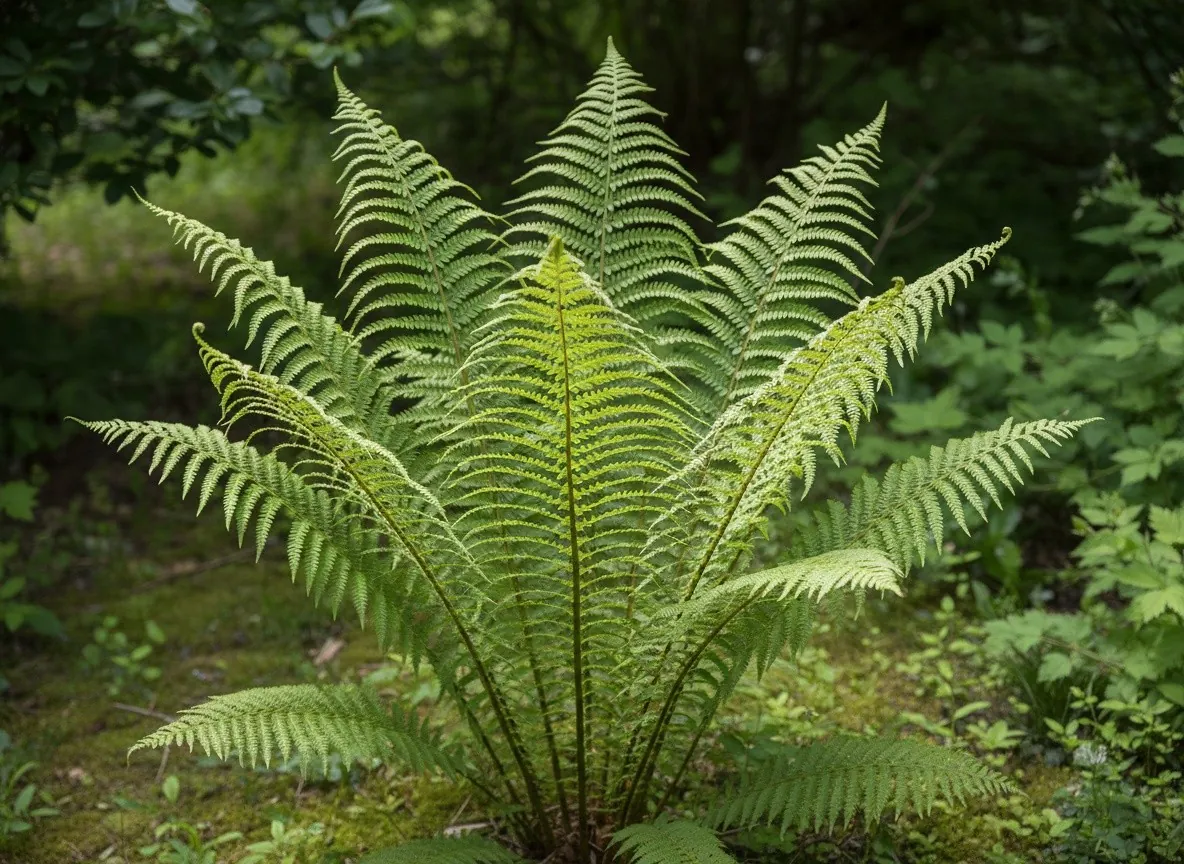
- A funnel-shaped clump of fronds resembling ostrich plumes, 0.6–1.2 m tall.
- Spreads by underground runners, forming extensive colonies over time.
- Requires shade or partial shade and constantly moist, humus-rich soil.
- Very frost-hardy (zone 3a) — one of the hardiest garden ferns.
- The young, coiled shoots are eaten in some cuisines, but must be cooked thoroughly.
- The fronds die back for winter — a typical deciduous fern.
Botanical data
- Family
- Onocleaceae (Onocleaceae)
- Height
- 0.6–1.2 m
- Width
- 0.6–1 m
- Habit
- Clump-forming
- Growth rate
- Moderate
- Position
- Partial shade, Shade
- Soil
- Humus-rich, Clay
- pH reaction
- pH 5.5–7
- Moisture
- Moist, Wet
- Bloom
- —
- Hardiness
- USDA 3a–8b
- Propagation
- By division, By runners, From seed
Characteristics
It forms a distinctive, funnel- to vase-shaped rosette of light-green, bipinnate, sterile fronds arranged radially like a plume. In autumn, shorter, stiff, dark-brown fertile fronds grow up in the centre of the clump; these survive the winter and release their spores in spring. The plant produces underground runners (stolons), through which a single plant gradually forms a dense colony.
Growing and care
Watering
The soil should never dry out — at a dry site the fronds quickly turn brown at the tips. It tolerates occasional flooding along waterside banks well.
Fertilizing
A mulch of compost is enough for the whole season — no mineral fertilisers are needed.
Planting
Moist, fertile humus soil; mix with compost before planting, in a shaded or partially shaded position.
Pruning
Remove the browned, previous year's fronds right at ground level.
Companion plants
Good companions
Similar requirements — shade or partial shade and moist, humus-rich soil; together they form a typical woodland-garden combination.
The ostrich fern grows naturally along river and stream banks — it combines well and tolerates the same moist conditions.
Bad companions
Completely different water and light requirements — in a dry, sunny spot the ostrich fern quickly withers.
The evidence level indicates whether the relationship is backed by research, observation, or gardening tradition.
Diseases and pests
Toxicity
| For whom | Level | Notes |
|---|---|---|
| Humans | Mild | The young, coiled shoots (known as fiddleheads) are sometimes eaten after thorough cooking, but raw or undercooked they can cause stomach upset (nausea, diarrhoea). |
| Dogs | None | — |
| Cats | None | — |
History and origin
A species with a very wide, circumpolar natural range covering the cool temperate zone of Europe, Asia and North America — in Poland it grows wild in riparian woodlands and alder carrs. In North America and Scandinavia the young shoots were traditionally gathered in spring as a seasonal delicacy, making this species one of the few ferns with a documented culinary use.
Uses
For woodland gardens, shady waterside borders, pond edges and naturalistic plantings in moist shade. Thanks to its runners it works well as a ground cover on larger, moist areas, where it will form a dense colony over time.
Trivia
- The young, still-coiled shoots (known as fiddleheads, from their resemblance to the scroll of a violin) are a seasonal delicacy in Canadian and Scandinavian cuisine, but are eaten only after thorough cooking — raw or undercooked they cause nausea and diarrhoea.
- The genus and species name (struthiopteris) derives from the Greek word for ostrich — it precisely reflects the appearance of the plume-like clump of fronds.
- Thanks to its runners, a single plant can form a dense colony several metres across within a few years, making it an effective ground cover for shady, moist slopes.
Frequently asked questions
Is the ostrich fern invasive in the garden?
It spreads quite vigorously through underground runners and can form an extensive colony from a single plant over time, so it is best planted where this is desirable (e.g. in large, moist areas) or its spread limited with a root barrier.
Can you eat the young shoots of the ostrich fern?
In some cuisines (e.g. in Canada and Scandinavia) the young, coiled shoots (fiddleheads) are a seasonal delicacy, but they must be cooked thoroughly — raw or undercooked shoots contain substances that can cause stomach upset. Harvesting also requires certainty about the species, so caution is advised for the inexperienced.
Why do the ostrich fern's fronds turn brown at the tips in summer?
The most common cause is soil that is too dry or too much sun. The ostrich fern requires constantly moist soil and a shaded position — in a dry, sunny spot the fronds quickly lose their firmness and turn brown.
Sources
- Plants of the World Online (POWO)Database (GBIF, POWO…)
- RHS — Matteuccia struthiopterisInstitution / botanical garden
My note
A private note for this plant — saved in your browser.