In short
- The most poisonous wild-growing plant in Poland — the lethal dose for an adult is about 2–4 g of root.
- Aconitine is absorbed through the skin: weeding and dividing the crown with bare hands is a real danger, without eating anything.
- Every task involving monkshood — planting, cutting, weeding — only in gloves.
- Never plant it in the vegetable garden or near herbs: the root has been mistaken for horseradish and parsley, which ended in death.
- There is no specific antidote — if poisoning is suspected, immediate medical help is what counts.
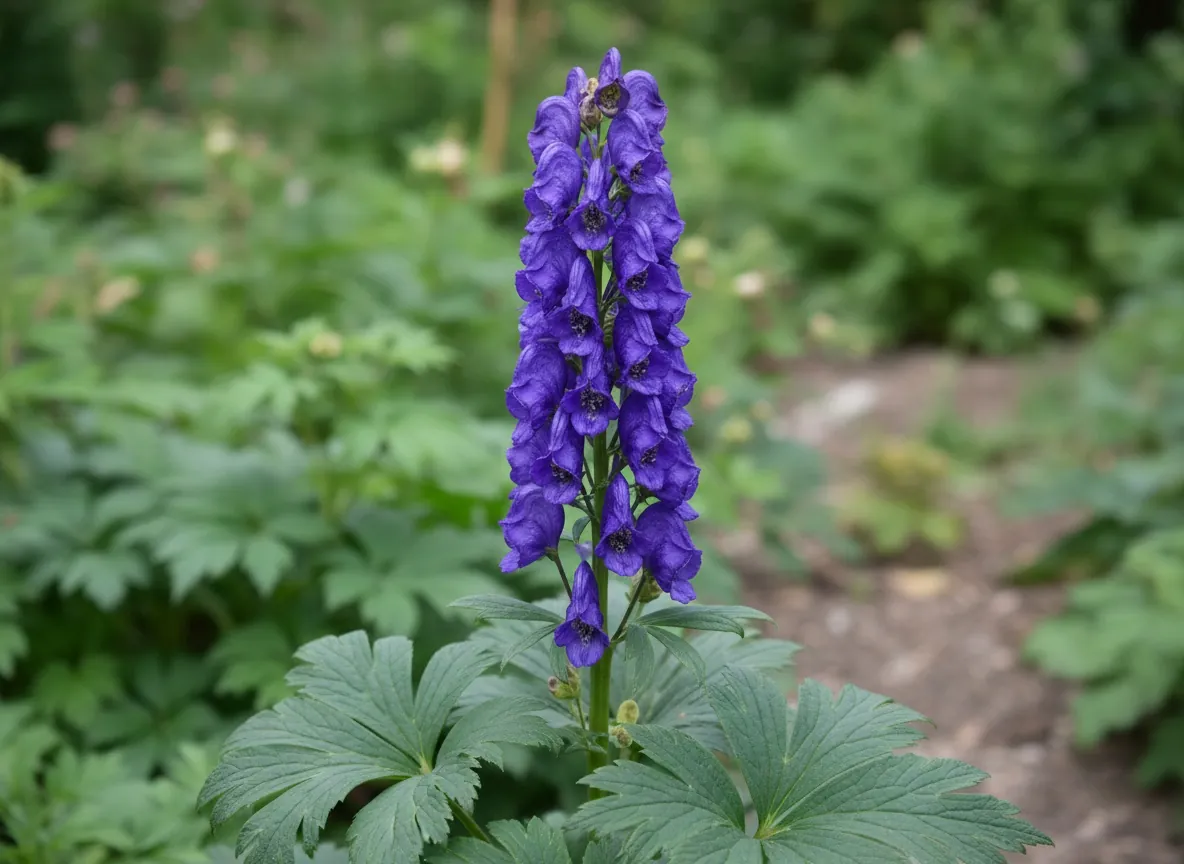
- In spite of everything, a beautiful perennial: navy-blue flower helmets from July to September, in partial shade and on moist, fertile soil.
Botanical data
- Family
- Ranunculaceae (Ranunculaceae)
- Height
- 0.8–1.5 m
- Width
- 0.3–0.5 m
- Habit
- Upright
- Growth rate
- Moderate
- Position
- Full sun, Partial shade
- Soil
- Humus-rich, Loamy
- pH reaction
- pH 5.5–7
- Moisture
- Moderate, Moist
- Bloom
- July–September
- Hardiness
- USDA 3a–7b
- Propagation
- By division, From seed
Characteristics
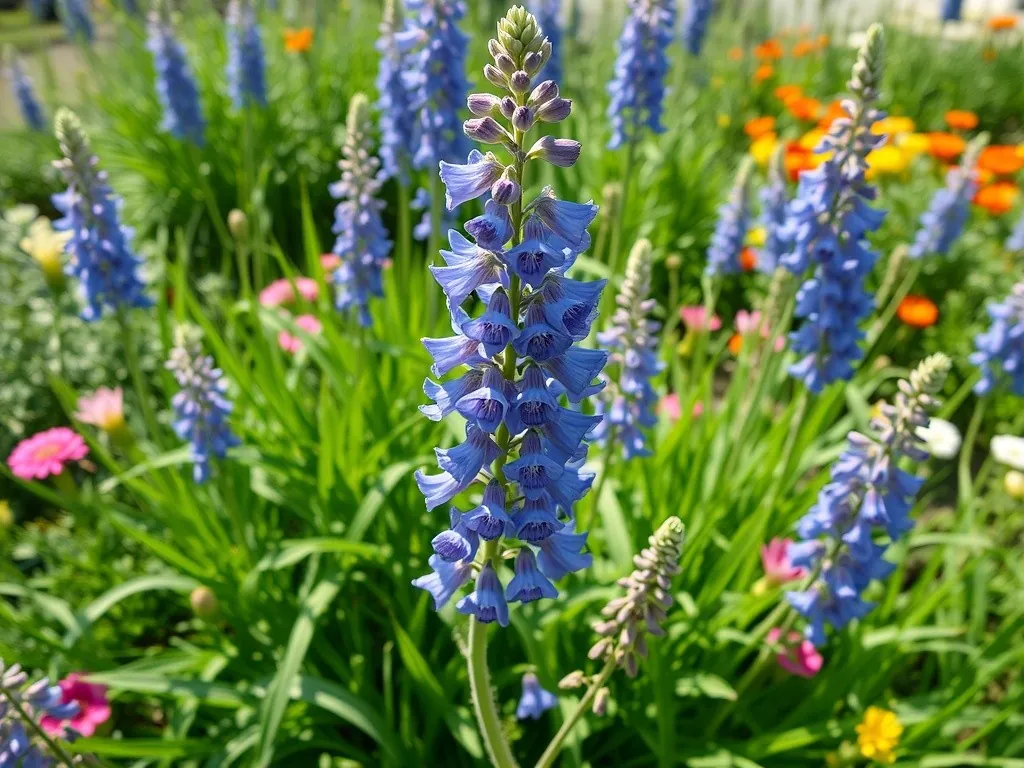
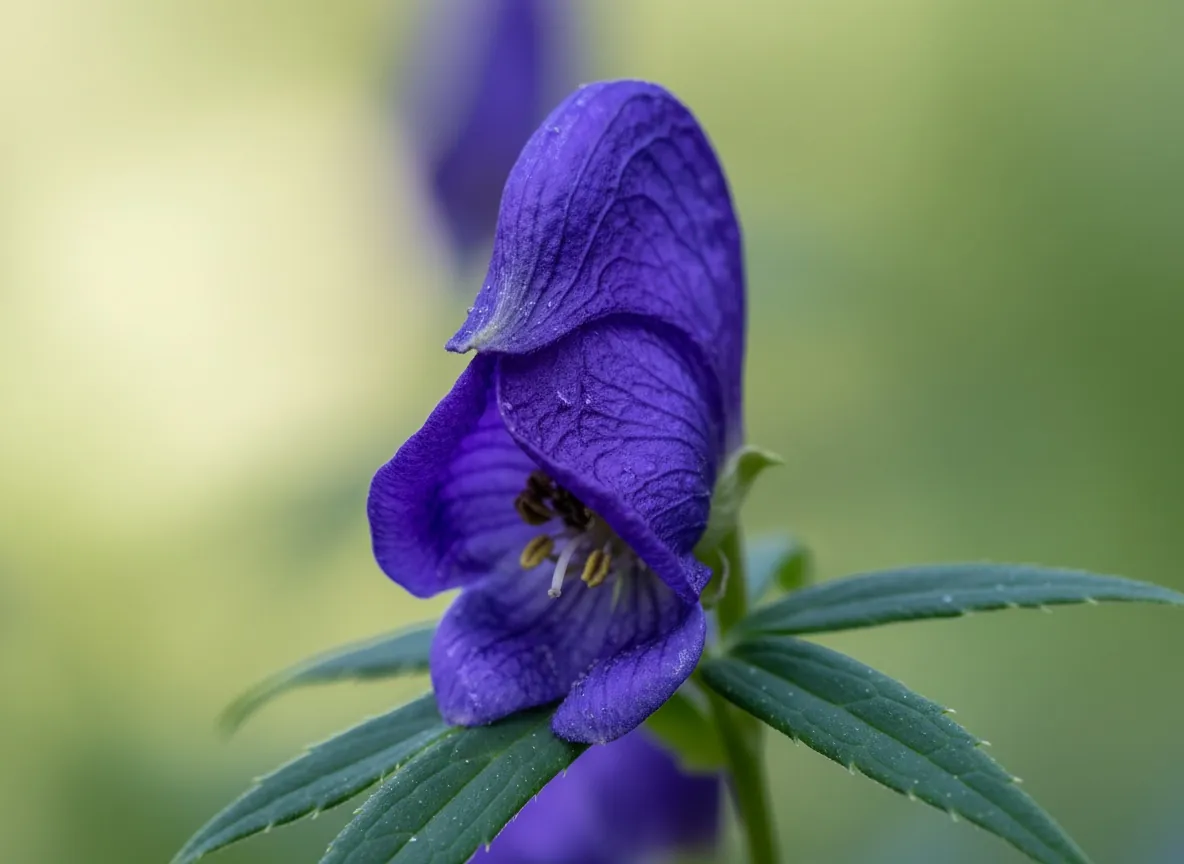
An erect, stiff perennial 0.8–1.5 m tall with dark green leaves palmately divided into 5–7 narrow segments. The flowers are gathered in a dense, terminal raceme; their upper sepal forms the characteristic helmet (the monk's hood), beneath which two petals transformed into nectaries are hidden. The underground part consists of fleshy, turnip-like root tubers — each year the old tuber dies and new ones form beside it, so that the clump slowly migrates. It is precisely in the root that the concentration of aconitine is highest.
Growing and care
Watering
This is a plant of moist mountain tall-herb communities — it requires constantly fresh soil. In drought it yellows prematurely and dies back, and the flower heads are short and poor. Mulching works better here than frequent watering.
Fertilizing
It likes fertile soil — a layer of compost in spring markedly improves the height of the shoots and the length of the flower heads. Spread fertilisers wearing gloves, as with any work involving this plant.
Planting
Deeply dug soil enriched with compost, in a spot sheltered from the wind. Plant ONLY in gloves. Do not plant in the vegetable garden, beside a herb bed or in a place where small children play; the tall shoots are worth staking.
Pruning
Cut out the spent flower heads — this will sometimes bring on a modest second flowering. Remove the dried above-ground part in autumn or early spring and put it in the green waste, not on the compost heap whose soil will later end up in the vegetable garden.
Companion plants
Good companions
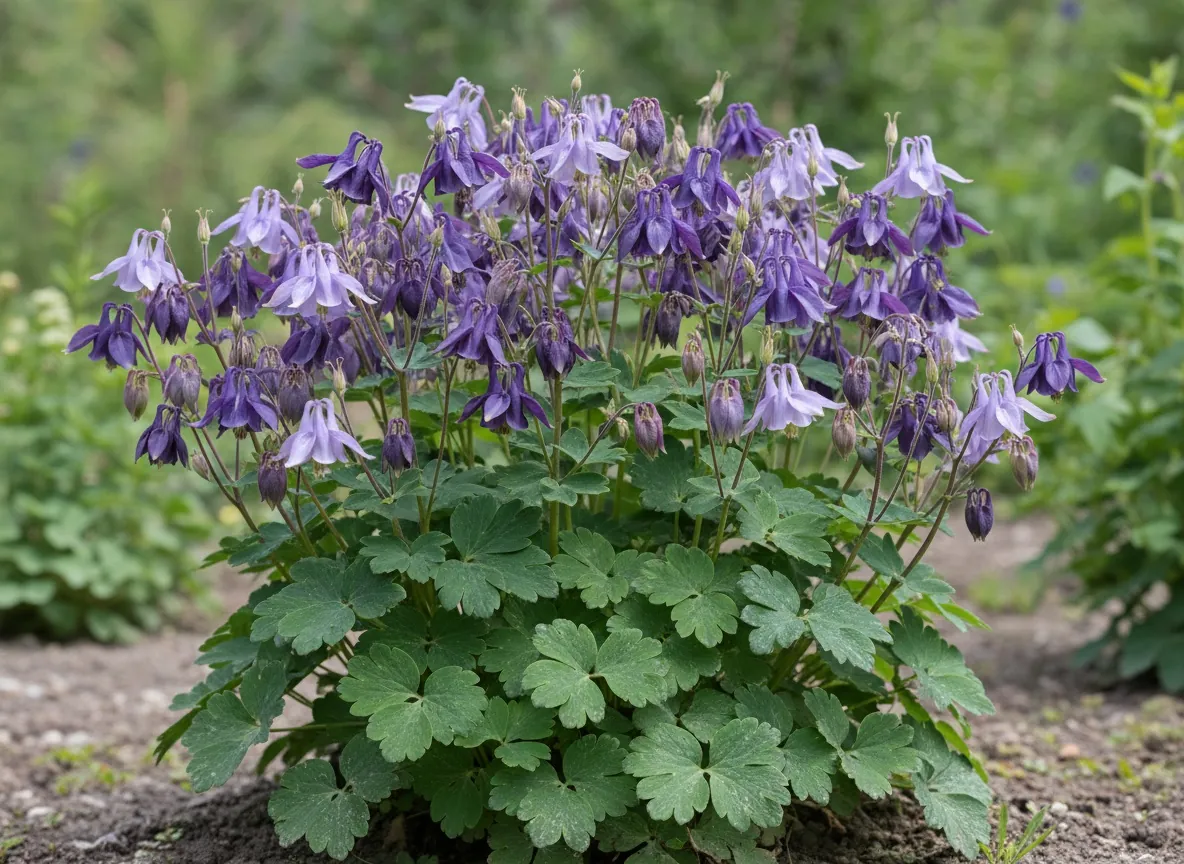
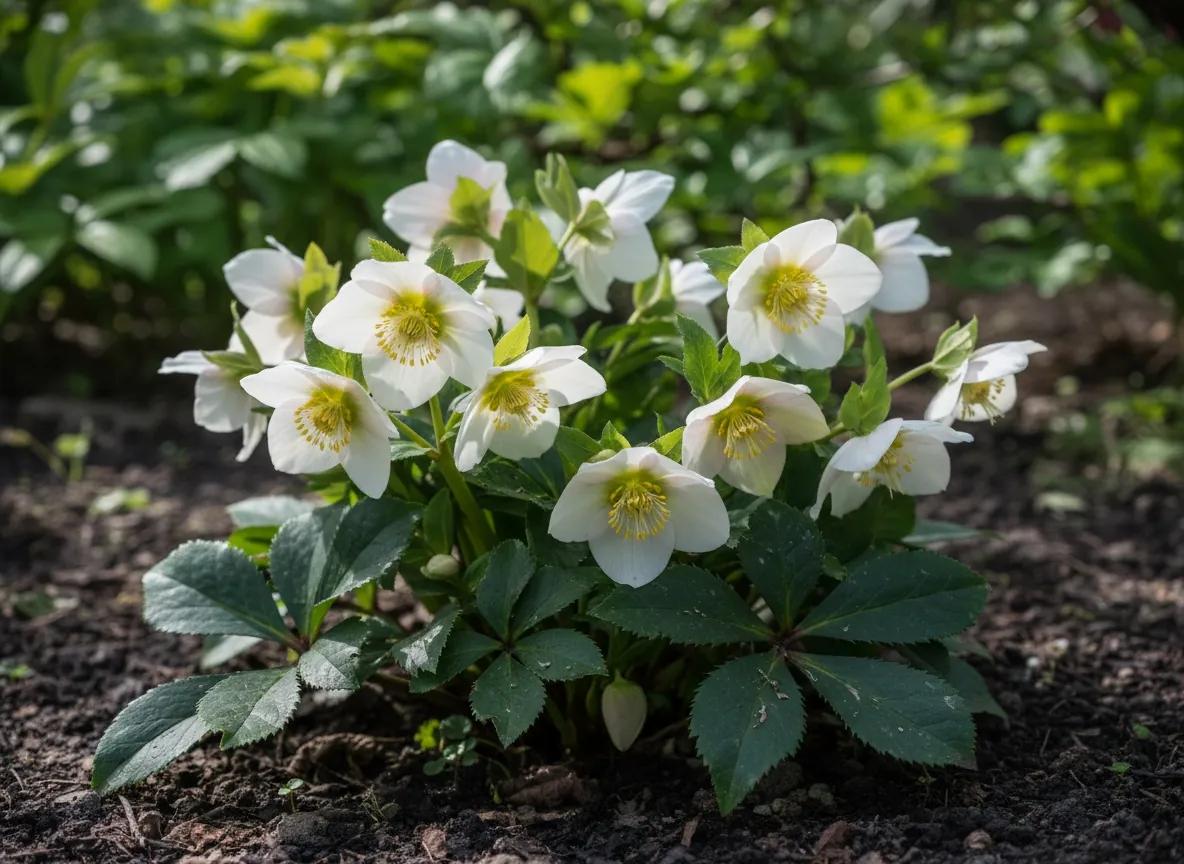
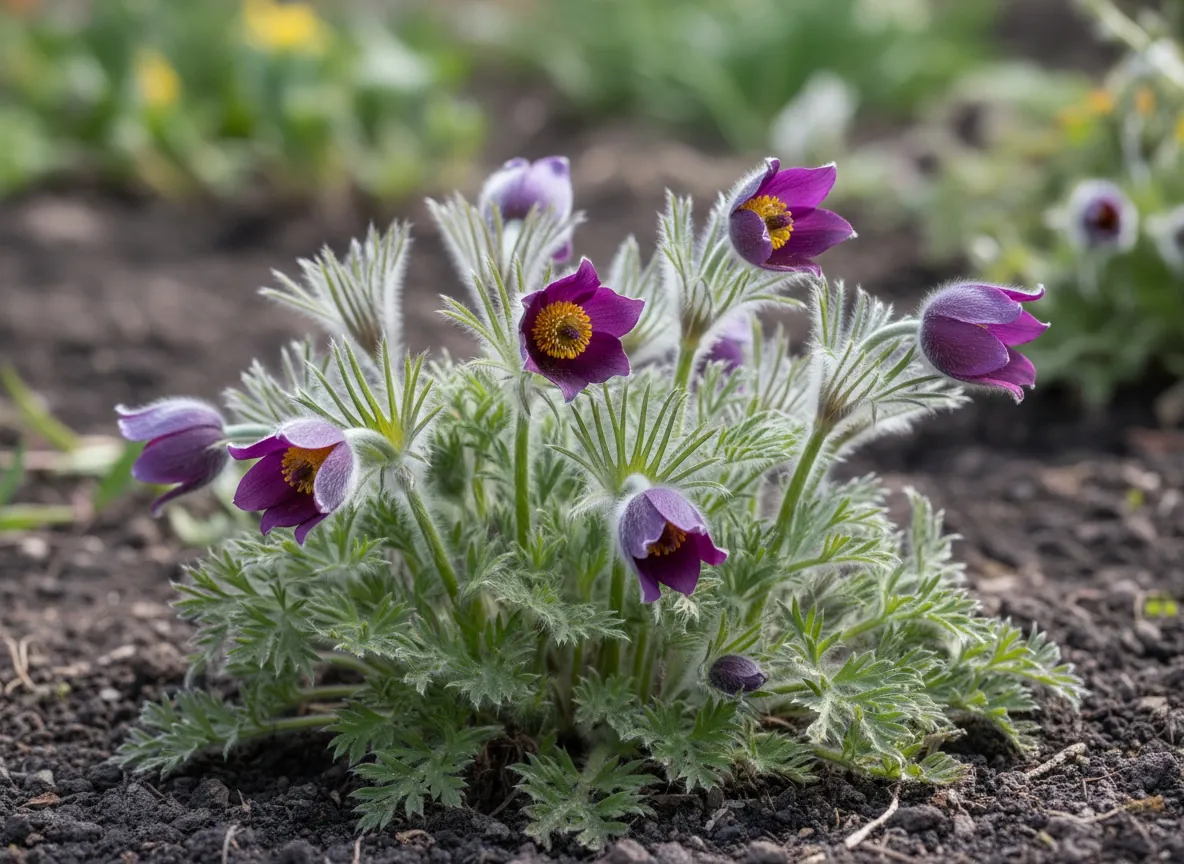
The same requirements — fertile, constantly fresh soil and partial shade. The low, broad-leaved mound of the hosta conceals the bare lower parts of the tall monkshood shoots.
Both come from moist tall-herb communities and flower in a similar rhythm; the fluffy plumes of the astilbe soften the stiff, vertical silhouette of the monkshood.
The fern tolerates the same moisture and partial shade, and its feathery fronds give the monkshood a natural tall-herb backdrop — a combination proven in naturalistic gardens.
Bad companions
This neighbourhood kills. The root of monkshood has been mistaken for the root of parsley, horseradish or celeriac, and the young leaves for parsley leaves — fatal poisonings have been described as a result. Monkshood must not be planted in the vegetable garden or in its vicinity.
A classic confusion documented in toxicology: a dug-up monkshood root looks like a horseradish root. These two plants should never grow in the same bed or end up in the same basket.
The incised leaves of monkshood resemble the leaves of umbellifers. Every plant gathered for eating should grow in a different part of the garden from the monkshood — far enough away that confusion when harvesting is impossible.
The evidence level indicates whether the relationship is backed by research, observation, or gardening tradition.
Toxicity
| For whom | Level | Notes |
|---|---|---|
| Humans | Lethal | The most poisonous wild-growing plant in the flora of Poland. All parts contain aconitine, the root most of all — the lethal dose for an adult is about 2–4 g of root. The alkaloid is also absorbed through intact skin, so poisoning can occur without eating anything, from merely weeding or dividing the crown with bare hands. Symptoms: tingling and numbness of the lips, tongue and fingers, drooling, vomiting, a sensation of cold, then heart rhythm disturbances and paralysis of the respiratory muscles; consciousness is usually preserved to the end. There is no specific antidote — treatment is exclusively supportive. Any suspicion of contact requires immediate contact with the emergency services or a poison centre. |
| Dogs | Lethal | Eating a fragment of the plant, and especially a dug-up root, is an immediate threat to life: drooling, vomiting, muscle tremors, arrhythmia, respiratory paralysis. Requires immediate veterinary help. |
| Cats | Lethal | A very small amount of the plant can be lethal to a cat. Immediate veterinary intervention is essential. |
| Horses | Lethal | Poisonous also after drying — aconitine does not break down in hay. Poisonings of horses and cattle by monkshood from mountain pastures are described and end in death. |
History and origin
Monkshood has accompanied humanity as a poison since antiquity. The Greeks knew it as akoniton, in myth it was linked with Medea and the dog Cerberus, and in Europe it was used for centuries to poison arrowheads and baits for wolves — hence the English name wolfsbane and the Polish “mordownik” (killer herb) and “wilczy korzeń” (wolf root). It was also a medicinal plant: in old medicine and in homeopathy, extracts of monkshood were used as a painkiller and antipyretic. Modern Western medicine does not use it, because the distance between an effective and a lethal dose is too small to measure out safely. Traditional Chinese medicine uses related species subjected to prolonged heat treatment that lowers the aconitine content — and even so, poisonings following such preparations are regularly described in the medical literature in Asia.
Uses
An ornamental perennial for the back of a bed in partial shade, for naturalistic gardens and moist corners, where hardly any other plant gives such a pure navy blue in the middle of summer. There is one condition, and it is absolute: awareness of what you are dealing with. Do not plant it in gardens with small children or with animals that dig in the soil, never near vegetables and herbs, and carry out all work on the plant in gloves. It is not suitable as a cut flower for a house with children in it.
Trivia
- A monkshood flower is closed by a helmet that not just any insect will open — the nectaries are hidden so deep that almost only bumblebees, strong enough and long-tongued, can reach them. Monkshood is a textbook example of a plant specialised in bumblebee pollination.
- The nectar of monkshood also contains alkaloids, which is why single-species monkshood honey can be toxic. In Europe this is a theoretical problem — monkshood nowhere forms such stands — but poisonings from “mad honey” from regions with a mass occurrence of alkaloid plants are described in the literature.
- Toxicologists point to a particularly unpleasant feature of aconitine poisoning: consciousness usually remains preserved almost to the end, despite progressive muscle paralysis and heart rhythm disturbances.
Frequently asked questions
Can monkshood really poison you by touch alone, and are gloves necessary?
Gloves are absolutely necessary for every task involving monkshood — planting, weeding, cutting and dividing the crown. Aconitine is absorbed through the skin, so you do not need to eat anything to be poisoned; the most dangerous thing is contact with sap from a cut or damaged root, and also working with an injured hand. A brief, accidental brush against an intact leaf usually does not end in poisoning, but prolonged work with bare hands is a risk there is no sense in taking. The first symptom is tingling and numbness of the fingers or lips — at that point you call for help immediately, you do not wait for the symptoms to develop. After working you wash your hands and tools, without touching your face beforehand.
How dangerous is monkshood and how much do you have to eat to be poisoned?
It is the most poisonous plant growing wild in Poland. The lethal dose for an adult human is estimated at about 2–4 g of root — that is, a mouthful. Symptoms appear quickly: tingling and numbness of the mouth and tongue, drooling, vomiting, a sensation of cold, then heart rhythm disturbances and paralysis of the respiratory muscles. There is no specific antidote, and treatment consists exclusively of supporting vital functions. For a dog, cat or horse the dose is correspondingly smaller — the dry herb in hay is poisonous too.
Is it permitted to grow monkshood in a garden in Poland?
Yes — growing and selling nursery plants is fully legal, and you will find monkshood quite normally in the range of garden centres. Species protection concerns wild-growing plants: the Polish monkshoods, including the Carpathian Aconitum firmum, are under species protection and may not be dug up, picked or collected from natural sites. In other words: buy a plant at a nursery, but never bring monkshood back from the mountains. The legality of cultivation changes nothing as regards safety — it is still a plant that calls for gloves and common sense.
Sources
- Plants of the World Online (POWO) — Aconitum napellusDatabase (GBIF, POWO…)
- Royal Botanic Gardens Kew — Aconitum napellus (monkshood)Institution / botanical garden
My note
A private note for this plant — saved in your browser.