In short
- Requires strongly acidic soil (pH 4.0–5.5) — without it, it does not grow properly.
- Sunny or lightly shaded site, consistently moist but well-drained substrate.
- Flowers May–June, fruits July–August.
- Soft water (rainwater) is best for watering — hard water de-acidifies the substrate.
- A very popular home garden crop in Poland in recent years, also yields well in large pots.
- The autumn leaf colour (red, orange) provides an additional ornamental value.
Botanical data
- Family
- Ericaceae (Ericaceae)
- Height
- 1.2–2 m
- Width
- 1–1.5 m
- Habit
- Clump-forming
- Growth rate
- Moderate
- Position
- Full sun, Partial shade
- Soil
- Peaty
- pH reaction
- pH 4–5.5
- Moisture
- Moist
- Bloom
- May–June
- Hardiness
- USDA 4a–7b
- Propagation
- From cuttings, By layering
Characteristics
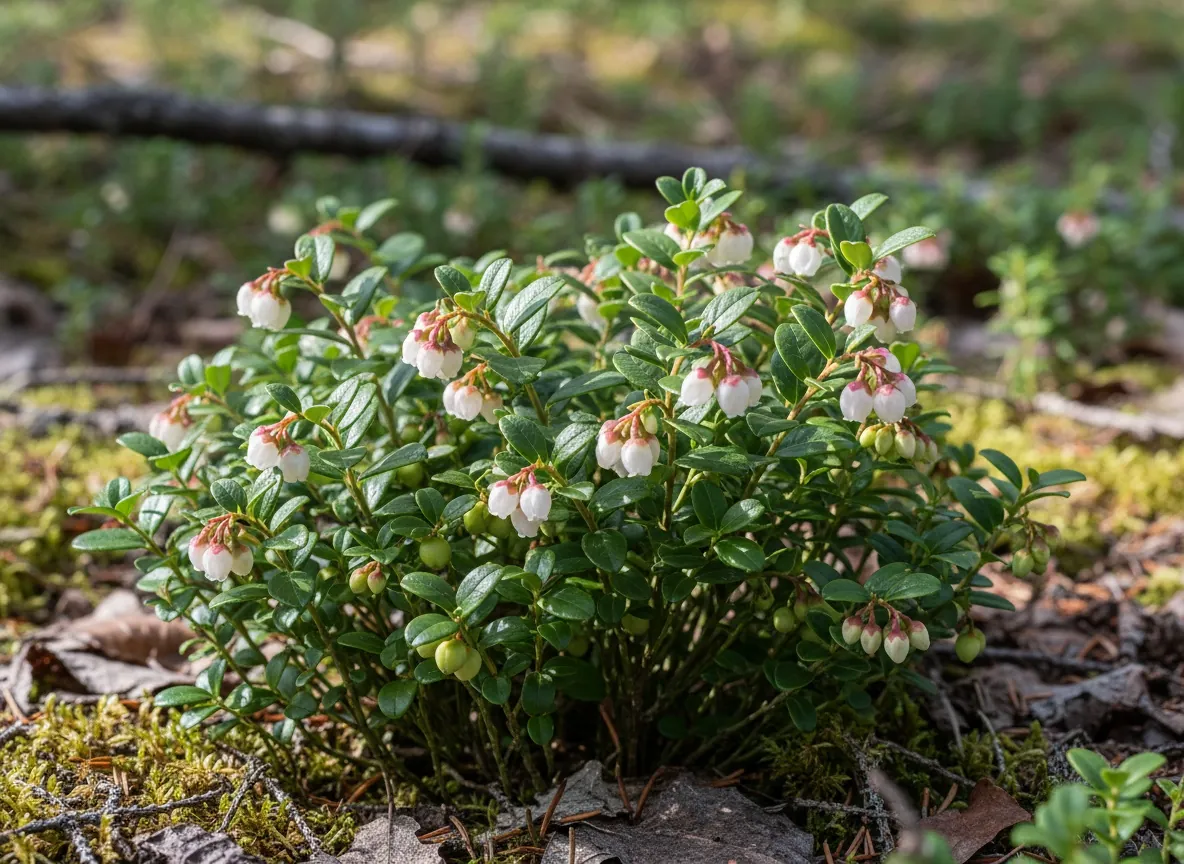
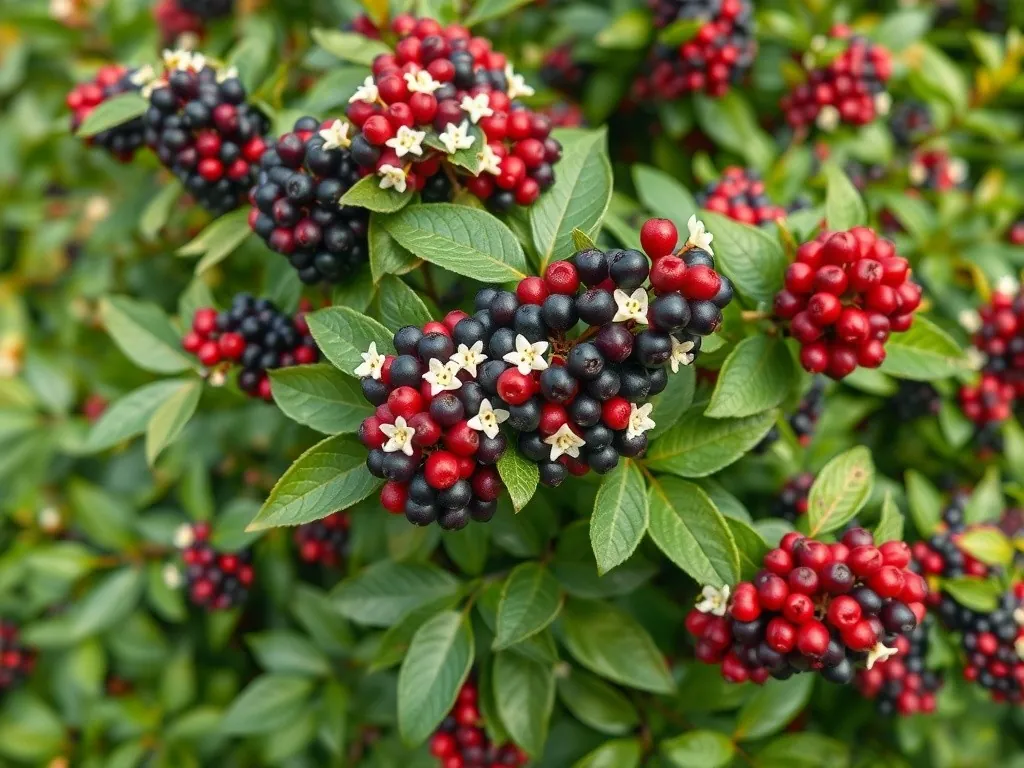
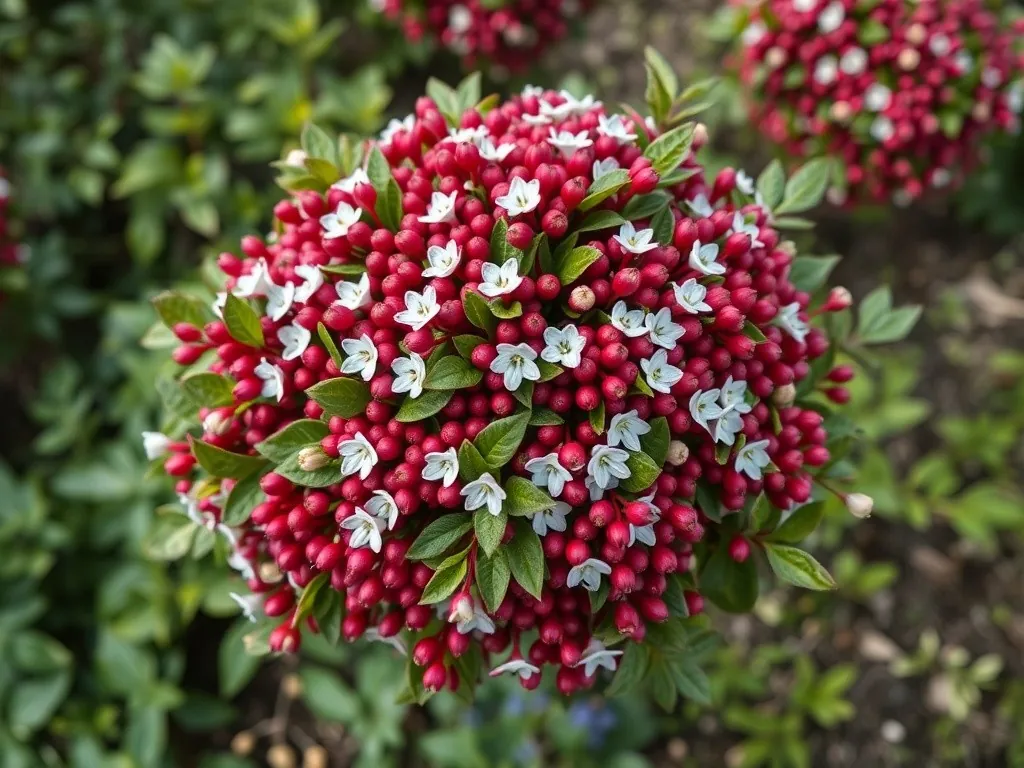
Forms a compact, clump-forming shrub with upright shoots. The leaves are elliptical, light green in summer, turning red in autumn. Bell-shaped, white-pink flowers are gathered in clusters, and the fruit is blue-navy berries covered with a waxy bloom, borne in loose clusters (Latin corymbosum — corymbed).
Growing and care
Watering
The shallow root system dries out quickly — the substrate must always be slightly moist. Use soft water (rainwater) for watering; hard tap water de-acidifies the substrate over time and harms the plant.
Fertilizing
Avoid fertilisers containing calcium or chloride — they reduce the effectiveness of the substrate's acidification.
Planting
Prepare a planting hole filled with acidic peat or pine bark; avoid the proximity of calcareous soils and concrete kerbs that could raise the pH.
Pruning
Remove the oldest, least fruitful shoots at the base, as well as crossing branches, to open up the interior of the shrub.
Companion plants
Good companions
The same heath family and identical requirements — strongly acidic, moist, well-drained soil.
Classic companion plants in heather gardens — the same soil requirements as blueberry.
Prefers a similarly acidic substrate (on which hydrangea additionally colours blue) and a moist site.
Bad companions
Thyme requires dry, alkaline soil — exactly the opposite of the acidic, moist substrate blueberry needs.
Liming nearby raises the soil pH, which in blueberry quickly leads to chlorosis and stunted growth.
The evidence level indicates whether the relationship is backed by research, observation, or gardening tradition.
Toxicity
| For whom | Level | Notes |
|---|---|---|
| Humans | None | The fruit is fully edible, valued for its high content of anthocyanins and antioxidants. |
| Dogs | None | — |
| Cats | None | — |
History and origin
Highbush blueberry reached Europe in the 20th century as a cultivated plant selected from wild populations of eastern North America, where it was long gathered by indigenous peoples. In Poland, intensive commercial and home garden cultivation developed especially over the last two decades, along with the growing popularity of antioxidant-rich berry fruits.
Uses
For orchards on acidic soil, for heather plantings, and for growing in large pots with substrate for acid-loving plants. The fruit is suitable for eating raw, freezing and processing.
Trivia
- The dark blue bloom on the fruit is a natural wax layer that protects against excessive evaporation.
- Unlike the wild bilberry (Vaccinium myrtillus), the flesh of highbush blueberry is pale and does not stain.
Frequently asked questions
Why is my highbush blueberry turning yellow and growing poorly?
The most common cause is soil pH that is too high (chlorosis from iron deficiency) — the substrate's pH needs to be lowered, e.g. with elemental sulphur or acidic peat, and watering with hard tap water should be avoided.
Do you need two blueberry cultivars for fruiting?
Highbush blueberry is partially self-fertile, but planting two different cultivars next to each other produces noticeably more abundant and larger fruit thanks to cross-pollination.
Can highbush blueberry be grown in a pot?
Yes, it is one of the best fruit plants for large containers — a pot of about 40 l or more filled with acidic peaty substrate, plus regular watering with soft water, is enough.
Sources
- USDA PLANTS Database — Vaccinium corymbosumDatabase (GBIF, POWO…)
- Missouri Botanical Garden — Vaccinium corymbosumInstitution / botanical garden
My note
A private note for this plant — saved in your browser.