In short
- Very drought-tolerant — needs full sun and well-drained soil.
- Doesn't tolerate waterlogging; loses its aroma on rich soil.
- Evergreen — sprigs can be harvested year-round.
- Highly attractive to bees, a strong nectar source.
- Excellent for rock gardens and as low ground cover.
Botanical data
- Family
- Lamiaceae (Lamiaceae)
- Height
- 0.1–0.3 m
- Width
- 0.2–0.4 m
- Habit
- Creeping
- Growth rate
- Slow
- Position
- Full sun
- Soil
- Sandy, Chalky
- pH reaction
- pH 6–8
- Moisture
- Dry
- Bloom
- May–July
- Hardiness
- USDA 5a–9b
- Propagation
- From cuttings, By division
Characteristics
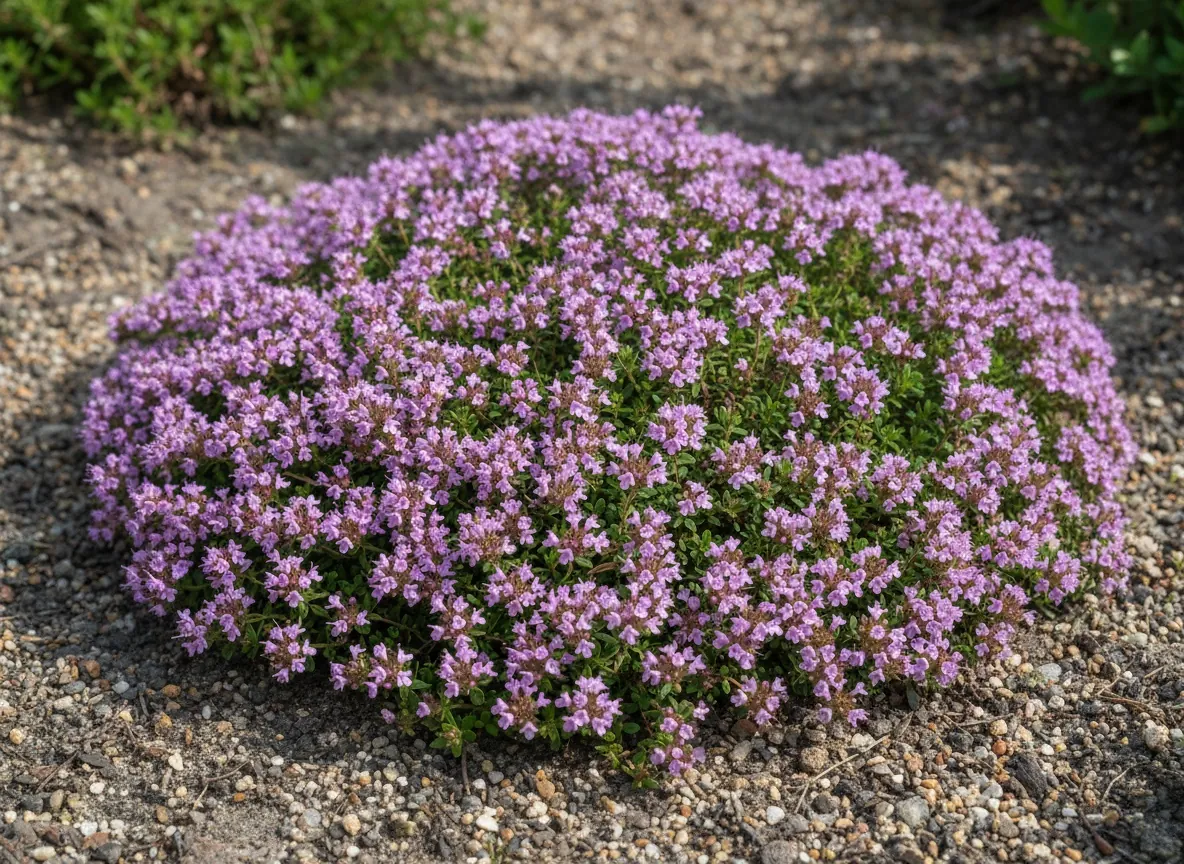
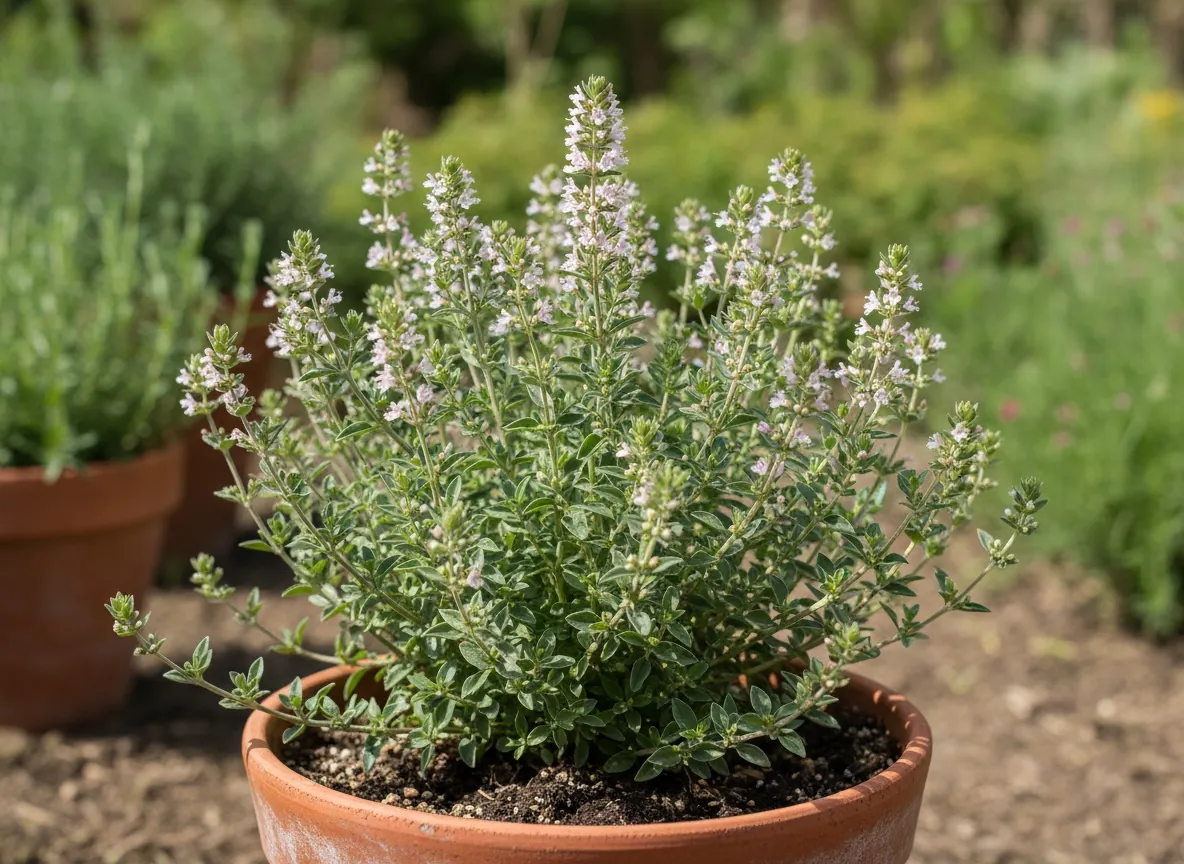
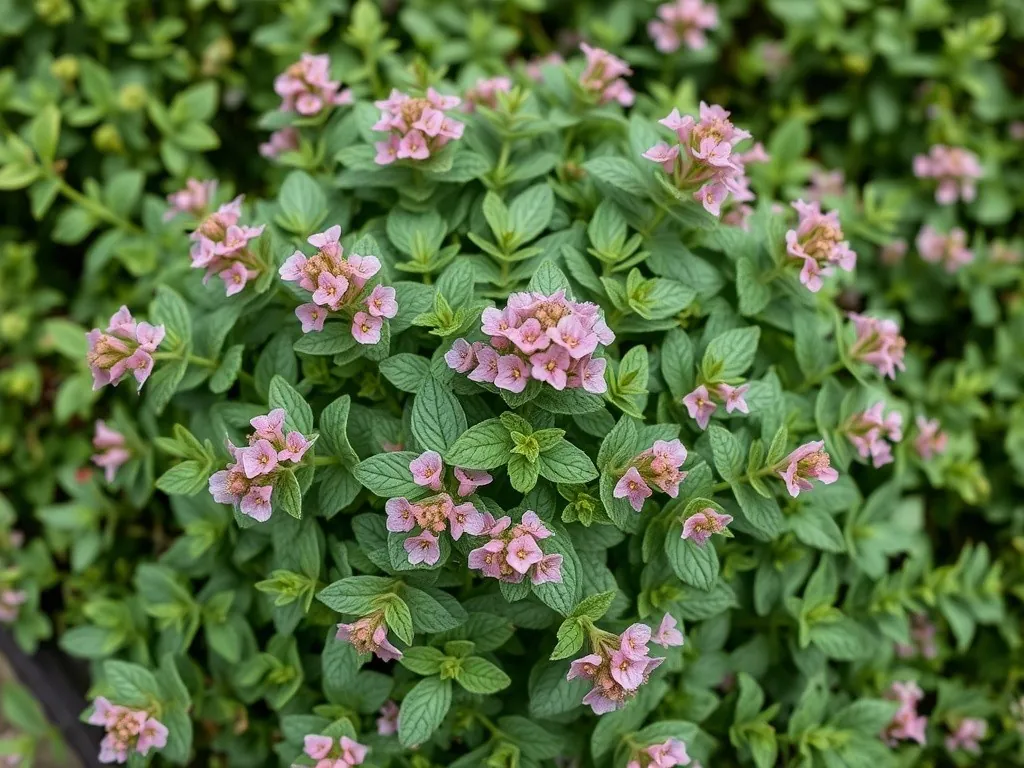
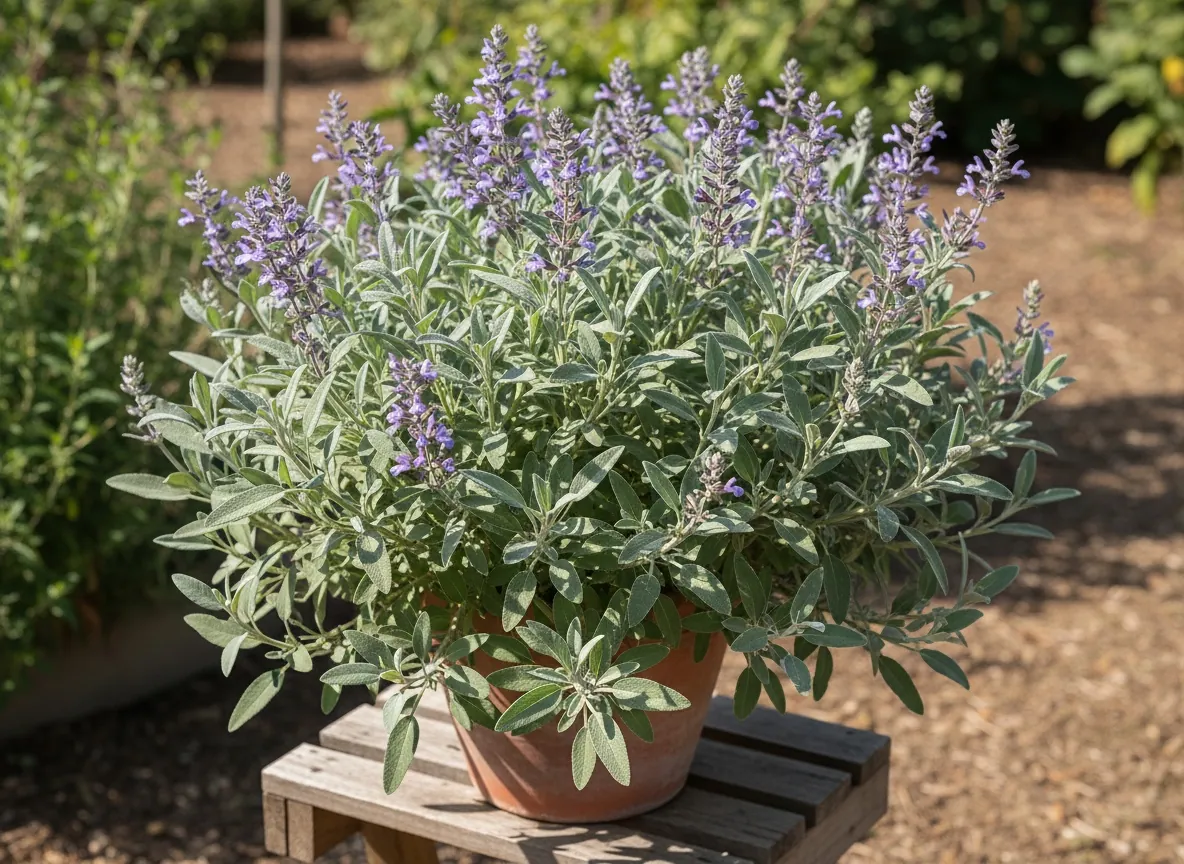
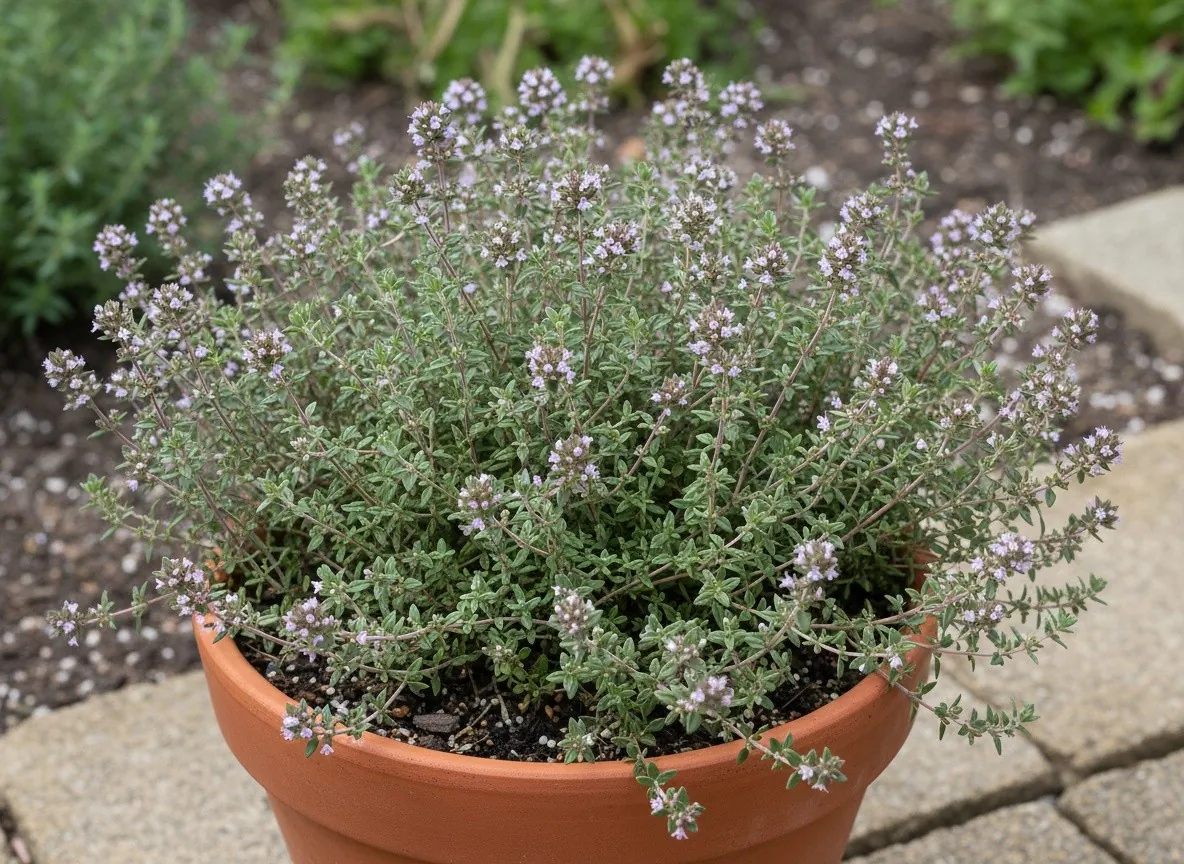
A low, spreading or cushion-forming sub-shrub with tiny, narrow, strongly aromatic leaves and numerous small pink-violet flowers clustered at the shoot tips.
Growing and care
Watering
Very drought-tolerant; doesn't tolerate waterlogging. Water only once the substrate has completely dried out — excess water causes rot.
Fertilizing
Undemanding — loses its aroma on fertile soil; performs best in a lean, dry spot.
Planting
Well-drained, lean, somewhat alkaline soil in full sun; ideal for rock gardens and wall crevices.
Pruning
Trim lightly after flowering to keep a compact habit; harvest sprigs as needed.
Companion plants
Good companions
Mediterranean herbs with identical needs — sun and dry, well-drained soil; a classic herb-garden pairing.
The same care profile — drought and full sun; a natural companion in the herb garden.
Bad companions
Thyme rots under the constant moisture that moisture-loving plants require.
The evidence level indicates whether the relationship is backed by research, observation, or gardening tradition.
Toxicity
| For whom | Level | Notes |
|---|---|---|
| Humans | None | — |
| Dogs | None | — |
| Cats | None | — |
History and origin
Thyme was already prized in antiquity — the Egyptians used it for embalming, the Greeks as a symbol of courage, and the Romans spread it as a culinary herb throughout Europe.
Uses
For herb and rock gardens, dry walls and crevices, as low ground cover, and in pots. The leaves are used as a culinary herb and for infusions.
Trivia
- Thymol, thyme's essential oil, has strong antibacterial properties and is an ingredient in many mouthwashes.
- Thyme honey, especially the Greek variety, is highly prized for its intense aroma.
Frequently asked questions
Why is my thyme rotting or drying out?
The most common cause is overwatering and soil that's too heavy and damp. Thyme is a Mediterranean plant — it needs full sun, free-draining soil, and should only be watered once the ground has dried out.
Will thyme survive winter outdoors?
In most of Poland, yes, especially in well-drained soil and a sheltered spot. Wet, heavy soil in winter is more dangerous than the cold itself — it's what causes plants to die out.
How should I harvest thyme to preserve its aroma?
Best just before flowering, on a sunny morning, when the oil concentration is highest. Cut the upper parts of the stems without cutting into the woody base.
Sources
- Plants of the World Online (POWO)Database (GBIF, POWO…)
- RHS — ThymeInstitution / botanical garden
My note
A private note for this plant — saved in your browser.