In short
- Very undemanding — grows on both acidic and neutral soil.
- Tolerates periodic waterlogging better than most fruit shrubs.
- Flowers April–May, fruits August–September.
- The fruits are astringent when raw, valued for their high antioxidant content — used mainly for processing.
- Frost-hardy practically throughout Poland (down to USDA zone 3a).
- In autumn the leaves turn red, providing an additional ornamental value.
Botanical data
- Family
- Rosaceae (Rosaceae)
- Height
- 1–2 m
- Width
- 1–1.5 m
- Habit
- Upright
- Growth rate
- Fast
- Position
- Full sun, Partial shade
- Soil
- Loamy, Peaty, Humus-rich
- pH reaction
- pH 5.5–7
- Moisture
- Moderate, Moist
- Bloom
- April–May
- Hardiness
- USDA 3a–8a
- Propagation
- From cuttings, By layering, From seed
Characteristics
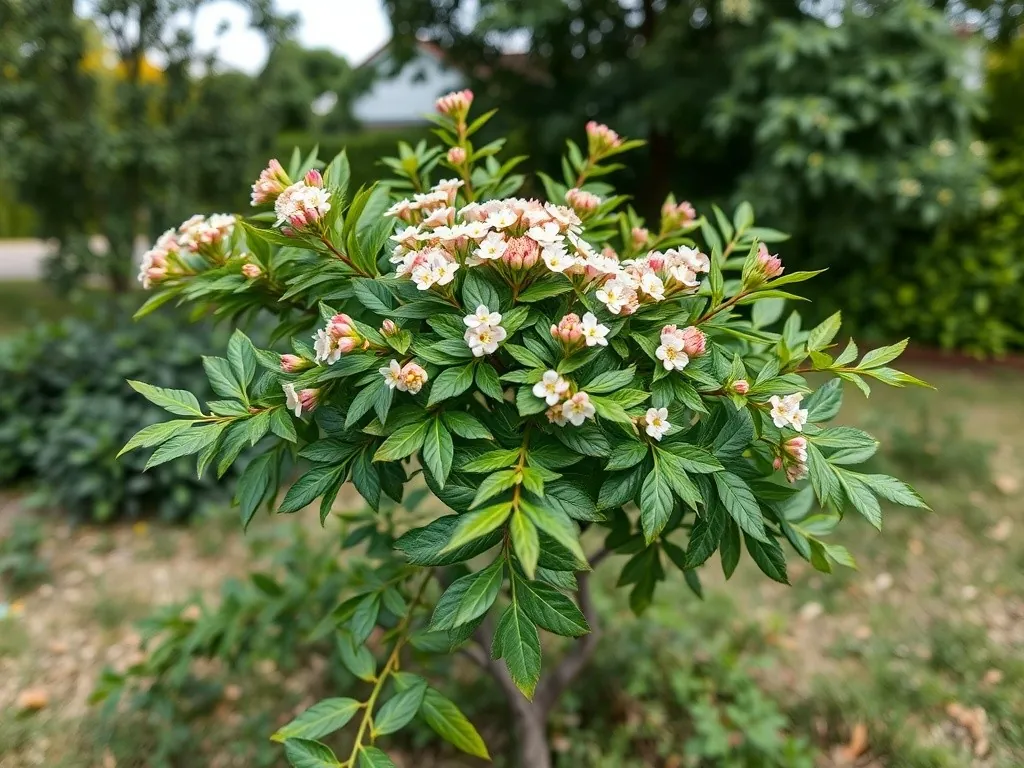
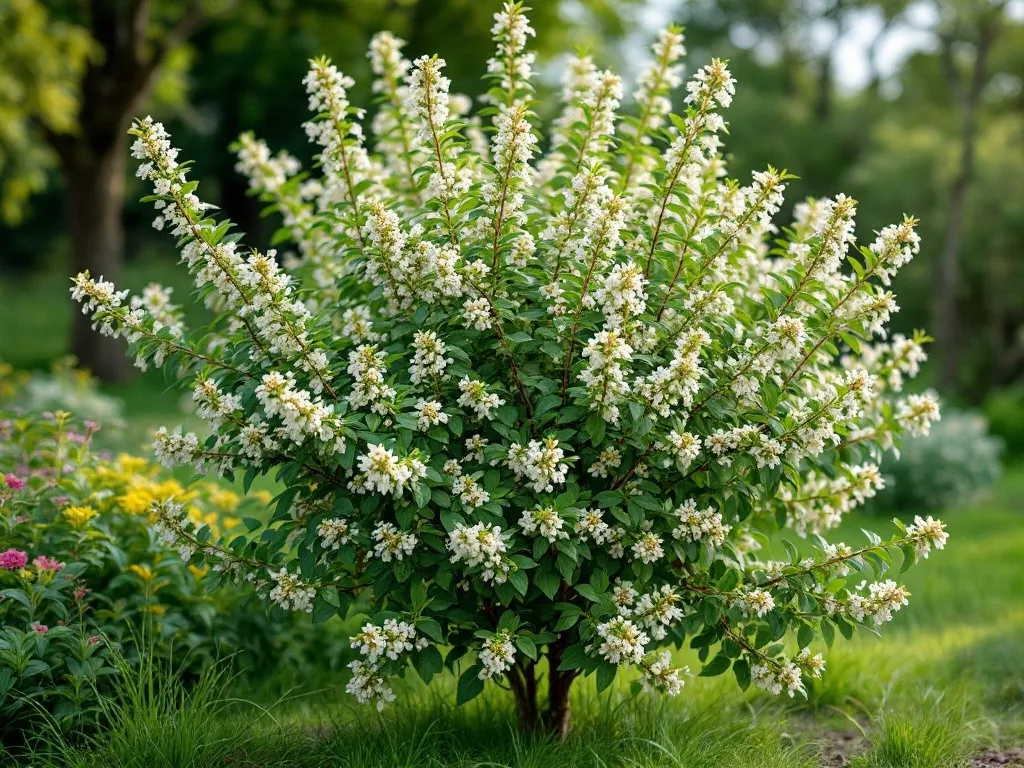
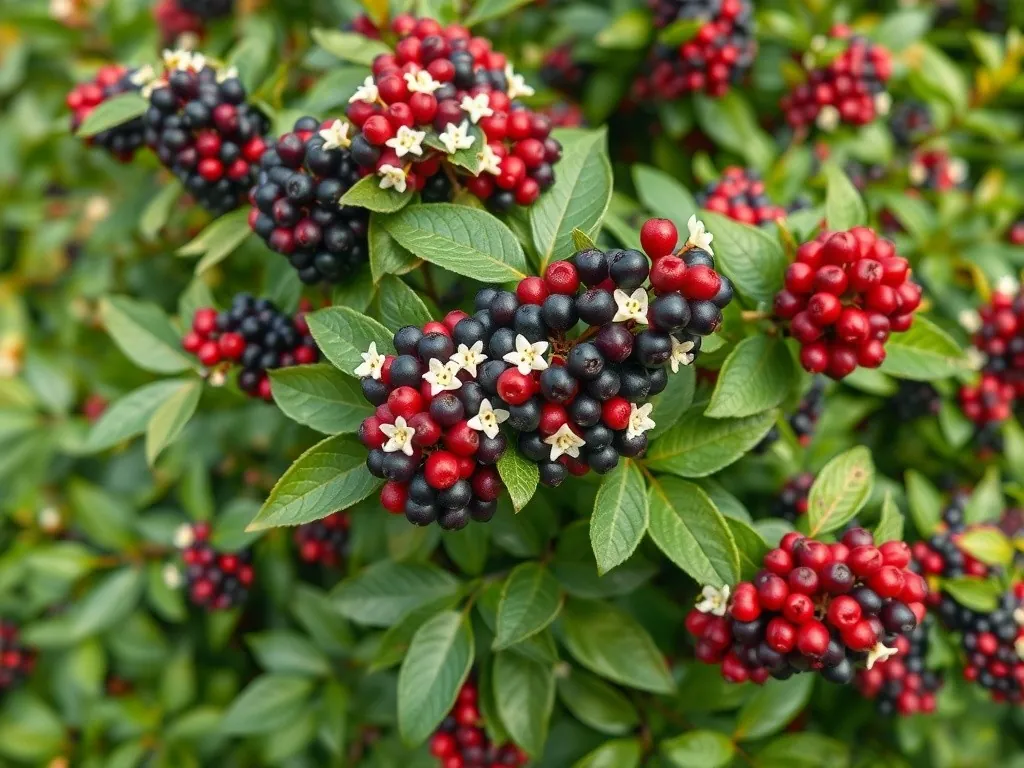
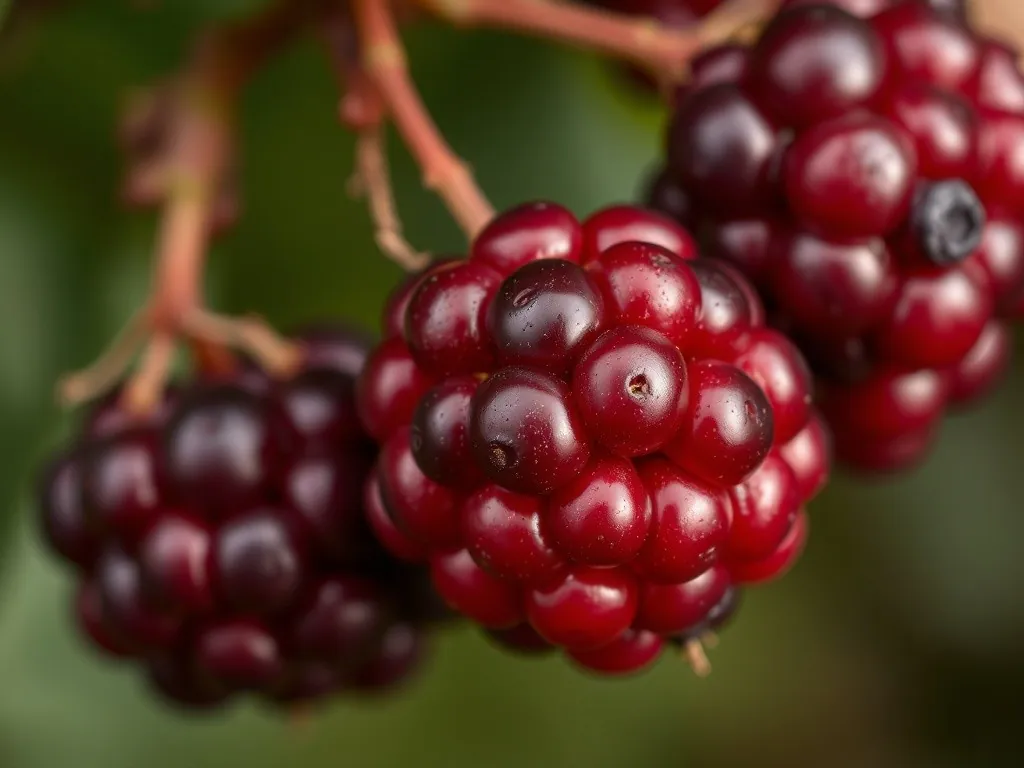
Forms a compact, upright shrub with numerous, straight-growing shoots. The leaves are elliptical, glossy, dark green in summer and turning intensely red in autumn. White flowers gathered in corymbs appear in spring, and in autumn small, black, lightly bloomed berries ripen, clustered in dense bunches.
Growing and care
Watering
Tolerates periodic waterlogging better than most fruit shrubs — its natural habitats are moist wetlands. Water young shrubs regularly.
Fertilizing
Excess nitrogen favours leaf growth at the expense of fruiting.
Planting
Dig a planting hole with compost; the plant is undemanding as to soil, but yields best on fertile, moist humus-rich soil.
Pruning
Thin the shrub every year, removing shoots older than 7–8 years right at the base — this stimulates new, abundantly fruiting shoots.
Companion plants
Good companions
Similar habitat requirements and shared value for birds that eat the fruit in autumn and winter.
Combines well in mixed plantings with a similar height and growth rate.
Tolerate a similarly moderately moist soil moisture level as chokeberry.
Bad companions
Lavender requires dry, well-drained, alkaline soil — conditions that conflict with the moister, acidic to neutral substrate preferred by chokeberry.
The consistently moist site required by chokeberry favours root rot in plants adapted to drought.
The evidence level indicates whether the relationship is backed by research, observation, or gardening tradition.
Toxicity
| For whom | Level | Notes |
|---|---|---|
| Humans | None | The fruits are fully edible, though raw they are very astringent (tannins) — usually processed into juices, cordials and dried fruit. As with other plants from the rose family, the seeds contain trace amounts of cyanogenic compounds, harmless with normal consumption of the fruit. |
| Dogs | None | — |
| Cats | None | — |
History and origin
Black chokeberry originates from the moist regions of eastern North America, where it was long gathered by indigenous peoples. It reached Europe in the 20th century, and in recent decades has gained particular popularity in Poland and neighbouring countries as a "superfood" plant, thanks to the very high content of anthocyanins and antioxidant compounds in the fruits.
Uses
For orchards, informal hedges and plantings on wetter sites, where other fruit shrubs perform less well. The fruits are used mainly for juices, cordials, jams and dried fruit.
Trivia
- Chokeberry contains one of the highest amounts of anthocyanins among common cultivated fruits — hence the intensely purple-black juice that stains everything it touches.
- The species name "melanocarpa" literally means "black-fruited" (Greek melas — black, karpos — fruit).
Frequently asked questions
Why are chokeberry fruits so astringent?
This is due to the high content of tannins and organic acids. The fruits taste best after a light frost or processed — into juice, cordial or dried fruit.
Does chokeberry tolerate wet, heavy soil?
Yes, it is one of the few fruit shrubs that tolerates periodic waterlogging and heavier, clayey soil well — it grows naturally in wetland areas.
How long before chokeberry produces its first fruit?
The first fruits appear as early as the 2nd–3rd year after planting, and the shrub usually reaches full, abundant fruiting after 4–5 years.
Sources
- Plants of the World Online (POWO) — Aronia melanocarpaDatabase (GBIF, POWO…)
- Missouri Botanical Garden — Aronia melanocarpaInstitution / botanical garden
My note
A private note for this plant — saved in your browser.