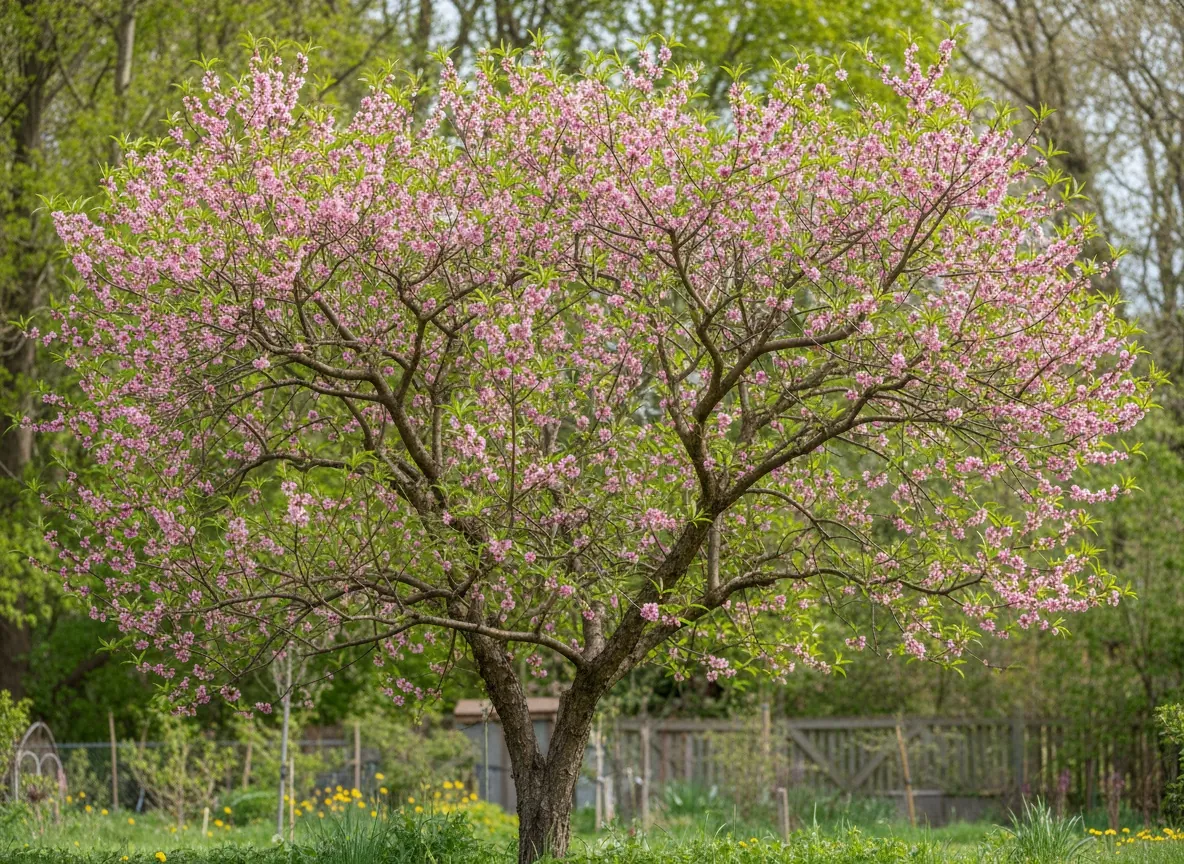
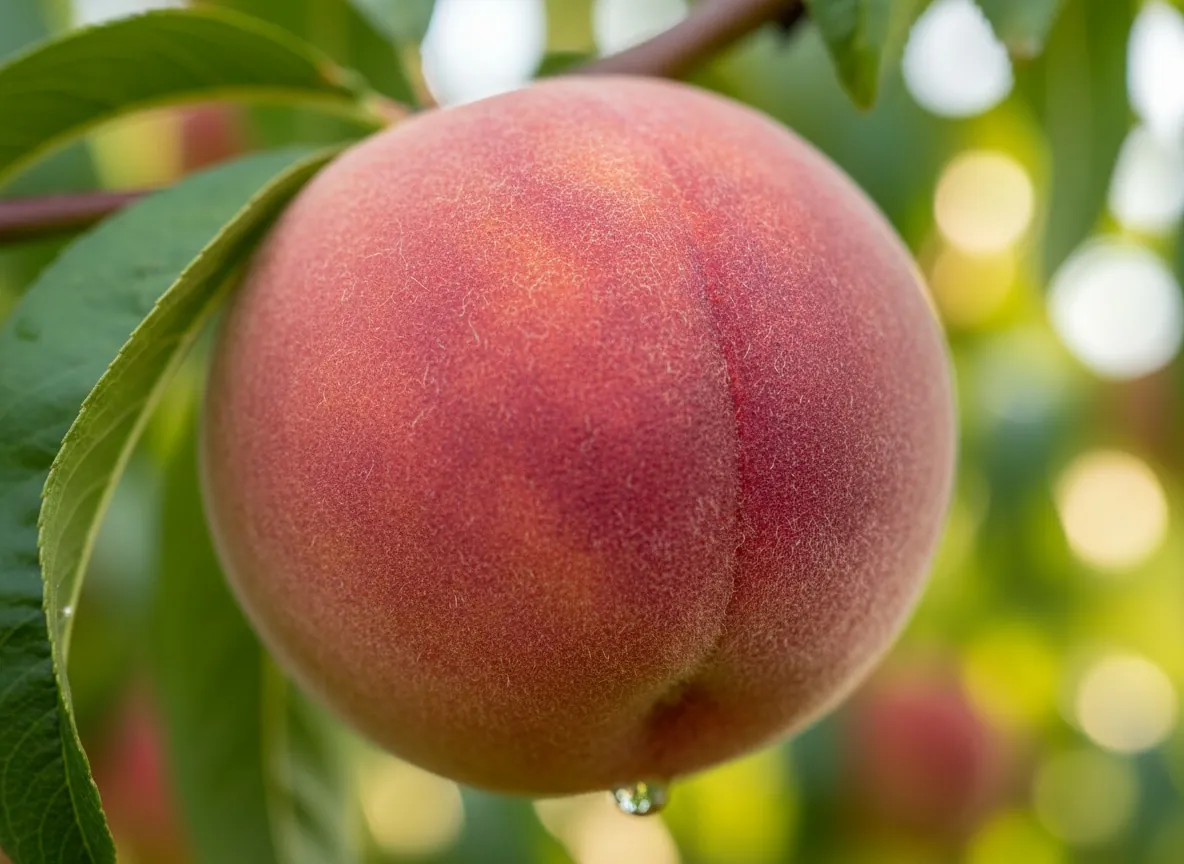
In short
- Flowers at the turn of March and April — in Polish conditions this is the main problem of its cultivation: frosts destroy the flowers and write off the crop in many years.
- Requires the warmest, sheltered spot in the garden; avoid hollows in the ground where cold air stagnates.
- Short-lived — it usually crops heavily for only 12–20 years, after which the tree is replaced with a new one.
- Most cultivars are self-fertile, so a second cultivar is not necessary — unlike with sweet cherry.
- Fruits exclusively on one-year-old shoots, which is why it requires annual, hard pruning at the pink bud stage.
- The flagship disease: peach leaf curl — controlled only preventively, before the buds break.
Botanical data
- Family
- Rosaceae (Rosaceae)
- Height
- 2.5–5 m
- Width
- 3–5 m
- Habit
- Spreading
- Growth rate
- Fast
- Position
- Full sun
- Soil
- Sandy, Humus-rich, Loamy
- pH reaction
- pH 6–7
- Moisture
- Moderate
- Bloom
- March–April
- Hardiness
- USDA 5b–9a
- Propagation
- From cuttings, From seed
Characteristics
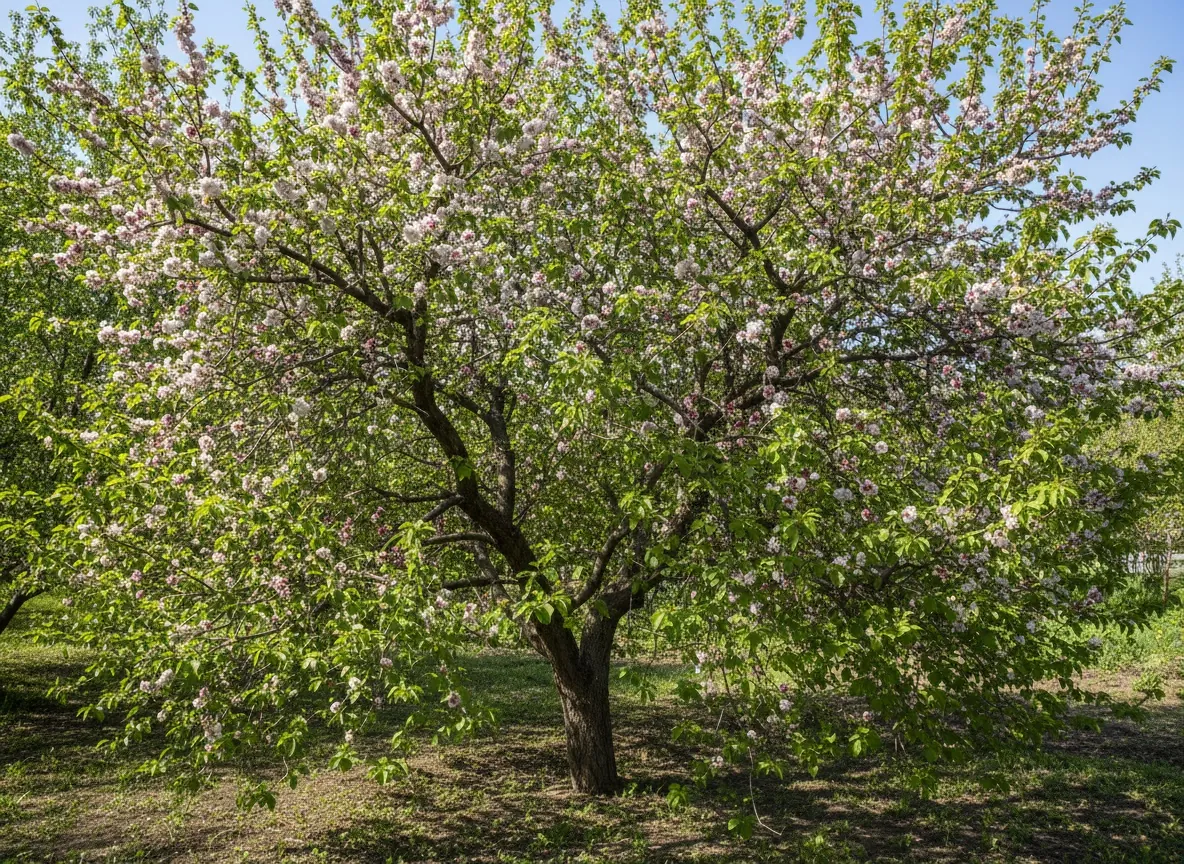
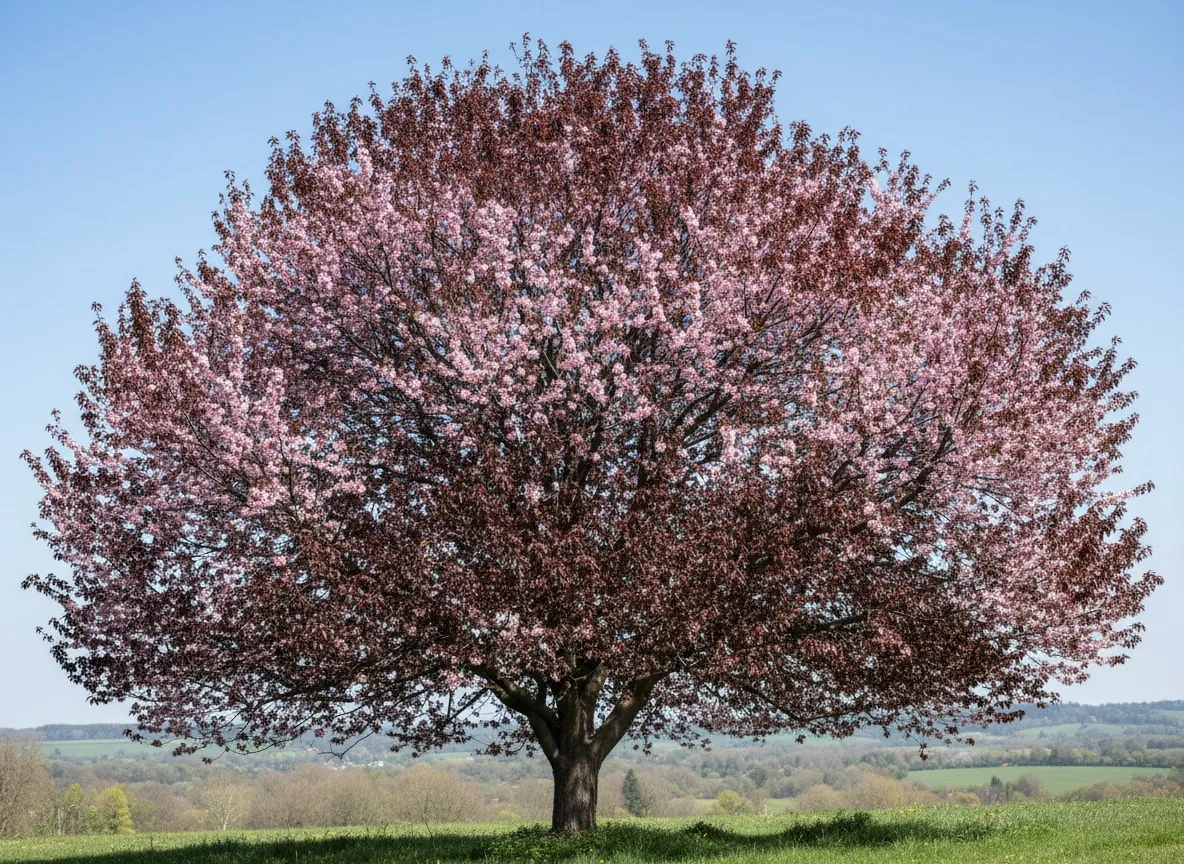
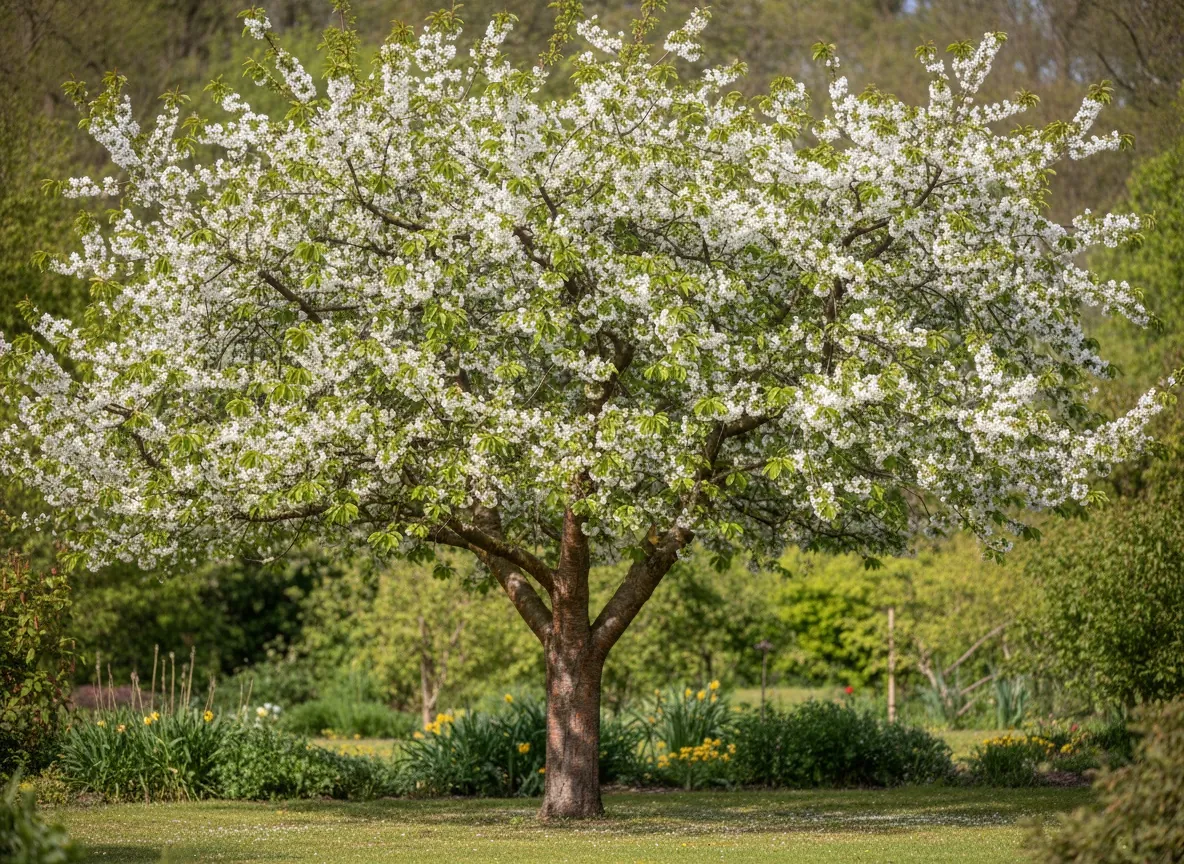
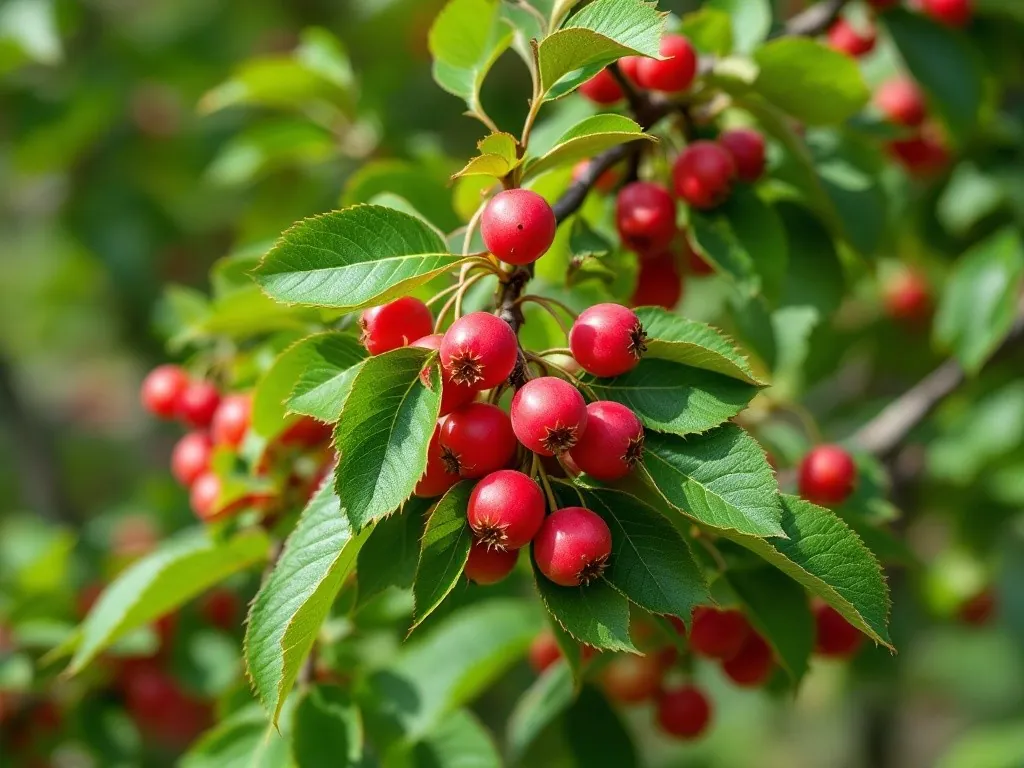
A small tree with a low, wide crown, usually grown without a leader (as an open centre). The leaves are very characteristic — long, narrowly lanceolate, pointed, sickle-shaped, which makes the peach easy to distinguish from the apricot with its broad, almost heart-shaped leaves. The flowers are pink, sessile, single or in pairs, and open on bare shoots before the leaves. The fruit is a drupe with a distinct suture and velvety, downy skin; the stone is deeply furrowed and wrinkled. The nectarine is not a separate species — it is a peach (Prunus persica var. nucipersica) with a recessive mutation that removes the down from the skin.
Growing and care
Watering
The most water-hungry period is July and August, when the fruits are gaining size — a water shortage gives small, dry peaches. At the same time the species does not tolerate standing water at all: on heavy and waterlogged soils the roots rot and the tree dies within a few seasons.
Fertilizing
The peach fruits exclusively on the previous year's shoots, so it needs strong growth every year — it is hungrier for nitrogen than other stone fruits. Nitrogen feeding must not, however, be extended into July and August: unlignified shoots are killed by winter frost.
Planting
The position decides the success of the crop more than the cultivar does: the warmest, wind-sheltered spot in the garden, preferably against the south or south-west wall of a building. Absolutely avoid hollows and valleys where, on windless nights, cold air flows down and stagnates (so-called frost pockets) — that is where spring frosts destroy the flowers most severely. The soil should be well-drained, warm and light.
Pruning
Grow an open-centre (goblet) crown, without a leader, with 3–4 main branches and an open, well-lit interior. Because the fruits set only on one-year-old shoots, hard rejuvenating and thinning pruning is carried out each year, cutting out the shoots that have already fruited and leaving room for new growth.
Companion plants
Good companions
Both species flower very early and require the same, warmest and sheltered position — in the garden it is worth grouping them in a single, best-protected corner rather than scattering them over the plot.
Planted in the tree circle, its strong scent traditionally deters aphids, which curl the young leaves of the peach.
They keep the circle free of turf, do not shade the crown and attract beneficial insects, without competing strongly for water with the tree's shallow root system.
Bad companions
Species of the genus Prunus are among the most sensitive to juglone — an allelopathic compound released by the roots of black walnut, inhibiting their growth and leading to dieback.
Planting a peach where another stone fruit tree stood leads to replant disease (“soil sickness”) — the young tree grows poorly despite good care. The soil must be replaced or another site chosen.
The evidence level indicates whether the relationship is backed by research, observation, or gardening tradition.
Toxicity
| For whom | Level | Notes |
|---|---|---|
| Humans | None | The fruit is edible and safe. The seed hidden inside the stone, as in other Prunus species, contains amygdalin — it should not be eaten. |
| Dogs | Mild | The hazard is chewed stones and leaves eaten in larger amounts; the flesh itself is safe. A whole stone swallowed by a dog also risks obstructing the digestive tract. |
| Cats | Mild | The risk concerns mainly chewed stones and leaves. |
| Horses | Moderate | Wilting leaves of plants in the genus Prunus release particularly large amounts of hydrogen cyanide — prunings must not be thrown onto pasture. |
History and origin
The peach was cultivated in China as long as about 4000 years ago and holds an important place in the culture there as a symbol of longevity and immortality — the “peaches of immortality” appear in Taoist myths. Along trade routes through Central Asia and Persia it reached Greece and Rome, and from there the rest of Europe; the Roman name malum persicum (“Persian apple”) entrenched the mistaken belief in its Persian origin, which survives in the scientific name to this day.
Uses
Only for home gardens in the warmest regions of the country and in the best-sheltered positions — classically against the south wall of a building, where the wall gives off heat and shelters from wind. The fruits are eaten raw, and also made into compotes, jams and dried fruit. Because of the tree's short life, cultivation is planned on the assumption of replacement every dozen or so years.
Trivia
- The species name persica suggests Persia, but the homeland of the peach is China — Persia was only a stop on its way to Europe.
- The nectarine is not a cross between peach and plum, nor a separate species, but a peach with a mutation that removes the down from the skin — a branch bearing nectarines can grow on a peach tree, and vice versa.
- Peach and apricot are most easily told apart by the leaf: the peach has narrow, lanceolate leaves, the apricot — broad, almost heart-shaped ones.
Frequently asked questions
Why does the peach flower abundantly but bear no fruit?
Spring frosts are most often to blame. The peach flowers at the turn of March and April, and open flowers die at around −2 °C — a single cold night can write off the whole crop. The second reason is a lack of pollination despite healthy flowers: in cool, rainy weather bees barely fly (below about 12 °C). The third — planting the tree in a hollow, where cold air flows down and stagnates. The absence of a second pollinating cultivar is usually NOT the cause, because most peaches are self-fertile.
The peach leaves are thickened, puckered and reddish — what is it?
This is peach leaf curl, a fungal disease caused by Taphrina deformans — the most typical problem of this species. Infected leaves thicken, pucker, take on a reddish colour and fall, which seriously weakens the tree. Prevention is crucial: sprays are applied preventively at the end of winter, before the buds break (and often also in autumn after leaf fall). Once symptoms appear, spraying no longer works — all that remains is removing and destroying the infected leaves. It is worth reaching for less susceptible cultivars.
Does a peach need a second tree for pollination?
Usually not — the vast majority of peach cultivars are self-fertile and a single tree fruits on its own (exceptions, such as the cultivar “J.H. Hale”, are few). This is an important difference compared with sweet cherry, which almost always requires a pollinator. With peach the factor limiting the crop is not pollination but the very early flowering time and the frost risk that goes with it — so instead of looking for a pollinator, it is worth investing in the warmest possible position.
Sources
- Plants of the World Online (POWO)Database (GBIF, POWO…)
- RHS — Prunus persica (peach)Institution / botanical garden
My note
A private note for this plant — saved in your browser.