In short
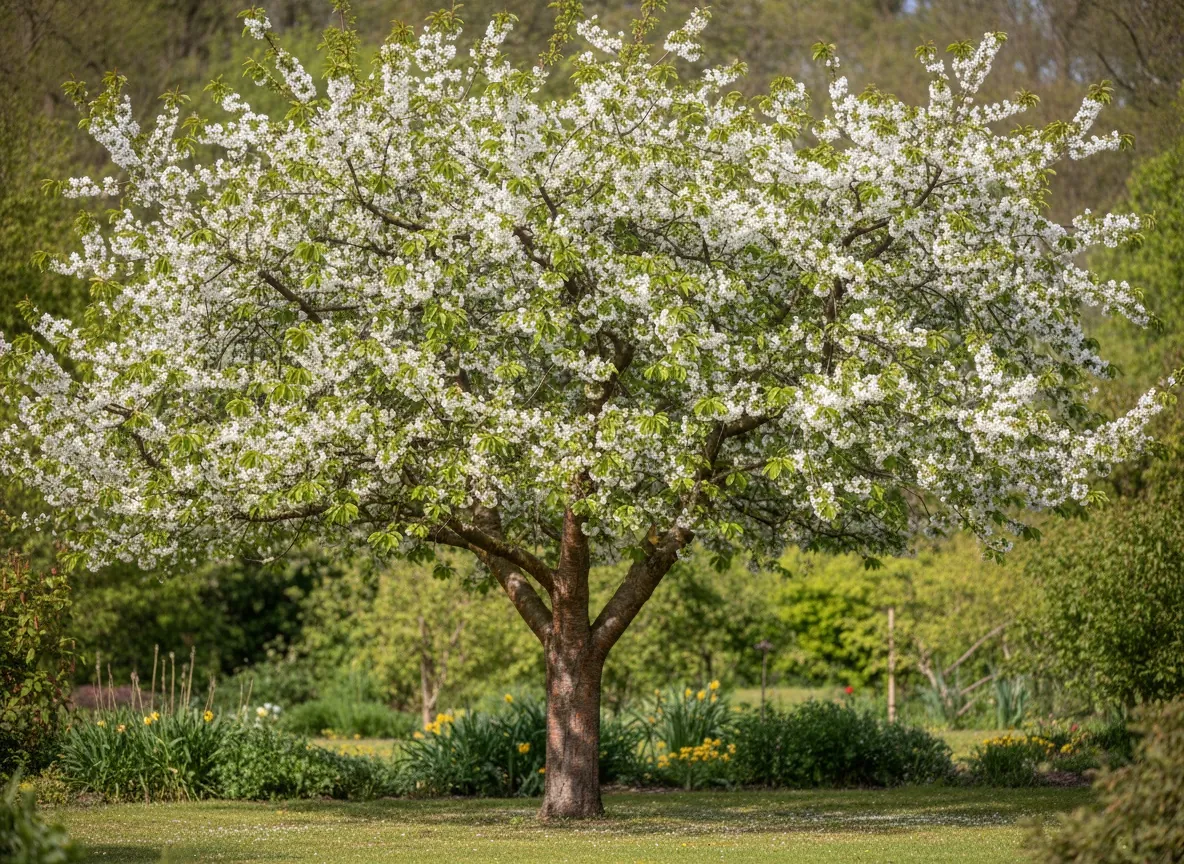
- Height 3-7 m, with a broad, spreading crown.
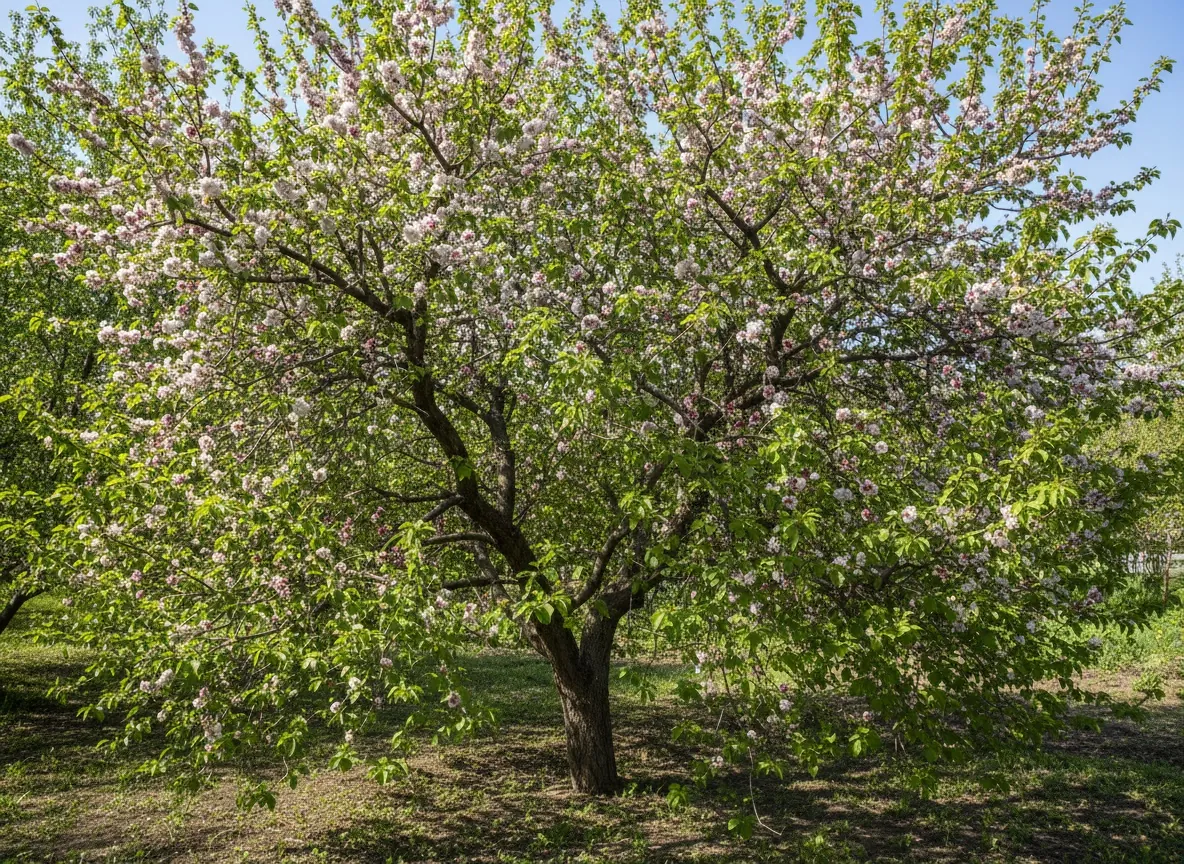
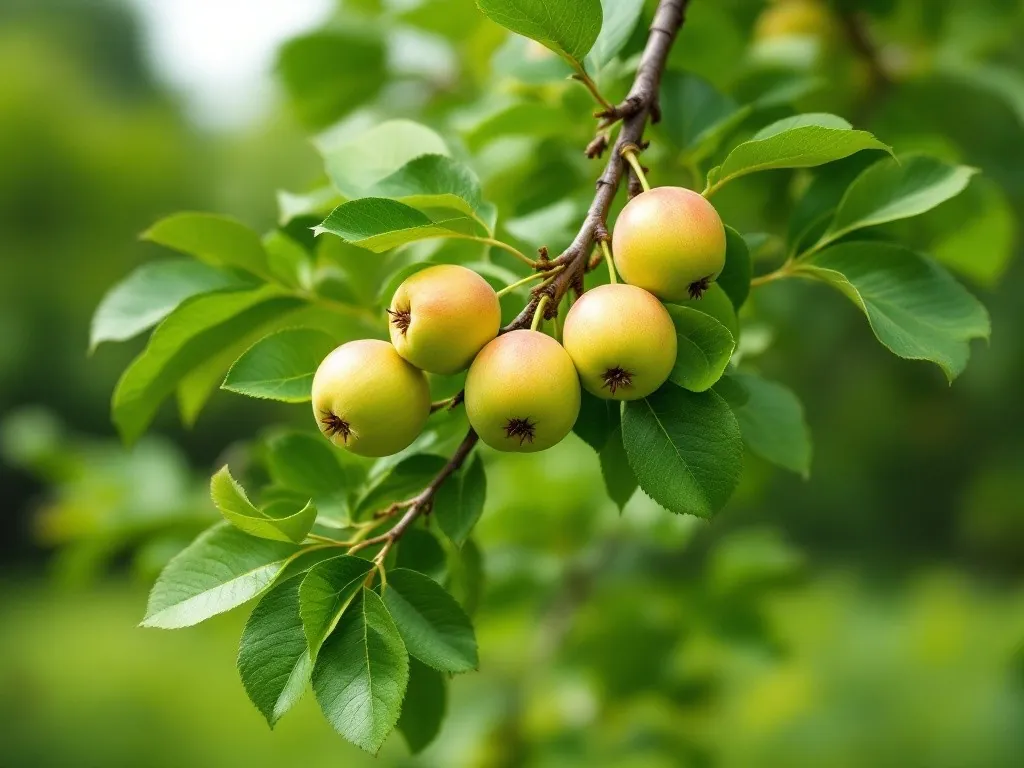
- Blooms white in April; fruits (sour cherries) ripen in July.
- Self-fertile in most varieties — unlike sweet cherry, it does not need a second variety for pollination.
- Very frost-hardy, thrives in Central Europe's continental climate.
- Fruits mainly on one- and two-year-old shoots — needs regular renewal pruning after harvest.
- A classic component of traditional Polish orchards and preserves.
Botanical data
- Family
- Rosaceae (Rosaceae)
- Height
- 3–7 m
- Width
- 2.5–5 m
- Habit
- Spreading
- Growth rate
- Moderate
- Position
- Full sun
- Soil
- Loamy, Humus-rich
- pH reaction
- pH 6–7.5
- Moisture
- Moderate
- Bloom
- April–April
- Hardiness
- USDA 4a–8b
- Propagation
- From cuttings, By layering
Characteristics
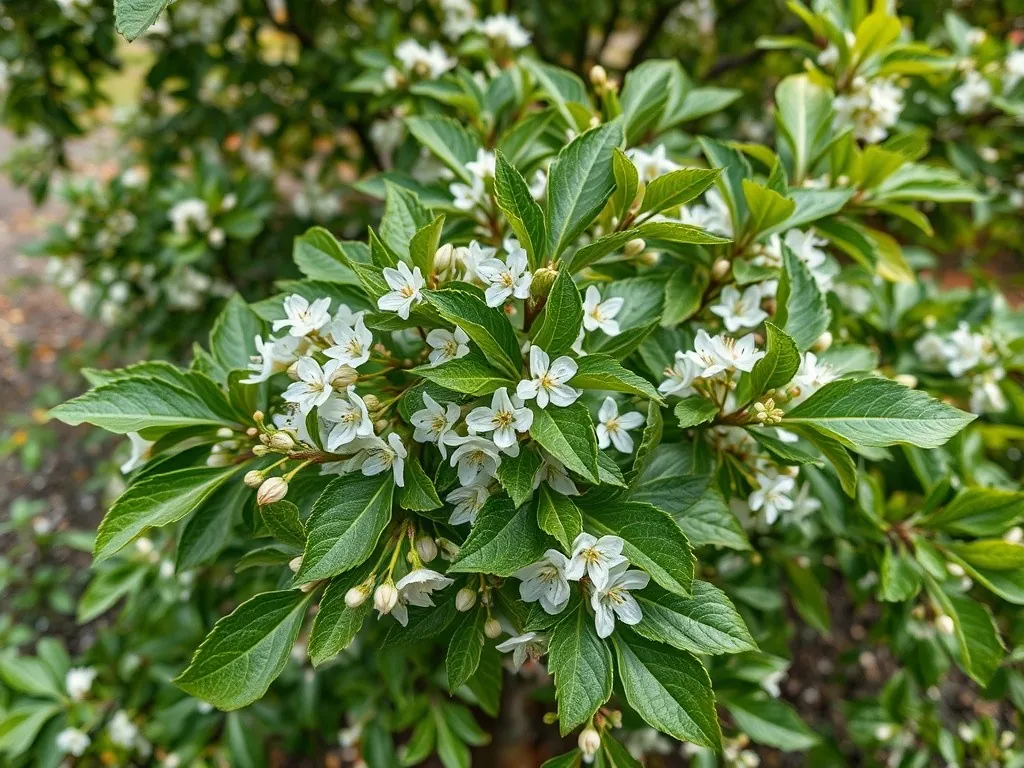
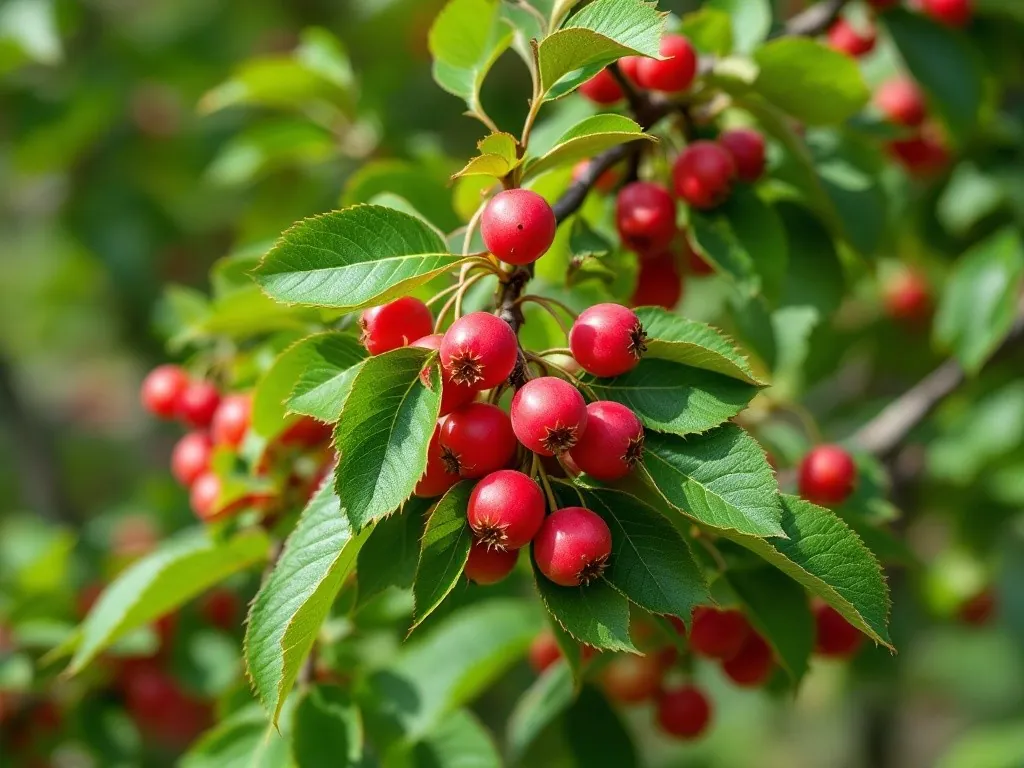
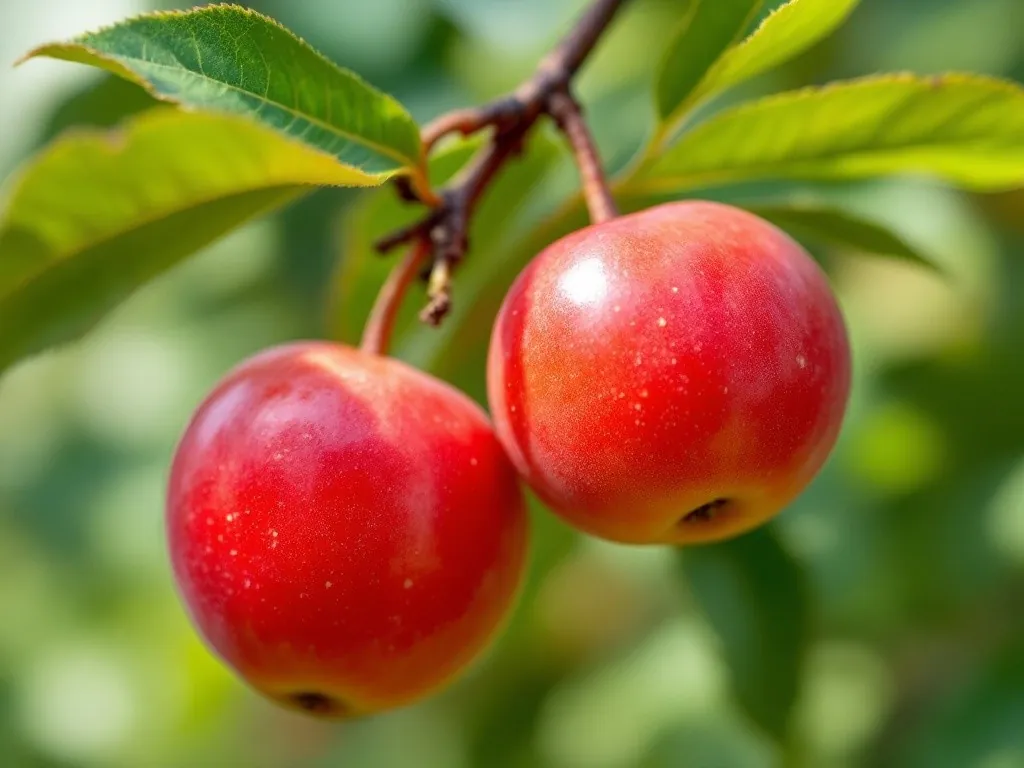
A tree or multi-stemmed shrub with a dense, spreading crown and reddish-brown bark. Leaves elliptical, toothed, dark green. White, five-petaled flowers appear before or alongside the leaves. Fruits are round, ranging from light red to dark red, with a distinctly tart flavor compared to sweet cherries.
Growing and care
Watering
Young trees need regular watering in the first years after planting; mature specimens tolerate short droughts well but are sensitive to waterlogged roots on heavy, wet soils.
Fertilizing
Moderate nitrogen doses in spring; excess nitrogen fertilizing lowers shoot winter hardiness and encourages fungal diseases.
Planting
Unlike sweet cherry (Prunus avium), most sour cherry varieties are self-fertile — they bear fruit on their own without needing a second pollinating variety planted nearby, though the presence of pollinators usually improves yield size.
Pruning
Remove old, spent fruiting shoots (fruit sets mainly on one- and two-year-old shoots) and thin the crown for better air circulation.
Companion plants
Good companions
The strong scent of these plants, planted beneath the sour cherry, is traditionally used to repel aphids and other pests.
Bad companions
Plants of the genus Prunus, including sour cherry, are especially sensitive to juglone — an allelopathic compound released by black walnut roots that inhibits their growth.
The evidence level indicates whether the relationship is backed by research, observation, or gardening tradition.
Diseases and pests
A grey-brown, fluffy coating of mycelium on flowers, fruit, leaves and shoots, preceded by watery, rotting spots. It attacks weakened and damaged tissue and develops rapidly in humidity and cool conditions and where air circulation is poor. Common on strawberries, begonias, peonies and roses.
AphidsSmall (1–3 mm) soft-bodied insects, green, black or pink, feeding in clusters on young shoots and the underside of leaves. They excrete sticky honeydew.
Toxicity
| For whom | Level | Notes |
|---|---|---|
| Humans | None | The fruit is edible and safe. The pits, leaves and bark contain cyanogenic compounds (amygdalin) — chewed in large amounts, they can be harmful. |
| Dogs | Mild | Eating a large number of chewed pits or leaves can cause stomach upset. |
| Cats | Mild | The risk mainly involves chewed pits and leaves consumed in large amounts. |
History and origin
Sour cherry has been cultivated in Europe since antiquity — the Romans spread it around the Mediterranean, and in Central and Eastern Europe, including Poland, it became for centuries one of the staple fruit trees of rural and home orchards. The 'Łutówka' variety is one of the oldest and most popular Polish commercial cultivars.
Uses
For home and commercial orchards, as a solitary tree or in rows. The fruit is mainly used for processing (compotes, preserves, liqueurs, dried fruit) since its tart flavor is less suited to eating raw in large quantities.
Trivia
- Sour cherries are the base of traditional cherry liqueur (e.g. steeped in vinegar or spirit) as well as compotes and preserves in Polish home cooking.
- Sour cherries are a classic filling for pierogi and pancakes in Polish and Central European cuisine.
- Poland is one of Europe's largest sour cherry producers, with large commercial orchard areas, especially in the Masovia and Lublin regions.
Frequently asked questions
Does sour cherry need a second variety for pollination?
Usually not — most sour cherry varieties are self-fertile and bear fruit on their own, unlike sweet cherry (Prunus avium), which typically requires a pollinating variety. Even so, the presence of bees and other pollinators in the garden usually improves the size and consistency of the harvest.
What is the difference between sour cherry and sweet cherry?
Sour cherry (Prunus cerasus) has smaller, tarter fruit and is a lower, more spreading tree, usually self-fertile. Sweet cherry (Prunus avium) is a taller tree with sweet fruit and most often needs a second, compatible variety to bear fruit.
When is the best time to prune sour cherry?
The best time is right after harvest (July-August) — wounds heal faster and the risk of fungal infection is lower. Winter pruning is only possible on frost-free days.
Sources
- Plants of the World Online (POWO)Database (GBIF, POWO…)
- RHS — Prunus cerasusInstitution / botanical garden
My note
A private note for this plant — saved in your browser.