In short
- The vast majority of cultivars are self-incompatible — a single tree in the garden usually will not set fruit.
- Vigorous: up to 20 m in the wild, 4–8 m in an orchard, only 2.5–3.5 m on a dwarfing rootstock (Gisela 5).
- Flowers in April, the fruits ripen from June to July depending on the cultivar.
- Needs full sun and a deep, warm, well-drained soil; does not tolerate standing water.
- Prune only after harvest (July–August) — winter pruning risks gummosis and bacterial canker.
- Uneven moisture just before harvest causes the fruits to split.
Botanical data
- Family
- Rosaceae (Rosaceae)
- Height
- 3–20 m
- Width
- 3–10 m
- Habit
- Upright
- Growth rate
- Fast
- Position
- Full sun
- Soil
- Loamy, Humus-rich, Sandy
- pH reaction
- pH 6–7.5
- Moisture
- Moderate
- Bloom
- April–May
- Hardiness
- USDA 4a–8b
- Propagation
- From cuttings, From seed
Characteristics
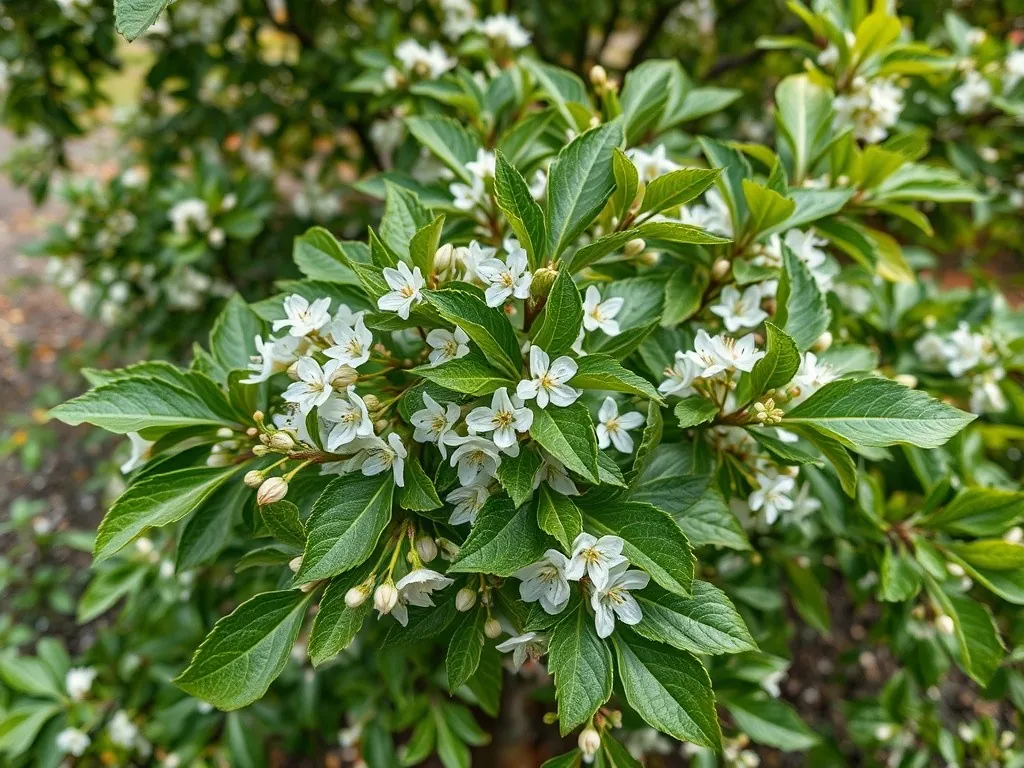
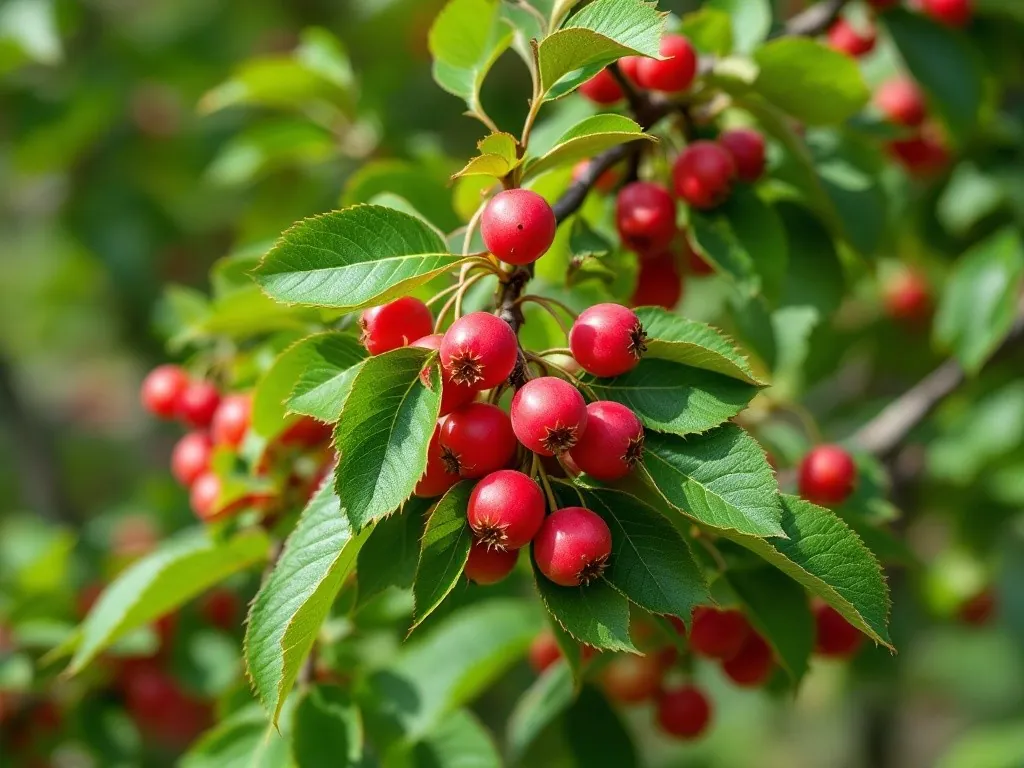
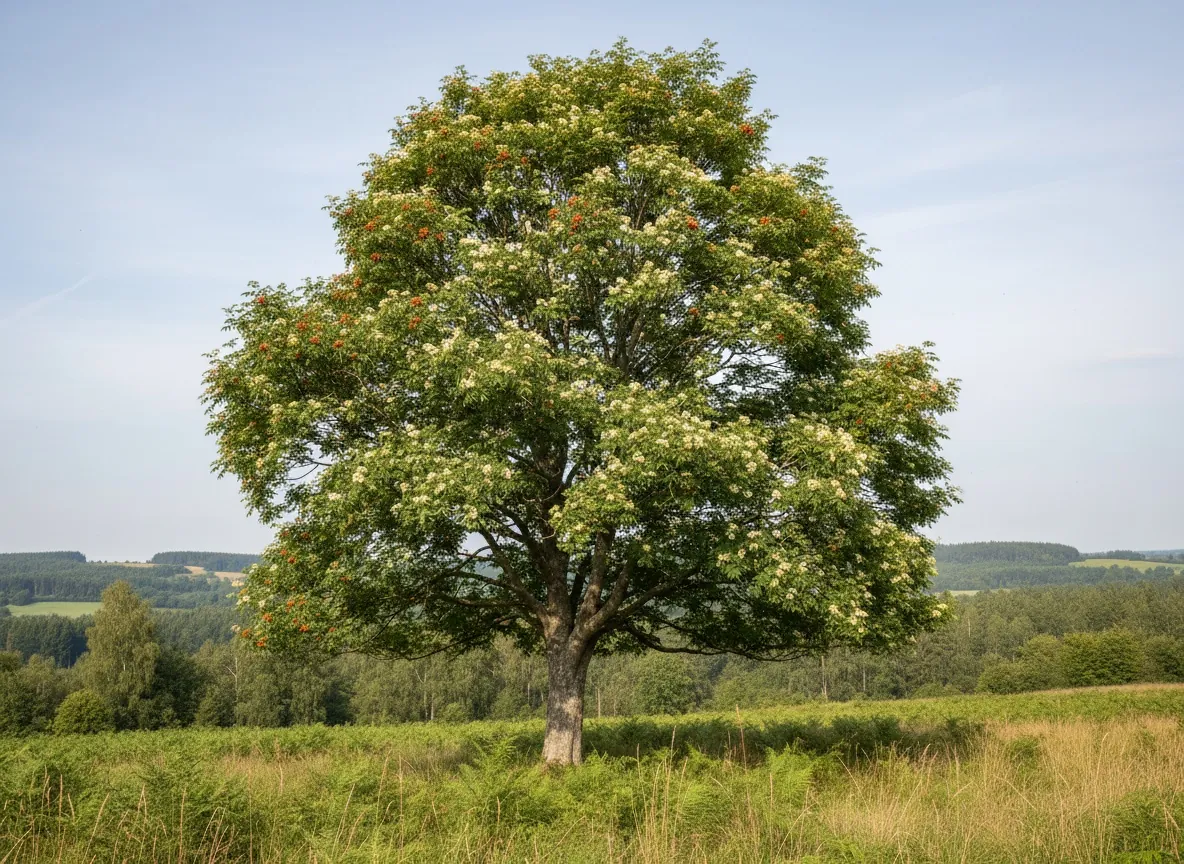
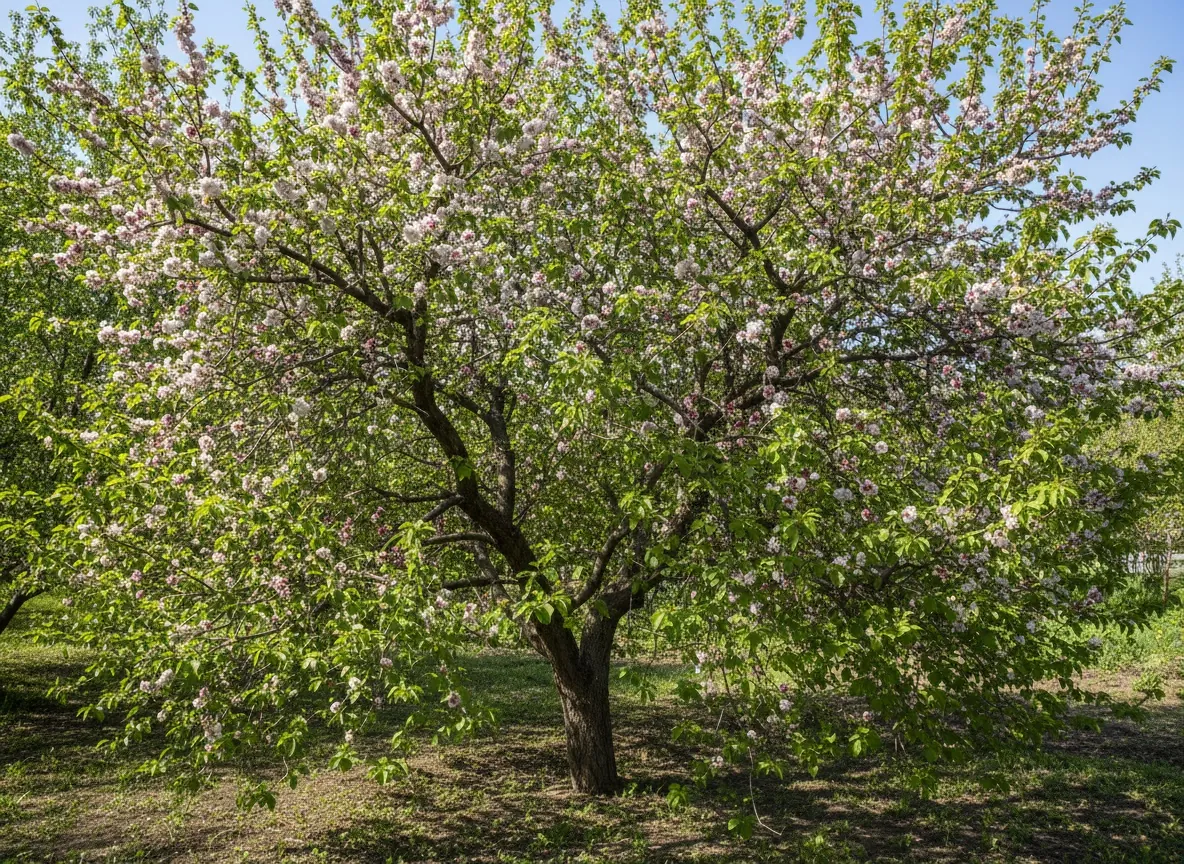
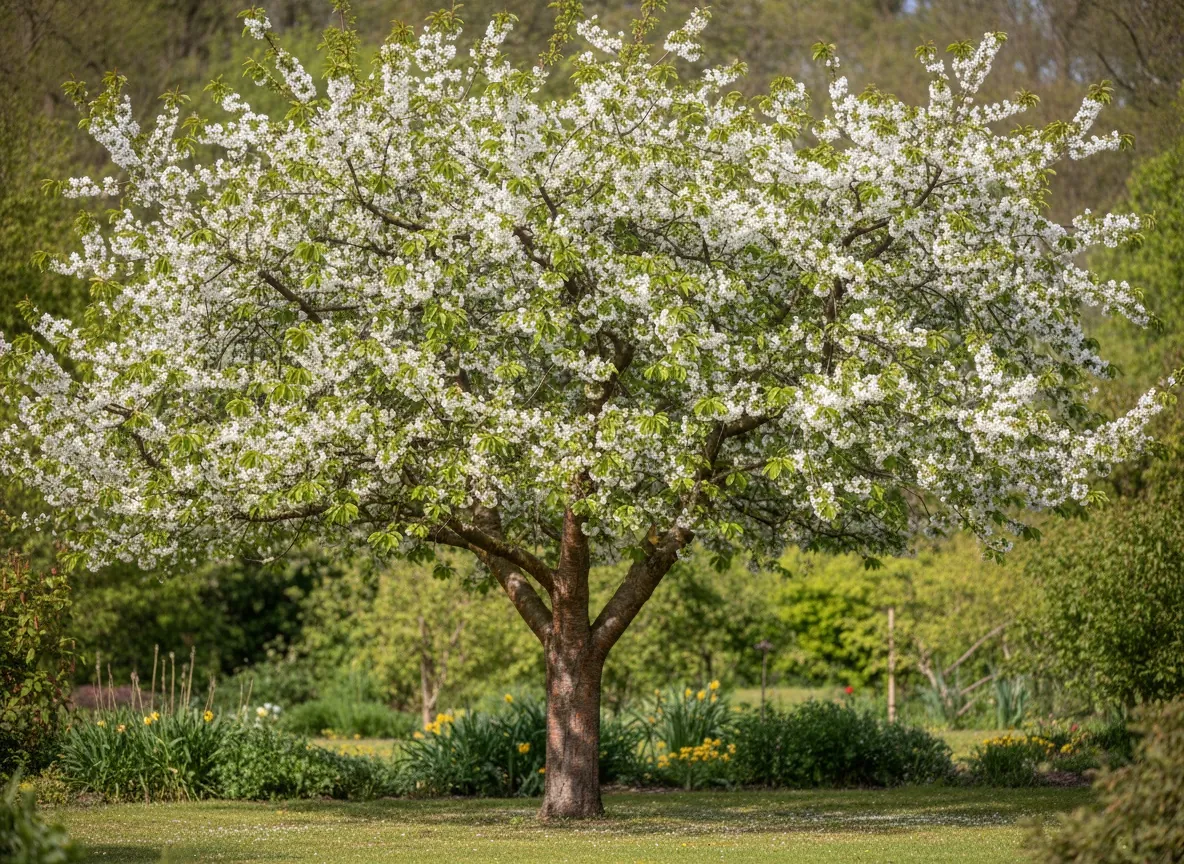
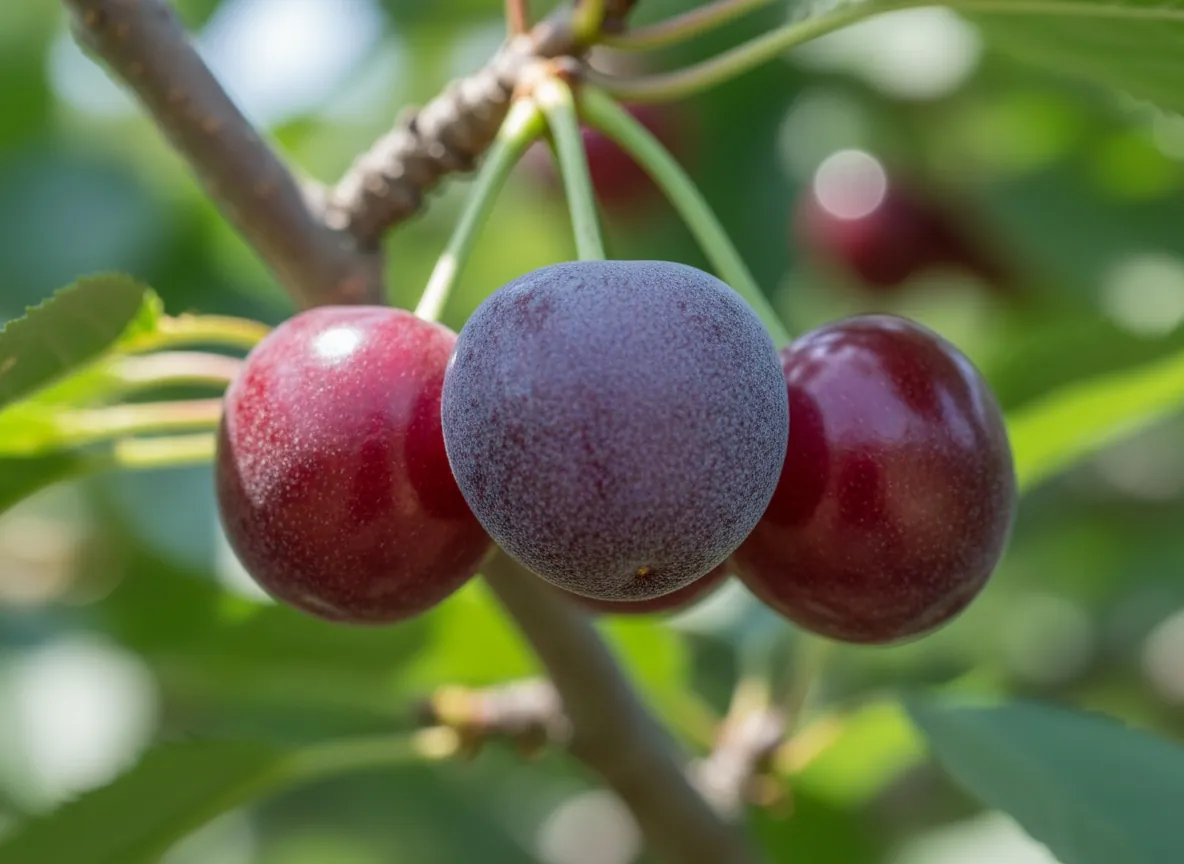
A tree with a strong, straight leader and branches emerging in characteristic whorls, which gives a regular, tiered silhouette. The bark is red-brown, smooth and glossy, with distinct horizontal lenticels, peeling in horizontal bands with age — a diagnostic feature of the species. The leaves are elliptic, serrated, drooping, with two red nectar glands at the base of the blade. The flowers are white, five-petalled, in umbels, and open together with the leaves. The fruits are drupes with sweet, juicy flesh — from yellow through red to almost black, depending on the cultivar. The size of the tree in cultivation depends above all on the rootstock: on a sweet cherry seedling the tree grows very vigorously, while on dwarfing rootstocks of the Gisela type it stays low and comes into bearing earlier.
Growing and care
Watering
Even moisture during fruit ripening is crucial — a sudden influx of water after drought (a downpour, heavy watering) causes mass splitting of the cherries just before harvest. Mature trees withstand short droughts, but do not tolerate standing water around the roots.
Fertilizing
Moderately. Excess nitrogen prolongs shoot growth into late summer, lowers their winter hardiness and favours gummosis and bacterial canker, to which the sweet cherry is exceptionally susceptible.
Planting
A deep, warm and well-drained soil — the sweet cherry does not tolerate compacted, waterlogged sites. MOST IMPORTANT: the vast majority of cultivars are self-incompatible, so a second, compatible cultivar flowering at the same time must be provided for at the planning stage of the planting.
Pruning
Shape the crown in the first years, later limit yourself to thinning — remove shoots competing with the leader, growing into the centre of the crown, and diseased ones. Cut to the branch collar and protect wounds more than 2–3 cm in diameter.
Companion plants
Good companions
A necessary condition for fruiting — the sweet cherry is self-incompatible in most cultivars and needs another cultivar flowering at the same time nearby (up to about 50 m).
Similar soil requirements and flowering time make running an orchard together easier, but note: the sour cherry is not a pollinator for the sweet cherry — a second sweet cherry cultivar is needed for pollination.
Planted in the tree circle, its strong scent traditionally deters aphids, which readily colonise the shoot tips of the sweet cherry.
Bad companions
Species of the genus Prunus are particularly sensitive to juglone — an allelopathic compound released by the roots of black walnut, inhibiting their growth and leading to dieback.
Turf competes very effectively with a young sweet cherry for water and nitrogen in the upper soil layer, markedly slowing its growth in the first years after planting.
The evidence level indicates whether the relationship is backed by research, observation, or gardening tradition.
Toxicity
| For whom | Level | Notes |
|---|---|---|
| Humans | None | The fruits are edible and safe. The stones, leaves and bark contain cyanogenic glycosides (amygdalin) — chewed stones can be harmful in large quantities, but swallowing a few whole poses no threat. |
| Dogs | Mild | The risk concerns chewed stones and leaves eaten in larger quantities; the flesh of the fruit is safe. |
| Cats | Mild | As with dogs — the hazard is chewed stones and leaves, not the flesh itself. |
| Horses | Moderate | Wilting leaves of plants in the genus Prunus release particularly large amounts of hydrogen cyanide — prunings should not be thrown onto pasture. |
History and origin
The cherry is one of Europe's oldest cultivated fruit trees — its stones have been found at archaeological sites from the Bronze Age. According to the Roman tradition handed down by Pliny the Elder, the general Lucullus brought fine sweet cherries to Rome in the 1st century BC from the city of Kerasos (present-day Giresun) in Pontus — from this name derives the Greek-Latin term for the cherry, and indirectly also the names in many European languages. The wild-growing sweet cherry was gathered and used in Europe long before cultivated varieties appeared.
Uses
For home and commercial orchards — in small gardens exclusively on dwarfing and size-controlling rootstocks, which keep the tree within reach and make harvesting easier. A valuable park and forest tree (a fine hardwood admixture) of high value to birds and pollinating insects. The fruits are eaten mainly raw, and also made into compotes, preserves and liqueurs.
Trivia
- The species name avium literally means “of the birds” — birds eat the fruits and spread the stones, thanks to which the cherry sows itself through woods and thickets.
- Cherry wood, with its warm, reddish colour, is among the most valuable domestic furniture timbers — which is why the species is planted in forests as a so-called fine hardwood admixture.
- The first truly self-fertile sweet cherry cultivar was the Canadian “Stella”, introduced in the late 1960s; only thanks to it and its descendants does a single tree in a small garden stand a chance of fruiting.
Frequently asked questions
Will a single sweet cherry in the garden set fruit?
Usually not. The vast majority of sweet cherry cultivars are self-incompatible (self-sterile) — their own pollen does not fertilise the flowers, so the tree flowers abundantly but sets no fruit. A second, compatible cultivar flowering at the same time is needed nearby, preferably within 50 m. The exception are the few self-fertile cultivars (e.g. “Stella”, “Lapins”, “Sunburst”), which fruit on their own — and only those are worth planting if there is no other sweet cherry in the garden or the neighbourhood. It is worth remembering that the sour cherry does not pollinate the sweet cherry.
Why do sweet cherries split just before harvest?
This is a reaction to an abrupt change in water supply: after a dry spell, heavy rain or watering causes a rapid influx of water into the ripening fruits, whose skin cannot stretch quickly enough — and it splits. Water also penetrates directly through the skin of wetted fruits. Even soil moisture helps (mulching, regular watering instead of flooding after drought), as does choosing less susceptible cultivars and — in commercial growing — rain covers.
When should you prune a sweet cherry?
Only in summer, right after harvest — preferably in July or August. The wounds heal quickly then, in full growth, and the tree defends itself effectively against infection. Autumn, winter and early spring pruning, standard for apple trees, is a mistake with sweet cherry: it favours gummosis (resin bleeding) and bacterial canker, which can kill whole branches.
Sources
- Plants of the World Online (POWO)Database (GBIF, POWO…)
- RHS — Prunus aviumInstitution / botanical garden
My note
A private note for this plant — saved in your browser.