In short
- Site: full sun, fertile and well-drained soil, neutral pH.
- Planted from sets, from seed, or as an overwintering crop in August–September.
- Limit watering before harvest so the bulbs ripen and dry properly.
- Highly toxic to dogs and cats — sulphur compounds damage red blood cells.
- A good neighbour for carrot — the two mutually deter their species-specific pests.
Botanical data
- Family
- Amaryllidaceae (Amaryllidaceae)
- Height
- 0.3–1 m
- Width
- 0.1–0.2 m
- Habit
- Clump-forming
- Growth rate
- Moderate
- Position
- Full sun
- Soil
- Humus-rich, Loamy
- pH reaction
- pH 6–7
- Moisture
- Moderate
- Bloom
- July–August
- Hardiness
- —
- Propagation
- From seed, From bulbs / tubers
Characteristics
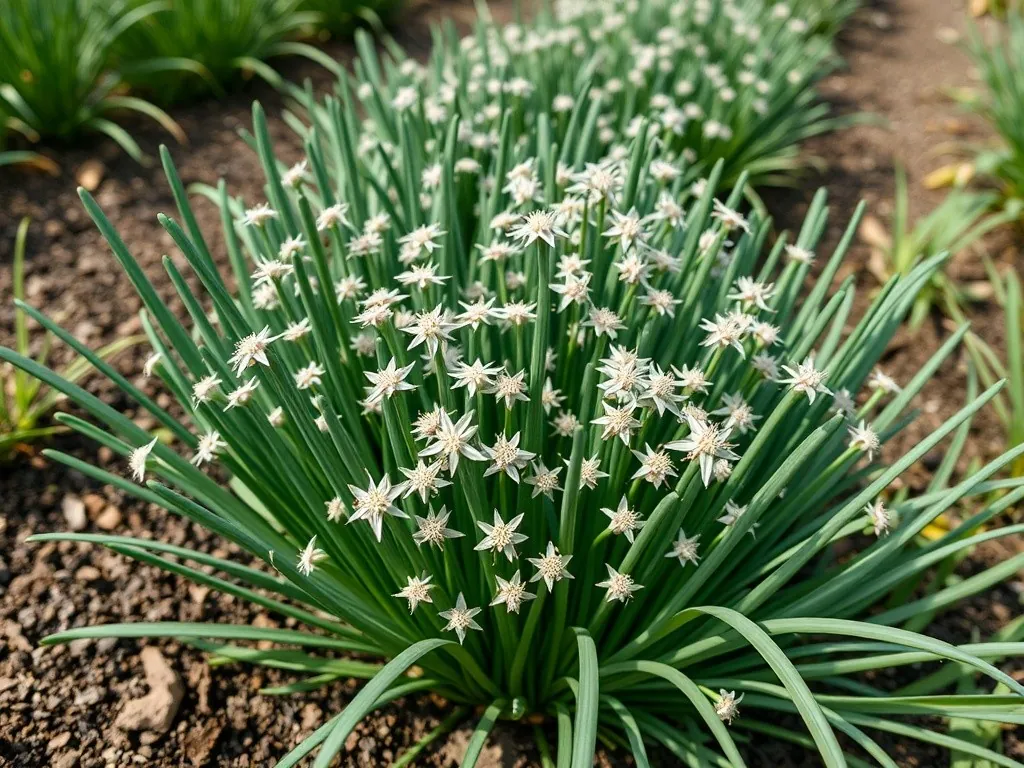
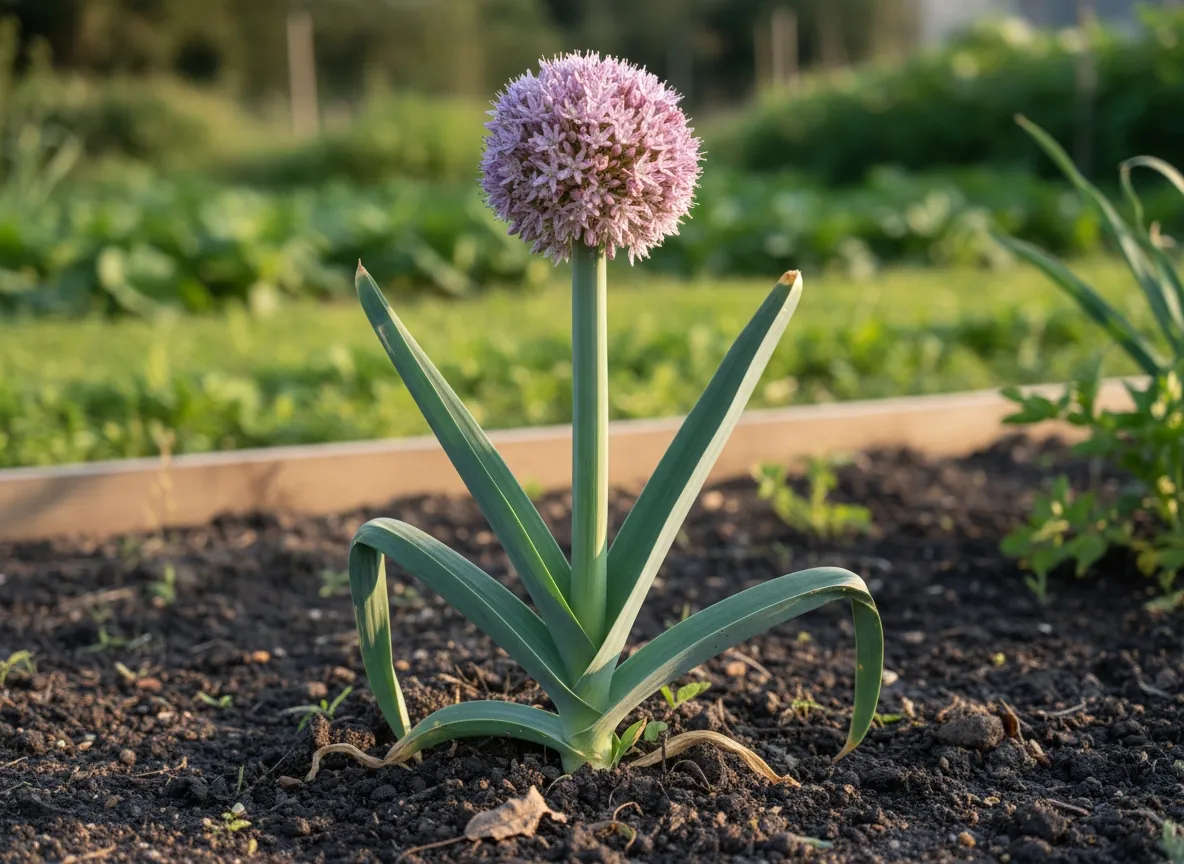
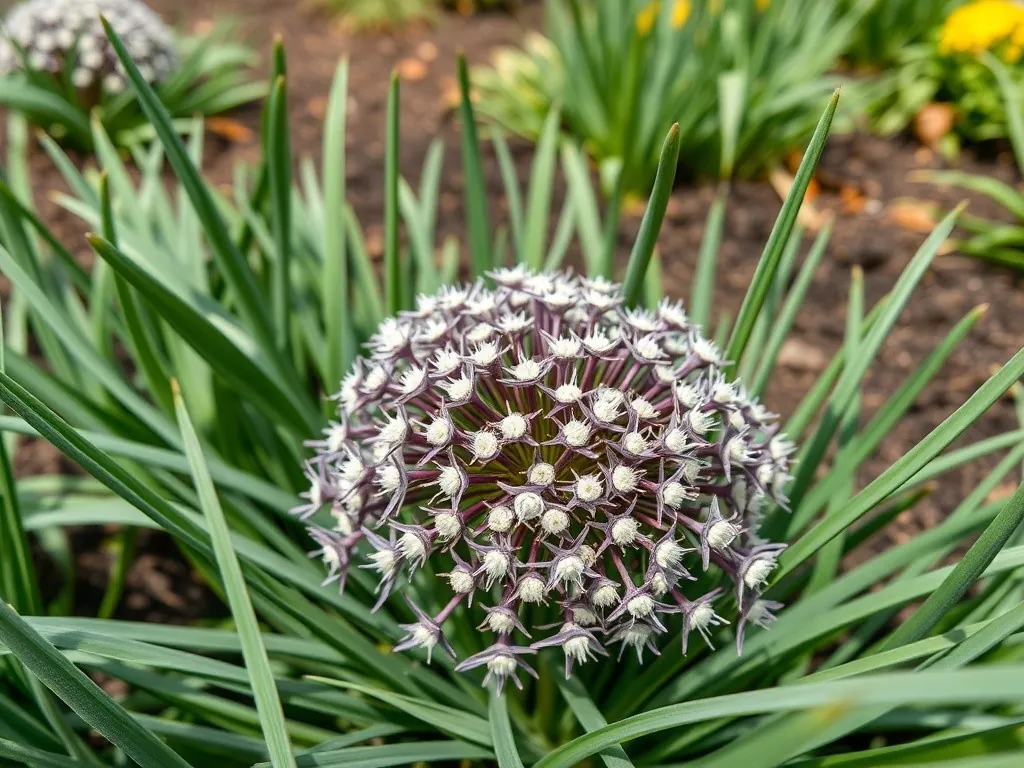
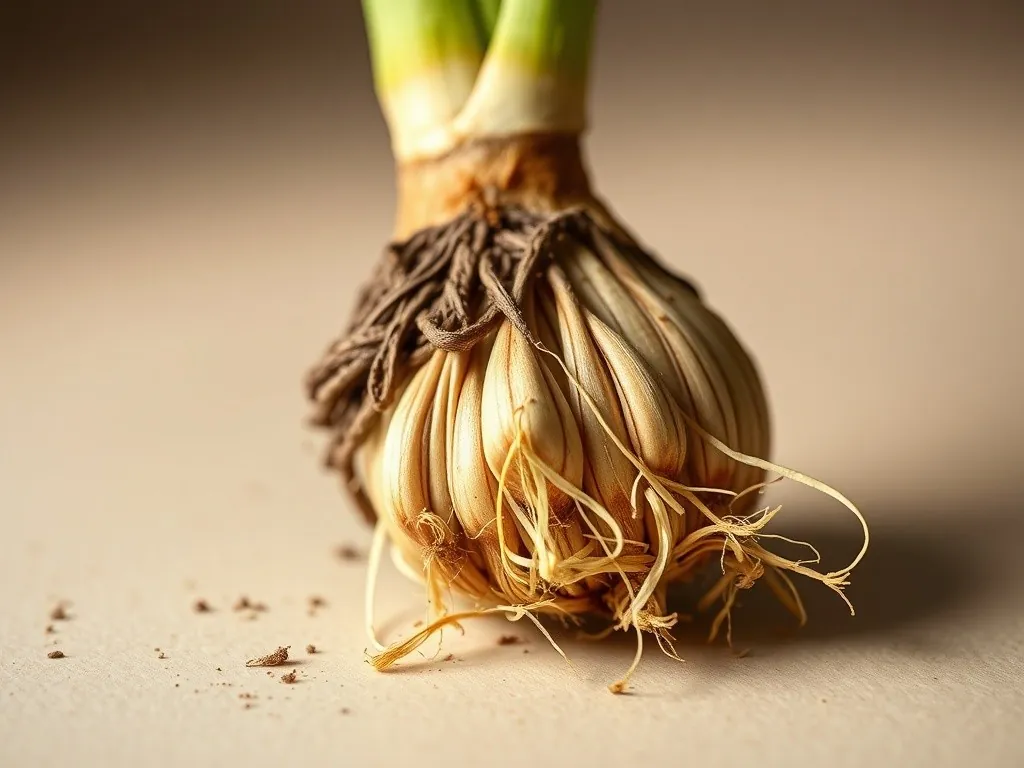
The plant forms an edible bulb made up of fleshy, swollen leaf scales, covered by dry, papery outer scales. The leaves are hollow, tubular, set on a short stem. In the second year (or with premature bolting) it produces a tall stalk topped by a spherical umbel of small, white flowers.
Growing and care
Watering
Limit watering 2–3 weeks before harvest — this makes it easier for the bulbs to dry and keep well.
Fertilizing
Avoid fresh manure immediately before cultivation — it promotes fungal diseases of the bulbs.
Planting
Fertile, well-drained soil, free of fresh manure; a site previously used for legumes or brassicas.
Pruning
Snap off the shoot right at the base before the flower bud develops.
Companion plants
Good companions
The strong smell of onion makes it harder for carrot fly (Psila rosae) to find carrot plants, while carrot in turn deters onion fly — a classic pairing in companion planting.
Planted between strawberries, onion takes up little space and limits the occurrence of some fungal diseases of the fruit.
Bad companions
Onion-family plants (Allium) release allelopathic compounds into the soil that inhibit nodule bacteria (Rhizobium), limiting the bean's ability to fix nitrogen — a documented allelopathic effect.
The same allelopathic mechanism as with beans — onion weakens the symbiosis of legumes with nodule bacteria.
The evidence level indicates whether the relationship is backed by research, observation, or gardening tradition.
Toxicity
| For whom | Level | Notes |
|---|---|---|
| Humans | Mild | Raw onion in very large amounts can irritate the digestive tract; fully safe once cooked. |
| Dogs | High | Contains organosulphur compounds that damage red blood cells (haemolytic anaemia) — documented Allium poisonings. |
| Cats | High | Cats are even more sensitive to Allium toxins than dogs. |
| Horses | Moderate | — |
History and origin
It has been cultivated for at least 5,000 to 7,000 years, probably in the region of Central Asia and the Middle East — its wild ancestor has never been found. In ancient Egypt it was considered a symbol of eternity because of its concentric structure.
Uses
A staple seasoning vegetable in kitchens worldwide, grown both in home gardens and on a commercial scale. Set varieties are also suitable for growing in pots on a balcony.
Trivia
- The tears caused when cutting onions are triggered by a volatile sulphur compound (syn-propanethial-S-oxide), which forms only after the cells are cut.
- There are onion cultivars in yellow, red and white, differing in pungency and sulphur compound content.
Frequently asked questions
Why does onion bolt into flower instead of forming a bulb?
Premature bolting is triggered by temperature fluctuations, especially cool spells in spring after a warm start. Plants that have produced a flowering shoot form smaller bulbs with poorer storage qualities — it's worth using these first.
When should onions be harvested and how should they be stored?
Onions are harvested when the foliage yellows and bends over, usually in August. After digging up, the bulbs should be dried in an airy, shaded spot for 1–2 weeks and then stored in a cool, dry place.
Are onions dangerous for pets?
Yes, onion is highly toxic to dogs and cats — the organosulphur compounds it contains damage red blood cells, leading to haemolytic anaemia. No form of onion, including cooked, should ever be given to animals.
Sources
- Plants of the World Online (POWO) — Allium cepaDatabase (GBIF, POWO…)
- RHS — Growing onionsInstitution / botanical garden
My note
A private note for this plant — saved in your browser.