In short
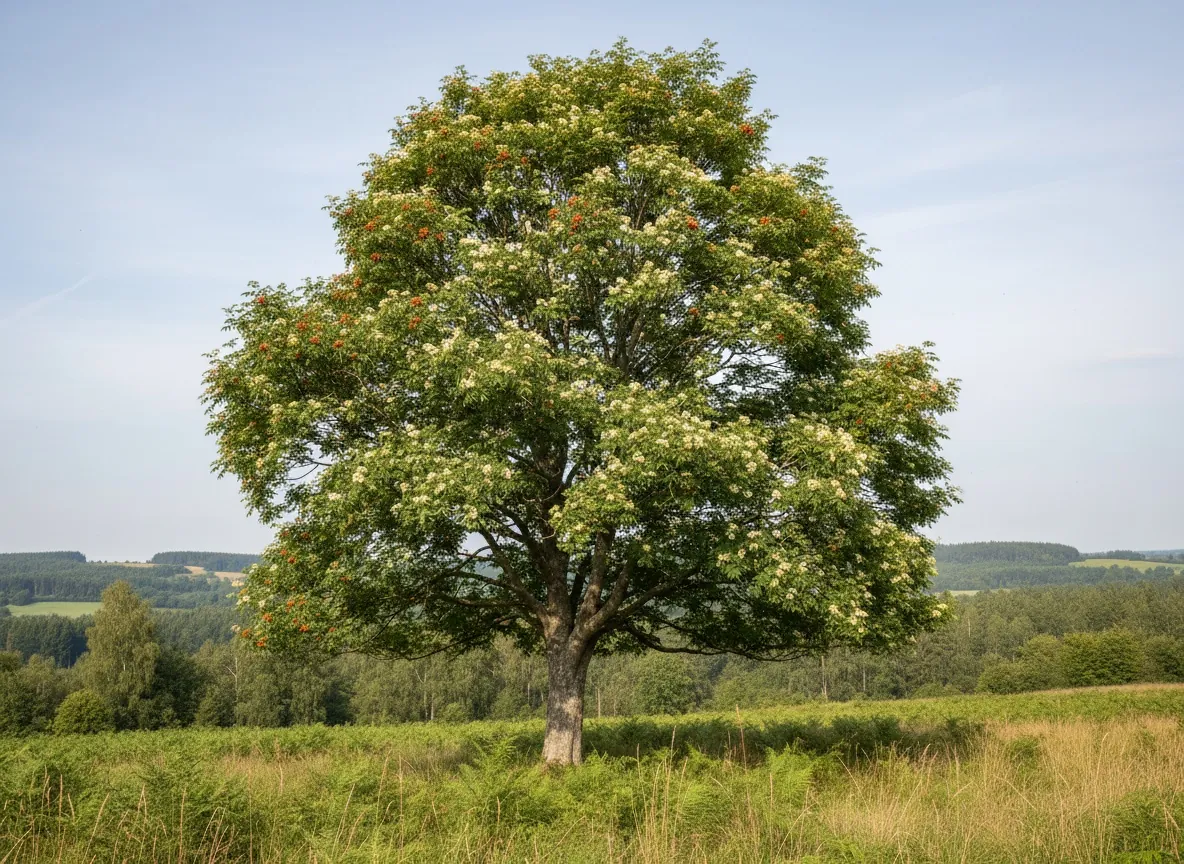
- Reaches 5–15 m — one of the few native trees that suit a medium-sized garden.
- Extremely frost-hardy (USDA zone 3), it grows even on poor and sandy soils.
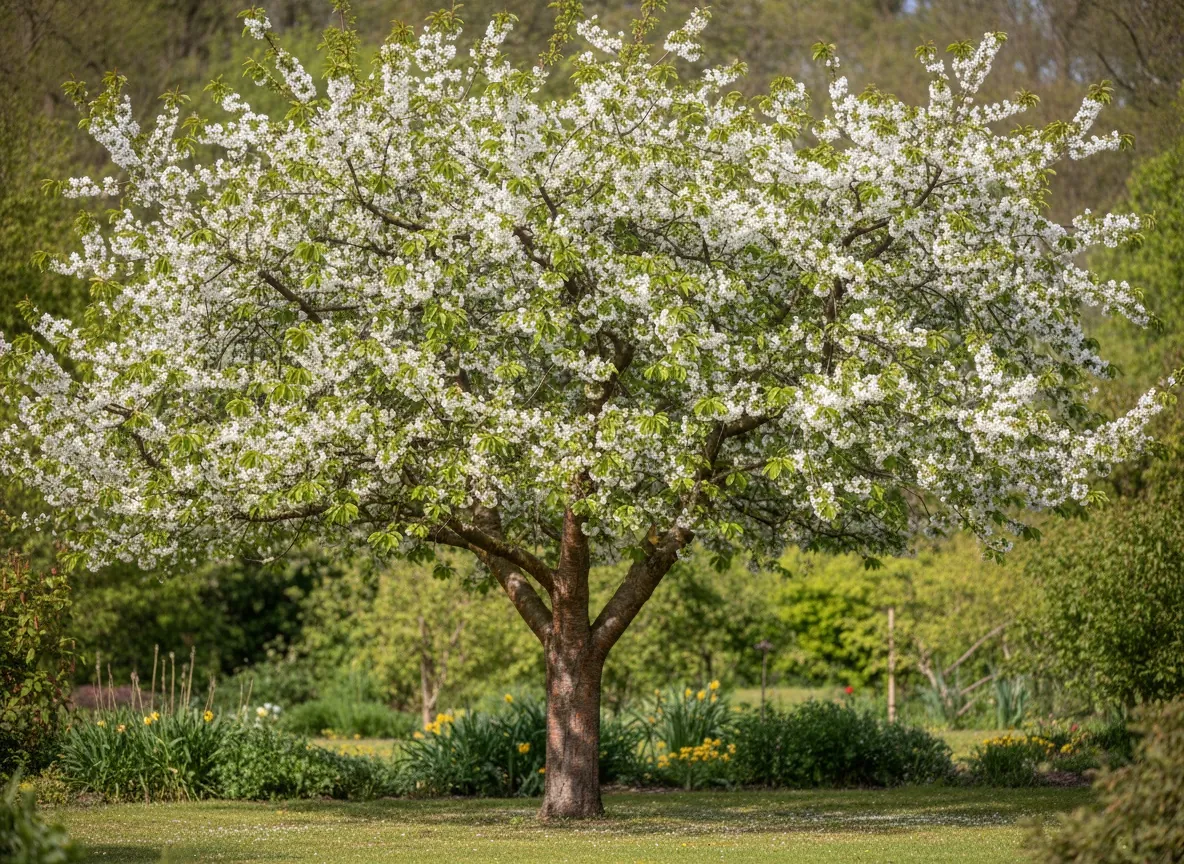
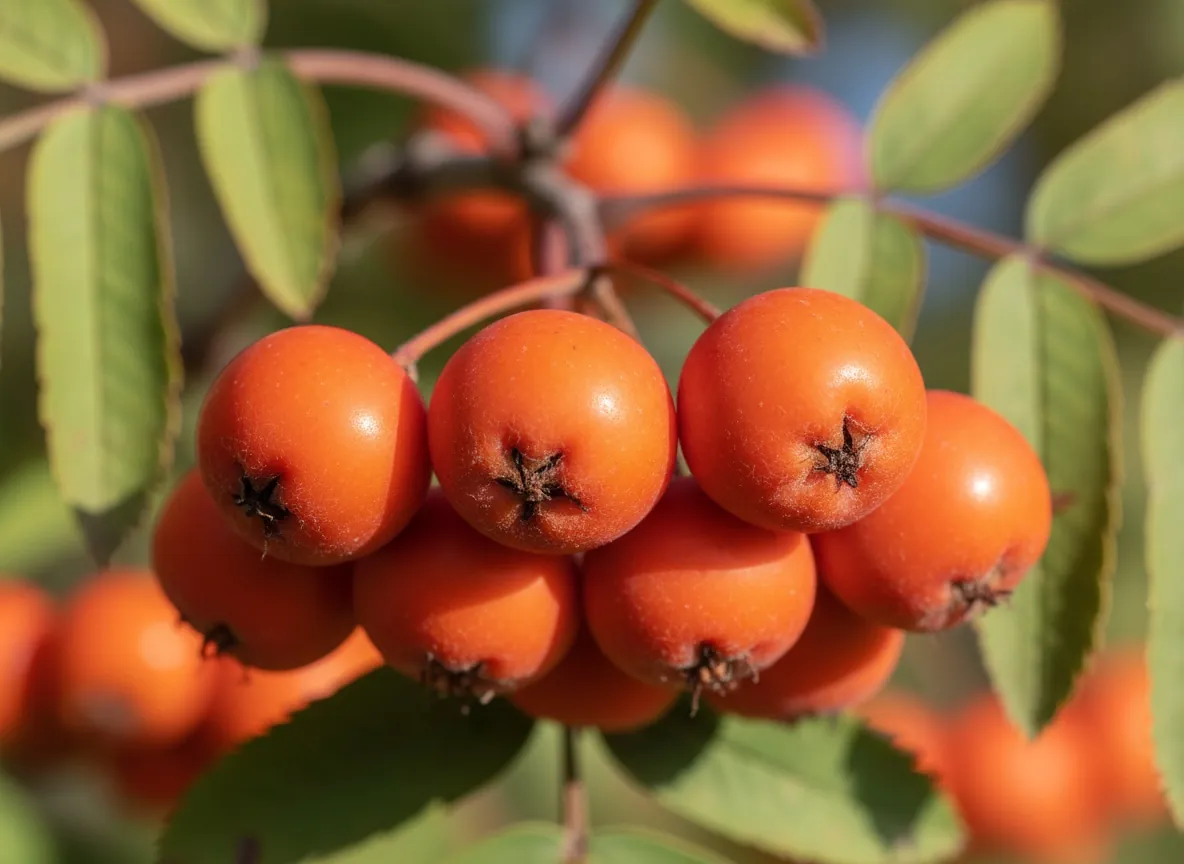
- White corymbs in May–June, red fruits from August — often into January.
- Raw fruits contain parasorbic acid; after freezing or cooking they are edible.
- A key tree for birds — waxwings, fieldfares and thrushes, among others, feed on rowan berries.
Botanical data
- Family
- Rosaceae (Rosaceae)
- Height
- 5–15 m
- Width
- 4–8 m
- Habit
- Upright
- Growth rate
- Moderate
- Position
- Full sun, Partial shade
- Soil
- Sandy, Loamy, Humus-rich
- pH reaction
- pH 4.5–7
- Moisture
- Moderate, Moist
- Bloom
- May–June
- Hardiness
- USDA 3a–7b
- Propagation
- From seed, By layering
Characteristics
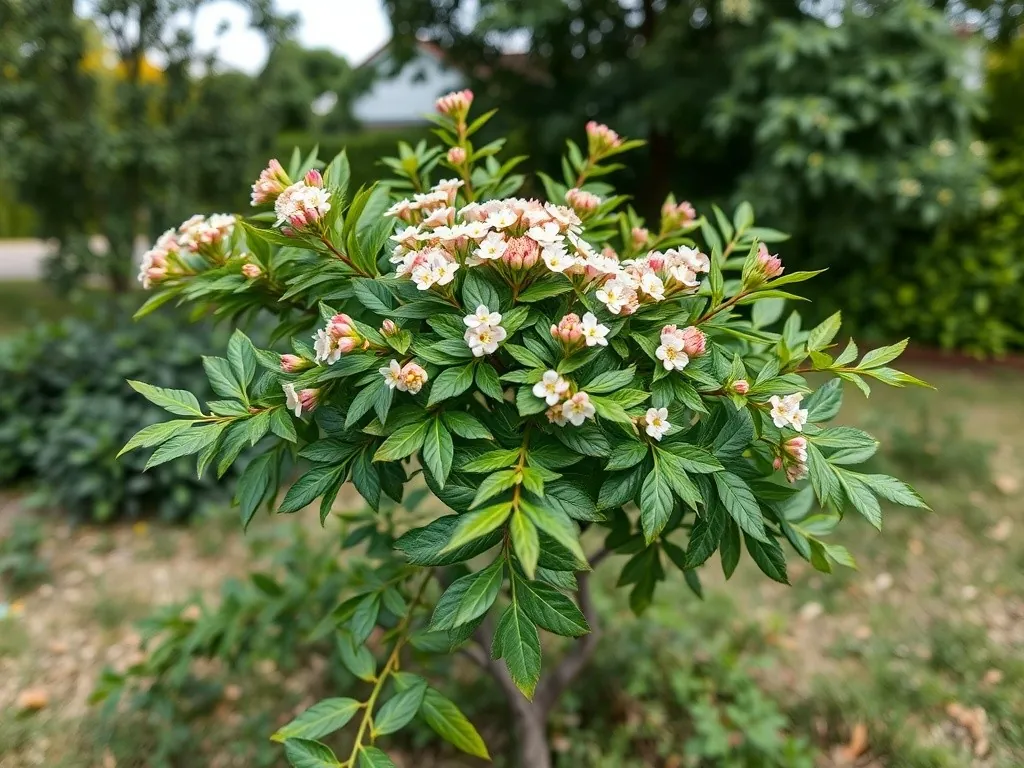
A slender tree with a loose, ovate crown and smooth, grey bark. The leaves are odd-pinnate, composed of 9–15 elongated, toothed leaflets, turning orange and scarlet in autumn. The small, creamy-white flowers are gathered into dense corymbs, and the fruits are spherical, bright red pomes 8–10 mm in diameter.
Growing and care
Watering
Watering is needed above all by trees in the first 2–3 years after planting; mature specimens cope on their own.
Fertilizing
Sparingly — the rowan is a pioneer species and tolerates poor soils well.
Planting
Tolerates poor, sandy and acidic soils. Avoid positions with standing water and strongly calcareous soils.
Pruning
Remove diseased, dead and crossing shoots; the crown shapes itself naturally and needs no pruning.
Companion plants
Good companions
A natural companion in pioneer communities — both tolerate poor and sandy soils, forming light stands of trees together.
The combination extends the food base for birds — the guelder rose fruits abundantly when the rowan may already have been eaten out.
Similar requirements and complementary fruiting times — together they form a valuable corner for birds.
Bad companions
The rowan is susceptible to fireblight and can be a source of infection for neighbouring pome fruit trees.
The evidence level indicates whether the relationship is backed by research, observation, or gardening tradition.
Toxicity
| For whom | Level | Notes |
|---|---|---|
| Humans | Mild | Raw fruits contain parasorbic acid, which causes nausea, vomiting and diarrhoea. After freezing or cooking it turns into harmless sorbic acid and the fruits become edible. |
| Dogs | Mild | Eating a larger quantity of raw fruits may irritate the digestive tract. |
| Cats | Mild | — |
History and origin
In Slavic and Scandinavian culture the rowan was held to be a tree protecting against evil forces — branches were hung above the door of the homestead, and beads were strung from the fruits for children. In folk medicine the dried fruits were used as a source of vitamin C.
Uses
For naturalistic gardens, plantings around the house, avenues and schemes that attract birds. After freezing or scalding, the fruits are used for liqueurs, jams, preserves and jellies to serve with meat — they have a characteristic, slightly bitter note.
Trivia
- The specific name aucuparia comes from the Latin aucupari, meaning to catch birds — the fruits were once used as bait in snares.
- The rowan grows higher in the Tatras than any other Polish deciduous tree, reaching the dwarf pine zone.
Frequently asked questions
Are rowan berries toxic?
Raw fruits contain parasorbic acid, which in humans causes nausea, vomiting and diarrhoea — which is why they should not be eaten straight from the tree. Freezing on the tree or in the freezer, or cooking, converts this compound into harmless sorbic acid, so liqueurs, jams and preserves are safe.
Is the rowan suitable for a small garden?
Yes — it is one of the few native trees of reasonable size. It usually reaches 8–12 m with a crown 4–6 m wide, has not overly aggressive roots and a loose crown giving light shade, under which perennials will still grow.
Why is my rowan not fruiting?
Most often the tree is simply too young — the first fruits usually appear after 5–8 years. Other causes are too shady a position, frosts during flowering, or birds that eat the fruits before they have fully coloured up.
Sources
- Plants of the World Online (POWO)Database (GBIF, POWO…)
- Lasy Państwowe — gatunki drzewInstitution / botanical garden
My note
A private note for this plant — saved in your browser.