In short
- Height 3–10 m depending on rootstock (dwarf, semi-dwarf, standard) and training form.
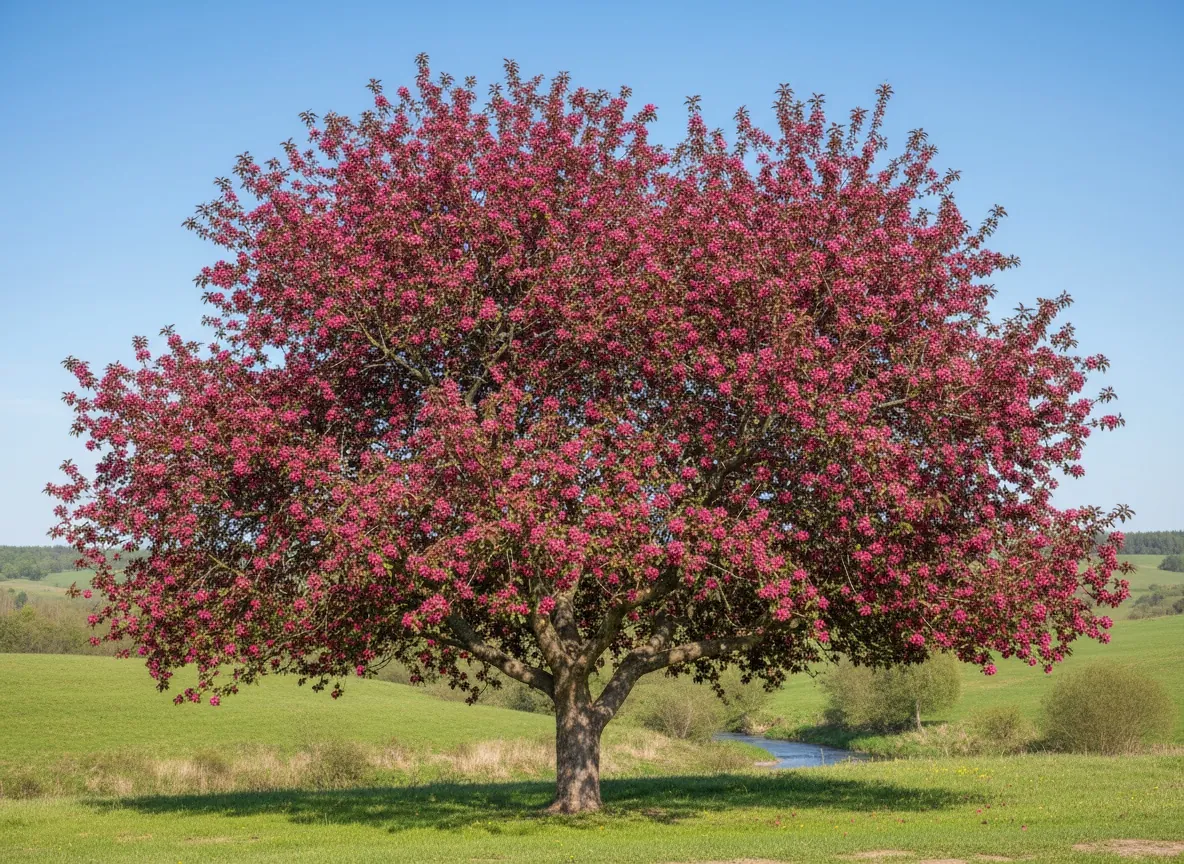
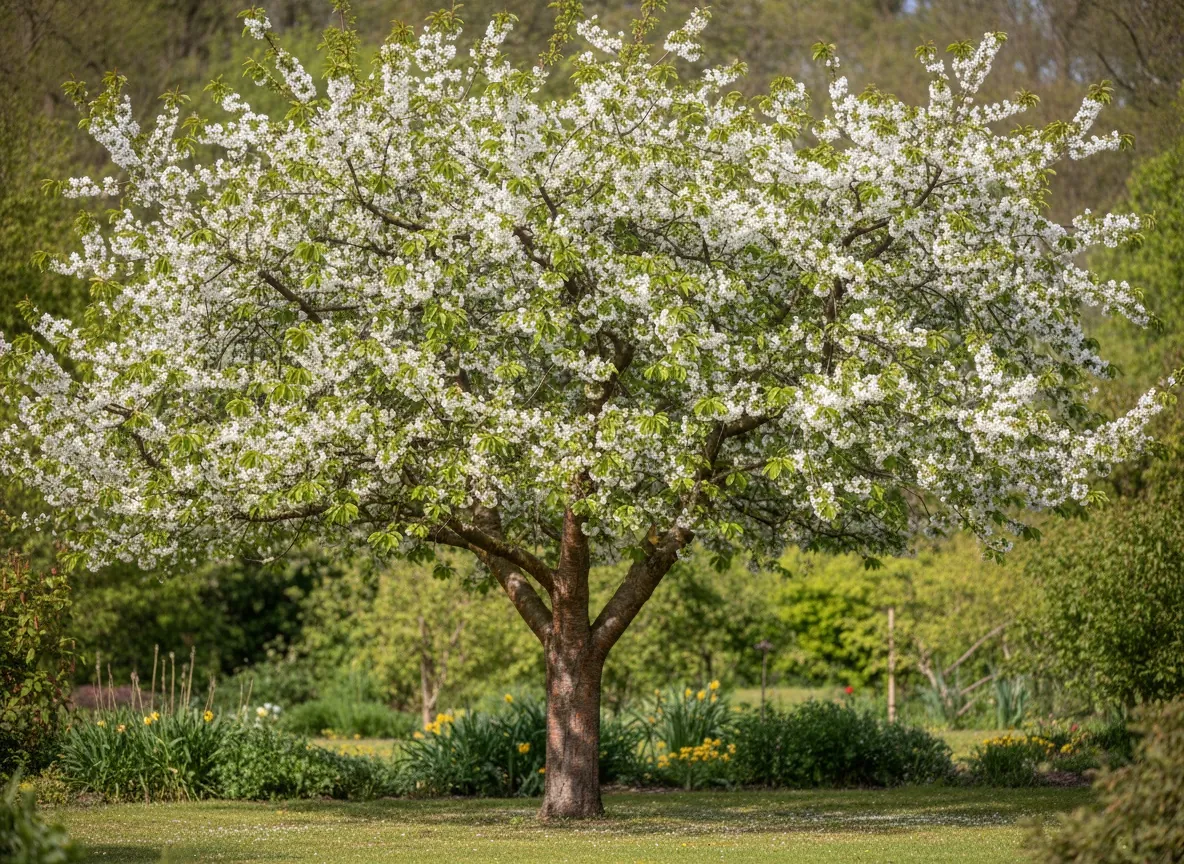
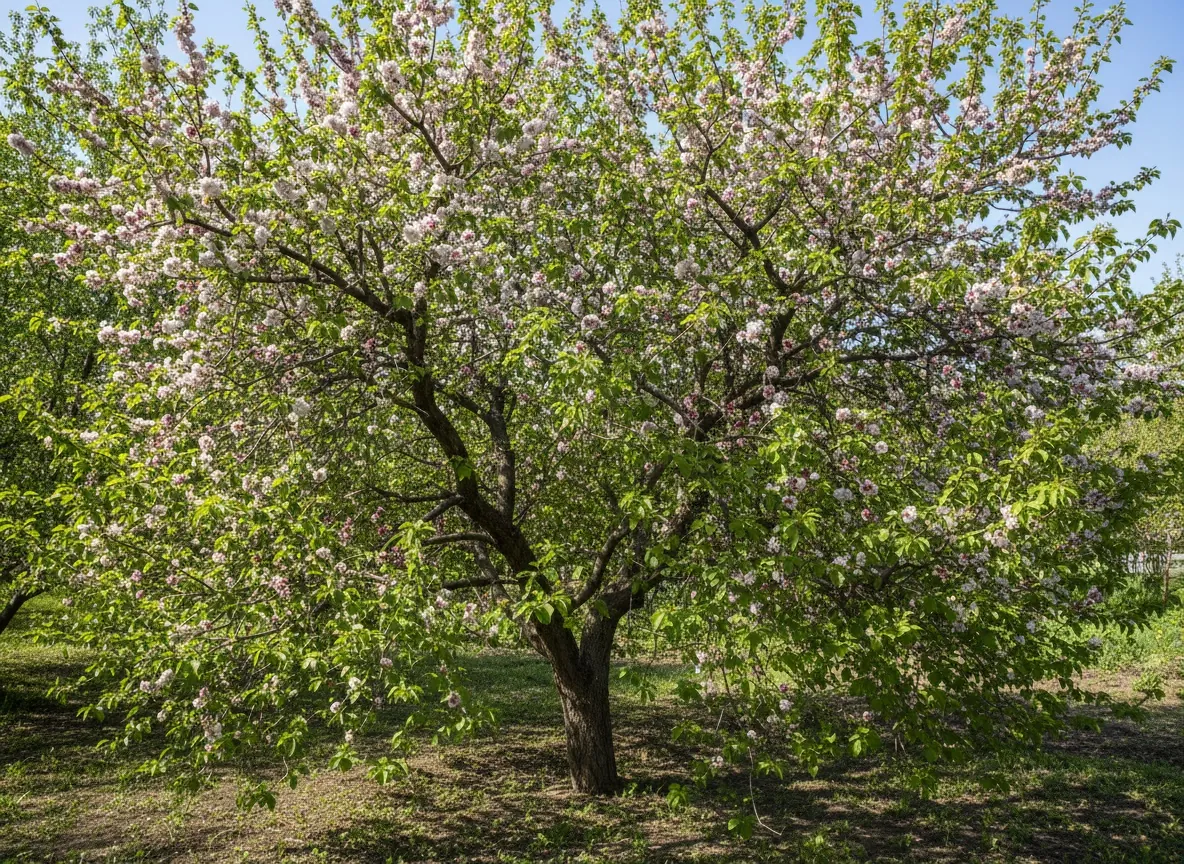
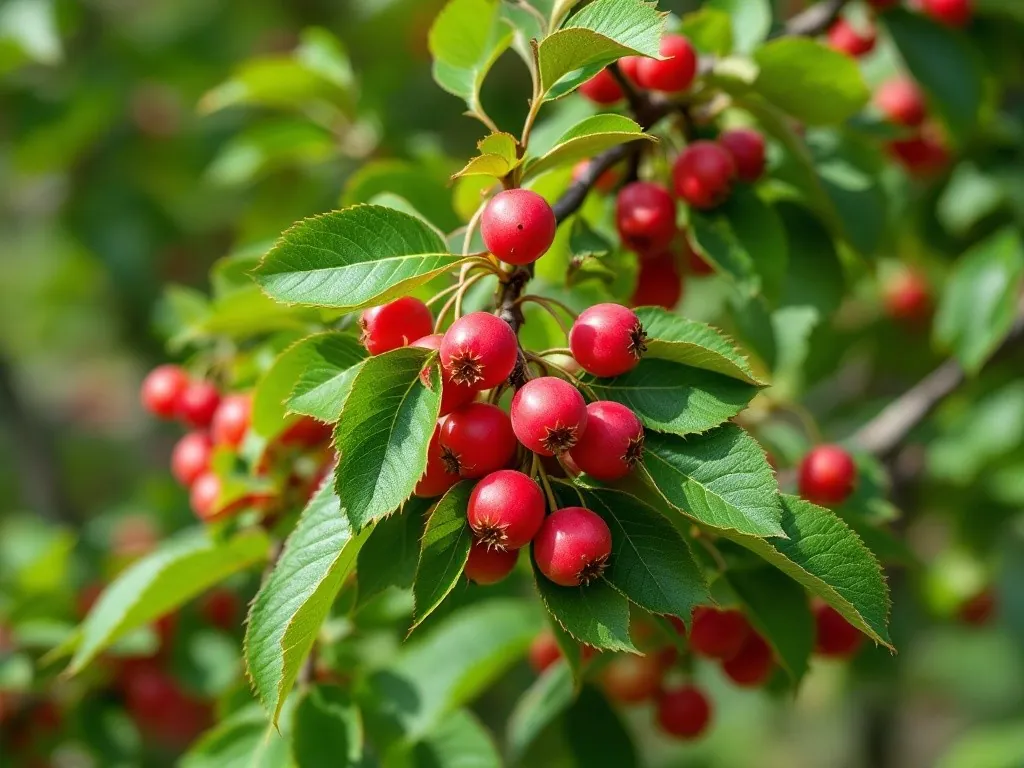
- Blooms April–May with white-pink flowers; fruit ripens September–October.
- Needs full sun for good fruiting and healthy growth.
- Most varieties need a second, compatible variety nearby for cross-pollination.
- Hardy across a very wide range of USDA zones in Poland (3a–8b).
- Pruned during dormancy, at the turn of winter and spring.
Botanical data
- Family
- Rosaceae (Rosaceae)
- Height
- 3–10 m
- Width
- 2–6 m
- Habit
- Spreading
- Growth rate
- Moderate
- Position
- Full sun
- Soil
- Loamy, Humus-rich, Sandy
- pH reaction
- pH 6–7
- Moisture
- Moderate
- Bloom
- April–May
- Hardiness
- USDA 3a–8b
- Propagation
- From cuttings
Characteristics
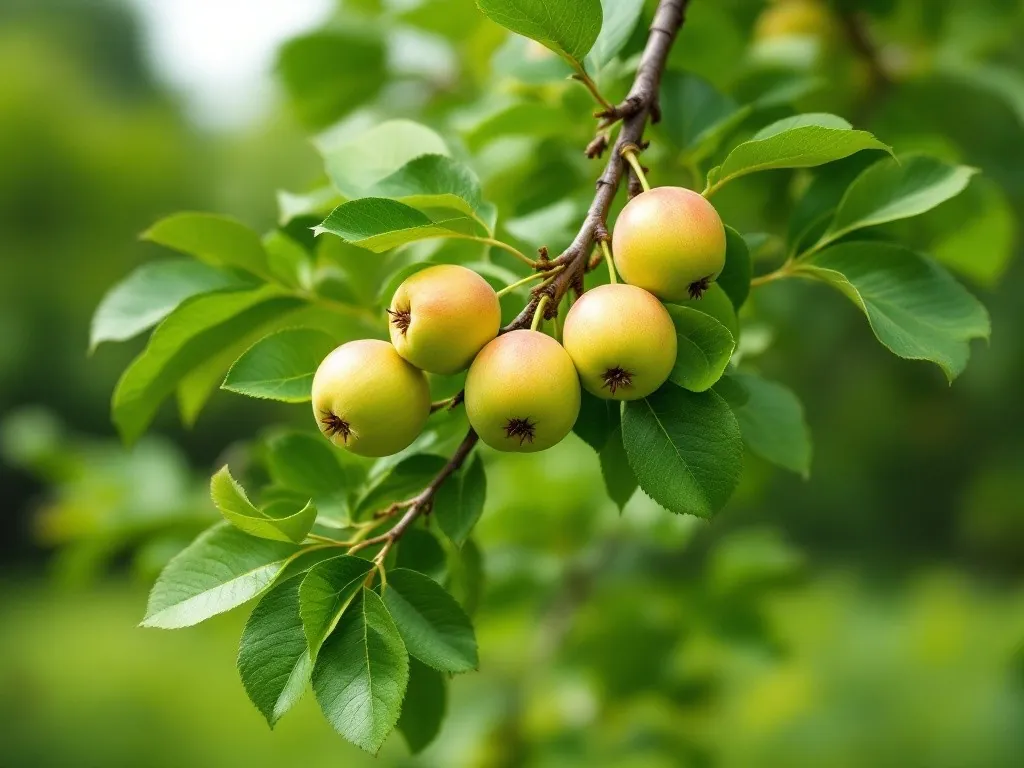
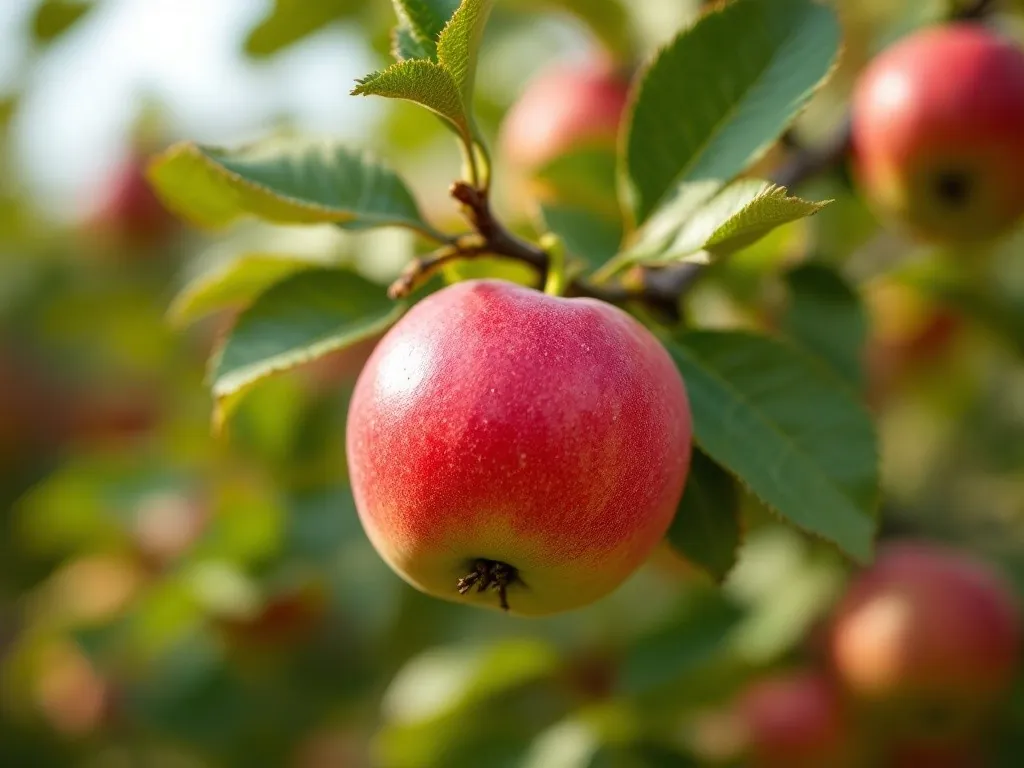
A tree with a broad, rounded crown and grey bark that becomes fissured with age. Height depends strongly on the rootstock: dwarf trees (M9 rootstock) usually reach 2.5–3.5 m, semi-dwarf (MM106) 4–5 m, and standard trees on seedling rootstock up to 8–10 m. The flowers are five-petalled and fragrant, borne in corymbs; the fruit (the apple) is a pome — a swollen, fleshy part of the flower receptacle surrounding the true core.
Growing and care
Watering
Young trees (the first 2–3 years after planting) need regular watering, especially in dry summers. Mature specimens on standard rootstocks tolerate short drought periods.
Fertilizing
The amount depends on the tree's age and soil fertility — fertilize young trees sparingly; excess nitrogen limits fruiting in favour of vegetative growth.
Planting
Important: most apple varieties are self-sterile or only weakly self-fertile — good fruit set requires a second, compatible variety flowering at the same time nearby (cross-pollination by bees and other pollinators).
Pruning
Remove shoots competing with the leader, branches growing into the crown, and diseased or damaged wood; thin the crown to let in light and air, which reduces fungal diseases.
Companion plants
Good companions
The strong scent of onion-family plants underplanted beneath the apple tree helps repel certain pests, such as aphids and whitefly.
Comfrey's deep root system draws minerals up from deeper soil layers, and its leaves, used as mulch, enrich the soil surface beneath the apple tree.
Bad companions
Black walnut releases juglone into the soil — an allelopathic compound that inhibits the growth of many plants, including apple trees, growing in close proximity to it.
The evidence level indicates whether the relationship is backed by research, observation, or gardening tradition.
Diseases and pests
Toxicity
| For whom | Level | Notes |
|---|---|---|
| Humans | None | The flesh of the fruit is edible and safe. The seeds contain small amounts of amygdalin — chewed in very large quantities they can be harmful, but accidentally swallowing a few seeds poses no danger. |
| Dogs | Mild | Chewed seeds and leaves in large quantities can cause mild stomach upset; the fruit flesh itself is safe. |
| Cats | Mild | Similar to dogs — the main risk comes from chewed seeds eaten in large quantities. |
History and origin
The apple has been cultivated for at least 4,000 to 10,000 years, and its domestication is traced back to the Tian Shan mountains of Central Asia, where forests of the wild apple Malus sieversii — the genetic ancestor of modern cultivars — still grow today. The apple reached Europe via trade routes (including the Silk Road and the Roman Empire), and crossing with wild European species shaped today's variety of cultivars.
Uses
Suitable for hobby and production orchards, home gardens (dwarf varieties work even on small plots and can be trained as cordons or espaliers), and as an ornamental tree during flowering.
Trivia
- Over 7,500 named apple cultivars are grown worldwide, though only a few dozen dominate the commercial trade.
- Apple trees can live and bear fruit for 50–100 years when grown on more vigorous rootstocks and properly cared for.
- Poland is one of the largest apple producers in Europe, and apple orchards have shaped the rural landscape for decades, especially in the Grójec region.
Frequently asked questions
Is one apple tree in the garden enough to get fruit?
Usually not — most apple varieties are self-sterile or only weakly self-fertile and need a second, compatible variety flowering at a similar time nearby (ideally within a few dozen metres) so bees can carry out cross-pollination. Self-fertile varieties are the exception, but even they fruit more abundantly with a pollinator nearby.
Why doesn't my apple tree bear fruit even though it flowers abundantly?
The most common causes are the lack of a pollinator variety nearby, late spring frosts damaging the flowers, too much shade at the site, or excess nitrogen fertilization, which favours shoot growth at the expense of fruit set.
Which rootstock is best for a small garden?
For small gardens, dwarf rootstocks (e.g. M9, M26) are best — they limit the tree's height to 2.5–3.5 m, bring it into fruiting sooner, and make harvesting easier, though they require permanent staking and regular watering.
Sources
- Plants of the World Online (POWO)Database (GBIF, POWO…)
- RHS — Malus domesticaInstitution / botanical garden
My note
A private note for this plant — saved in your browser.