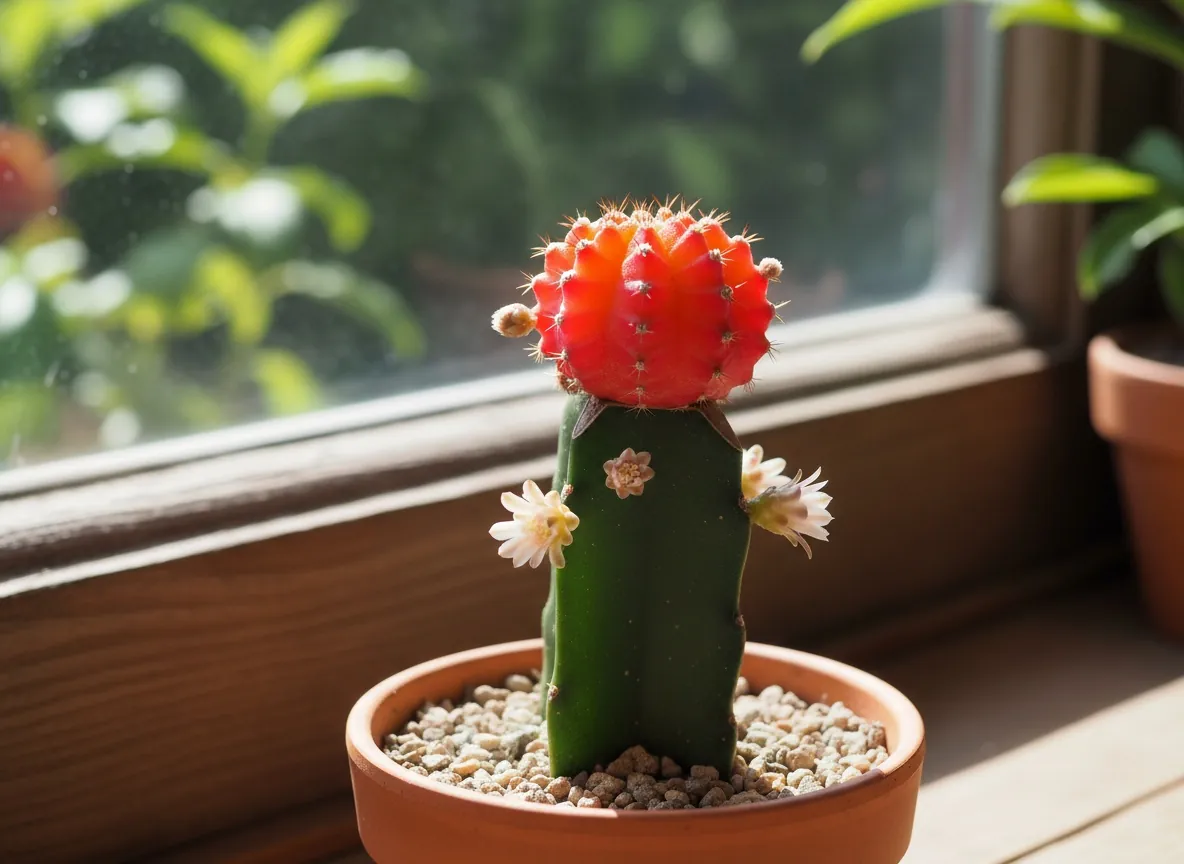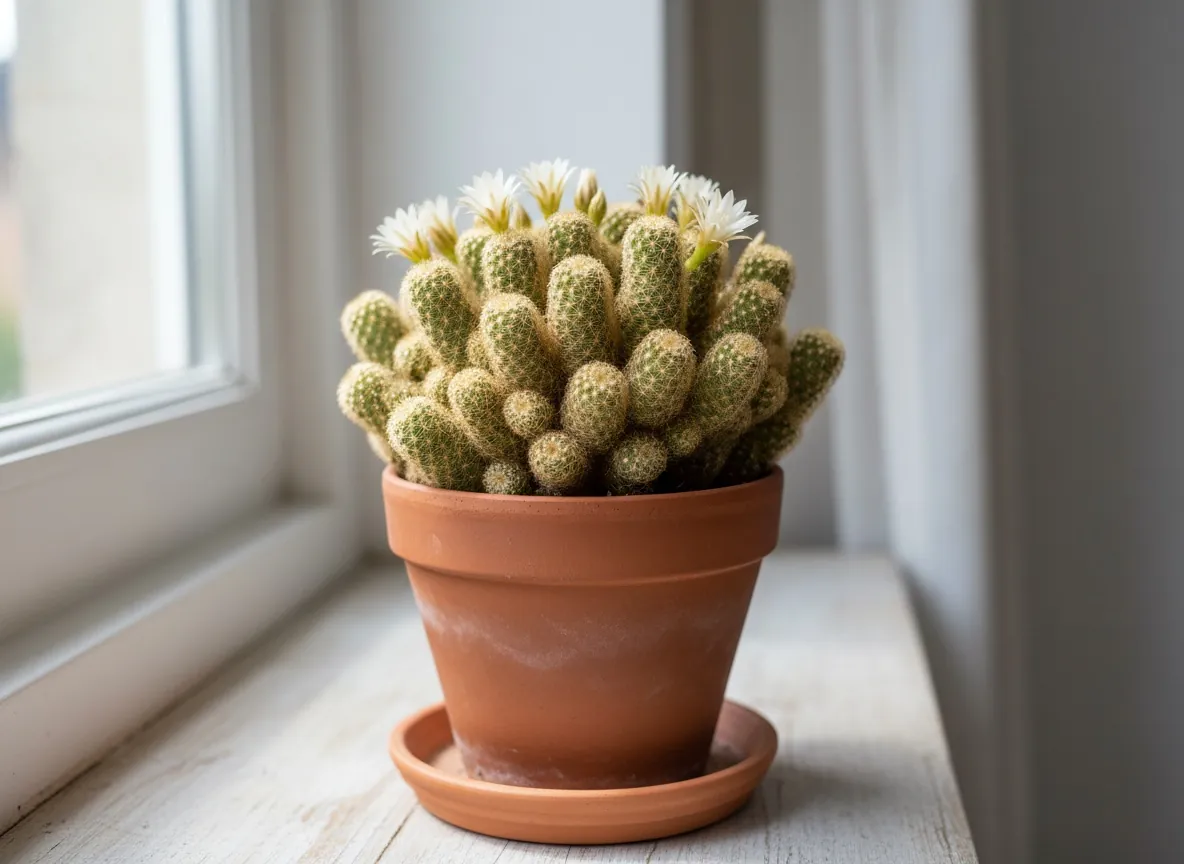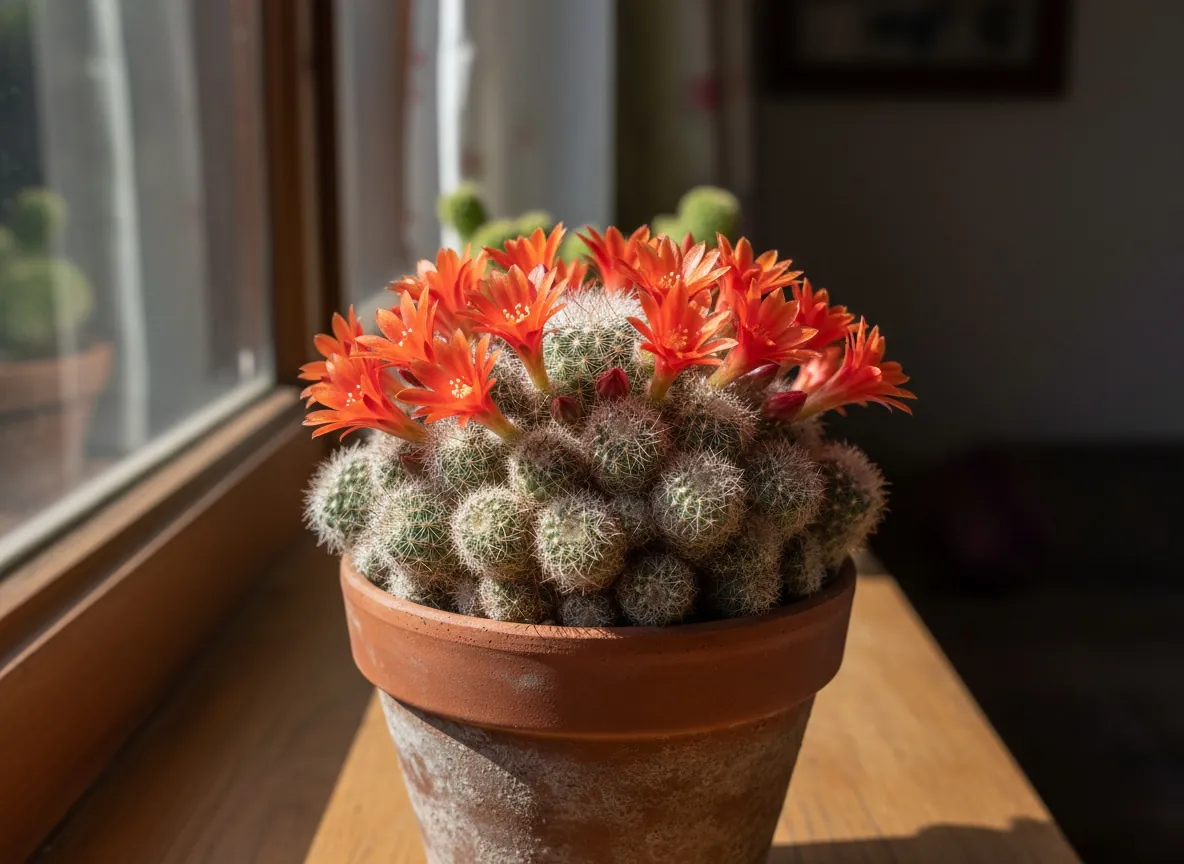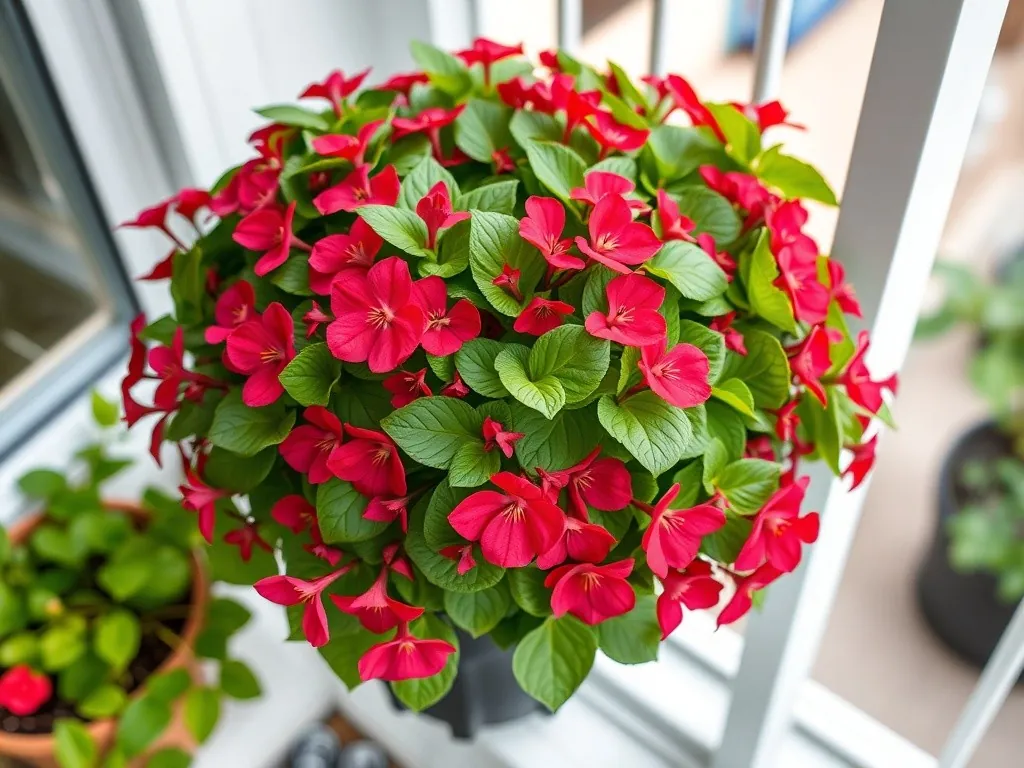
In short
- This is a FOREST cactus, not a desert one — in the wild it grows as an epiphyte in the shade of humid Brazilian forests.
- It needs half-shade and regular, moderate watering — it does not tolerate prolonged drying out like desert cacti do.
- It flowers in winter (November–January), usually around Christmas time.
- To set buds it needs a shorter day length and cooler temperatures in autumn.
- The flat stem segments function as leaves and store water.
Botanical data
- Family
- Cactaceae (Cactaceae)
- Height
- 0.2–0.4 m
- Width
- 0.3–0.6 m
- Habit
- Cascading
- Growth rate
- Slow
- Position
- Partial shade, Shade
- Soil
- Humus-rich, Peaty
- pH reaction
- pH 5.5–6.5
- Moisture
- Moderate, Moist
- Bloom
- November–January
- Hardiness
- —
- Propagation
- From cuttings
Characteristics
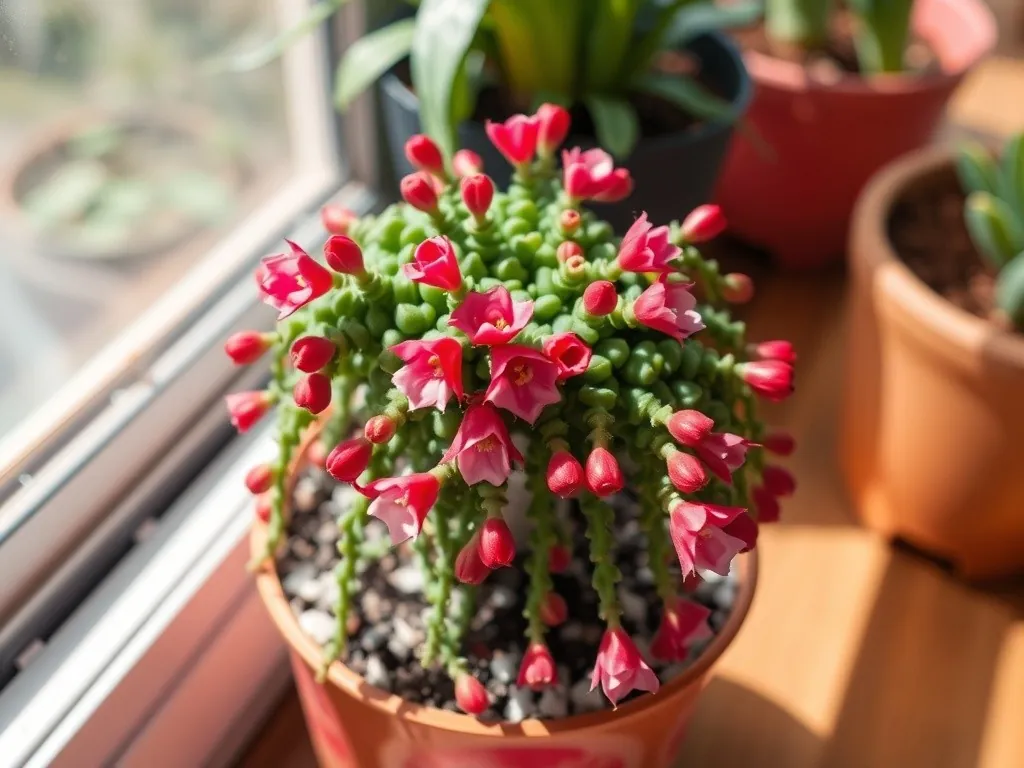
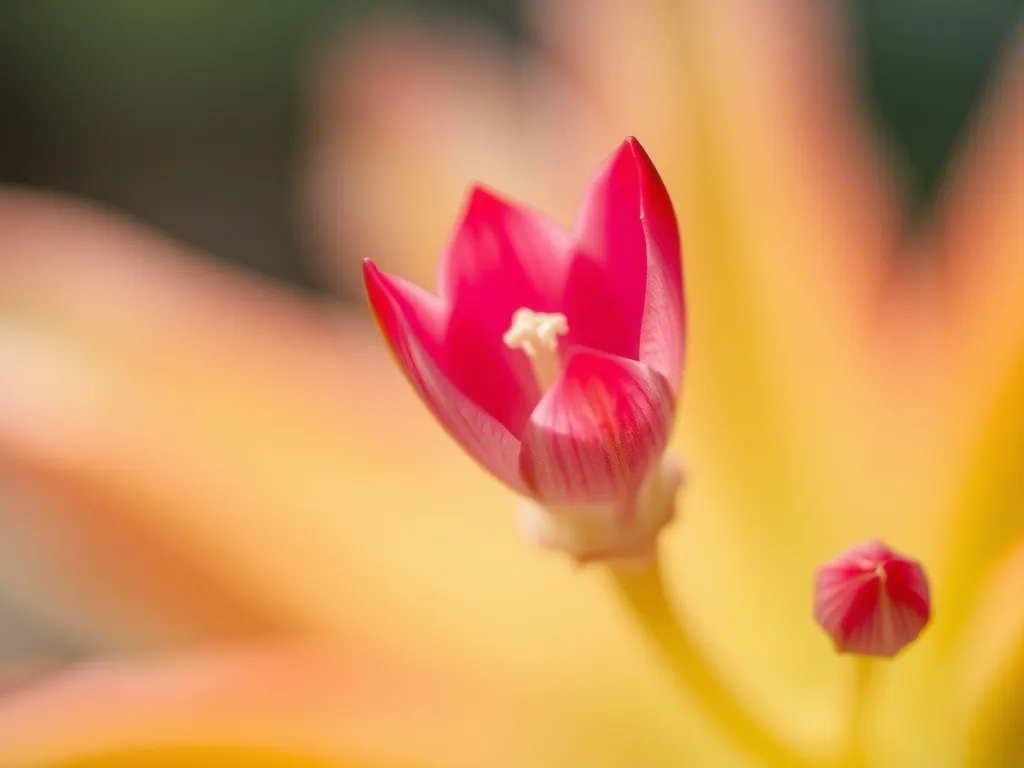
The plant forms trailing, heavily branched stems made up of flat, notched segments (phylloclades) a few centimetres long. The flowers grow at the ends of the segments, are tubular, bilaterally symmetrical and point slightly downward — a feature that distinguishes them from the related Easter cactus.
Growing and care
Watering
Unlike desert cacti, it does not tolerate prolonged drying out — the segments wilt and shrivel when it does. Water once the top layer of substrate has dried out, while maintaining high air humidity.
Fertilizing
Withhold fertilising from September until buds form, so as not to disrupt flower induction.
Planting
Light, well-drained epiphytic substrate — a mix of leaf mould, peat, bark and perlite; avoid heavy garden soil.
Pruning
Gently twist off or cut off 1–2 segments from the shoot tips to encourage branching and a bushier plant.
Companion plants
Good companions
Similar requirements: diffuse light, high air humidity and avoiding direct sun — they grow well side by side on the same windowsill.
They like the same half-shade and humid air, together forming a group of plants with similar care needs.
Bad companions
Aloe is a desert succulent that needs full sun and long drying-out periods between waterings — under the same conditions as the Christmas cactus, one of them always suffers.
The evidence level indicates whether the relationship is backed by research, observation, or gardening tradition.
Toxicity
| For whom | Level | Notes |
|---|---|---|
| Humans | None | — |
| Dogs | None | — |
| Cats | None | — |
History and origin
The plant is a horticultural hybrid created in Europe in the 19th century by crossing two Brazilian Schlumbergera species, brought over by collectors of forest epiphytes. It quickly gained popularity as a houseplant thanks to its flowering coinciding with the winter holidays.
Uses
Exclusively a pot/houseplant — for bright but not sunny windowsills, well-lit bathrooms and interiors with elevated humidity. Attractive as a trailing plant in a hanging basket.
Trivia
- Despite the name 'cactus', it has nothing to do with a dry site — it is a tropical forest plant accustomed to shade and moisture.
- Flowering is triggered by shortening day length and falling temperatures in autumn, similarly to poinsettia.
- With good care it can live and flower in the same pot for decades, and is sometimes passed down from generation to generation.
Frequently asked questions
Why won't my Christmas cactus flower?
Most often it is missing the trigger of short days and cool temperatures in autumn. Place the plant for 6–8 weeks in autumn somewhere it gets night-time darkness (at least 12–14 hours) and a temperature of around 15–18°C — this initiates budding.
Can the Christmas cactus be kept like an ordinary cactus, watered rarely?
No — it is a forest cactus, an epiphyte, accustomed to humid air and a regularly (though moderately) moist substrate. Prolonged drying out, typical for desert cacti, causes the segments to wilt.
Why do the buds drop before flowering?
This is usually a stress reaction: moving the pot, a draft, a sudden change in temperature, or the substrate drying out during budding. It is worth giving the plant a fixed spot during bud formation.
Sources
- Plants of the World Online (POWO) — Schlumbergera × buckleyiDatabase (GBIF, POWO…)
- Missouri Botanical Garden Plant Finder — SchlumbergeraInstitution / botanical garden
My note
A private note for this plant — saved in your browser.