In short
- One of the earliest-flowering water and marginal plants — flowers as early as April.
- Requires constantly wet soil or shallow water — does not tolerate drying out.
- The whole plant is toxic to humans and animals when fresh.
- An important, early source of nectar and pollen for bees and other pollinators after winter.
- Needs neither fertilising nor frost protection — very frost-hardy.
- In many regions of Poland it is under partial species protection.
Botanical data
- Family
- Ranunculaceae (Ranunculaceae)
- Height
- 0.2–0.4 m
- Width
- 0.3–0.5 m
- Habit
- Clump-forming
- Growth rate
- Moderate
- Position
- Full sun, Partial shade
- Soil
- Peaty, Loamy, Humus-rich
- pH reaction
- pH 5.5–7
- Moisture
- Wet, Moist
- Bloom
- April–June
- Hardiness
- USDA 3a–7b
- Propagation
- By division, From seed
Characteristics
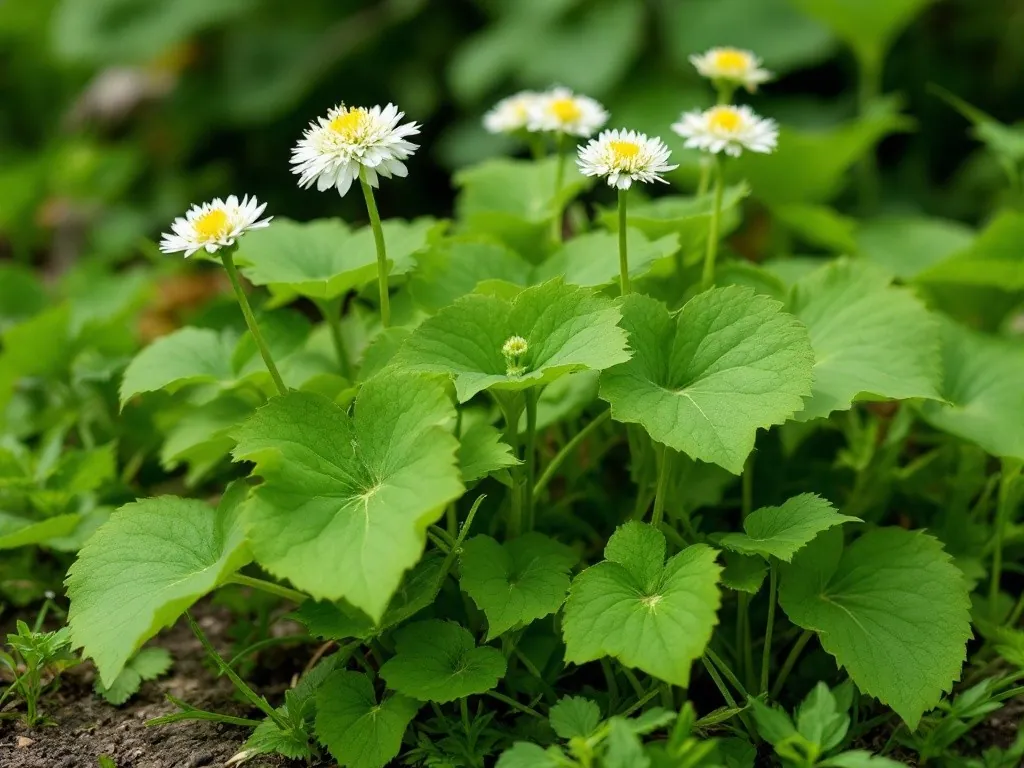
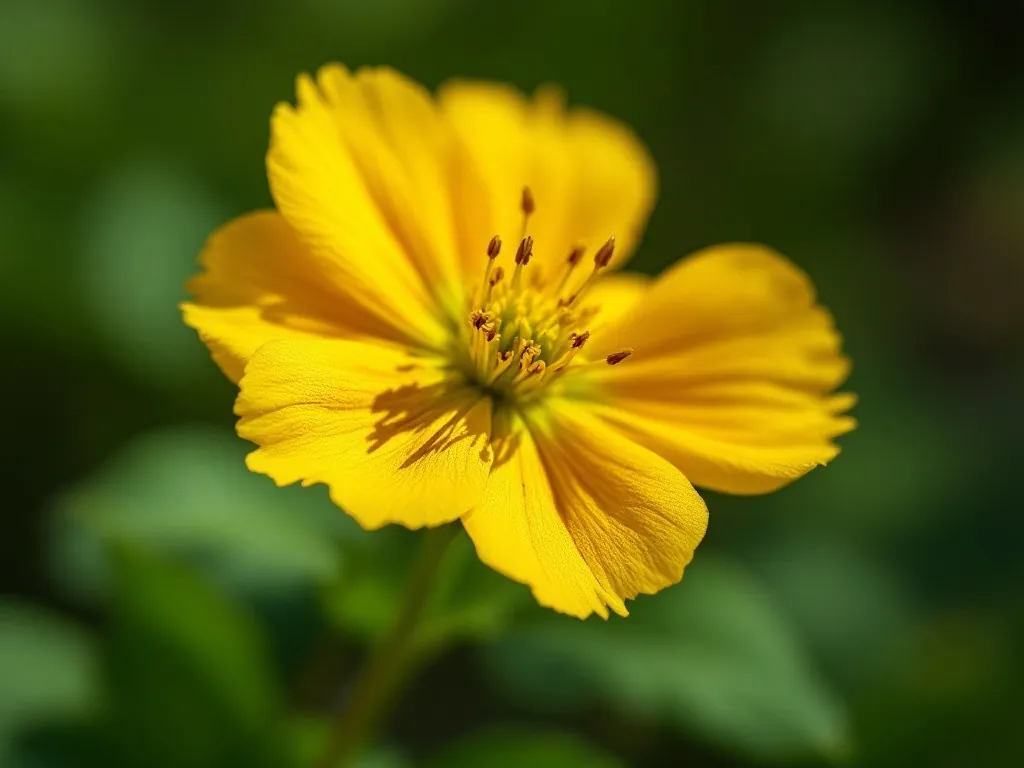
A perennial forming dense clumps of glossy, heart- to kidney-shaped leaves on short stalks. The flowers lack true petals — they consist of five (sometimes more) intensely yellow, glossy tepals resembling the structure of buttercup flowers, with numerous stamens in the centre. The stems are slightly ascending or creeping, hollow inside and well adapted to growing in water or very wet soil.
Growing and care
Watering
The soil or substrate must remain constantly wet — the marsh marigold naturally grows at the edges of ponds and in shallow water, so it is impossible to 'overwater' it.
Fertilizing
In a naturally fertile, moist habitat it usually requires no additional fertilising.
Planting
Pond edge, shallows up to about 5–10 cm deep, or a permanently waterlogged bed; the more sun, the more abundant the flowering.
Pruning
Remove the faded flower heads; let the leaves die back naturally.
Companion plants
Good companions
The same marginal zone of the pond and similar moisture requirements — together they create a naturalistic, multi-layered bankside planting.
Bad companions
Plants from dry, well-drained sites die in the constantly wet soil preferred by the marsh marigold — planted together, one side inevitably withers.
The evidence level indicates whether the relationship is backed by research, observation, or gardening tradition.
Diseases and pests
Toxicity
| For whom | Level | Notes |
|---|---|---|
| Humans | Mild | The fresh plant contains protoanemonin — contact with the sap can cause skin irritation, and eating raw parts can cause nausea and irritation of the mucous membranes of the mouth. |
| Dogs | Moderate | Eating the fresh plant can cause drooling, vomiting and diarrhoea. |
| Cats | Moderate | As in dogs — digestive-tract symptoms after eating fresh parts. |
| Horses | Moderate | There are reported cases of digestive-tract irritation in animals grazing on wet meadows with a large proportion of marsh marigold. |
History and origin
The marsh marigold has grown on European wetlands for ages and was one of the symbols of approaching spring on wet meadows and river banks. In many European languages its folk name refers to the golden, glossy colour of the flowers resembling butter (hence the English name 'marsh marigold' and the German 'Sumpfdotterblume' — literally 'marsh yolk'). Owing to the drainage of wetlands and the intensification of agriculture, its natural sites in many European countries, including Poland, have shrunk markedly, leading to the introduction of partial protection in some regions.
Uses
For planting the edges of ponds, streams and garden bog gardens, as well as moist, waterlogged parts of the garden that cannot be used for other plants. Excellent in naturalistic and wildlife plantings as an early food source for pollinators.
Trivia
- Although it looks like a buttercup, the marsh marigold has no true petals — the coloured flower parts are modified sepals.
- The toxic protoanemonin breaks down when dried or boiled, which is why dried hay containing some marsh marigold is far less harmful to livestock than the fresh plant.
Frequently asked questions
Can the marsh marigold be planted directly in water?
Yes. The marsh marigold grows best in shallows up to about 5–10 cm deep and on a constantly moist bank — in aquatic plant baskets or directly in waterlogged soil.
Is the marsh marigold safe for dogs with access to a garden pond?
The fresh plant is toxic to dogs and can cause vomiting and diarrhoea if eaten. If a dog tends to nibble aquatic plants, it is worth limiting its access to the marsh marigold clump or planting the bank in a spot out of its reach.
Why is my marsh marigold not flowering abundantly?
The most common cause is too dry a site or too much shade. The marsh marigold needs constant moisture and flowers best in full sun or light partial shade.
Sources
- Plants of the World Online (POWO)Database (GBIF, POWO…)
- RHS — Caltha palustrisInstitution / botanical garden
My note
A private note for this plant — saved in your browser.