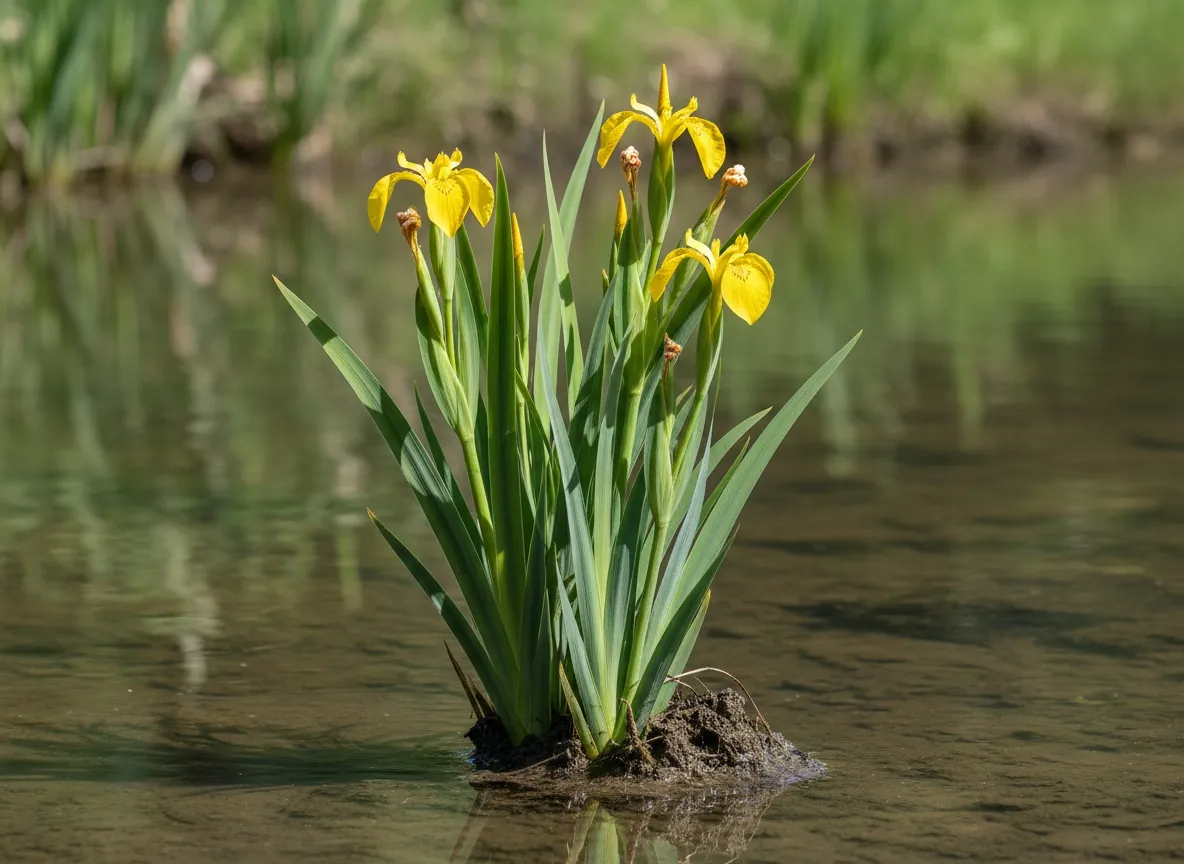
In short
- Native to Poland; a natural component of the reed beds along lakes, rivers and ditches.
- Position: the marginal zone of a garden pond or a permanently moist bank; it tolerates periodic flooding.
- It flowers from May to July with large, yellow flowers; it flowers abundantly only in sun or light partial shade.
- The rhizome is toxic — work in gloves when dividing and transplanting.
- It spreads fairly quickly by rhizome and self-seeds — in a small pond plant it in a basket.
- Very frost-hardy (USDA 4) and practically maintenance-free.
Botanical data
- Family
- Iridaceae (Iridaceae)
- Height
- 0.8–1.5 m
- Width
- 0.4–0.8 m
- Habit
- Clump-forming
- Growth rate
- Fast
- Position
- Full sun, Partial shade
- Soil
- Loamy, Clay, Peaty, Humus-rich
- pH reaction
- pH 5–7.5
- Moisture
- Wet, Moist
- Bloom
- May–July
- Hardiness
- USDA 4a–9a
- Propagation
- By division, From seed, By runners
Characteristics
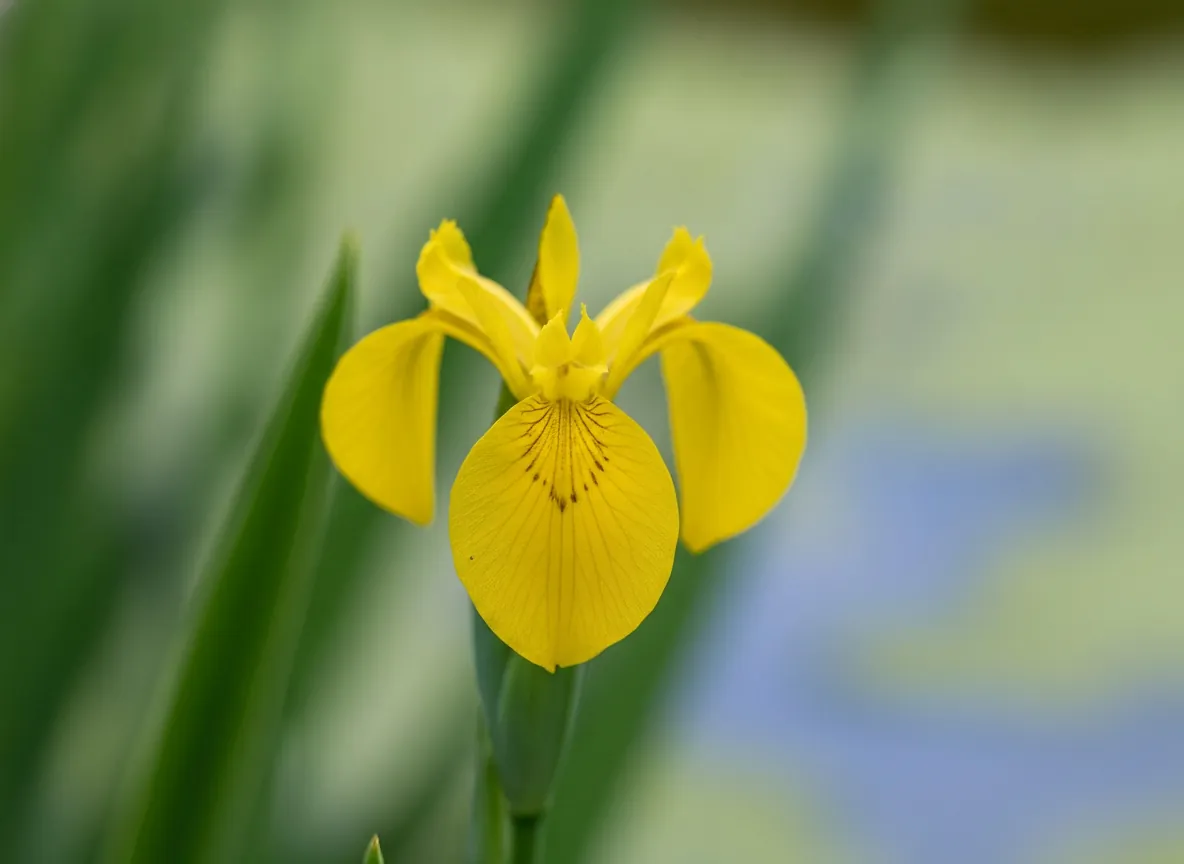
A perennial forming dense clumps from a thick, creeping rhizome. The leaves are sword-shaped, stiff, arranged in a fan, grey-green, with a pronounced midrib, growing up to 1.5 m. The flowers have the typical structure of an iris: three large, drooping falls with darker, orange-brown veining and three small, upright standards — the whole in an intense yellow, 8–10 cm across. After flowering it sets large, three-chambered seed capsules. Outside the flowering period the clump remains ornamental thanks to the pronounced, vertical structure of its leaves.
Growing and care
Watering
It naturally grows in the marginal zone and tolerates periodic flooding without harm — in the wild it can stand in water up to the base of its leaves for weeks. It also tolerates a short drying out of the bank in summer, but lasting drought ends in withering leaves and a lack of flowering the following season.
Fertilizing
On a fertile, silty bank fertilising is usually unnecessary. In a planting basket a single tablet of slow-release fertiliser pressed deep into the substrate is enough, so that the nutrients do not dissolve into the water of the pond.
Planting
The marginal zone: a permanently moist bank or shallows with a water depth of roughly 5–30 cm above the rhizome. Plant the rhizome shallowly, just below the surface of the substrate — planting too deep inhibits flowering. In a small pond it is worth using a planting basket, as the clump grows noticeably over time.
Pruning
Remove spent inflorescences if self-seeding is not wanted — the seed capsules shed their seeds straight into the water. Cut out withered leaves in autumn or early spring, above the water surface, and carry them away from the pond.
Companion plants
Good companions
The same marginal zone and the same moisture requirements, but different flowering times — the low marsh marigold flowers from April, and as it finishes, the taller iris takes over the baton. Together they give a colourful bank throughout May and June.
They occupy different zones of the pond — the iris the marginal belt, the water lily the deep zone — so they do not compete, and the vertical leaves of the iris contrast nicely with the flat leaves of the water lily.
Similar sword-shaped leaves and identical habitat requirements, but sweet flag spreads more slowly and lower — they form a naturalistic, multi-layered reed bed without sharp competition.
Bad companions
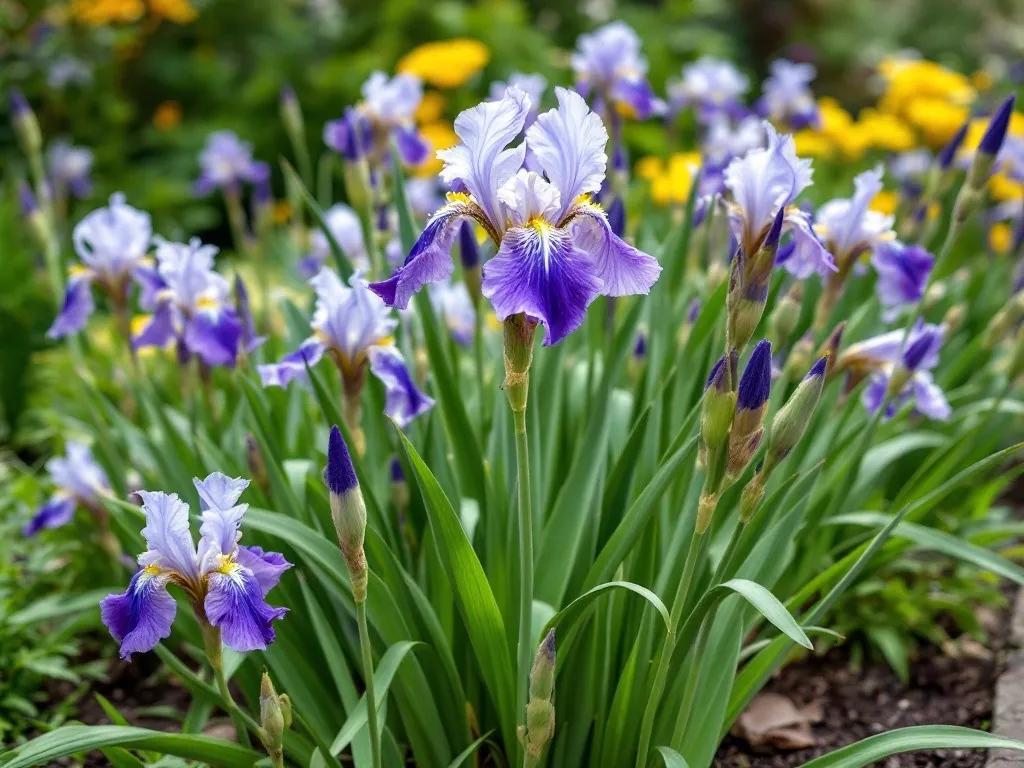
Despite their kinship they have utterly different requirements: bearded iris needs a dry, free-draining and sunny position, and its rhizome must bake near the surface — in the permanently wet soil of yellow flag iris it soon rots.
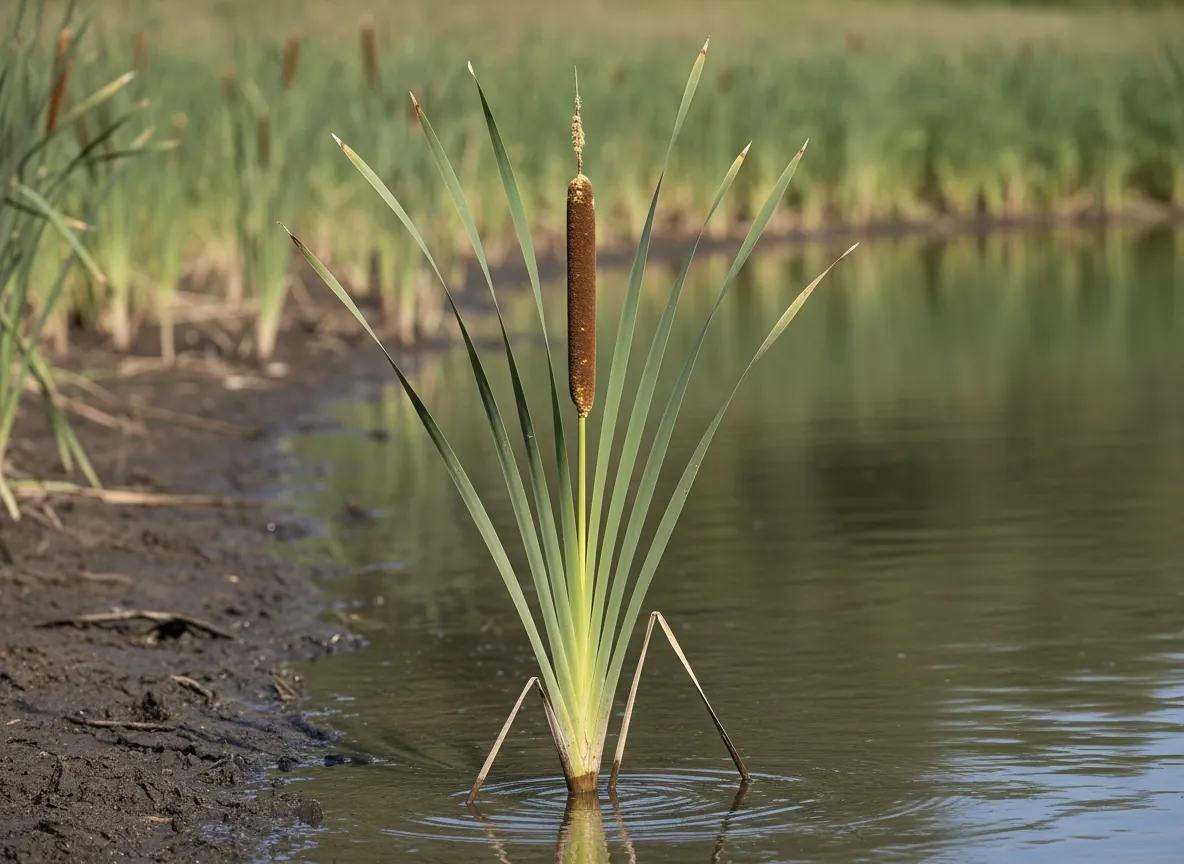
The cattail occupies the same marginal belt, but it is taller and spreads by rhizomes far more quickly — in time it shades out and displaces the clumps of iris.
The evidence level indicates whether the relationship is backed by research, observation, or gardening tradition.
Toxicity
| For whom | Level | Notes |
|---|---|---|
| Humans | Moderate | The most strongly toxic part is the rhizome — it contains glycosides and iridoid compounds. Ingestion causes vomiting, diarrhoea and abdominal pain, and contact of the fresh sap with the skin causes irritation and dermatitis in sensitive individuals. Work in gloves when dividing and transplanting. |
| Dogs | Moderate | Chewing the rhizome causes drooling, vomiting and diarrhoea. |
| Cats | Moderate | As in dogs — digestive symptoms after eating the rhizome or leaves. |
| Horses | Moderate | Animals usually avoid the plant because of its bitter taste, but eating larger quantities from waterlogged pasture may irritate the digestive tract. |
History and origin
Yellow flag iris has for centuries been a constant element of the European wetland landscape and has entered the culture: according to a popular hypothesis it is this plant, and not the lily, that lies behind the heraldic fleur-de-lis motif associated with the French monarchy. In folk herbalism the rhizome was used as a powerful laxative, abandoned today because of its toxicity; dyes were also obtained from the roots and flowers. Nowadays the species has found practical use in constructed wetlands and phytoremediation — it copes well with taking up heavy metals and nutrient compounds from water. Taken beyond its natural range as an ornamental plant, especially to North America, it spread there so vigorously that it is fought as an invasive species — in Poland there is no such problem, because here it is native and kept in check by natural competition and the insects that feed on it.
Uses
The fundamental plant of the marginal zone of garden ponds, pools and streams, and also of the moist, waterlogged parts of a garden that cannot be used in any other way. Its vertical, sword-shaped leaves give the pond structure and contrast well with the floating leaves of water lilies. It works well in naturalistic plantings, in stabilising banks and in constructed wetlands. In a small pond it is best planted in a basket, which restricts the spread of the rhizome.
Trivia
- The seeds of yellow flag iris have a corky, air-filled coat and float on water — the current carries them along the bank dozens of metres from the parent clump.
- The specific name pseudacorus means “false sweet flag” — outside the flowering period the leaves of the iris strikingly resemble sweet flag, but they lack its characteristic aroma when crushed.
- The plant is sometimes planted in domestic constructed wetlands, because it effectively takes up nitrogen, phosphorus and heavy metals from the water.
Frequently asked questions
Is yellow flag iris invasive?
In Poland, no — it is a native species and a natural component of our reed beds, so planting it by water raises no objections. It is, however, regarded as invasive outside its natural range, chiefly in North America, where it arrived as an ornamental plant. In the garden it is worth remembering that it is simply expansive: it spreads by rhizome and self-seeds, so in a small pond it is better kept in a planting basket, with spent inflorescences removed.
Is yellow flag iris toxic?
Yes, above all the rhizome. Eating it causes vomiting, diarrhoea and abdominal pain in people and animals, and contact of the fresh sap with the skin may cause irritation in sensitive individuals. It is not a plant that is dangerous in everyday contact — it is enough not to consume its parts and to work in gloves when dividing and transplanting the clump.
Does yellow flag iris have to stand in water?
It does not have to, but that is its natural environment. It grows best in shallows with a water depth of about 5–30 cm above the rhizome or on a permanently moist bank, and it tolerates periodic flooding without harm. It will also cope in an ordinary, moist border, provided the soil does not dry out for long — in a dry spot it will grow poorly and will not flower.
Sources
- Plants of the World Online (POWO)Database (GBIF, POWO…)
- RHS — Iris pseudacorusInstitution / botanical garden
My note
A private note for this plant — saved in your browser.