In short
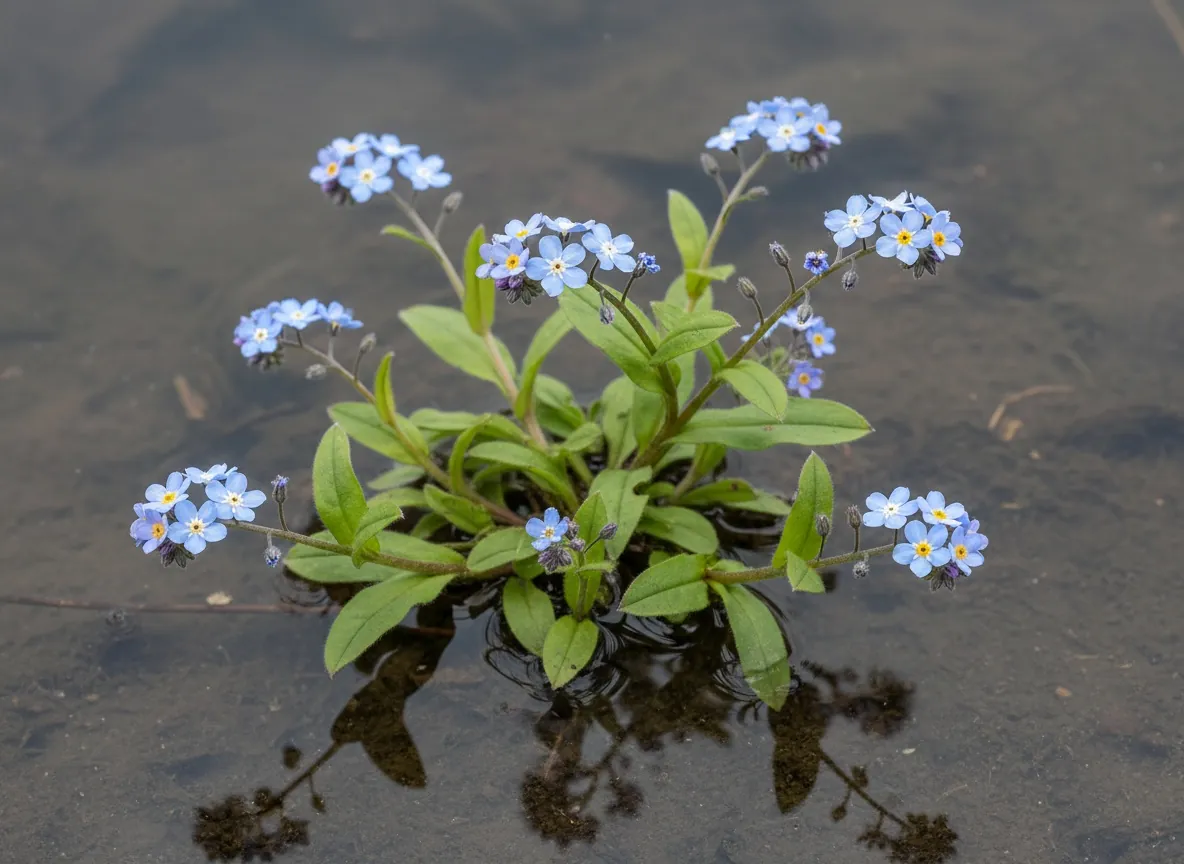
- Native to Poland; a natural plant of the banks of ditches, streams, springs and wet meadows.
- It is a PERENNIAL living for many years — not to be confused with the garden wood forget-me-not, which is a short-lived biennial.
- It flowers exceptionally long, from May right through to September — far longer than its garden relative.
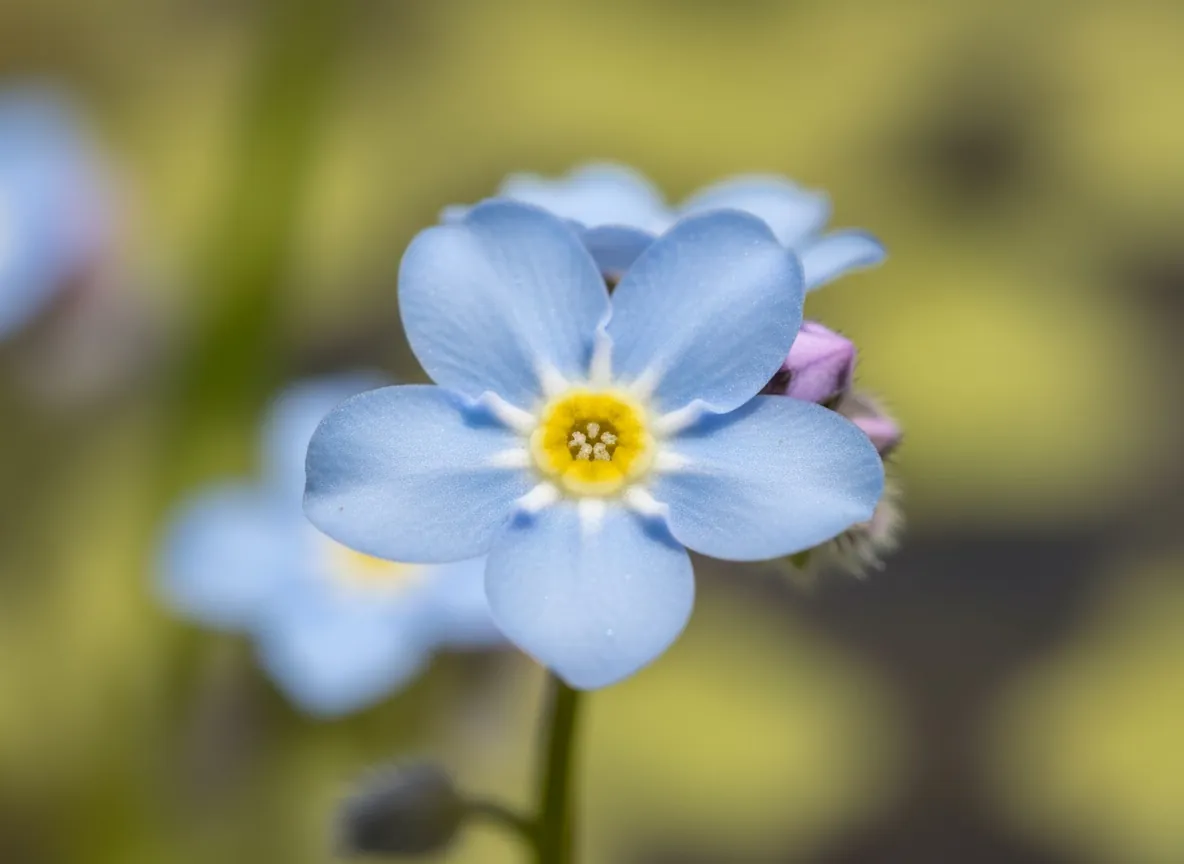
- The flowers are blue with a yellow eye, which changes colour to white after pollination — a signal for insects.
- Position: a permanently wet bank or shallows with up to 10 cm of water; it does not tolerate drought at all.
- The name scorpioides comes from the inflorescence coiled like a scorpion's tail, which straightens out as flowering progresses.
Botanical data
- Family
- Boraginaceae (Boraginaceae)
- Height
- 0.15–0.4 m
- Width
- 0.3–0.6 m
- Habit
- Creeping
- Growth rate
- Fast
- Position
- Full sun, Partial shade
- Soil
- Loamy, Clay, Humus-rich, Peaty
- pH reaction
- pH 5.5–7.5
- Moisture
- Wet, Moist
- Bloom
- May–September
- Hardiness
- USDA 4a–9a
- Propagation
- By division, From seed, From cuttings, By runners
Characteristics
A perennial with creeping, branched shoots that root at the nodes and thereby form a loose, spreading carpet 15–40 cm tall. The shoots are angular and appressed-hairy, the leaves oblong to spatulate, matt and softly hairy — their shape gave the plant its generic name Myosotis, literally “mouse ear”. The inflorescence is a cyme: a shoot tightly coiled into a spiral that looks like a scorpion's tail and straightens out gradually as successive flowers open — at the top of the coil there are always still-closed buds, while at the base the fruitlets are already ripening. It is precisely to this feature that the plant owes its specific epithet scorpioides. The flowers are small (5–8 mm), five-petalled, of a pure, light blue, with a distinct yellow eye in the centre — and this eye changes colour to white after pollination, signalling to insects that there is no more nectar in that flower. Flowering continues from May to September, far longer than in the garden wood forget-me-not. After flowering, small, glossy, black nutlets are set, which catch on fur and clothing. The plant also spreads vegetatively, by creeping shoots and short stolons.
Growing and care
Watering
The plant absolutely requires a permanently wet substrate and tolerates flooding with shallow water without harm — in the wild it can grow all summer in a ditch with water up to the base of its shoots. Drought ends its season within a few days: the shoots wilt and the plant dries up prematurely. This is the only real condition for growing it successfully.
Fertilizing
Fertilising is unnecessary, and an excess of nitrogen gives rank, flopping shoots at the expense of flowering. Near a garden pond it is better not to use mineral fertilisers at all, because they wash into the water and favour algae.
Planting
A permanently wet bank or shallows with a water depth of roughly 10 cm above the substrate — this is the classic plant of the very water's edge, excellent for masking the edge of the liner in a pond. The soil fertile and humus-rich, it may be heavy and clayey. Plant in groups of several, because a single plant gives a meagre effect; it spreads by itself, by creeping shoots.
Pruning
After flowering, once the shoots have flopped, cut the whole cushion low over the substrate — given enough water it will come back with a fresh rosette and often flowers a second time towards the end of summer. In early spring remove the dried, previous year's shoots.
Companion plants
Good companions
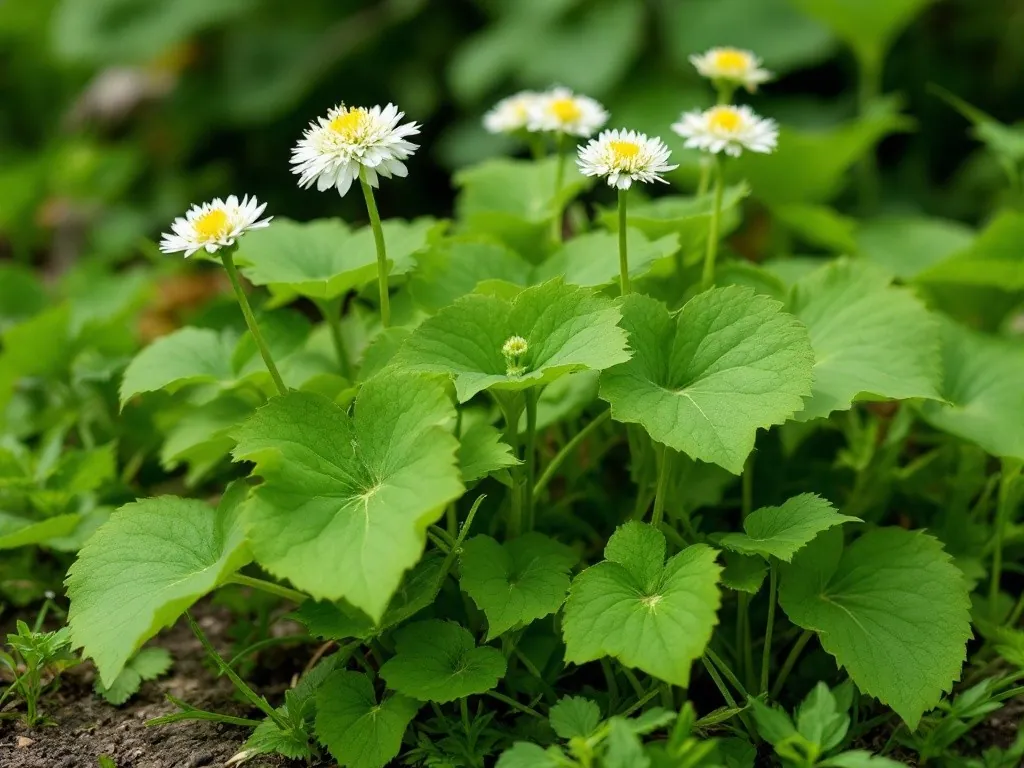
A classic duet of the very water's edge: the yellow marsh marigold flowers from April, and as it goes over, the blue forget-me-not takes over the bank and keeps it in colour all summer. Identical requirements, the same conditions, complementary colours and times.
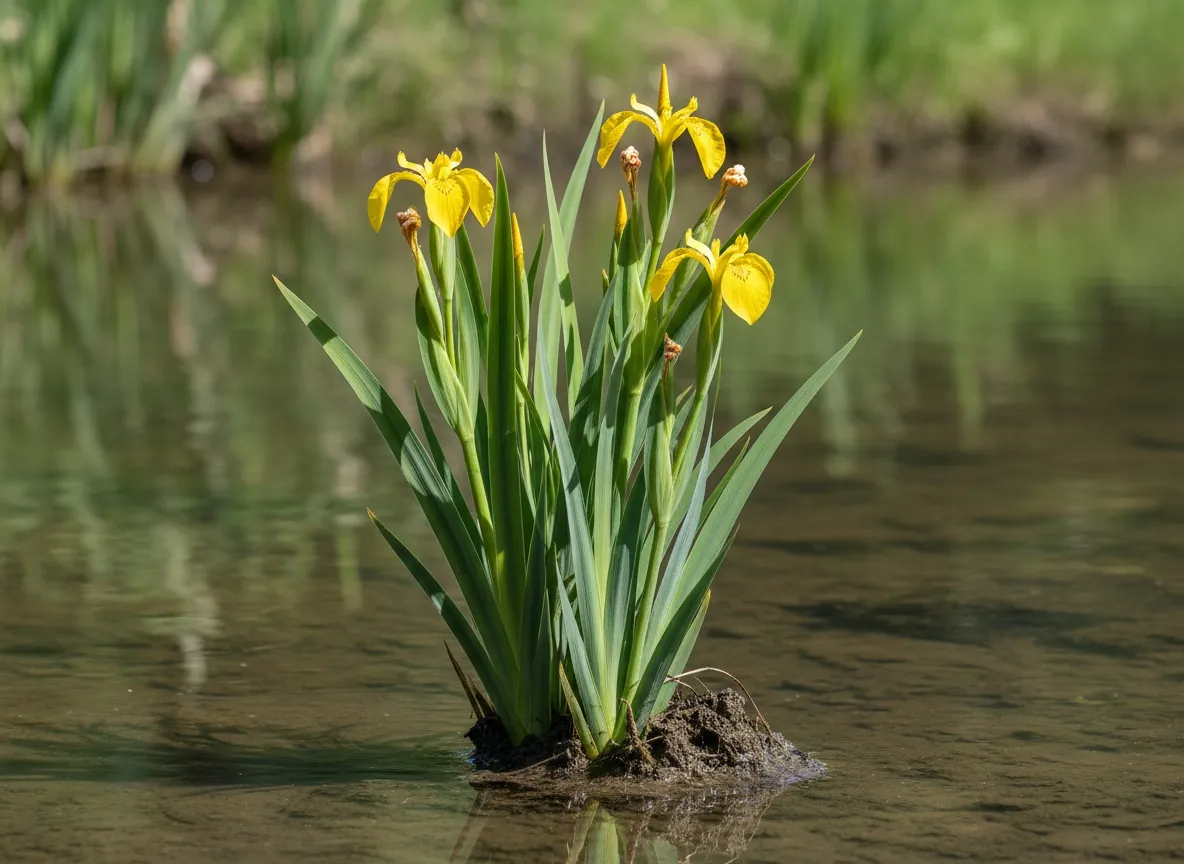
The low, creeping forget-me-not fills the space at the base of the tall clumps of flag, which naturally remains bare — both plants have the same requirements of a wet bank and do not compete for light.
The vertical, thin shoots of the rush and the flat, blue carpet of the forget-me-not at its feet give two completely different storeys and textures, with the same water requirements.
Bad companions
Reedmace occupies the same marginal belt, but is several times taller and spreads by rhizomes very fast — in two or three seasons it shades out and completely smothers the low forget-me-not.
Exactly opposite requirements: lavender needs dry, well-drained and calcareous soil, water forget-me-not a permanently wet one. In one position one of them will always die.
The evidence level indicates whether the relationship is backed by research, observation, or gardening tradition.
Toxicity
| For whom | Level | Notes |
|---|---|---|
| Humans | None | The plant is not regarded as toxic and poses no hazard on contact or in a garden with children. Like many members of the borage family, however, it may contain trace amounts of pyrrolizidine alkaloids, which burden the liver when consumed over a long period — which is why it is neither an edible nor a herbal plant, and infusions should not be prepared from it. |
| Dogs | None | — |
| Cats | None | — |
| Horses | None | — |
History and origin
The forget-me-not has one of the best-known legends in European botany, although its oldest recorded versions date only from the romantic 19th century. A knight is said to have been picking blue flowers for his lady by a river, to have fallen into the water and, as he drowned, to have thrown her the bouquet with the cry “Vergiss mein nicht!” — forget me not. The name in this same wording took hold in almost every language of Europe: forget-me-not, ne m'oubliez pas, niezapominajka. That the legend speaks of a knight drowning in a river is no accident — the heroine of the story is precisely the waterside species, and not the drought-loving wood forget-me-not of garden beds. The flower thereby became a lasting symbol of memory and faithfulness: it was the badge of German freemasonry in the 1930s, and today it is the emblem of organisations concerned with Alzheimer's disease and of many commemorative initiatives. In horticulture, by contrast, the species has made a more modest but lasting career as a basic plant of the margins of garden ponds — valued for what none of its relatives can manage: flowering for five months in a row, in a place where water stands.
Uses
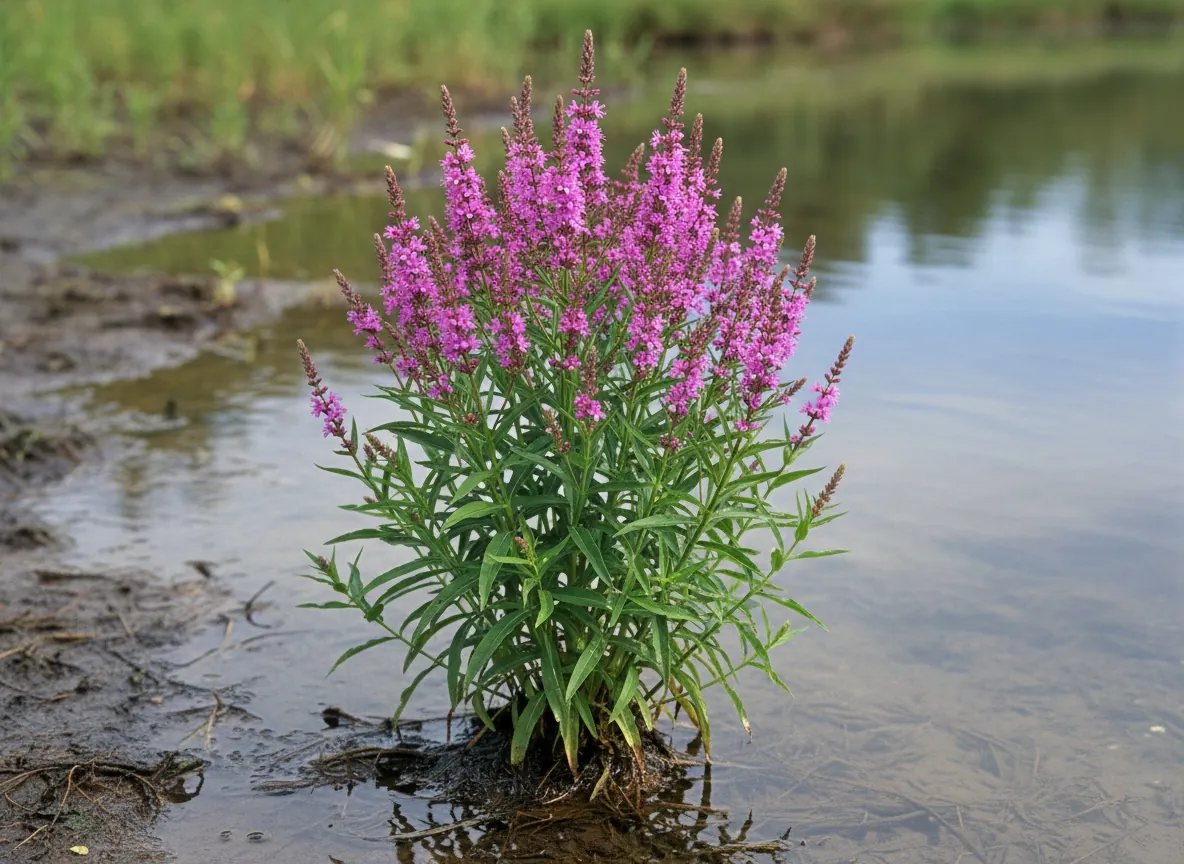
The basic plant of the very edge of the water: it is used to plant the rim of a garden pond, the bank of a stream and a cascade, and its creeping shoots excellently mask protruding liner or concrete — a problem faced by almost everyone with a small water body. It also performs well in rain gardens, in waterlogged hollows and everywhere the water collects by itself. Its greatest asset is the length of its flowering: the blue carpet holds from May to September, so it fills the entire gap between the spring marsh marigolds and the late-summer purple loosestrife. Always plant it in groups of several, because a single plant gives a meagre effect, and preferably at the base of taller aquatic perennials — yellow flag, soft rush — whose lower part remains bare. Cultivars with a more intense blue ('Mermaid') and white and pink ones are available in the trade. The plant is maintenance-free and long-lived on one condition, but an absolute one: the substrate must not dry out.
Trivia
- The yellow eye in the centre of the flower is a working signal: after pollination it changes colour to white, and only then do insects stop looking into it. Thanks to this the plant directs bumblebees and bees exclusively to the flowers in which there is still nectar — and wastes neither their time nor its own pollen.
- The specific epithet scorpioides means “scorpion-like” and refers to the inflorescence: when young it is tightly coiled into a spiral resembling a scorpion's tail, and it straightens out gradually as successive flowers open. As a result, on one shoot one can see at once closed buds at the top of the coil, open flowers in the middle and ripening fruitlets at the base.
- The generic name Myosotis means “mouse ear” in Greek and refers to the shape and the soft hairiness of the leaves. The legend of the drowning knight throwing the bouquet with the cry “Vergiss mein nicht!” concerns precisely this waterside species — not the garden wood forget-me-not, which grows on dry beds and would not survive by water.
Frequently asked questions
How does water forget-me-not differ from the ordinary, garden forget-me-not?
These are two different species with completely different ways of life. The garden wood forget-me-not (Myosotis sylvatica), sold in spring in trays for beds, is a short-lived biennial: it flowers for a few weeks in May, after which it dries up and persists in the garden only by self-seeding. Water forget-me-not is a true perennial that lives for many years, spreads by creeping shoots and flowers from May right through to September. They also differ in their requirements: the wood species grows in an ordinary, averagely moist bed, while the water species requires a permanently wet substrate and tolerates flooding with shallow water. If you are looking for a forget-me-not for a garden pond, this is the one you need.
Why is the yellow eye in the flowers of my forget-me-not turning white?
That is normal and one of the more interesting things about this plant. The yellow eye is a signal for insects: it guides them to the nectar. After the flower is pollinated it changes colour to white, which for a bumblebee or a bee means “there is nothing here any more” — thanks to this, insects visit only flowers that are still unpollinated. The plant thereby saves their time and secures more effective pollination for itself, because the pollen does not go where it is no longer needed. The white eye is therefore not a symptom of disease or ageing, but proof that the flower has done its job.
Does water forget-me-not have to grow in water?
It does not have to be in water, but it does have to be in a wet substrate — and that is an absolute condition. It grows best at the very edge of the water body or in shallows with up to about 10 cm of water above the substrate, and tolerates flooding without harm. It will also manage in a rain garden or in a waterlogged hollow, provided the soil does not dry out. In an ordinary, well-drained bed it has nothing to look for: at the first July drought it wilts within a few days. If you want a forget-me-not for a drier spot, choose the wood forget-me-not — that is a different species, adapted to precisely such conditions.
Sources
- Plants of the World Online (POWO) — Myosotis scorpioidesDatabase (GBIF, POWO…)
- RHS — Myosotis scorpioidesInstitution / botanical garden
My note
A private note for this plant — saved in your browser.