In short
- Requires full sun and regular, even watering.
- Indeterminate (cordon) varieties need side-shoots removed and training on a support.
- Leaves and unripe fruit are toxic – only ripe fruit is edible.
- Irregular watering causes the fruit to split.
- Do not plant after potatoes – the same fungal diseases (late blight).
Botanical data
- Family
- Solanaceae (Solanaceae)
- Height
- 0.6–2.5 m
- Width
- 0.4–0.6 m
- Habit
- Upright
- Growth rate
- Fast
- Position
- Full sun
- Soil
- Humus-rich, Loamy
- pH reaction
- pH 6–6.8
- Moisture
- Moderate
- Bloom
- June–August
- Hardiness
- USDA 9a–11b
- Propagation
- From seed
Characteristics
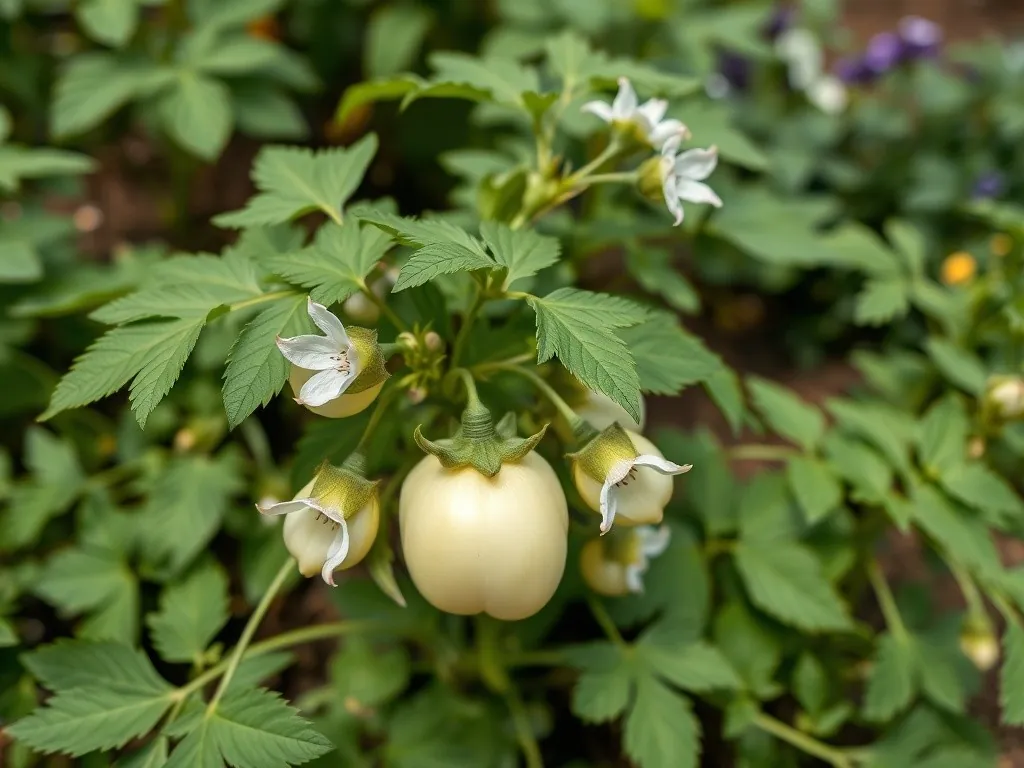
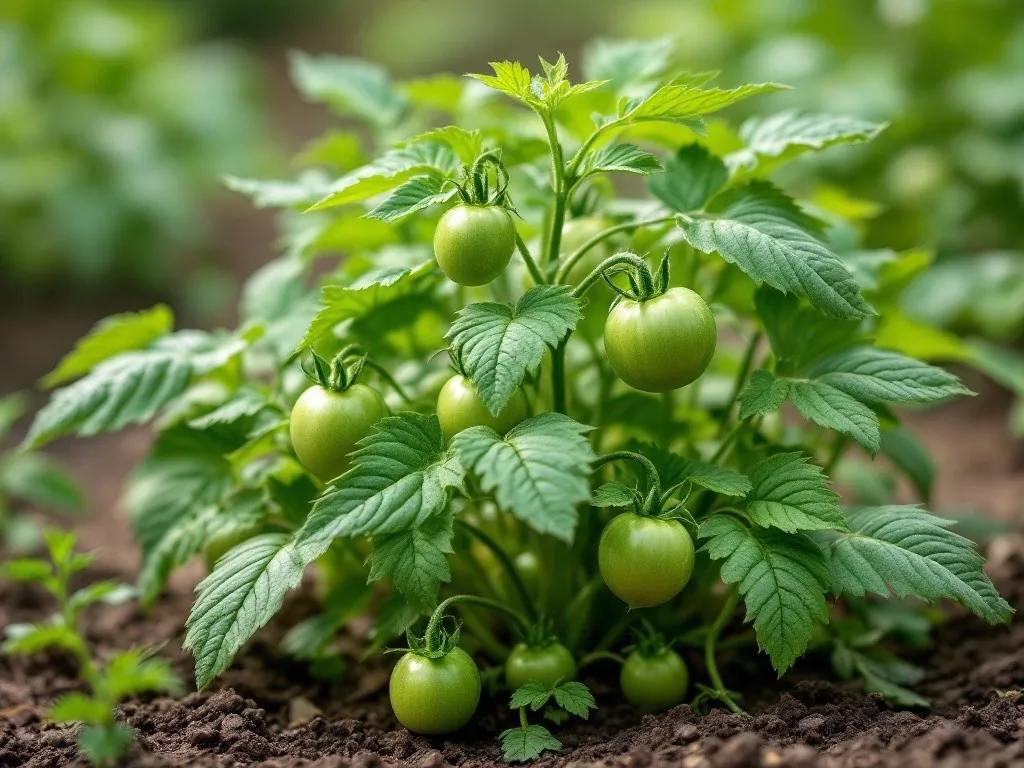
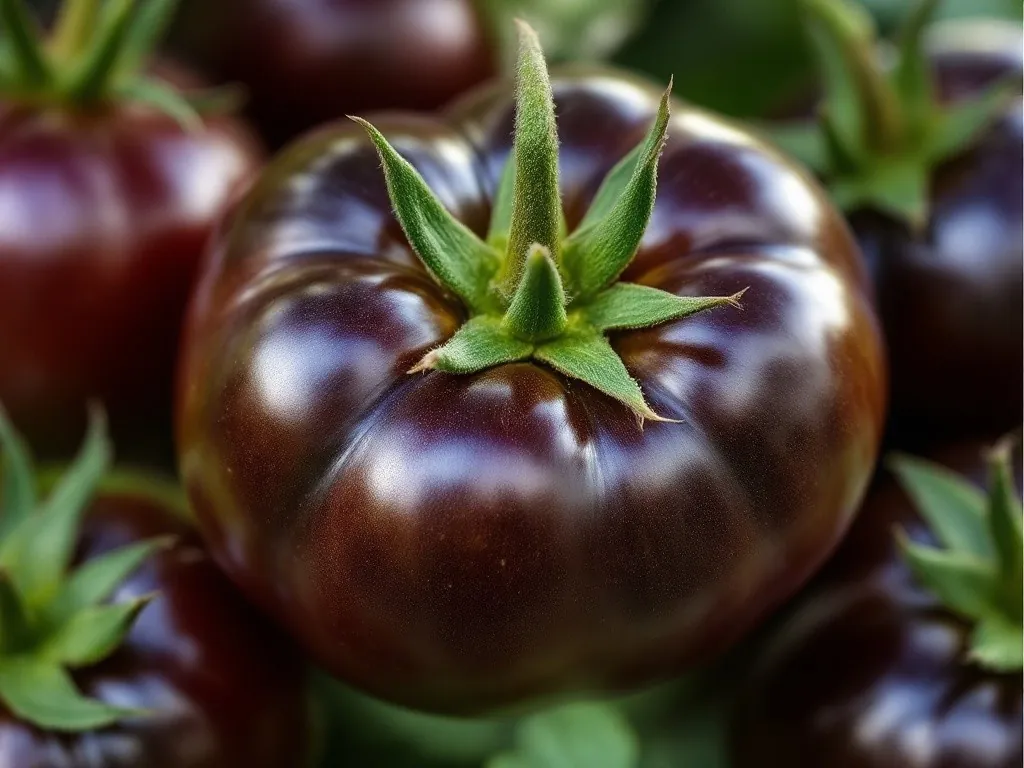
A herbaceous plant with hairy, strongly scented, pinnately divided leaves. The flowers are yellow, small and gathered in clusters. The fruits are berries that vary in shape, size and colour depending on the variety.
Growing and care
Watering
Requires regular, even watering – irregular watering causes the fruit to split and leads to blossom end rot.
Fertilizing
High potassium supports fruiting; excess nitrogen results in lush foliage at the expense of fruit.
Planting
Fertile, free-draining soil enriched with compost; a warm, wind-sheltered position.
Pruning
In cordon varieties, remove the side-shoots (that grow in the leaf axils) and train the plant on one or two main stems.
Companion plants
Good companions
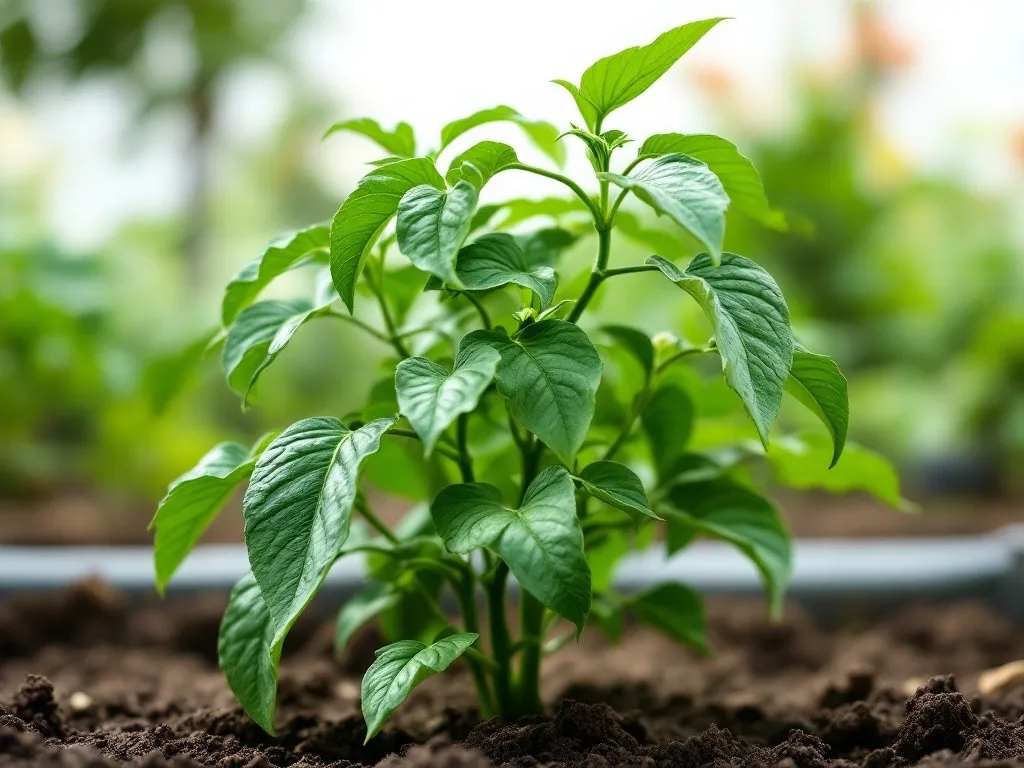
The strong scent of rosemary can deter cabbage white butterflies and other insects that attack tomatoes.
A classic kitchen companion; some studies suggest that basil can deter thrips and aphids from the tomato.
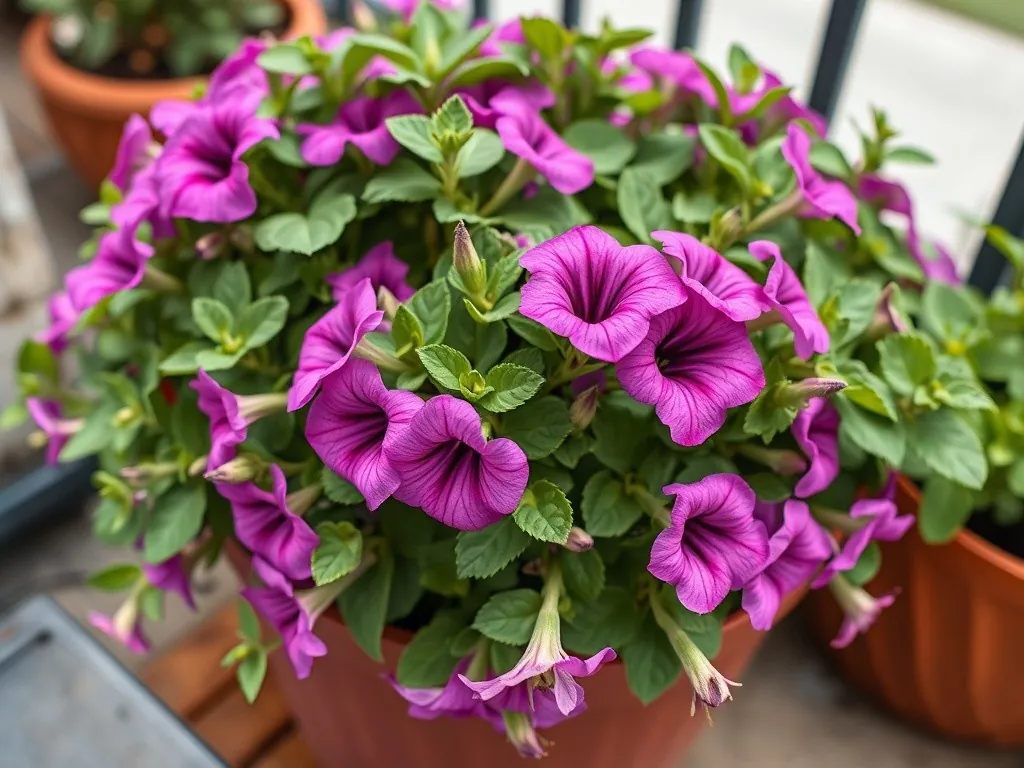
The root secretions of marigolds reduce the population of harmful soil nematodes around the tomato's roots.
Bad companions
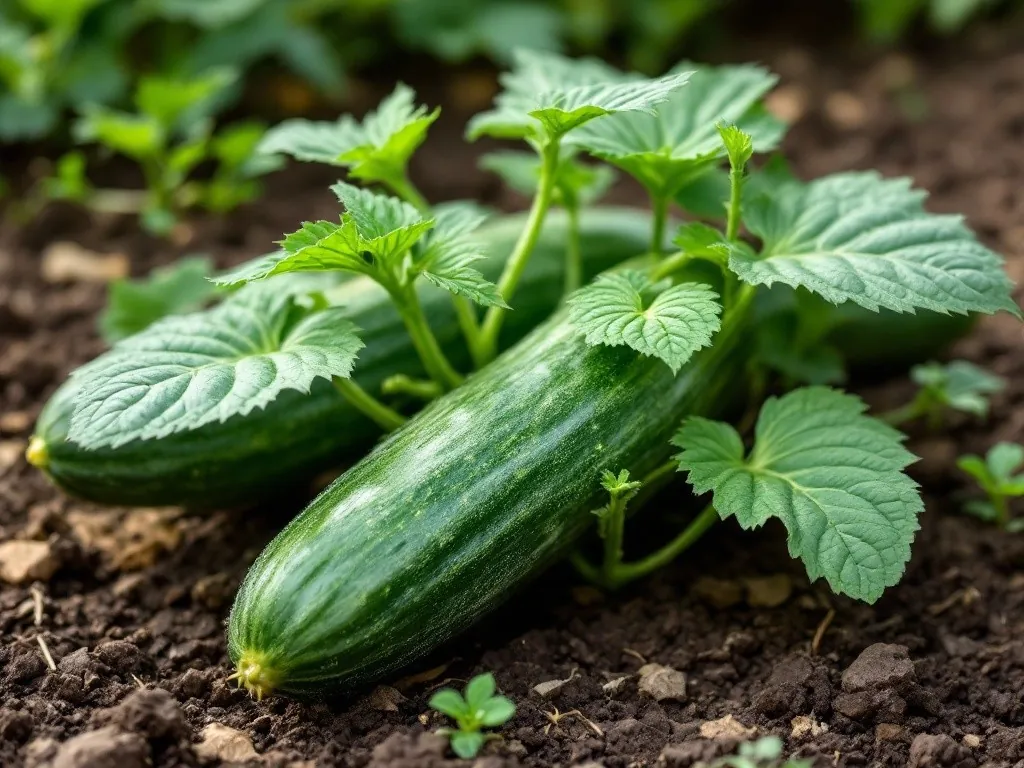
The same botanical family (nightshades) – they share the same diseases and pests, e.g. late blight, which increases the risk of infection.
Fennel releases allelopathic substances that inhibit the growth of many vegetables, including the tomato.
The evidence level indicates whether the relationship is backed by research, observation, or gardening tradition.
Diseases and pests
A white, powdery coating on leaves, shoots and buds. The leaves turn yellow, become deformed and drop prematurely.
Potato and tomato late blightDark-brown, spreading spots on the leaves (often with a lighter margin and a whitish coating on the underside in humid conditions), brown streaks on the stems, and hard, brown rots on tomato fruit. In wet, warm summers it develops with lightning speed and can destroy a crop in a few days.
AphidsSmall (1–3 mm) soft-bodied insects, green, black or pink, feeding in clusters on young shoots and the underside of leaves. They excrete sticky honeydew.
Greenhouse whiteflyTiny (1–2 mm) white insects resembling minuscule moths that rise in a cloud when the plant is disturbed. They feed on the underside of leaves, sucking sap and excreting honeydew. This causes yellowing and weakening. Common on tomatoes, peppers, cucumbers and pelargoniums, especially in polytunnels and greenhouses.
Toxicity
| For whom | Level | Notes |
|---|---|---|
| Humans | Mild | The leaves and stems contain solanine and are inedible; the ripe fruit is safe and edible. |
| Dogs | Moderate | The green parts of the plant and unripe fruit are toxic to dogs. |
| Cats | Moderate | — |
History and origin
The tomato comes from South and Central America, where it was cultivated by the Aztecs. It reached Europe in the 16th century, at first grown as an ornamental plant – for a long time it was thought to be poisonous because of its kinship with the toxic nightshades.
Uses
For growing in the garden, in a polytunnel, in a greenhouse and in pots on the balcony (dwarf varieties). The fruit is eaten raw and processed into preserves and sauces.
Trivia
- Botanically the tomato is a fruit (a berry), although in cooking it is treated as a vegetable.
- There are more than 10,000 varieties of tomato grown worldwide.
Frequently asked questions
Why do tomato fruits split?
The most common cause is irregular watering – a period of drought followed by heavy watering or rain causes a sudden rush of water into the fruit and the skin splits.
What is blossom end rot of tomatoes?
It is a physiological disorder caused by calcium deficiency, often resulting from irregular watering rather than a fungal disease. Regular, even watering prevents this problem.
Can you plant tomatoes after potatoes?
It is not recommended – both plants belong to the nightshade family and are susceptible to the same diseases, such as late blight, which spreads easily between them.
Sources
- Plants of the World Online (POWO)Database (GBIF, POWO…)
- RHS — Growing tomatoesInstitution / botanical garden
My note
A private note for this plant — saved in your browser.