In short
- Position: sun or partial shade, fertile, moist but well-drained soil.
- Fruits best on one- to two-year-old shoots — requires annual thinning.
- Very frost-hardy, tolerates the harsh winters of the continental climate well.
- The leaves and fruits have a characteristic, intense scent.
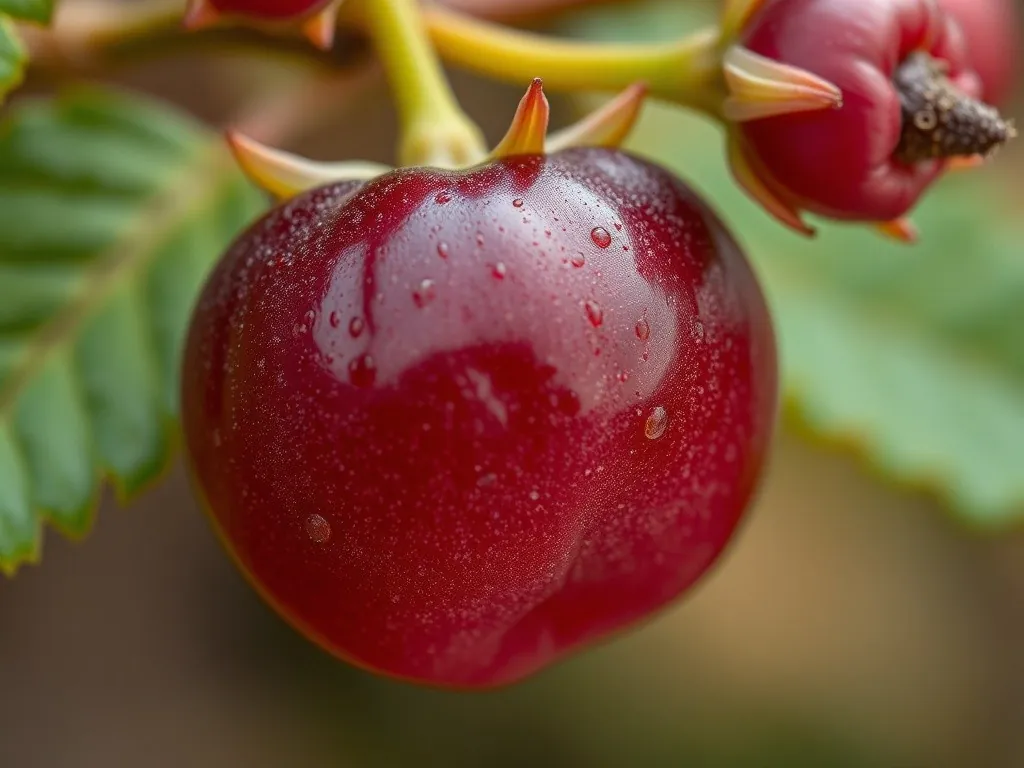
- The fruits are among the richest sources of vitamin C among fruits of the temperate zone.
Botanical data
- Family
- Grossulariaceae (Grossulariaceae)
- Height
- 1–1.5 m
- Width
- 1–1.5 m
- Habit
- Spreading
- Growth rate
- Fast
- Position
- Full sun, Partial shade
- Soil
- Humus-rich, Loamy
- pH reaction
- pH 6–6.8
- Moisture
- Moderate, Moist
- Bloom
- April–May
- Hardiness
- USDA 3a–7b
- Propagation
- From cuttings, By layering
Characteristics
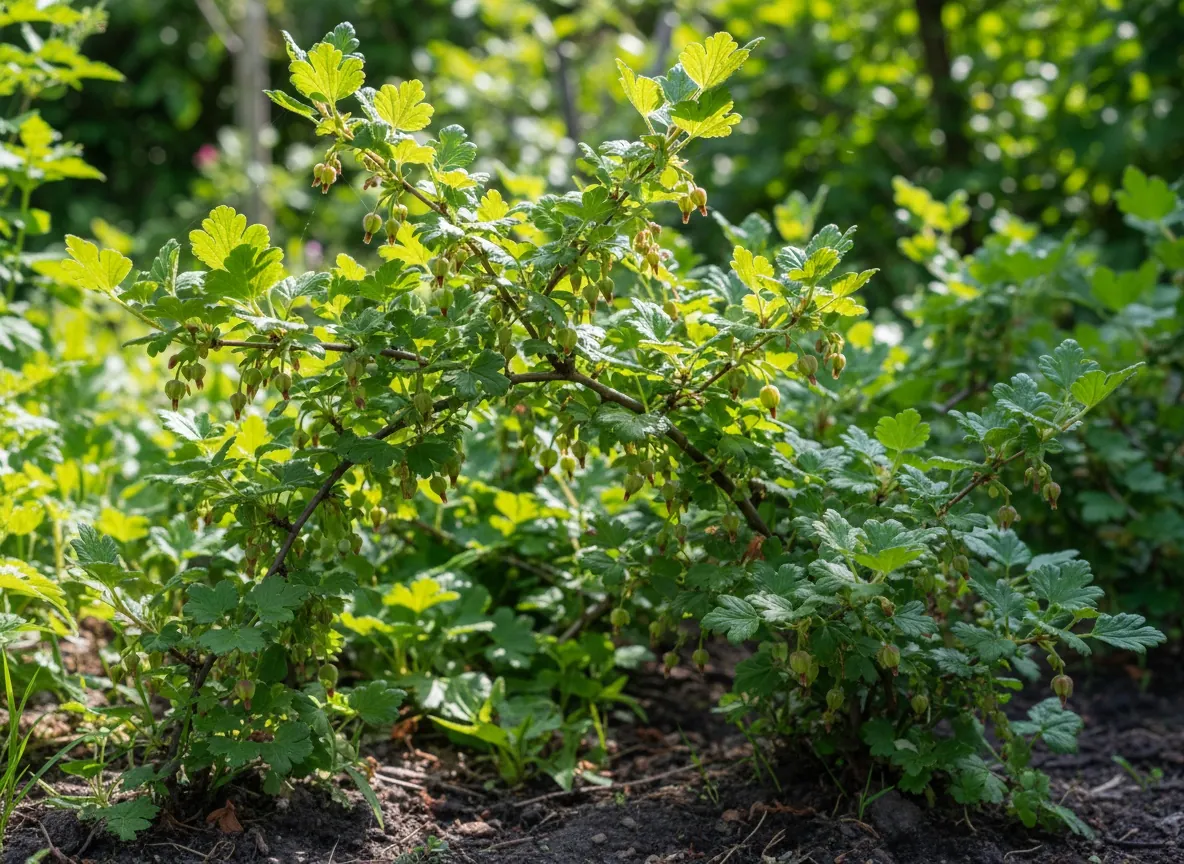
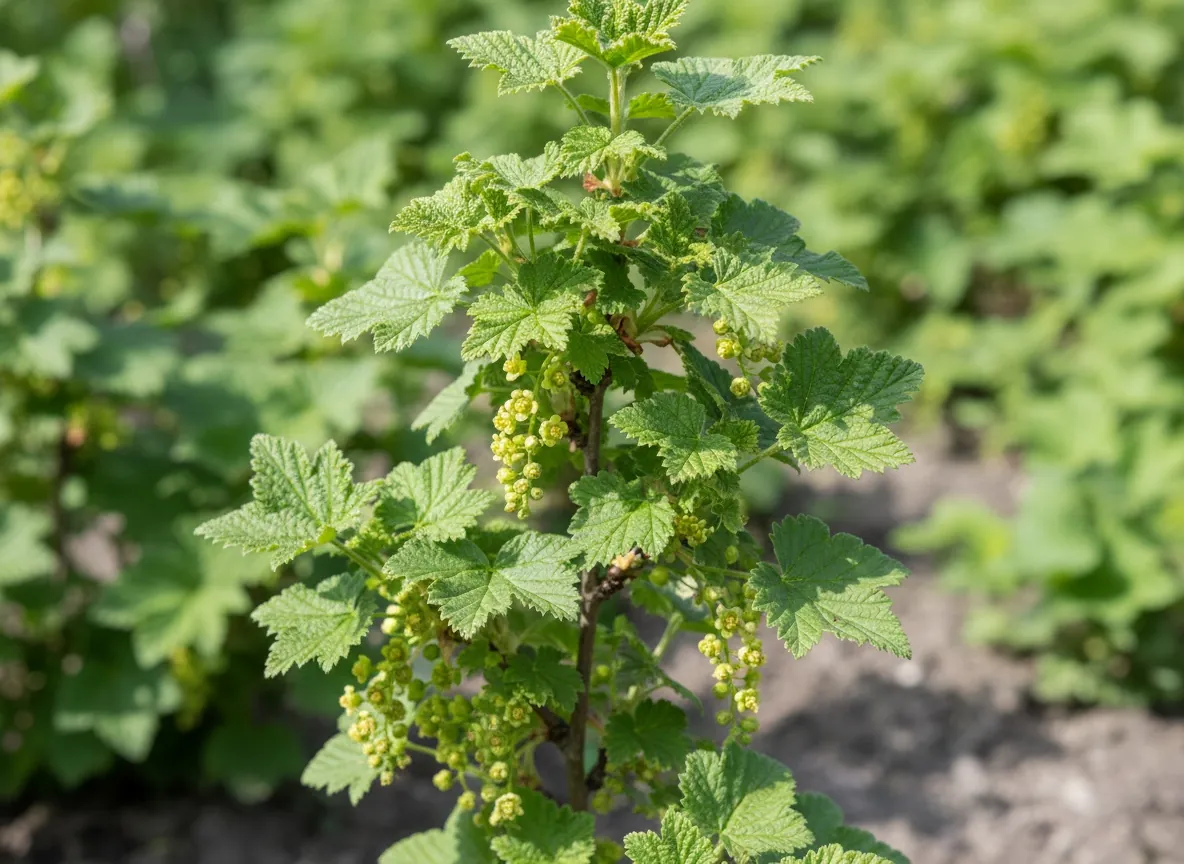
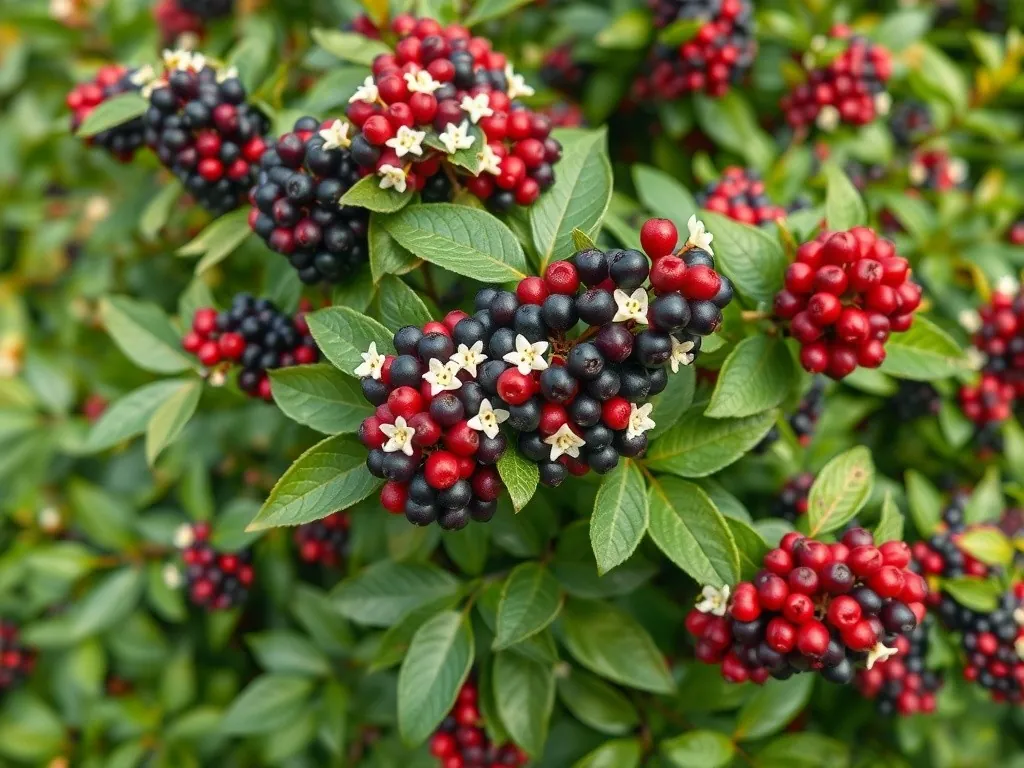
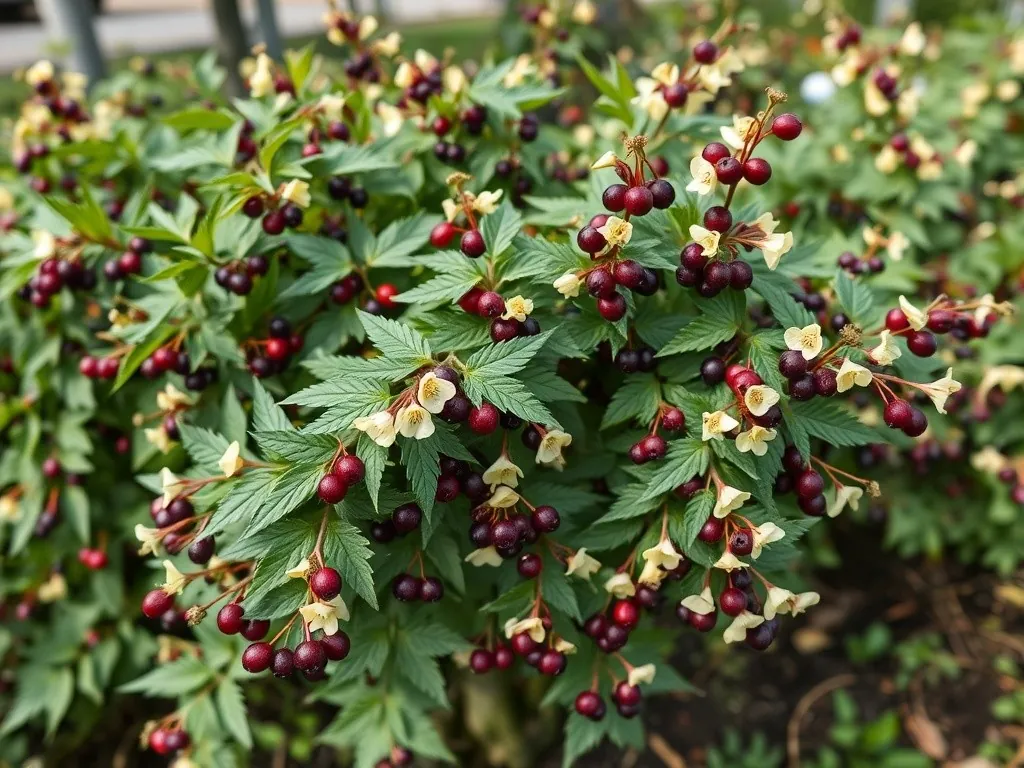
A shrub with a spreading habit and numerous shoots growing from the base. The 3- to 5-lobed, dark green leaves release an intense, resinous scent when rubbed, characteristic of the entire genus Ribes. The fruits, gathered in clusters (so-called currant strigs), ripen unevenly from the base to the tip of the branch.
Growing and care
Watering
Likes moist but not waterlogged soil. During fruit set and ripening it is especially sensitive to drying out.
Fertilizing
The blackcurrant is a heavy feeder — annual mulching with compost significantly improves the yield.
Planting
Plant a little deeper than it grew in the nursery to encourage the development of shoots from the base of the bush. Fertile soil enriched with compost.
Pruning
It fruits most abundantly on one- to two-year-old shoots, so each year shoots older than 3 years are cut out at ground level, leaving 8–10 of the strongest, younger ones.
Companion plants
Good companions
The strong scent of garlic helps to repel currant aphids and other sucking pests.
The compounds released by the roots suppress some soil nematodes, and the flowers attract beneficial insects.
Bad companions
The same botanical genus Ribes means shared pests (e.g. the blackcurrant gall mite) and fungal diseases, easily transmitted between bushes growing close together.
The blackcurrant is an intermediate host of white pine blister rust, dangerous to five-needle pines growing nearby.
The evidence level indicates whether the relationship is backed by research, observation, or gardening tradition.
Toxicity
| For whom | Level | Notes |
|---|---|---|
| Humans | None | — |
| Dogs | None | — |
| Cats | None | — |
History and origin
Cultivated in Europe since the Middle Ages, though appreciated on a large scale only in the 16th–17th centuries, when its medicinal value against scurvy was discovered. During the Second World War, a vitamin syrup for children was produced from it on a mass scale in Great Britain, when access to citrus fruits was limited.
Uses
Grown for fruit for preserves (juices, jams, cordials, cassis liqueur), less often for eating raw because of the sour taste. In the garden it is planted singly or in rows as part of the utility area.
Trivia
- One hundred grams of blackcurrant fruit contain more vitamin C than the same amount of oranges.
- The buds of blackcurrant are a raw material in perfumery — their scent note is called 'bourgeons de cassis'.
Frequently asked questions
Why does the blackcurrant fruit more and more weakly year after year?
This is usually the result of a lack of pruning — without the annual removal of the oldest shoots, the bush ages and fruits mainly on the perimeter, yielding fewer and smaller fruits.
Can the blackcurrant be planted in shade?
It will tolerate light partial shade, but fruits best in full sun. In deep shade the shoots become etiolated and the yield drops markedly.
What are these swollen, round buds on the currant's shoots?
This is a symptom of feeding by the blackcurrant gall mite — a microscopic mite. Affected buds should be broken off and destroyed, and in the case of heavy infestation, replacing the bush should be considered.
Sources
- RHS — Ribes nigrum (blackcurrant)Institution / botanical garden
- Plants of the World Online (POWO)Database (GBIF, POWO…)
My note
A private note for this plant — saved in your browser.