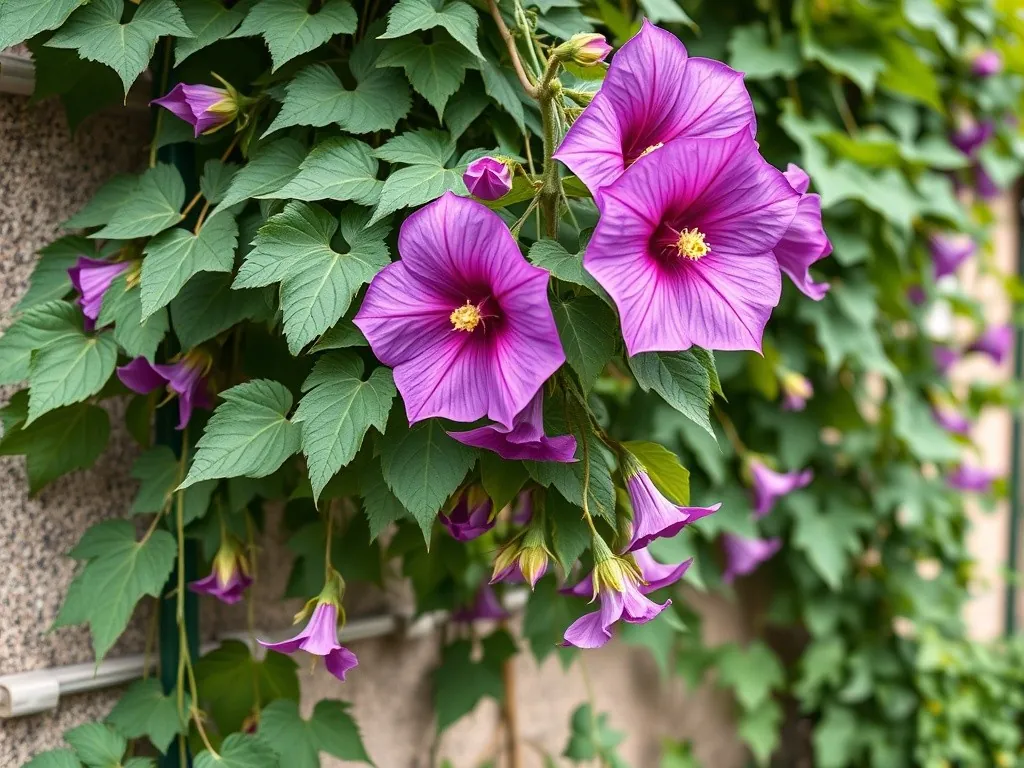
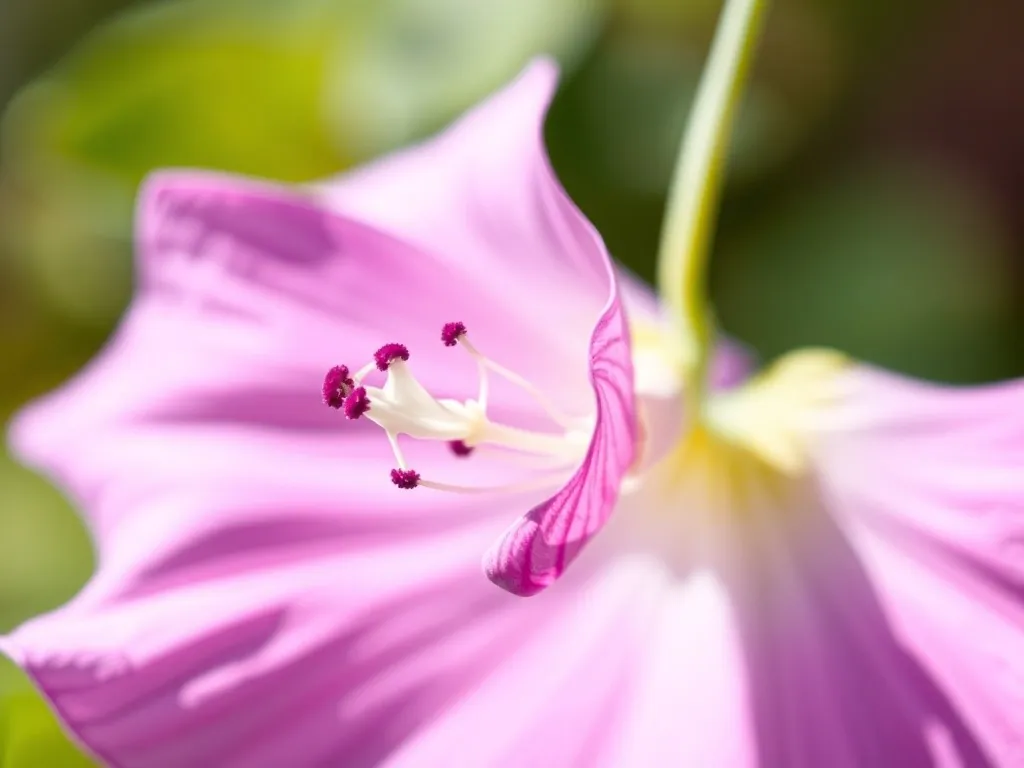
In short
- The flowers open in the morning and wilt by the afternoon of the same day — each flower lives only one day.
- An annual plant of very rapid growth that can cover a trellis or fence in the course of a single summer.
- It twines around its support — it needs a trellis, cords or stakes.
- The seeds are toxic and contain psychoactive compounds — keep away from children and animals.
- It flowers abundantly from July until the first frosts.
Botanical data
- Family
- Convolvulaceae (Convolvulaceae)
- Height
- 2–4 m
- Width
- 0.3–0.6 m
- Habit
- Cascading
- Growth rate
- Fast
- Position
- Full sun
- Soil
- Loamy, Sandy, Humus-rich
- pH reaction
- pH 6–7.5
- Moisture
- Moderate, Dry
- Bloom
- July–October
- Hardiness
- —
- Propagation
- From seed
Characteristics
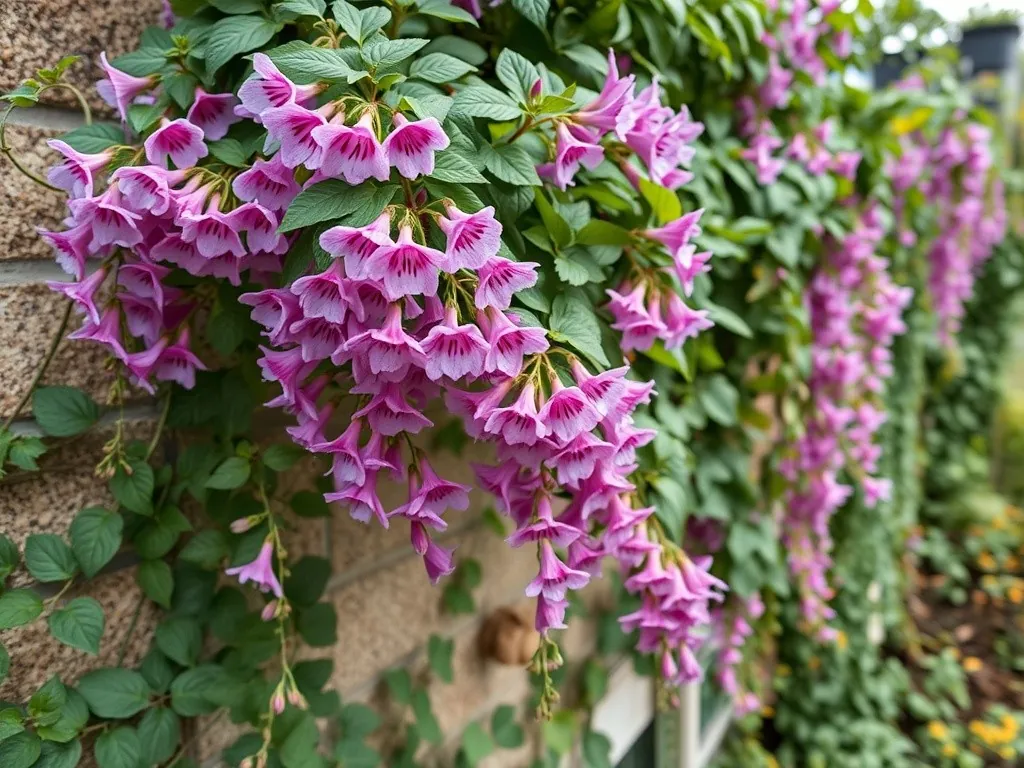
A hairy, twining stem with heart-shaped leaves and funnel-shaped flowers 5–8 cm in diameter, opening singly in the leaf axils. The flowers are typically purple-violet, but garden cultivars also offer pink, blue and white, often with a lighter star at the throat.
Growing and care
Watering
Fairly drought-resistant once established; excessive watering and overly fertile soil stimulate leaf growth at the expense of flowering.
Fertilizing
Poor to moderately fertile soil promotes more abundant flowering than overly fertilised soil.
Planting
Before sowing, lightly nick or soak the hard seed coats to speed up germination; provide a trellis, cords or stakes immediately after sowing.
Pruning
Cut back overgrown or dense shoots to improve ventilation and direct growth onto the desired support.
Companion plants
Good companions
The tall, stiff stem of the sunflower can serve as a living, natural support for the twining shoots of the morning glory.
A traditional combination known from cottage gardens — the tall maize stalks give support to the light shoots of the morning glory.
Bad companions
The very rapid growth of the morning glory allows it to entangle and shade weaker, lower-growing neighbours in a short time.
The evidence level indicates whether the relationship is backed by research, observation, or gardening tradition.
Toxicity
| For whom | Level | Notes |
|---|---|---|
| Humans | Moderate | The seeds contain LSA-like alkaloids with a psychoactive and toxic effect — ingestion risks poisoning, nausea and neurological disturbances. |
| Dogs | Moderate | — |
| Cats | Moderate | — |
History and origin
Cultivated ornamentally since colonial times, when it reached Europe from Central America. In many warmer regions of the world, including the southern USA, it has escaped cultivation and is sometimes regarded as a troublesome garden weed; in the Polish climate it dies with the first frosts and poses no invasive threat.
Uses
For the fast, seasonal greening of trellises, fences, balcony railings and pergolas where an immediate, dense screen is needed within a single summer.
Trivia
- The genus name Ipomoea derives from the Greek “ips” (worm) and “homoios” (similar), alluding to the twining, worm-like shoots.
- The daily morning opening of the flowers and their wilting in the afternoon is a typical feature of the entire genus Ipomoea, from which the English name “morning glory” derives.
Frequently asked questions
Why do morning glory flowers wilt by the afternoon?
This is a natural feature of the species — each individual flower lives only one day: it opens in the morning and wilts after a few hours, usually during the same afternoon. The plant compensates for this by abundantly producing new buds every day throughout the flowering season.
How do you speed up the germination of common morning glory seeds?
The seeds have a hard, impermeable coat, so it is worth lightly nicking them with a file or soaking them in water for 24 hours before sowing — this considerably speeds up and evens out germination.
Is the common morning glory dangerous to children or animals?
The seeds contain alkaloids with an effect similar to LSD, toxic if eaten — they can cause poisoning and neurological disturbances. It is worth making sure that children and pets have no access to them, especially in autumn when the seeds ripen.
Sources
- Plants of the World Online (POWO)Database (GBIF, POWO…)
- Missouri Botanical Garden — Ipomoea purpureaInstitution / botanical garden
My note
A private note for this plant — saved in your browser.