In short
- Position: full sun, sheltered from cold winds.
- Flowers from July to September — fills the flowering gap between spring and autumn perennials.
- Flowers appear on the current year's shoots, which is why pruning is done in early spring.
- Needs regular moisture during the flowering period, otherwise buds drop prematurely.
- Frost-hardy to USDA zone 5b, but in cooler regions a sheltered position is advisable.
Botanical data
- Family
- Malvaceae (Malvaceae)
- Height
- 2–3 m
- Width
- 1.5–2.5 m
- Habit
- Upright
- Growth rate
- Moderate
- Position
- Full sun
- Soil
- Loamy, Humus-rich
- pH reaction
- pH 6–7.5
- Moisture
- Moderate
- Bloom
- July–September
- Hardiness
- USDA 5b–9a
- Propagation
- From cuttings, From seed
Characteristics
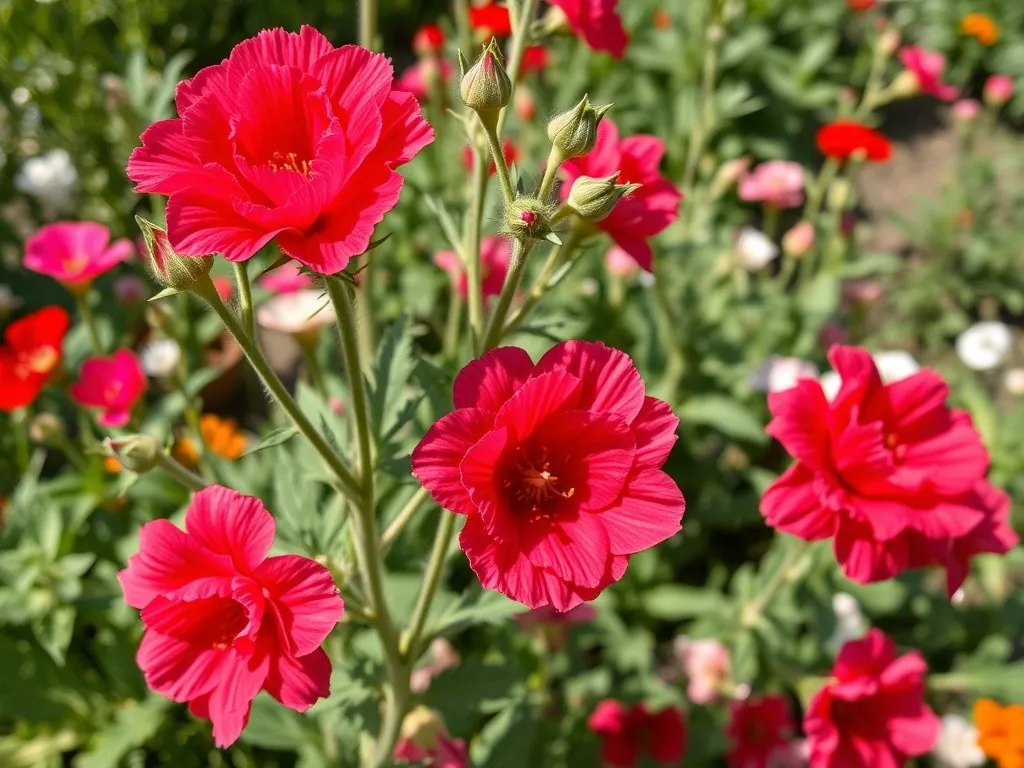
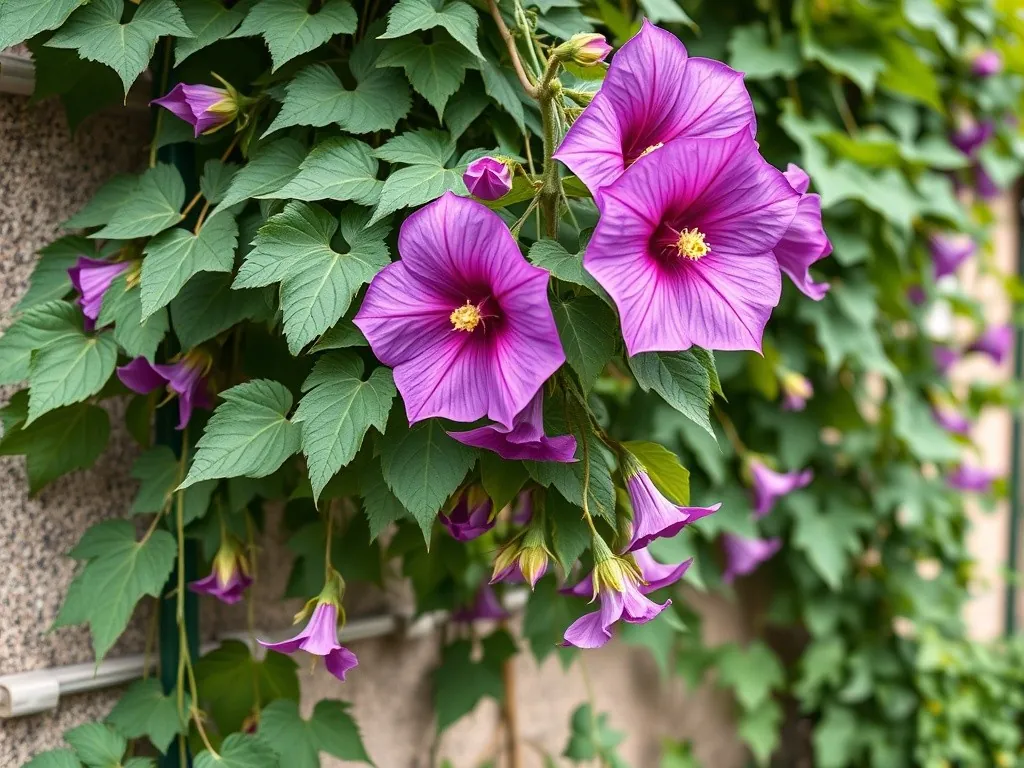
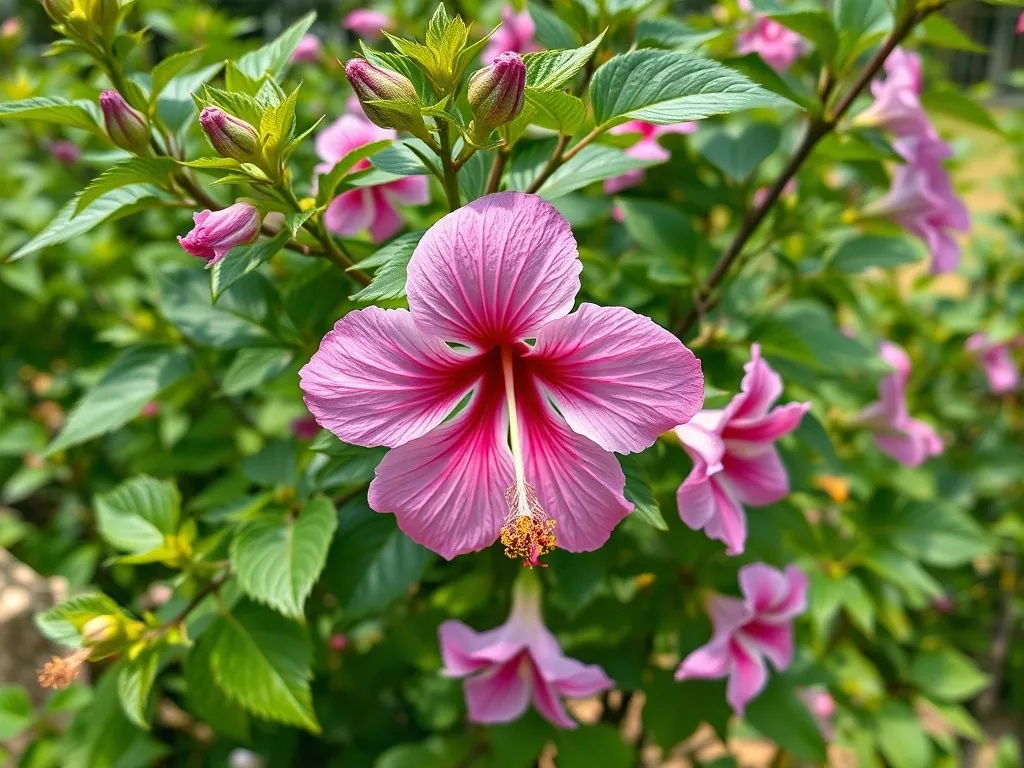
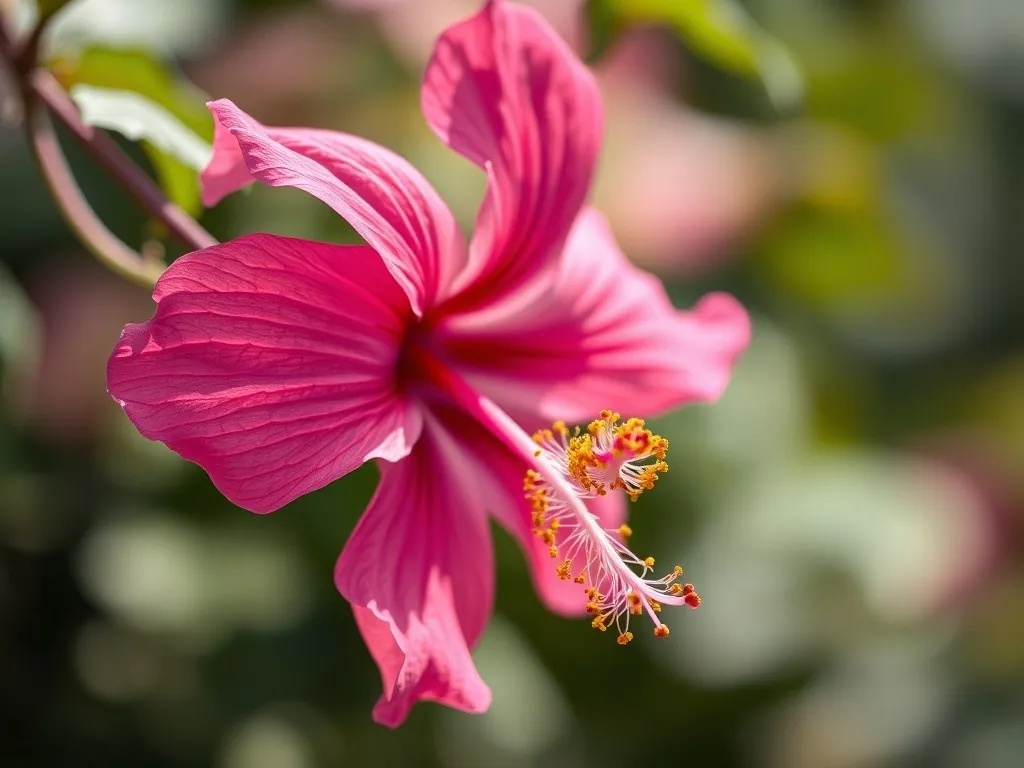
An upright shrub with stiff, ascending shoots and lobed, dark green leaves that appear relatively late in spring. The large, funnel-shaped flowers with five petals and a prominently protruding staminal column develop singly in the leaf axils throughout summer — each lasts only one day, but the shrub produces hundreds of them.
Growing and care
Watering
During the flowering period (July–September) it needs regular moisture — drying out at this time results in bud drop.
Fertilizing
Potassium supports abundant flowering; reduce nitrogen towards the end of summer so shoots have time to ripen before winter.
Planting
A position sheltered from cold winds; on heavier soils improve drainage with compost.
Pruning
Shorten last year's shoots by a third, since the flowers appear on the current year's growth — harder pruning produces larger, though somewhat later-opening, flowers.
Companion plants
Good companions
Both species flower in late summer and have similar light requirements — together they extend the flowering season of the shrub border.
Flowers at the same time as the hibiscus and forms a colour-contrasting border at the base of the shrub.
Similar flowering time and requirements — fills the space at the base of the shrub well, extending the border's appeal into autumn.
Bad companions
Hibiscus needs plenty of sun and warmth, and the dense shade cast by yew limits flowering and promotes fungal diseases at the base of the shrub.
The evidence level indicates whether the relationship is backed by research, observation, or gardening tradition.
Toxicity
| For whom | Level | Notes |
|---|---|---|
| Humans | None | — |
| Dogs | Mild | Consuming larger amounts of leaves or flowers may cause mild vomiting or diarrhoea. |
| Cats | Mild | — |
History and origin
Despite the species name "syriacus", Rose of Sharon does not originate from Syria — the botanist Carl Linnaeus gave it this name based on plants he observed in Syrian gardens, although the species' natural range covers East Asia. In South Korea it is the national flower, symbolising perseverance.
Uses
An impressive specimen plant or shrub-border plant that also tolerates cultivation in a large pot on the terrace. It fills the flowering gap in the garden in mid- and late summer, when most shrubs have already finished blooming.
Trivia
- Rose of Sharon is the national flower of South Korea, where it is called "mugunghwa" — a symbol of immortality and perseverance.
- Each individual flower fades within one day, but the shrub continuously produces new buds throughout summer, giving the impression of continuous flowering.
Frequently asked questions
Why do Rose of Sharon buds drop before they open?
The most common cause is a lack of water during the flowering period — Rose of Sharon needs regular moisture from July to September, otherwise it sheds buds to limit water loss.
When should you prune Rose of Sharon?
Pruning is done in early spring, before the leaves develop, because the flowers appear on the current year's growth. Pruning in autumn or winter exposes fresh wounds to the risk of frost damage.
Will Rose of Sharon survive a Polish winter?
Yes, it is frost-hardy to USDA zone 5b, which covers most of Poland, but in cooler regions it is worth choosing a position sheltered from cold winds and avoiding excessive nitrogen fertilising in late summer.
Sources
- Plants of the World Online (POWO) — Hibiscus syriacusDatabase (GBIF, POWO…)
- Missouri Botanical Garden Plant Finder — Hibiscus syriacusInstitution / botanical garden
My note
A private note for this plant — saved in your browser.