In short
- Requires full sun and fertile, free-draining soil.
- Flowers repeatedly from June to September.
- Susceptible to powdery mildew and aphids – prevention matters more than cure.
- Spring pruning determines the vigour of flowering during the season.
- Grows well in the company of lavender, which deters aphids.
Botanical data
- Family
- Rosaceae (Rosaceae)
- Height
- 0.6–1.5 m
- Width
- 0.5–0.8 m
- Habit
- Upright
- Growth rate
- Moderate
- Position
- Full sun
- Soil
- Loamy, Humus-rich
- pH reaction
- pH 6–7
- Moisture
- Moderate
- Bloom
- June–September
- Hardiness
- USDA 5a–9b
- Propagation
- From cuttings, By layering
Characteristics
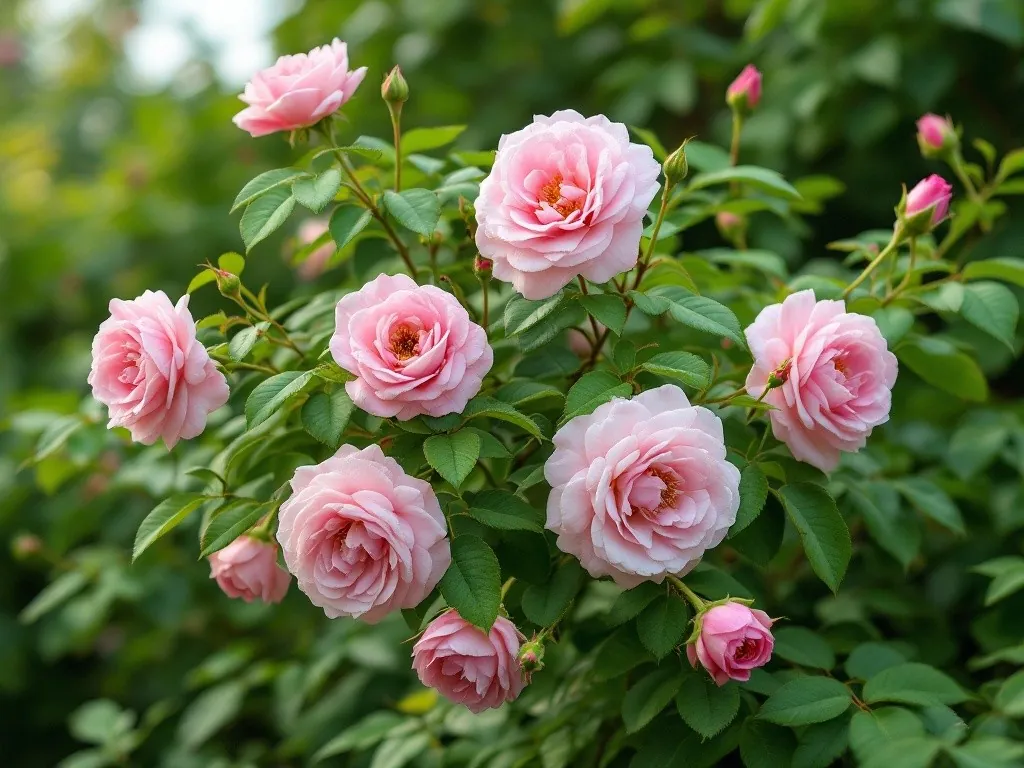
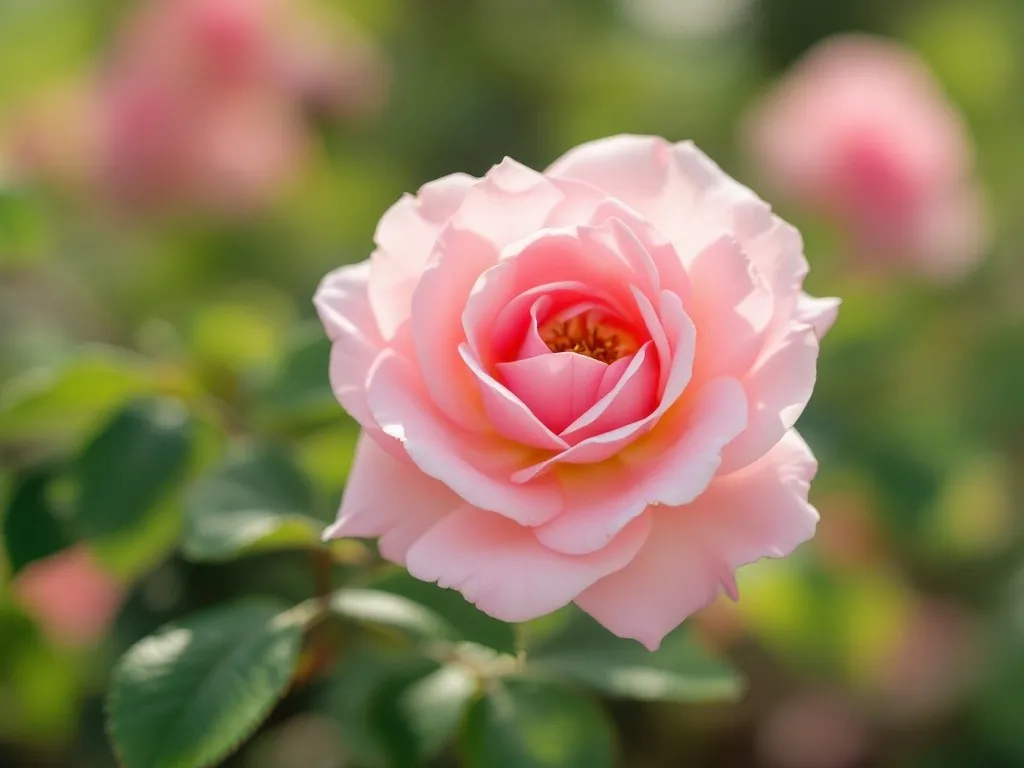
A shrub with stiff, thorny stems and large, double flowers borne singly or in small clusters at the tips of the shoots. The leaves are compound, glossy and dark green.
Growing and care
Watering
Water abundantly but rather infrequently – this lets the roots develop more deeply. Avoid wetting the leaves to reduce fungal diseases.
Fertilizing
Stop nitrogen feeding from August so the shoots have time to ripen and harden before winter.
Planting
Fertile, free-draining soil enriched with compost; a wind-sheltered but airy position.
Pruning
Cut the stems back to 3–5 healthy buds, remove weak, diseased and crossing stems, making a slanting cut above an outward-facing bud.
Companion plants
Good companions
The scent of lavender deters aphids, which readily attack roses; a classic, tried-and-tested combination.
The strong smell of ornamental garlic deters some of the pests that attack roses, including aphids.
The root secretions of pot marigold can reduce the population of soil nematodes harmful to roses.
Bad companions
The rose needs more frequent feeding and watering than Mediterranean plants – growing them together in one position makes it hard to match the care.
The evidence level indicates whether the relationship is backed by research, observation, or gardening tradition.
Diseases and pests
A white, powdery coating on leaves, shoots and buds. The leaves turn yellow, become deformed and drop prematurely.
Rose black spotBlack to dark-brown spots with ragged margins on rose leaves, surrounded by yellowing of the leaf blade. Infected leaves drop in large numbers, weakening the plant and reducing flowering. The disease intensifies in wet seasons and where air circulation is poor.
RustRusty-orange to brown, powdery clusters of spores on the underside of leaves, matched on the upper side by yellow spots. Heavily infected leaves turn yellow and drop prematurely, and the plant weakens. It affects roses and mallows among others, and some rusts have an alternate host (for example pear rust and juniper).
AphidsSmall (1–3 mm) soft-bodied insects, green, black or pink, feeding in clusters on young shoots and the underside of leaves. They excrete sticky honeydew.
Spider mitesTiny (0.3–0.5 mm) arachnids, hard to spot with the naked eye, feeding on the underside of leaves. Symptoms: fine, pale speckling (feeding punctures); over time the leaves turn grey, yellow and dry out. Under heavy infestation a fine webbing becomes visible. Warm, dry air favours their development — a common problem for houseplants in winter near radiators.
Toxicity
| For whom | Level | Notes |
|---|---|---|
| Humans | None | — |
| Dogs | Mild | The thorns can cause mechanical injuries; the petals are not poisonous. |
| Cats | None | — |
History and origin
The hybrid tea group of roses arose in 1867 in France from crossing European roses with repeat-flowering Chinese roses. Since then it has become the most popular group of garden roses in the world.
Uses
For beds, borders, climbing roses on supports and cultivation in pots on the terrace. Cut flowers stay fresh in the vase for up to 10 days.
Trivia
- The rose is the national symbol of many countries and cities.
- There are over 20,000 registered varieties of garden rose.
Frequently asked questions
Why are my rose's leaves turning yellow and developing a white coating?
These are usually signs of powdery mildew – a fungal disease favoured by high air humidity and poor circulation. Pruning for better airflow and avoiding wetting the leaves help against it.
When should you prune a hybrid tea rose?
The main pruning is done in early spring, just before the buds develop, cutting the stems back to 3–5 healthy eyes.
How often should you water a rose?
Abundantly but infrequently – once every 5–7 days in summer, thoroughly soaking the soil. Frequent, shallow watering encourages shallow rooting.
Sources
- Plants of the World Online (POWO)Database (GBIF, POWO…)
- RHS — Growing rosesInstitution / botanical garden
My note
A private note for this plant — saved in your browser.