In short
- Requires full sun and very well-drained soil.
- Highly drought-resistant – does not tolerate overwatering.
- In the Polish climate it needs winter protection outdoors or container cultivation.
- The leaves can be harvested all year round – the plant is evergreen.
- Its strong scent naturally repels some garden pests.
Botanical data
- Family
- Lamiaceae (Lamiaceae)
- Height
- 0.5–1.5 m
- Width
- 0.5–1 m
- Habit
- Spreading
- Growth rate
- Moderate
- Position
- Full sun
- Soil
- Sandy, Chalky
- pH reaction
- pH 6–8
- Moisture
- Dry
- Bloom
- April–June
- Hardiness
- USDA 7a–10b
- Propagation
- From cuttings
Characteristics
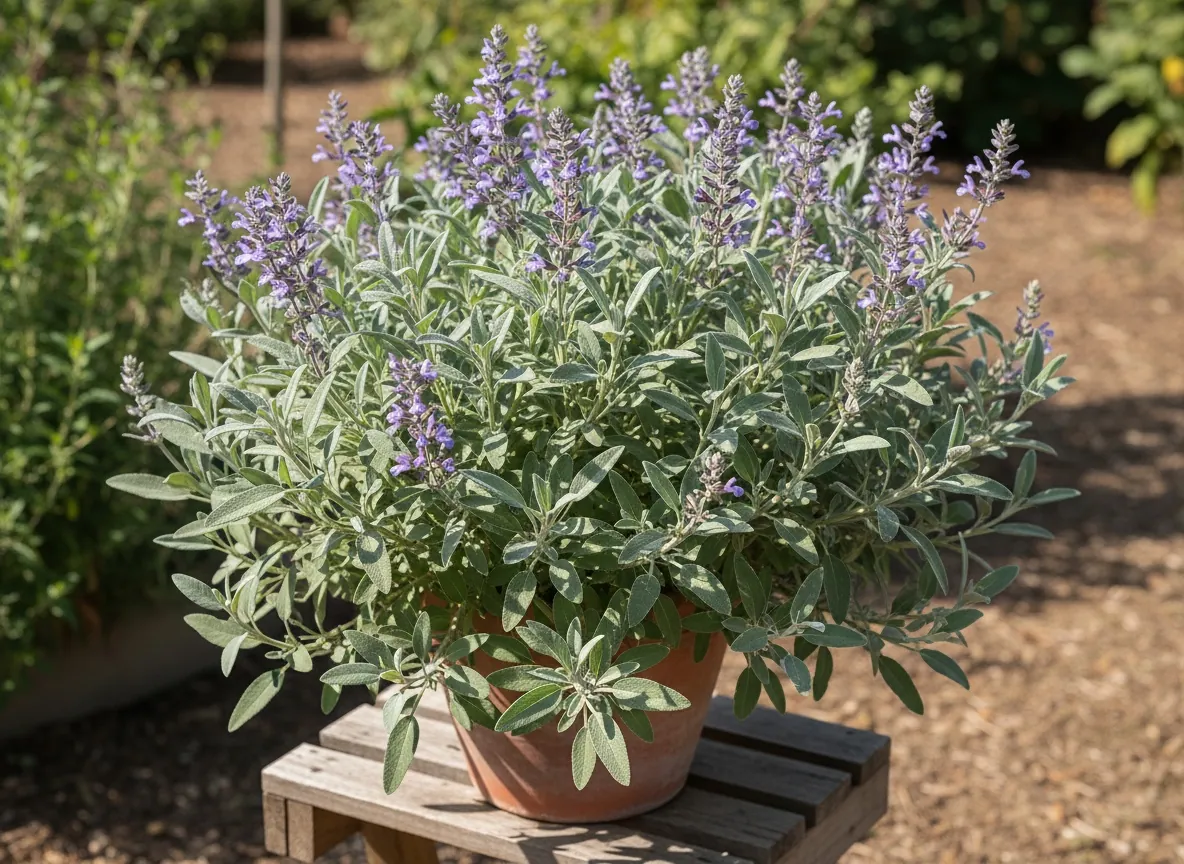
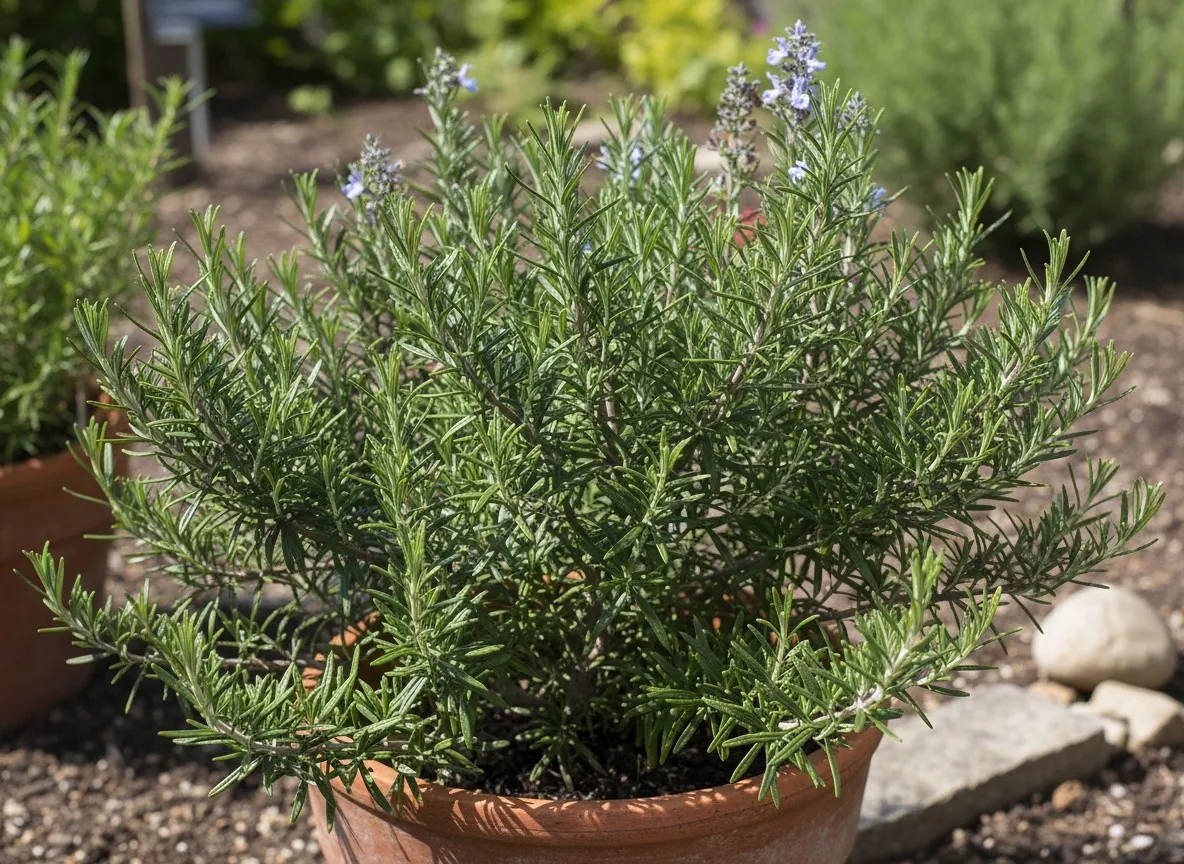
An evergreen subshrub with stiff, upright or spreading shoots and narrow, needle-like leaves with an intense, resinous scent. Small, blue-violet flowers appear in spring.
Growing and care
Watering
Very drought-resistant. Water only after the substrate has completely dried out – excess water causes root rot.
Fertilizing
Rosemary grows well on poor soils – it does not require intensive fertilizing.
Planting
A warm, sheltered site with well-drained soil – in Poland it needs winter protection outdoors or container cultivation.
Pruning
Shorten the young shoots to form a compact bush; sprigs can be harvested continuously for the kitchen.
Companion plants
Good companions
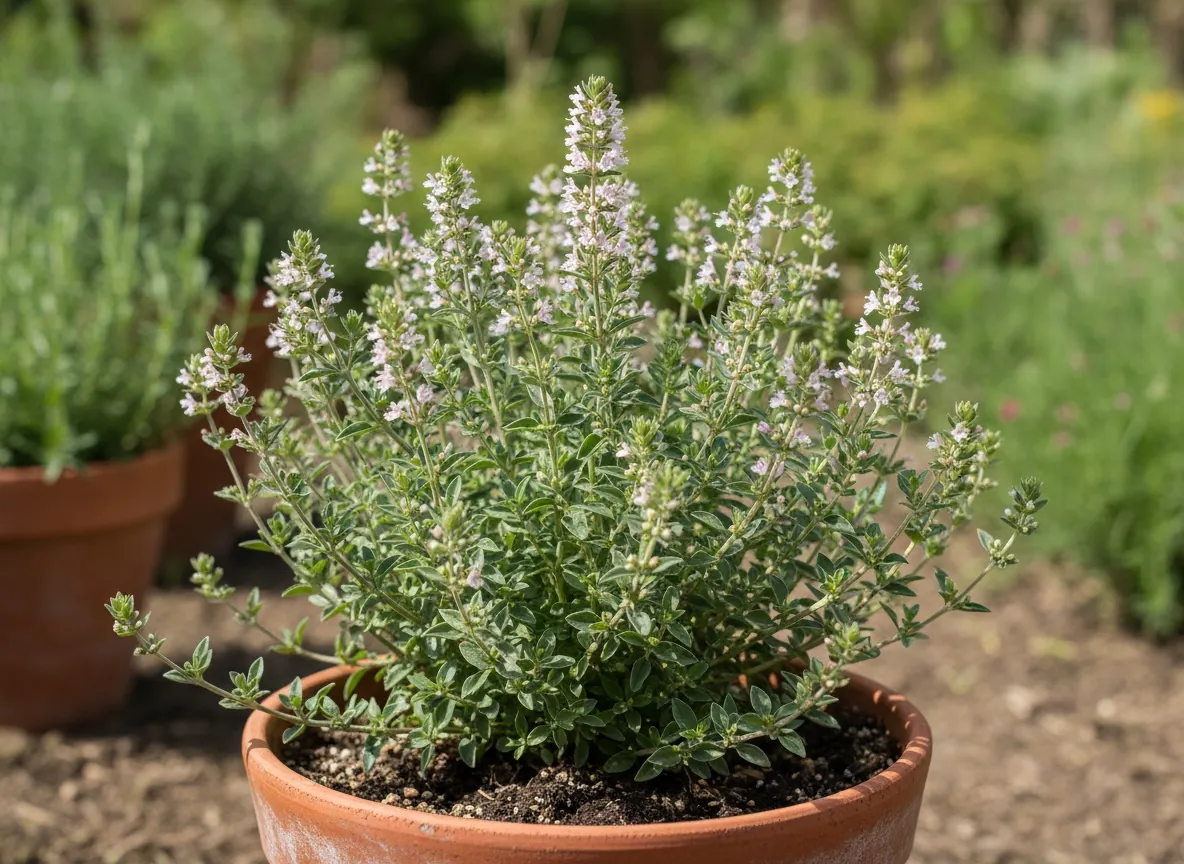
A Mediterranean companion with identical soil and water requirements.
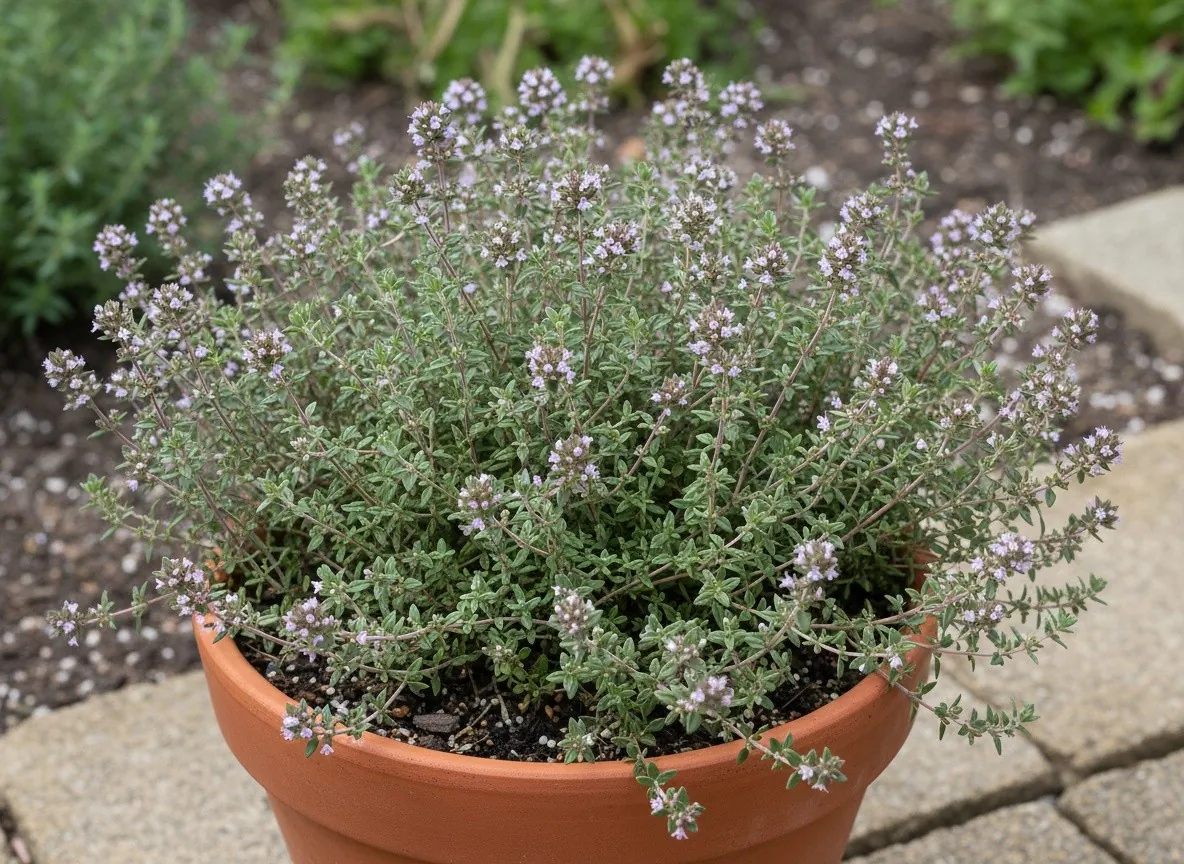
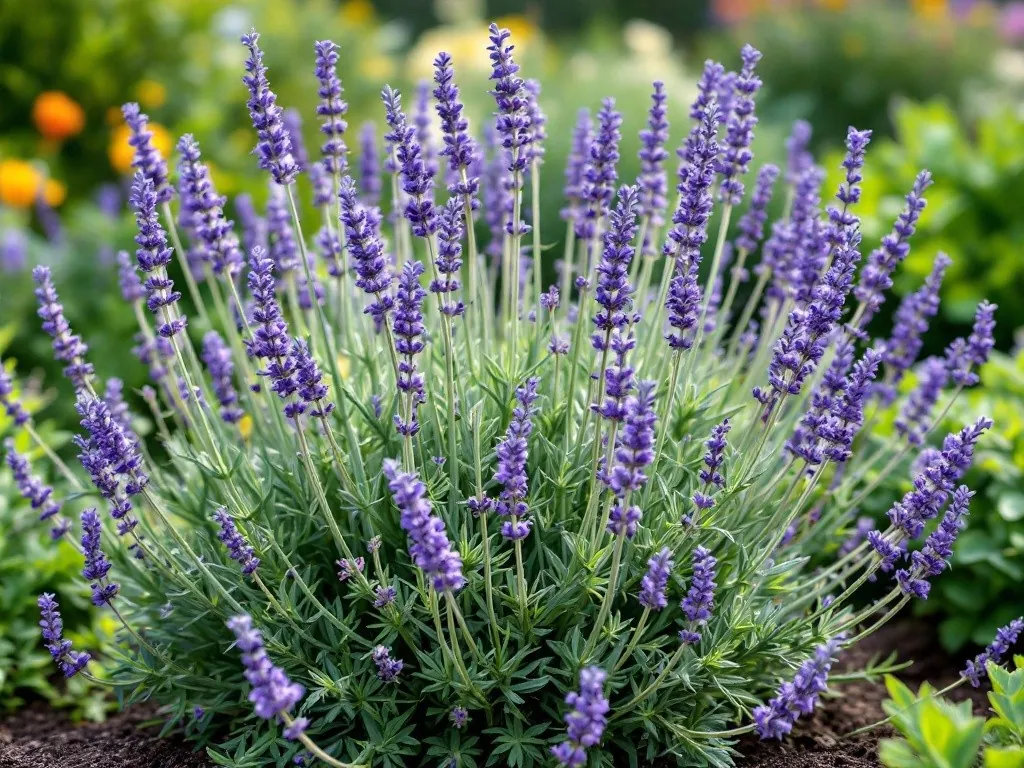
A close relative with the same requirements – sun, dry well-drained soil.
The strong scent of rosemary can repel the cabbage white butterfly, which lays its eggs on cabbage.
Bad companions
Extremely different water and soil requirements (drought and alkalinity vs. constant moisture and acidic pH) make growing them together impossible.
The evidence level indicates whether the relationship is backed by research, observation, or gardening tradition.
Diseases and pests
Toxicity
| For whom | Level | Notes |
|---|---|---|
| Humans | None | — |
| Dogs | None | — |
| Cats | None | — |
History and origin
The name rosemary comes from the Latin 'ros marinus' – sea dew – referring to its natural habitat on Mediterranean coasts. A symbol of remembrance and fidelity since antiquity, it is widely used in Mediterranean cuisine.
Uses
For herb and Mediterranean gardens, on dry slopes, for container growing on balconies and terraces, and as a culinary seasoning.
Trivia
- In many Mediterranean countries rosemary is a symbol of remembrance used at funerals and weddings.
- Rosemary oil is one of the most frequently studied essential oils for its antioxidant properties.
Frequently asked questions
Will rosemary survive the Polish winter outdoors?
In the warmer regions of Poland and with good protection (fleece, mounding) yes, but it is safer to grow it in a container and move it to a cool, bright room for the winter.
Why is my rosemary drying out despite watering?
The most common cause is overwatering – rosemary tolerates constantly moist soil and root rot poorly. Check the drainage and water only once the substrate has dried out.
How should rosemary be harvested so as not to weaken the plant?
Harvest the young, green tips of the shoots, leaving the older, woody parts – regular, moderate harvesting acts like pruning and encourages the plant to branch out.
Sources
- Plants of the World Online (POWO)Database (GBIF, POWO…)
- RHS — Growing rosemaryInstitution / botanical garden
My note
A private note for this plant — saved in your browser.