In short
- One of the few ground covers that tolerate deep shade, including under conifers.
- Evergreen — the carpet looks the same all year round.
- Spreads very slowly: you have to wait 2–3 years for the carpet to close, sometimes longer.
- Requires acid and humus-rich soil, constantly slightly moist; it tolerates neither sun nor drought.
- Small, white, faintly scented flower spikes in April and May — they are not the ornament here.
- For the first few seasons mulching and watering are obligatory, otherwise the weeds will win.
Botanical data
- Family
- Buxaceae (Buxaceae)
- Height
- 0.15–0.3 m
- Width
- 0.3–0.6 m
- Habit
- Creeping
- Growth rate
- Slow
- Position
- Partial shade, Shade
- Soil
- Humus-rich, Peaty, Loamy
- pH reaction
- pH 5–6.5
- Moisture
- Moderate, Moist
- Bloom
- April–May
- Hardiness
- USDA 4a–8a
- Propagation
- By division, From cuttings, By runners
Characteristics
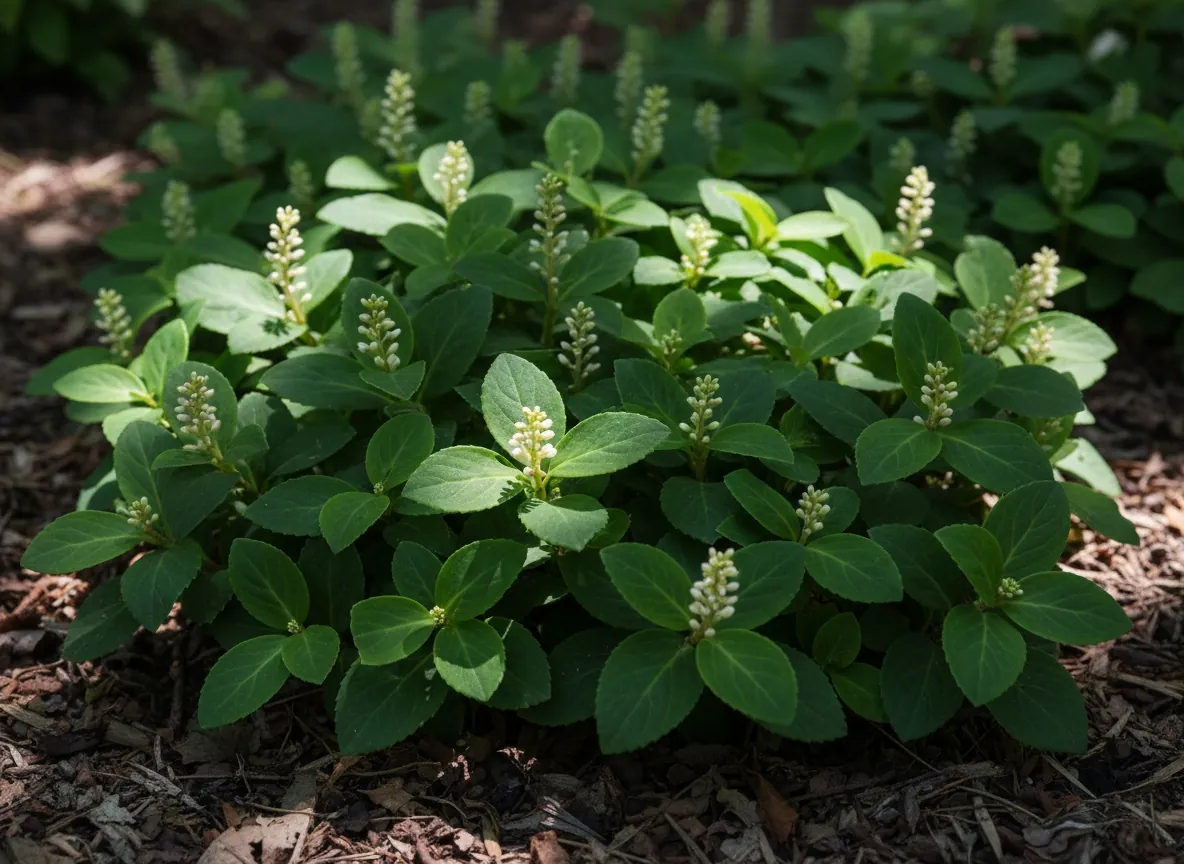
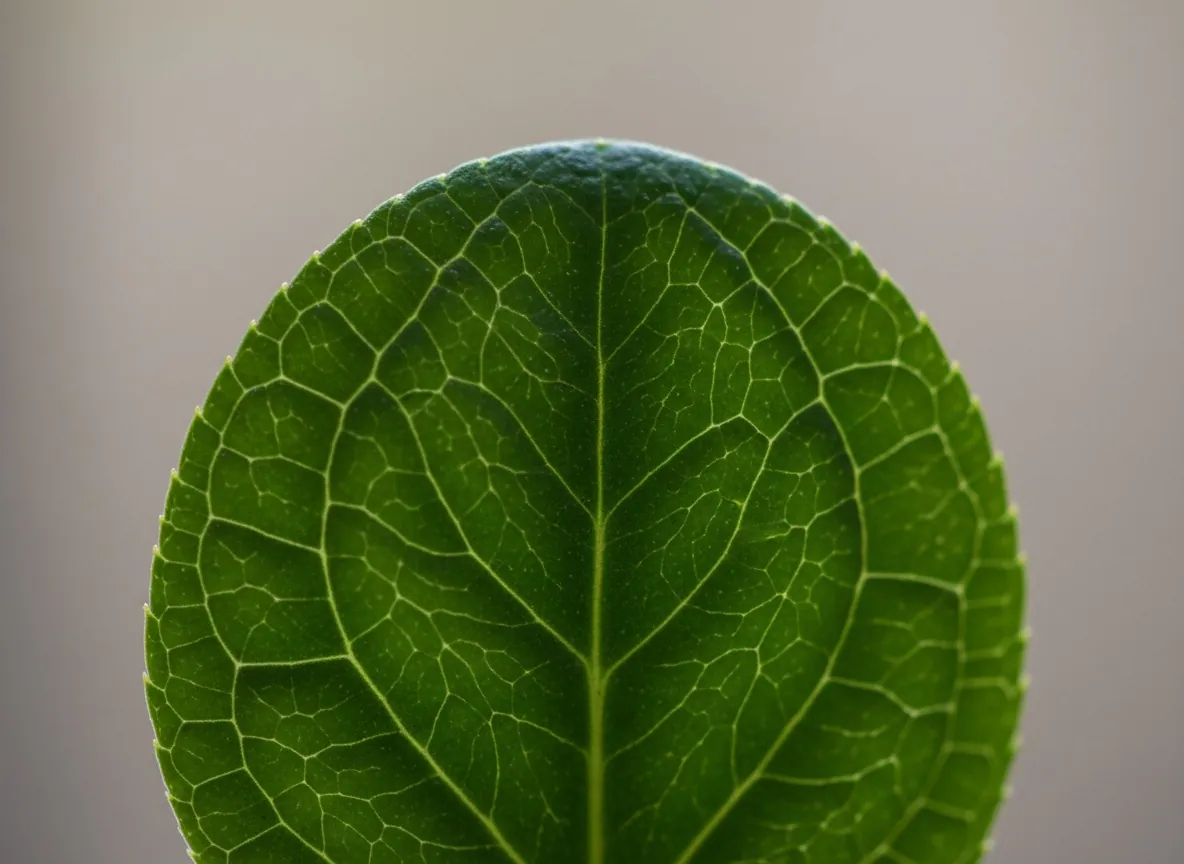
From underground runners grow erect, fleshy shoots 15–30 cm high, topped with a rosette of leathery, dark green leaves crenate at the tip — thanks to which the carpet has an almost uniform height and an orderly, almost “trimmed” appearance. It spreads by runners, but these are short and slow, so new shoots appear close to the mother plant. The flowers are small, white, gathered into stiff spikes at the top of the shoots, with a faint, sweetish scent; fruits rarely set in our climate. The popular cultivar “Green Carpet” is lower and more compact than the type.
Growing and care
Watering
For the first 2–3 seasons, before the carpet closes, it requires regular watering — this is the most common cause of failure. Later it manages on its own, but in a long drought under trees the leaves go dull and brown at the edges.
Fertilizing
A thin layer of compost or acid mulch. Fertilising in the first seasons genuinely shortens the time to closure of the carpet.
Planting
Mix the soil with acid peat or composted bark. After planting, mulching is essential — for the first 2–3 years it is the mulch, not the pachysandra, that protects the soil from weeds.
Pruning
Pruning is not needed. A carpet flattened over the years can be rejuvenated by shortening the shoots by about half — it will regrow more densely, but the rebuilding will take a season.
Companion plants
Good companions
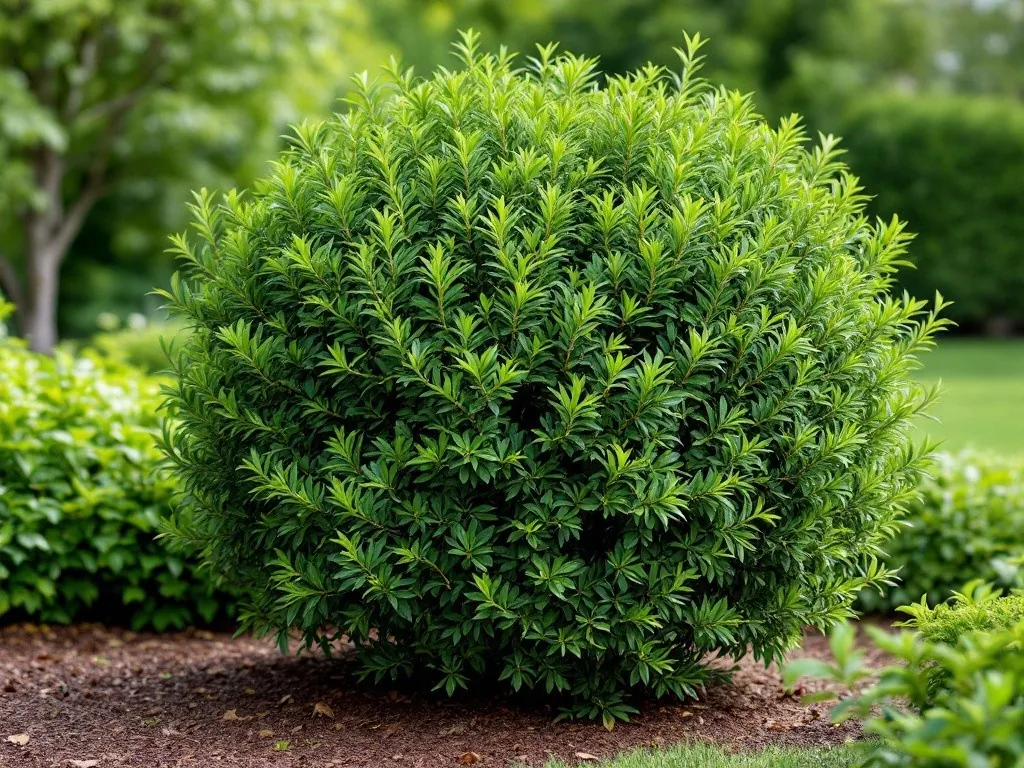
Identical requirements — acid, humus-rich soil and partial shade. Pachysandra forms a green carpet at the base of the shrub, where the ground is usually bare.
The large, blue-green leaves of the hosta contrast with the fine, evergreen carpet, and when the hosta dies back for winter, the pachysandra keeps the bed green.
The same acid soil and sheltered, partly shaded position; shallow-rooting pachysandra does not compete with the azalea's roots for water.
Bad companions
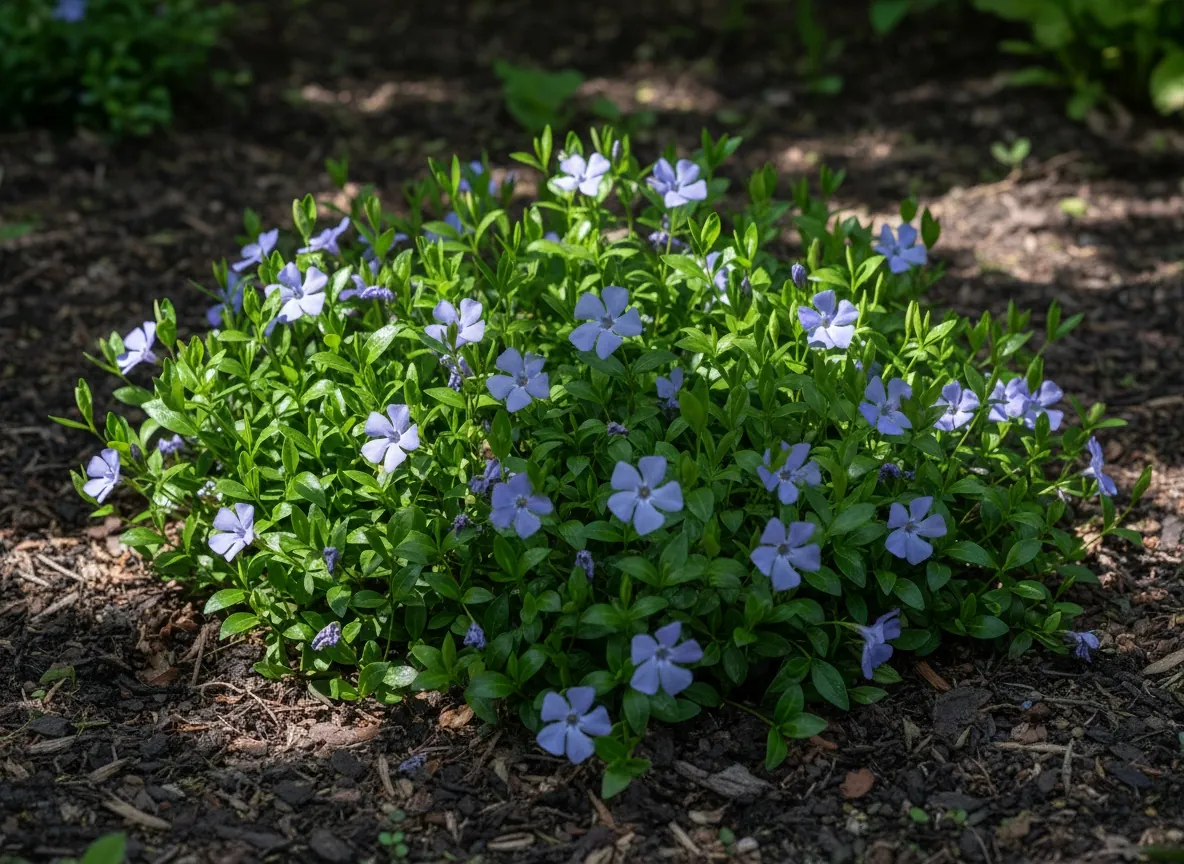
Periwinkle occupies the same tier and grows several times faster — it overgrows the pachysandra before it can form a closed carpet.
Conflicting requirements: lavender needs sun, dry and alkaline soil, pachysandra shade, moisture and acid reaction — one of them will always suffer.
The evidence level indicates whether the relationship is backed by research, observation, or gardening tradition.
Toxicity
| For whom | Level | Notes |
|---|---|---|
| Humans | Mild | It contains small amounts of the steroid alkaloids typical of the box family. Eating the leaves may irritate the digestive tract; serious poisonings are not described. |
| Dogs | Mild | Eating a larger quantity of shoots may cause vomiting or diarrhoea. |
| Cats | Mild | — |
History and origin
It reached European and American gardens from Japan in the second half of the 19th century and quickly made a career as the solution to an age-old problem: what to plant in a dry, dark place under trees. In the United States it became one of the most frequently planted ground covers — so much so that it began to naturalise locally in the forests of the east coast. In Poland, where the winters are harsher and spring frosts check it more strongly, it remains a decidedly less expansive plant.
Uses
For permanently greening shady places where a lawn fails: under tree canopies, by the north walls of buildings, between acid-loving shrubs and along shaded paths. It works especially well where we want a calm, even carpet of greenery and are in no hurry — anyone needing a quick effect should choose periwinkle.
Trivia
- Despite its herbaceous appearance, pachysandra belongs to the same family as box — the kinship is betrayed by its leathery, evergreen leaf and inconspicuous, petalless flower.
- The genus name Pachysandra means literally “thick-stamened” (Gk. pachys — thick, aner/andros — man, stamen) and refers to the distinctly thickened stamen filaments, clearly visible in the inflorescence at close range.
Frequently asked questions
How long does pachysandra need to cover the ground?
Planted 20–30 cm apart, a closed carpet usually forms only in the third season, and in a poorer position even later. This is its greatest drawback and the fundamental difference from periwinkle. During that time the soil must be mulched and weeded — otherwise the weeds will take the space before the pachysandra takes it itself. Denser planting (every 20 cm) shortens the wait but raises the cost accordingly.
Why are the leaves of my pachysandra yellowing and scorching?
Most often this is the result of too bright a position or of drying out — pachysandra is a woodland floor plant and fades in the sun, while its leaves turn brown at the edges. The second common cause is soil that is too alkaline, in which the plant does not take up iron (the leaves lighten between the veins). It helps to move it into shade, to mulch with acid bark and to feed with a preparation for acid-loving plants.
Is pachysandra expansive like periwinkle?
No. It spreads by short runners and does so very slowly, so in Polish gardens it causes no problems and is easy to keep within the bounds of a bed. This is the opposite problem to periwinkle: here you rather have to help it grow than hold it back.
Sources
- Plants of the World Online (POWO) — Pachysandra terminalisDatabase (GBIF, POWO…)
- Missouri Botanical Garden — Plant Finder: Pachysandra terminalisInstitution / botanical garden
My note
A private note for this plant — saved in your browser.