In short
- The most important tree of Polish forests — about 58% of the stand area.
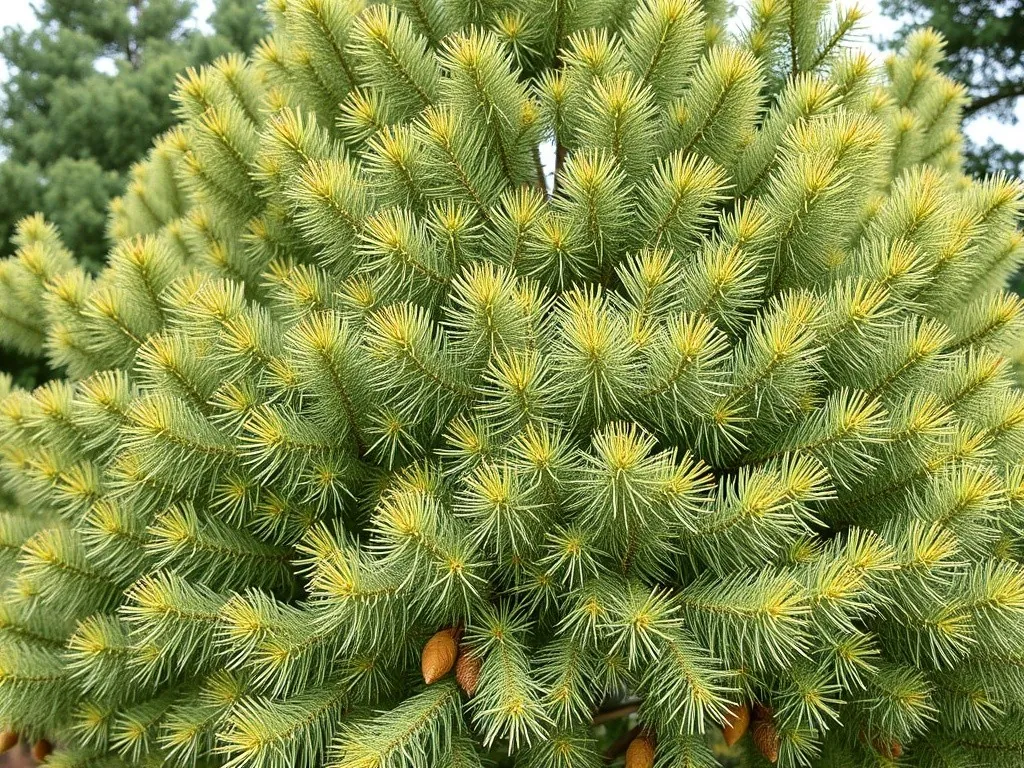
- Needles in PAIRS in a bundle, blue-green, slightly twisted, 3–7 cm long.
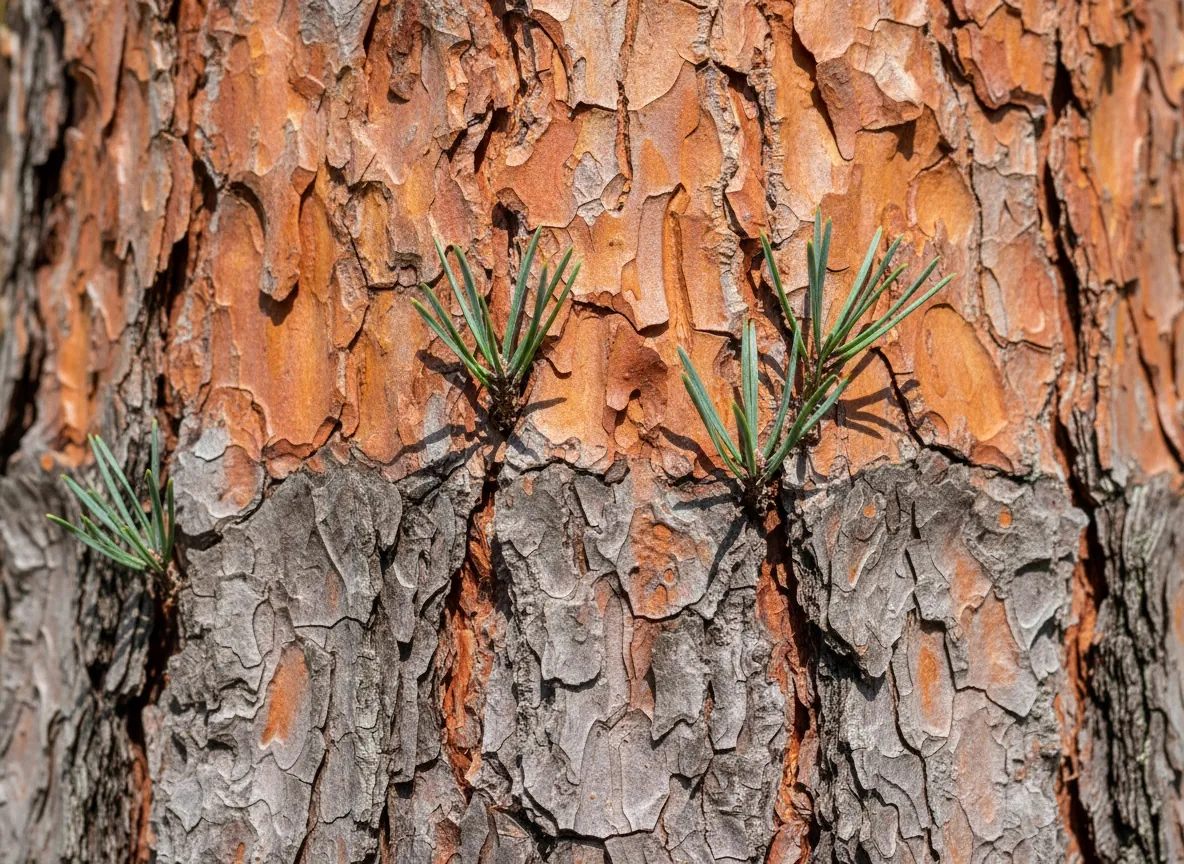
- The upper part of the trunk has a characteristic, flaking, rusty-orange bark.
- Extremely light-demanding — in shade it will not regenerate and dies back; plant only in full sun.
- Grows on poor and sandy soils, very resistant to frost (USDA zone 3) and drought.
Botanical data
- Family
- Pinaceae (Pinaceae)
- Height
- 20–35 m
- Width
- 6–12 m
- Habit
- Upright
- Growth rate
- Moderate
- Position
- Full sun
- Soil
- Sandy, Peaty, Loamy
- pH reaction
- pH 4–7
- Moisture
- Dry, Moderate
- Bloom
- May–June
- Hardiness
- USDA 3a–7b
- Propagation
- From seed
Characteristics
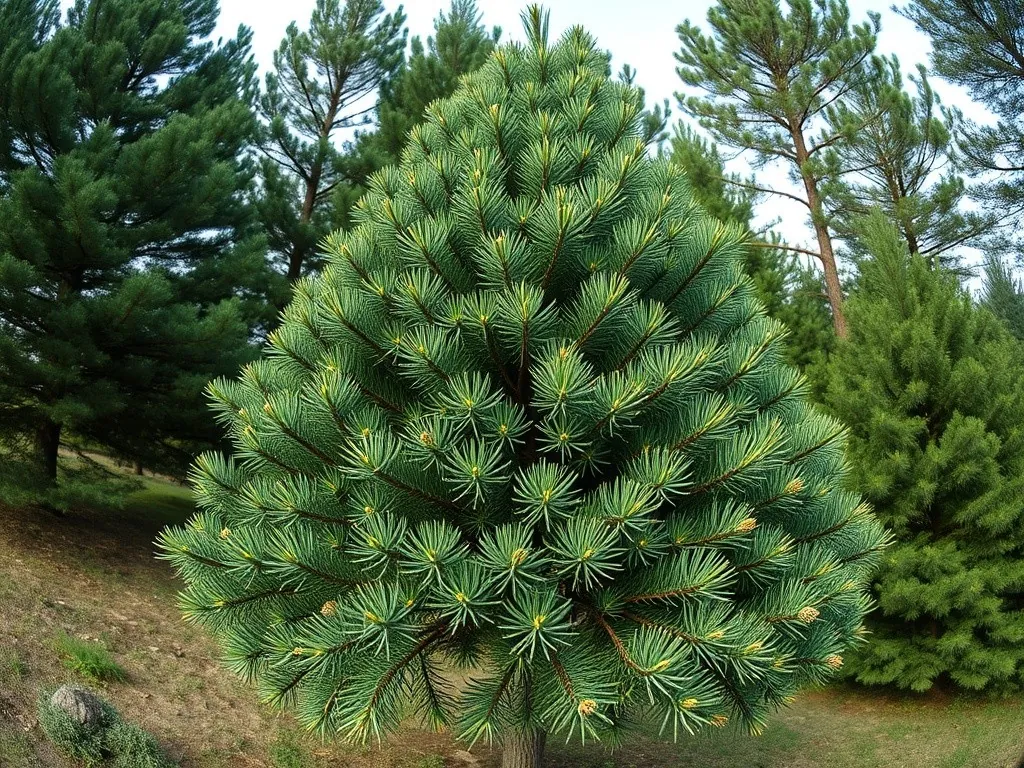
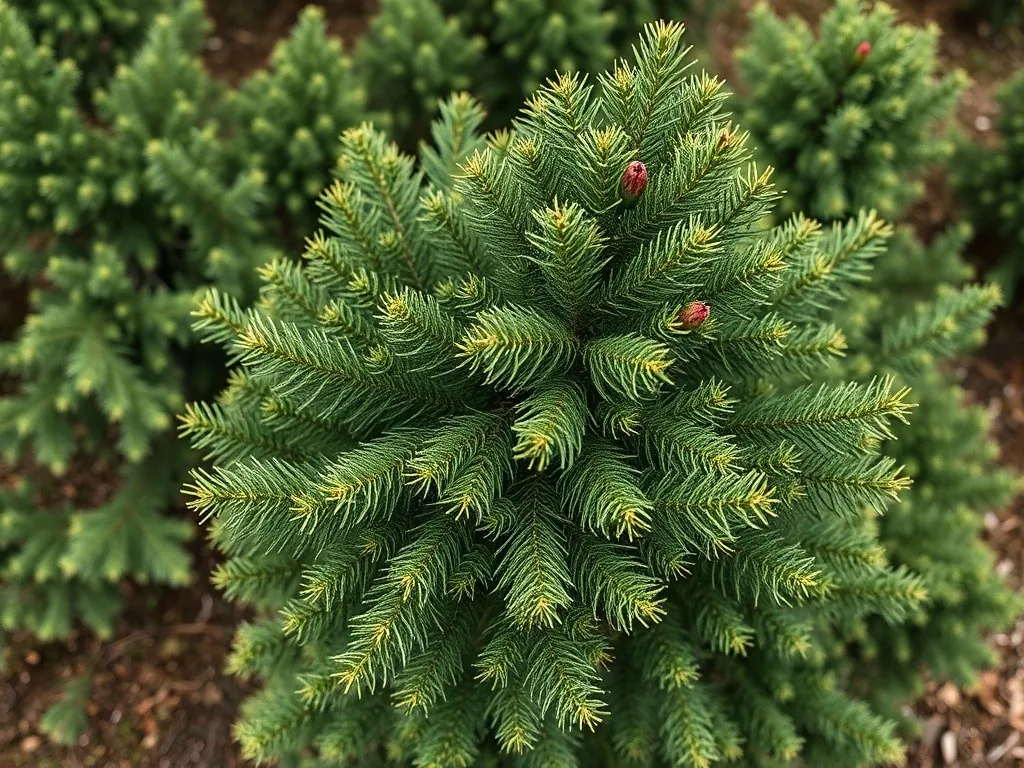
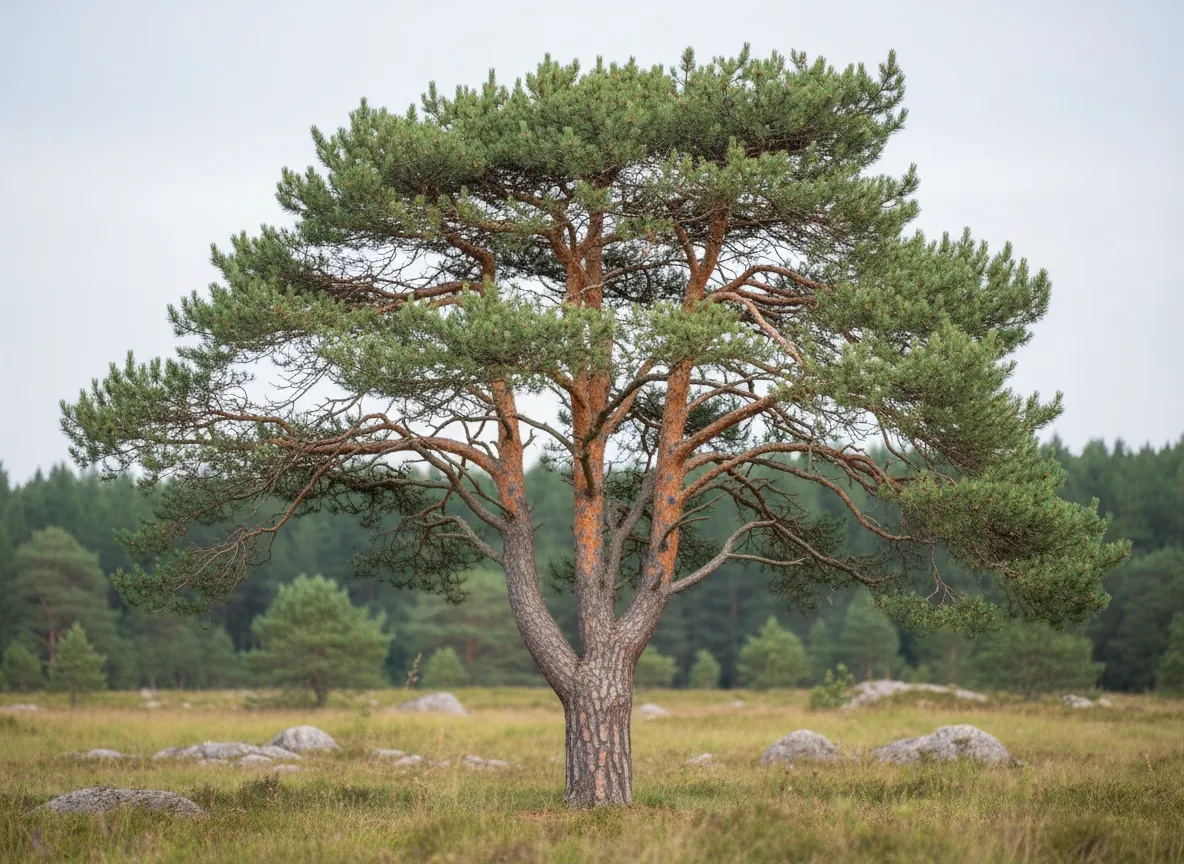
A tree with a straight trunk and a high-set crown, distinctly umbrella-shaped in older specimens. The identifying feature is the two-tone trunk: in the lower part the bark is thick, fissured and greyish-brown, while higher up it is thin, flaking off in large plates and strikingly rusty-orange. The needles grow in pairs in a bundle, are blue-green and slightly twisted. The male inflorescences are yellow and shed pollen in May, the female ones take the form of small, carmine conelets; the cones ripen only in their second year.
Growing and care
Watering
Once established it practically needs no watering — the deep taproot reaches for water from deeper layers. It does not tolerate standing water around the root collar.
Fertilizing
The pine is adapted to extremely poor soils — fertilising is unnecessary, and excess nitrogen is actually harmful.
Planting
The position must be in full sun — the pine will not survive in shade. Soil well-drained, however poor and sandy; do not plant on waterlogged ground. Older specimens are practically impossible to transplant because of the taproot.
Pruning
Shorten or break off the young candles with the fingers by 1/3–1/2 of their length to thicken the crown. Remove dry branches at any time.
Companion plants
Good companions
A natural component of the ground layer of a pine forest — it tolerates the acidic needle litter and the dry, sandy ground.
A companion of the pine in pine forests and on dunes; identical light and soil requirements.
A classic combination of pioneer species occupying the same poor and sandy habitats.
Bad companions
The falling needles acidify the soil, and the dry, poor litter of a pine forest does not provide them with the right conditions.
The pine is extremely light-demanding — in the shade of other trees it will not regenerate and dies back.
The evidence level indicates whether the relationship is backed by research, observation, or gardening tradition.
Toxicity
| For whom | Level | Notes |
|---|---|---|
| Humans | None | The pine is not a toxic plant — young shoots are traditionally used for syrup, and the buds for expectorant extracts. |
| Dogs | None | — |
| Cats | Mild | The essential oils from the needles may irritate cats; swallowed needles can also be a problem. |
History and origin
The pine has accompanied people in Europe since the end of the Ice Age — it was one of the first trees to move into the areas abandoned by the glacier. Its resin gave rise to Baltic amber, and tar and turpentine from pine wood caulked ships for centuries. Today's dominance of pine in Polish forests is, however, largely the work of people: 19th-century forestry replaced mixed woodlands on a massive scale with pine monocultures that were quick to produce.
Uses
The basic commercial species in forestry and the main source of structural timber in Poland. In gardens and parks it is planted as a specimen on dry, sunny and sandy sites, where with age it acquires a picturesque, umbrella-shaped habit; dwarf cultivars are also popular, for example the spherical Watereri. Very often used in bonsai. Young shoots are used to make syrup, and the buds and pine oil are used in expectorant preparations.
Trivia
- The pine has the widest natural range of all the pines in the world — it grows from the Iberian Peninsula to eastern Siberia and from the Arctic Circle to the mountains of Turkey.
- The characteristic orange bark in the crown is not an ornament but an economy: higher up, where fire in the undergrowth is no longer a threat, the tree does not have to maintain a thick armour.
Frequently asked questions
How do you tell the Scots pine from other pines?
First count the needles in a bundle: the Scots pine has them in pairs, just like the Austrian pine, whereas the Weymouth pine has them in fives. You can tell the Scots pine from the Austrian pine by two features: its needles are shorter (3–7 cm), blue-green and slightly twisted, while the Austrian pine has longer (8–15 cm), stiff and dark green needles. The decisive feature, however, is the trunk — only the Scots pine has the characteristic, flaking, rusty-orange bark in its upper part.
Why is the pine not regenerating in my forest?
It is almost always about light. The pine is an extremely light-demanding species — its seedlings need full sun and simply die back beneath the canopy of older trees, even of its own stand. That is why in the wild it occupies open ground, burnt areas and dunes, and in forestry it is regenerated on clear-fells. If the ground is growing over with undergrowth, the pine will not re-establish itself on its own.
Can the Scots pine be pruned?
Yes, but only on the young, soft shoots. In spring, at the turn of May and June, the young growths known as candles are shortened or broken off with the fingers by one third to one half — this makes the crown denser. Never cut into old, needleless wood: the pine has no dormant buds there, so such a branch will never shoot again and a dead stub will remain.
Sources
- Plants of the World Online (POWO)Database (GBIF, POWO…)
- Lasy Państwowe — gatunki drzewInstitution / botanical garden
My note
A private note for this plant — saved in your browser.