In short
- Unlike the wax begonia, it requires shade or partial shade, not full sun.
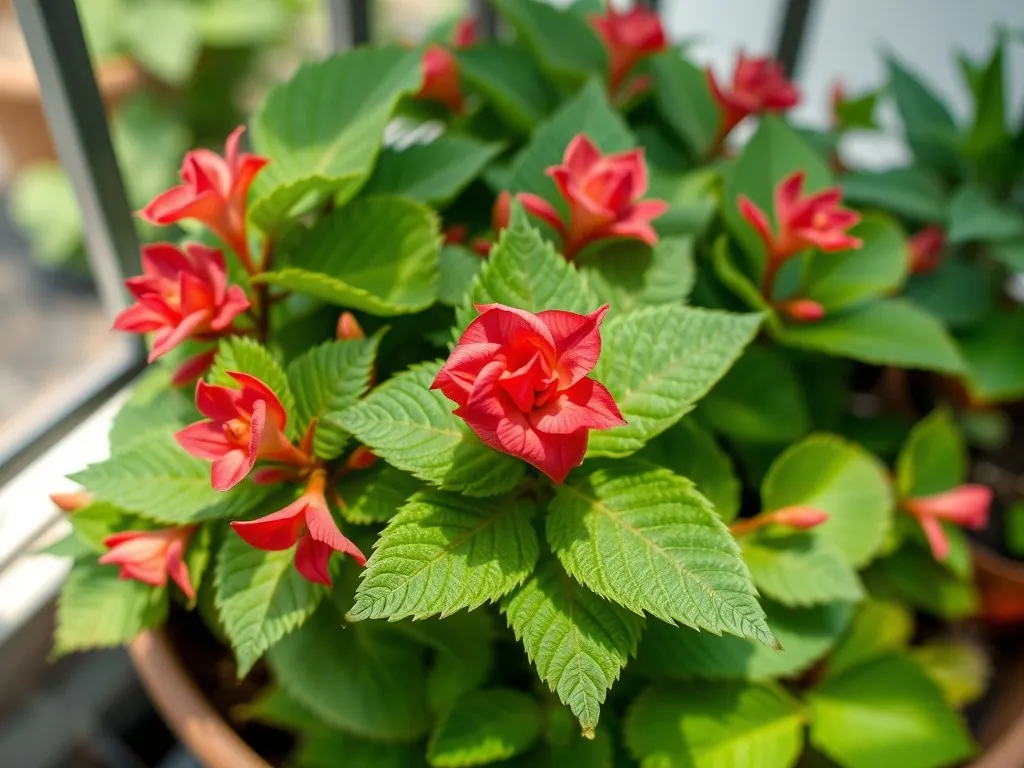
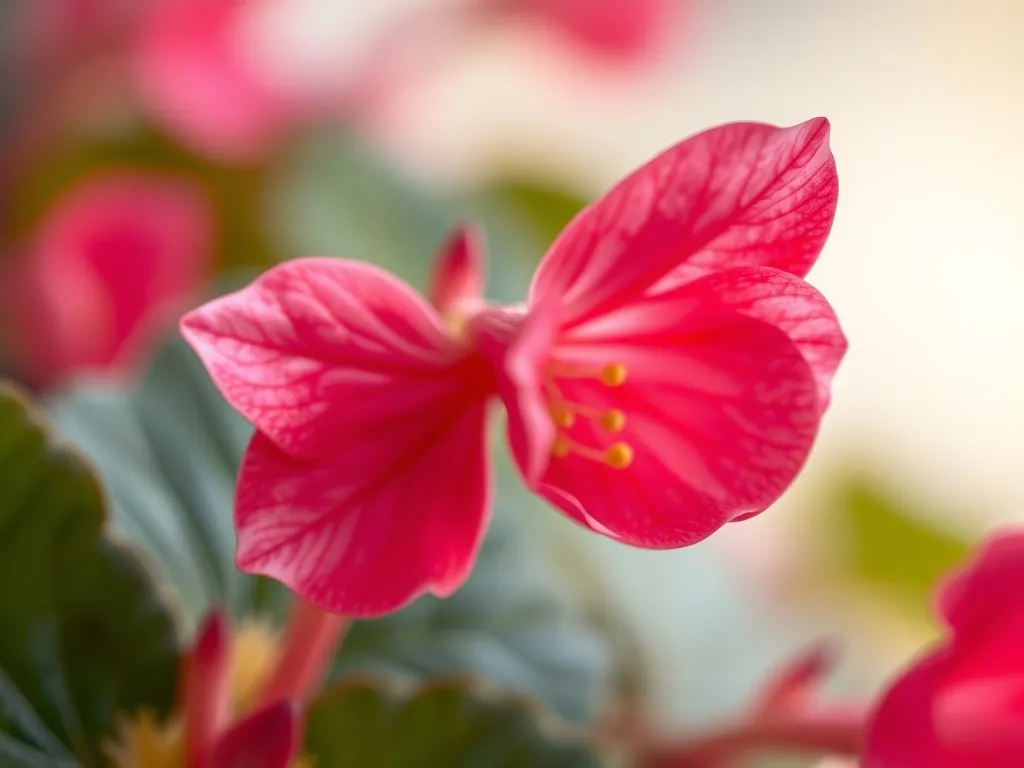
- Large, showy flowers resembling double roses or camellias, in many colours.
- Propagated from tubers, which must be dug up for winter and stored in a dry, cool place.
- Flowers abundantly from June until the first frosts.
- Does not tolerate waterlogging — excess water at the base of the stem causes the tuber to rot.
Botanical data
- Family
- Begoniaceae (Begoniaceae)
- Height
- 0.2–0.4 m
- Width
- 0.2–0.3 m
- Habit
- Upright
- Growth rate
- Moderate
- Position
- Partial shade, Shade
- Soil
- Humus-rich
- pH reaction
- pH 5.5–6.5
- Moisture
- Moist, Moderate
- Bloom
- June–October
- Hardiness
- —
- Propagation
- From bulbs / tubers, From cuttings
Characteristics
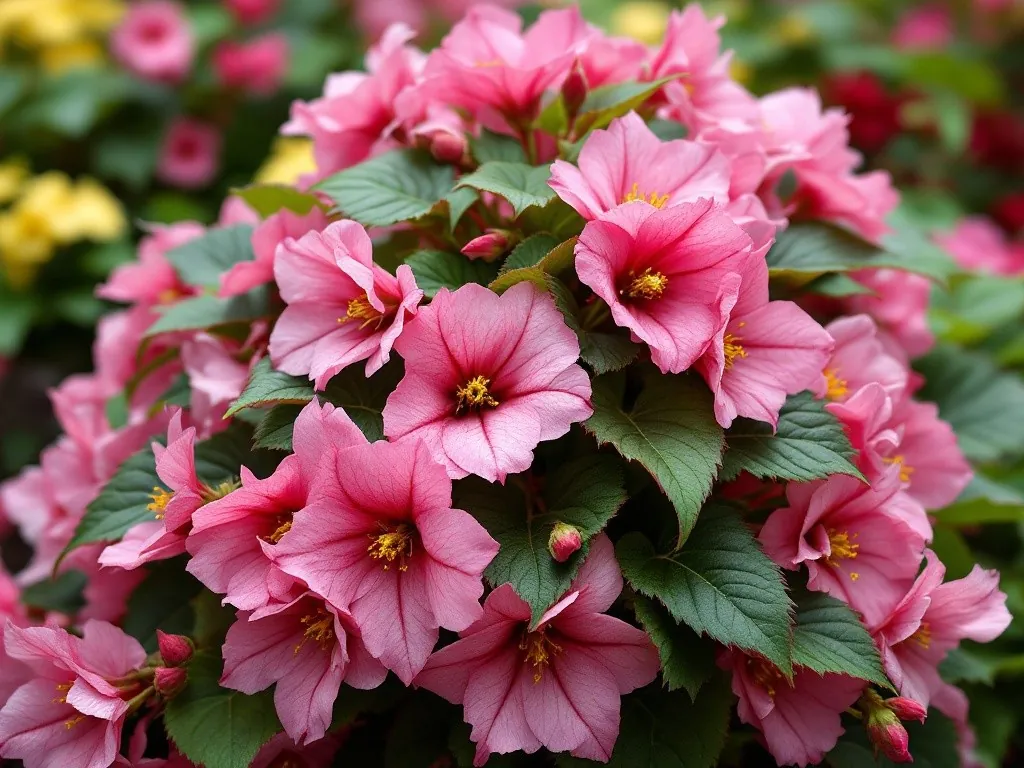
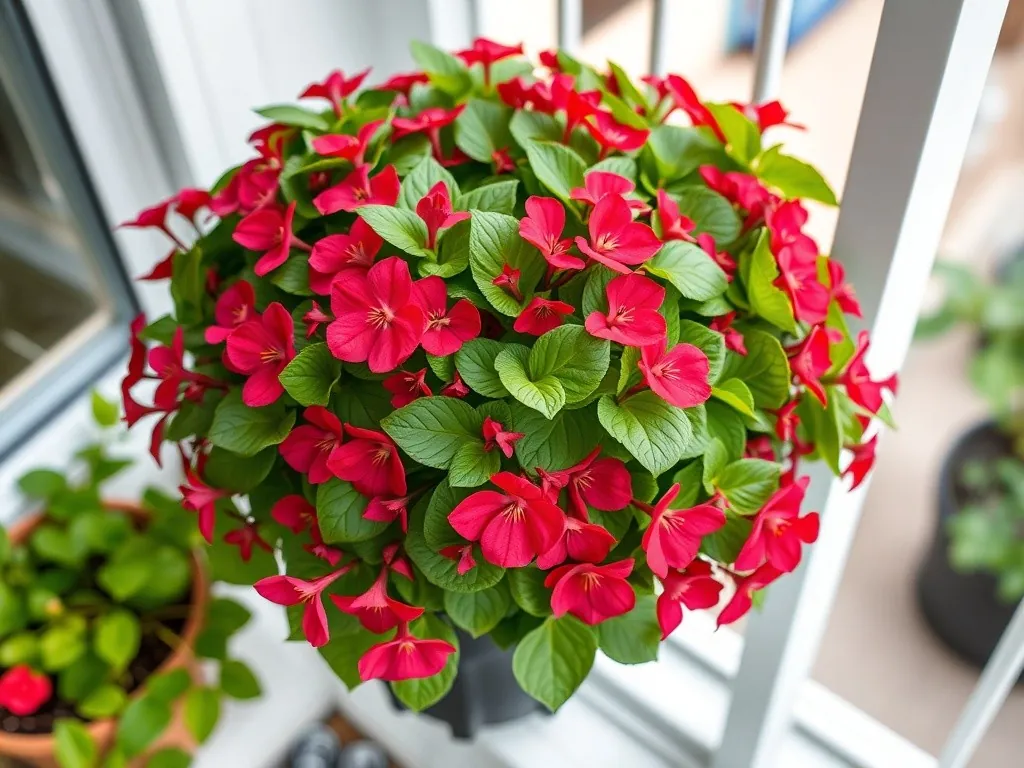
Forms succulent, brittle stems with large, asymmetrical leaves. The flowers, considerably larger than those of other garden begonias (up to 15 cm in diameter), are single or double, resembling a rose or camellia.
Growing and care
Watering
Water regularly, avoiding wetting the leaves and the base of the stem, to prevent rot. In winter the tubers are stored dry.
Fertilizing
Moderate doses — excess nitrogen limits flowering in favour of leaf growth.
Planting
Light, humus-rich substrate with good drainage; plant the tuber with the concave side facing up.
Pruning
After the first frosts, cut back the above-ground parts, dig up the tubers and let them dry before storing.
Companion plants
Good companions
Both species prefer shade or partial shade and moist, humus-rich soil — a proven combination for shade compositions.
Similar habitat requirements (shade, moisture) and contrasting leaf texture create a striking composition.
Bad companions
Rosemary requires full sun and dry soil — the opposite of the conditions tuberous begonia needs.
The evidence level indicates whether the relationship is backed by research, observation, or gardening tradition.
Toxicity
| For whom | Level | Notes |
|---|---|---|
| Humans | Mild | The tubers contain calcium oxalates — they can irritate the mouth if ingested. |
| Dogs | Moderate | The most toxic part is the underground portion (the tuber) — it can cause vomiting and irritation of the digestive tract. |
| Cats | Moderate | — |
History and origin
The Begonia × tuberhybrida hybrids were bred in the second half of the 19th century in Europe, by crossing Andean species brought from South America (including Bolivia and Peru). Thanks to the size and fullness of their flowers, they quickly became a popular garden and show plant.
Uses
Excellent for shaded beds, pots and balcony boxes on the north or east side of a building, where most flowering plants struggle with the lack of sun. Also striking as a show plant in pots.
Trivia
- Well-stored tubers can last for many years, growing larger from season to season.
- Some trailing cultivars (pendula) are grown specifically for hanging baskets and boxes in shade.
Frequently asked questions
Why won't my tuberous begonia flower in the sun?
It is a shade- and partial-shade-loving plant — in full sun the leaves and flowers get scorched, and the plant grows poorly. It thrives best in a bright spot that is sheltered from direct rays.
How do you store begonia tubers for winter?
After the first frosts, cut back the above-ground parts, carefully dig up the tubers, let them dry and store them in dry peat or sawdust at 5–10°C until spring.
What is the difference between tuberous begonia and wax begonia?
Tuberous begonia has much larger, more showy flowers, grows from a tuber that must be lifted for winter, and prefers shade, whereas wax begonia is small-flowered, grown from seed, and tolerates more sun.
Sources
- Plants of the World Online (POWO)Database (GBIF, POWO…)
- RHS — Begonia (Tuberhybrida Group)Institution / botanical garden
My note
A private note for this plant — saved in your browser.