In short
- The edible part is the immature flower head — harvest before the buds loosen.
- After the main head is cut it produces smaller side heads — a second crop.
- Do not plant after other brassicas: clubroot persists in the soil for years.
- Heat and drought cause premature flowering and loss of crop quality.
- Sensitive to boron deficiency — it shows as a hollow, browning stem.
Botanical data
- Family
- Brassicaceae (Brassicaceae)
- Height
- 0.4–0.8 m
- Width
- 0.4–0.6 m
- Habit
- Upright
- Growth rate
- Fast
- Position
- Full sun
- Soil
- Humus-rich, Loamy
- pH reaction
- pH 6.5–7.5
- Moisture
- Moderate, Moist
- Bloom
- June–August
- Hardiness
- —
- Propagation
- From seed
Characteristics
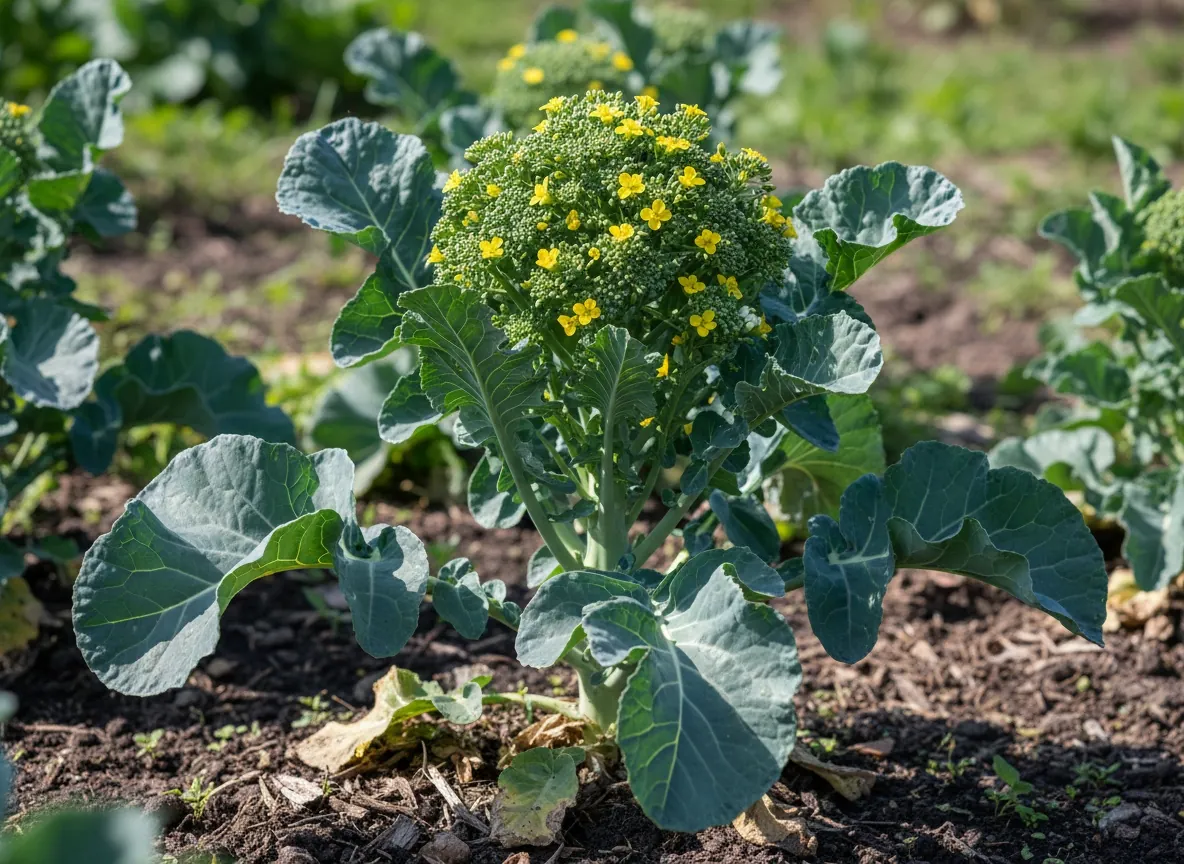
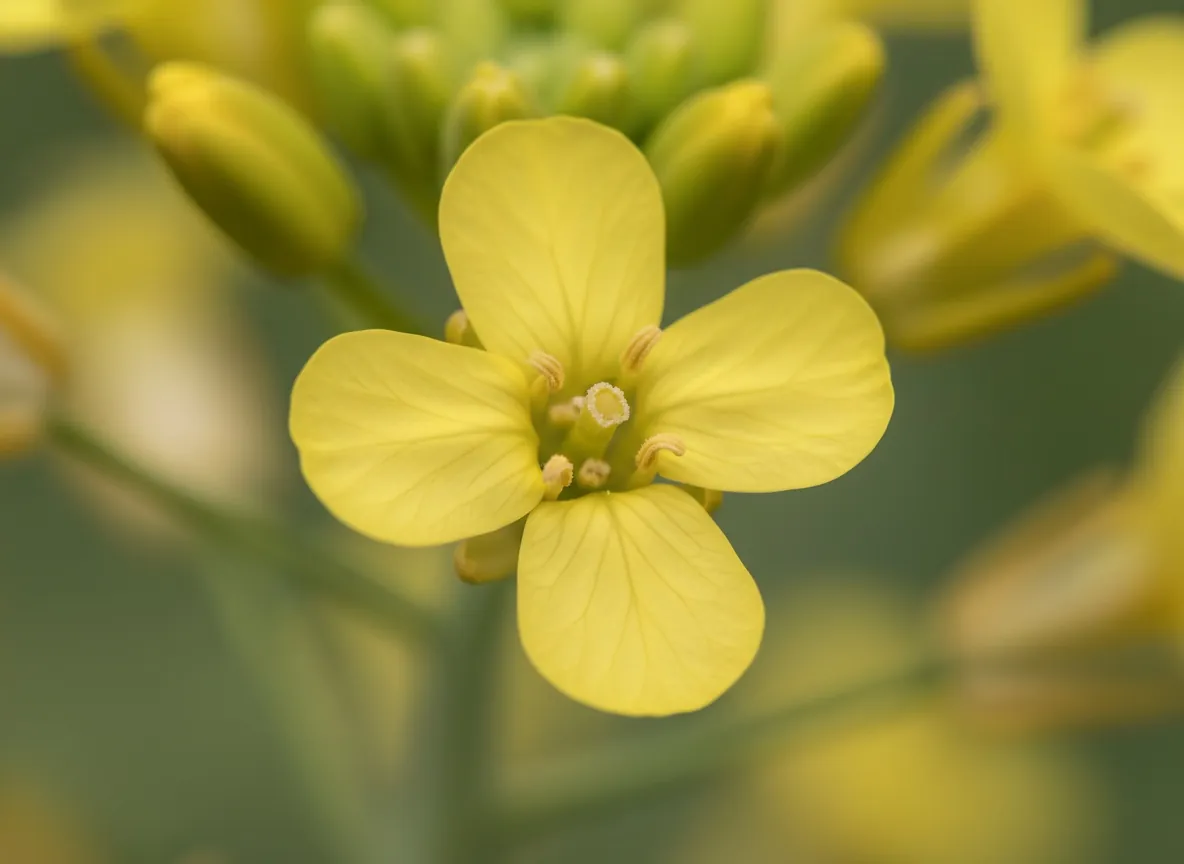
A biennial grown as an annual, with an erect, thick stem and large, grey-blue leaves. At the top of the shoot it forms a dense head made up of hundreds of small, tightly packed flower buds on fleshy stalks — and this is the crop. Harvested too late, the head loosens, yellows and develops into yellow flowers, losing its culinary value. After the main head is cut, the plant sends out smaller side heads from the leaf axils, which allows harvesting for several more weeks.
Growing and care
Watering
Needs constant moisture, especially while the head is forming. Drying out and heat cause the flower head to loosen and flower prematurely.
Fertilizing
Requires plenty of nitrogen while building its leaves. Sensitive to boron and molybdenum deficiency — it shows as a hollow, browning stem and a poor head set.
Planting
Fertile, humus-rich soil, well supplied with compost, with a neutral to slightly alkaline reaction. Keep at least a four-year break in growing brassicas on the same bed because of clubroot.
Pruning
Cut the main head at an angle with a piece of stem, before the buds loosen. The plant will then send out smaller side heads from the leaf axils, which are harvested over the following weeks.
Companion plants
Good companions
Rośnie szybko i zagospodarowuje przestrzeń między młodymi brokułami, zanim te się rozrosną — klasyczna uprawa współrzędna.
Silny zapach zaburza szkodnikom kapustnych, zwłaszcza bielinkowi, odnalezienie rośliny żywicielskiej.
Działa jak roślina pułapkowa — mszyce chętnie osiadają na nasturcji, oszczędzając sąsiadujące brokuły.
Pobiera wodę i składniki z głębszej warstwy gleby niż płytko korzeniący się brokuł, więc obie rośliny słabo ze sobą konkurują.
Aromatyczne zioło tradycyjnie sadzone wśród kapustnych dla zamaskowania ich zapachu przed owadami.
Bad companions
To ten sam gatunek — Brassica oleracea w innej odmianie uprawnej. Wspólne choroby i szkodniki, w tym kiła kapusty, sprawiają, że sąsiedztwo mnoży problemy zamiast je rozkładać.
Kolejna roślina kapustowata — żywiciel tych samych patogenów glebowych, przede wszystkim kiły kapusty.
Truskawka wyraźnie słabiej rośnie i plonuje w sąsiedztwie kapustnych, z którymi konkuruje o wodę i składniki pokarmowe.
Oba warzywa są bardzo wymagające pokarmowo i konkurują o azot, przez co żadne z nich nie osiąga pełni plonu.
The evidence level indicates whether the relationship is backed by research, observation, or gardening tradition.
Toxicity
| For whom | Level | Notes |
|---|---|---|
| Humans | None | A fully edible vegetable, both the head and the stem and leaves. |
| Dogs | None | Harmless in small amounts; larger portions may cause flatulence. |
| Cats | None | — |
History and origin
Broccoli took shape in southern Italy as a variety of wild cabbage selected towards an enlarged flower head — the Romans already knew it, and its Italian origin was fixed both by the botanical name var. italica and by the name itself, which comes from the Italian broccolo, meaning a flowering cabbage shoot. It reached the rest of Europe via France in the 18th century, but gained worldwide popularity only in the 20th century, when Italian immigrants spread it in the United States.
Uses
A bed vegetable for the home garden, rewarding thanks to the possibility of a double harvest (main head and side heads). A summer sowing allows harvesting in autumn, when the cool weather markedly improves head quality. In the kitchen it is steamed, blanched, roasted and frozen — it withstands freezing well.
Trivia
- Broccoli, cabbage, cauliflower, kale, Brussels sprouts and kohlrabi are one and the same species — Brassica oleracea. Each of these vegetables arose through selection strengthening a different part of the same plant: in broccoli and cauliflower people developed the flower head, in cabbage the terminal bud, in Brussels sprouts the lateral buds, and in kohlrabi the stem.
- Charles Darwin invoked this family of varieties in “On the Origin of Species” as proof of the power of selection: if people derived such extremely different forms from a single plant in a few hundred years, then nature over millions of years can achieve incomparably more.
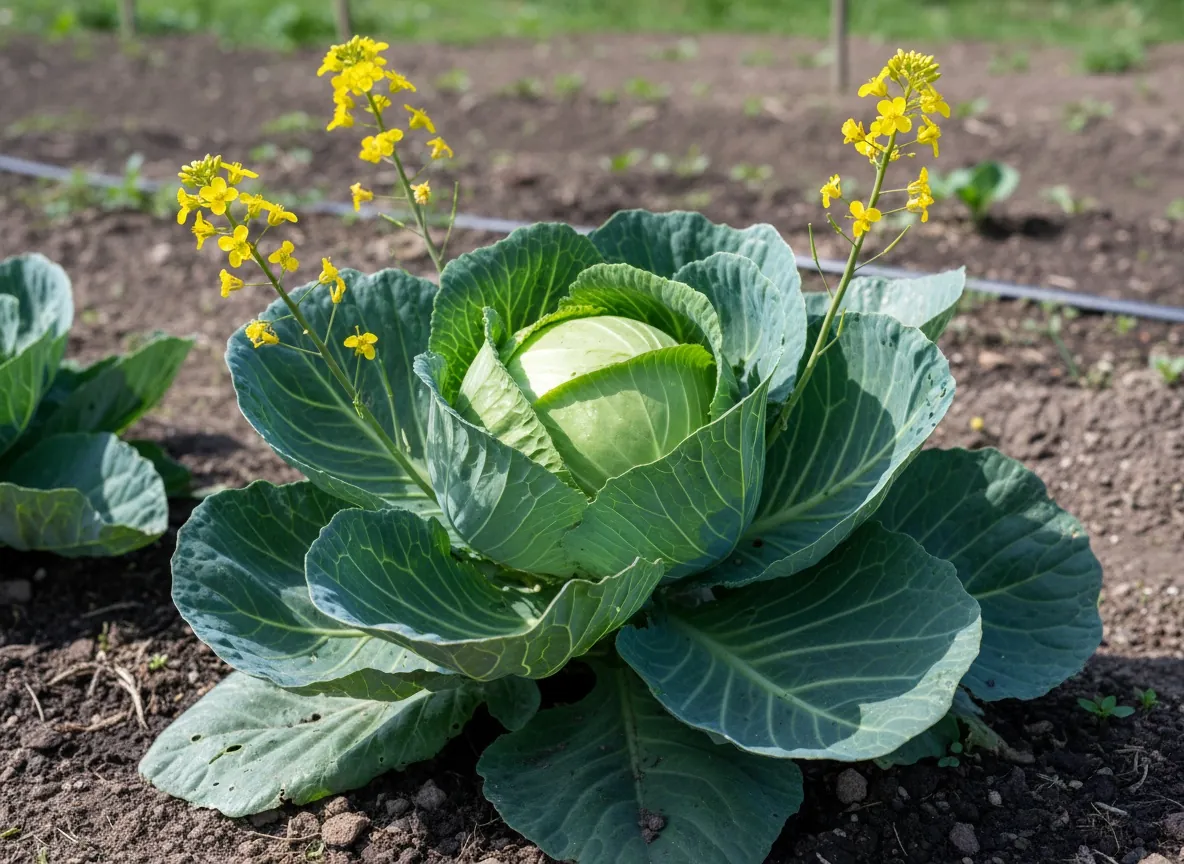
- Eating broccoli means eating hundreds of immature flower buds — left in the bed a few days longer, it would simply bloom yellow.
Frequently asked questions
Why did my broccoli flower before I could harvest it?
A broccoli head is an immature flower head, so it naturally tends towards flowering — heat and a dried-out soil speed this up. Harvest the head while the buds are still tight and dark green, without waiting for it to reach shop size, and in summer give the plant regular watering and a mulch to cool the soil.
Should the plant be pulled up after the head is cut?
It is not worth it. After the main head is cut, broccoli produces smaller side heads from the leaf axils, which can be harvested for several more weeks. Cut the main head at an angle, with a piece of stem, and leave the plant in the bed — the total crop from the side heads can be quite substantial.
Are broccoli and cabbage the same plant?
Botanically yes — both are Brassica oleracea, the same species in different cultivated varieties, just like cauliflower, kale, Brussels sprouts and kohlrabi. In garden practice this means they share all diseases and pests, so they should not be planted next to each other or one after another in the same bed.
Sources
- Plants of the World Online (POWO)Database (GBIF, POWO…)
- RHS — Broccoli and calabreseInstitution / botanical garden
My note
A private note for this plant — saved in your browser.