In short
- Fast-growing — the first harvest comes after just a few weeks.
- Needs constant moisture; drought causes bitterness and bolting.
- Sow successively every 2-3 weeks for a continuous harvest.
- Tolerates partial shade — good for growing among other vegetables.
- Leaf varieties regrow after the outer leaves are harvested.
Botanical data
- Family
- Asteraceae (Asteraceae)
- Height
- 0.15–0.4 m
- Width
- 0.15–0.35 m
- Habit
- Clump-forming
- Growth rate
- Fast
- Position
- Full sun, Partial shade
- Soil
- Humus-rich, Loamy
- pH reaction
- pH 6–7
- Moisture
- Moist
- Bloom
- July–August
- Hardiness
- USDA 4a–9a
- Propagation
- From seed
Characteristics
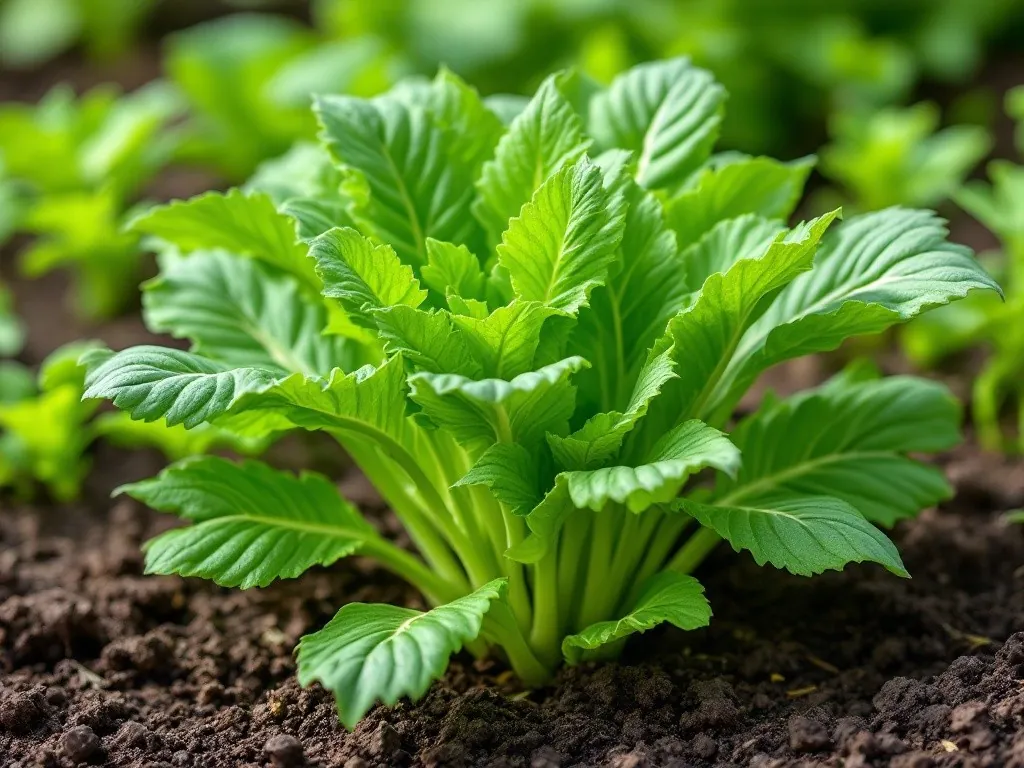
A plant with a rosette of tender leaves, green or reddish, smooth or crinkled. In heat and when short of water it quickly bolts into a tall flowering stem with yellow flower heads, and the leaves turn bitter.
Growing and care
Watering
Needs constant, even moisture — a lack of water and heat cause bolting into flowering stems and bitter leaves. Water at the base.
Fertilizing
Moderate; excess nitrogen encourages the build-up of nitrates in the leaves.
Planting
Fertile, humus-rich, moist soil; sow successively for a continuous harvest throughout the season.
Pruning
Harvest leaf varieties by picking the outer leaves — the plant regrows and yields further harvests.
Companion plants
Good companions
Fast-growing lettuce uses the space between slow-germinating carrots before they develop.
Low-growing lettuce fills the space between strawberry plants nicely early in the season.
Bad companions
They compete for the same nutrients and can encourage shared diseases when planted close together.
The evidence level indicates whether the relationship is backed by research, observation, or gardening tradition.
Diseases and pests
A white, powdery coating on leaves, shoots and buds. The leaves turn yellow, become deformed and drop prematurely.
AphidsSmall (1–3 mm) soft-bodied insects, green, black or pink, feeding in clusters on young shoots and the underside of leaves. They excrete sticky honeydew.
Slugs and snailsSlugs and shelled snails that feed at night and after rain. Symptoms: irregular holes in the leaves and young seedlings eaten off completely, silvery slime trails on leaves and soil. The greatest damage occurs in damp, shaded spots — particularly on lettuce, strawberries and hostas.
Toxicity
| For whom | Level | Notes |
|---|---|---|
| Humans | None | — |
| Dogs | None | — |
| Cats | None | — |
History and origin
Lettuce was already grown in ancient Egypt over 4,000 years ago, initially for its seeds and oil. The Greeks and Romans spread it as a leaf vegetable, and centuries of selection have produced today's wealth of varieties.
Uses
For the vegetable garden, balcony boxes and pots. The leaves are eaten raw in salads; ideal for intercropping and successive sowing.
Trivia
- Lettuce belongs to the same family as the sunflower and the dandelion — once it bolts it produces similar yellow flower heads.
- A cut lettuce stem exudes a white, milky sap (hence the Latin name Lactuca, from 'lac' — milk).
Frequently asked questions
Why does my lettuce turn bitter?
Bitterness appears when the lettuce starts to bolt — this is accelerated by heat, long days and lack of water. Regular watering, partial shade in hot weather and bolt-resistant varieties all help.
How do I have fresh lettuce all season long?
Sow it successively, in small batches every 2-3 weeks from spring until the end of summer. That way the harvest is spread out over time instead of arriving all at once.
Can lettuce be grown on a balcony?
Yes, it is perfectly suited to boxes and pots — it has shallow roots and grows quickly. All it needs is regular watering and fertile growing medium.
Sources
- Plants of the World Online (POWO)Database (GBIF, POWO…)
- RHS — LettuceInstitution / botanical garden
My note
A private note for this plant — saved in your browser.